
Short Description
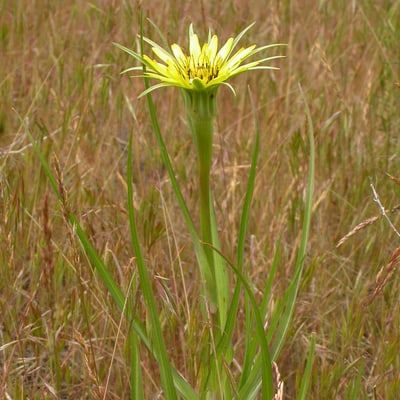
Yellow salsify can grow to a height of 60 cm.
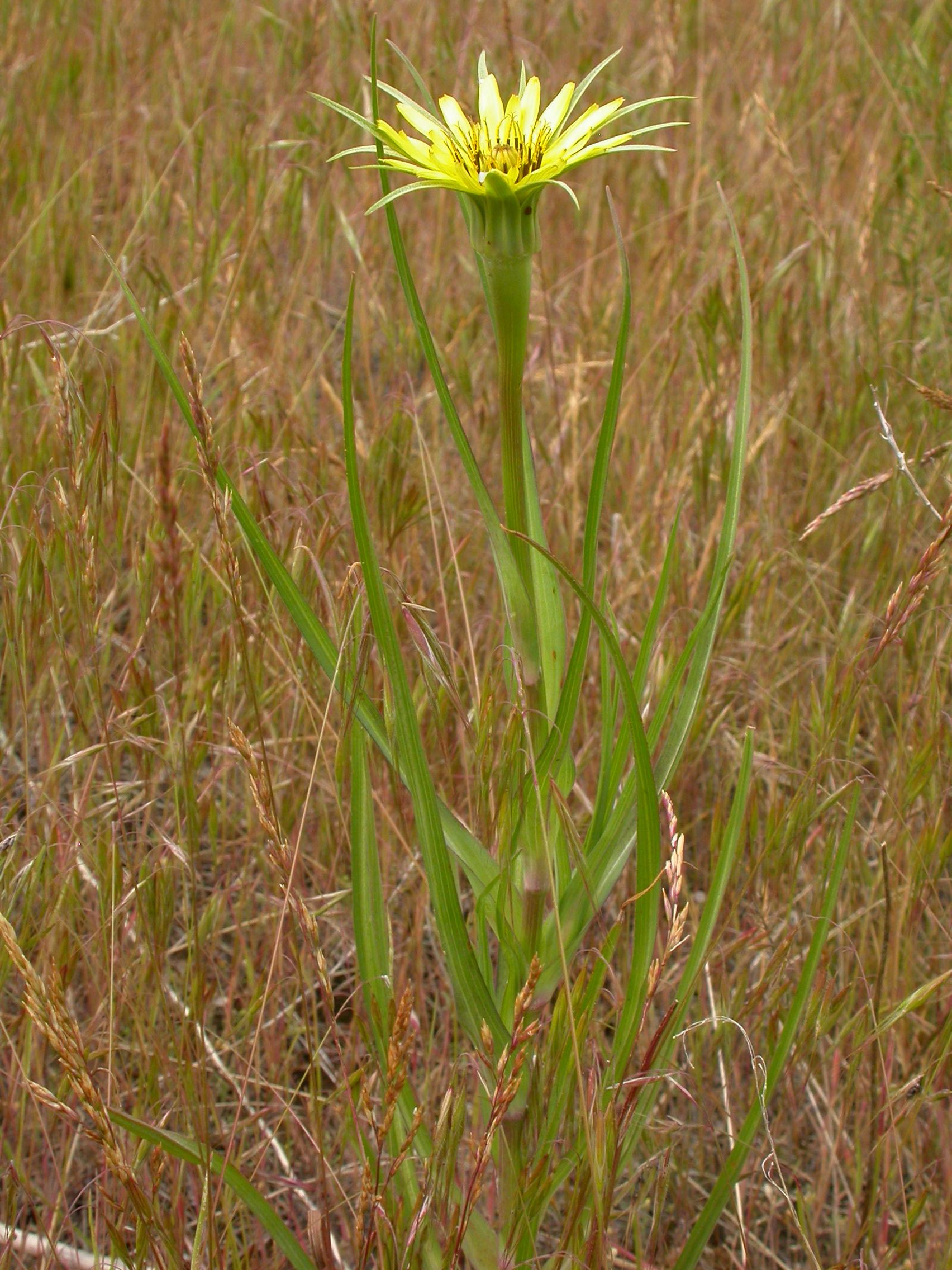
The leaves grow alternately on the stem. They are narrow lance-shaped with elongated tips.
The stem bearing the flower head is hollow and thickened to a club-shape at its upper end.
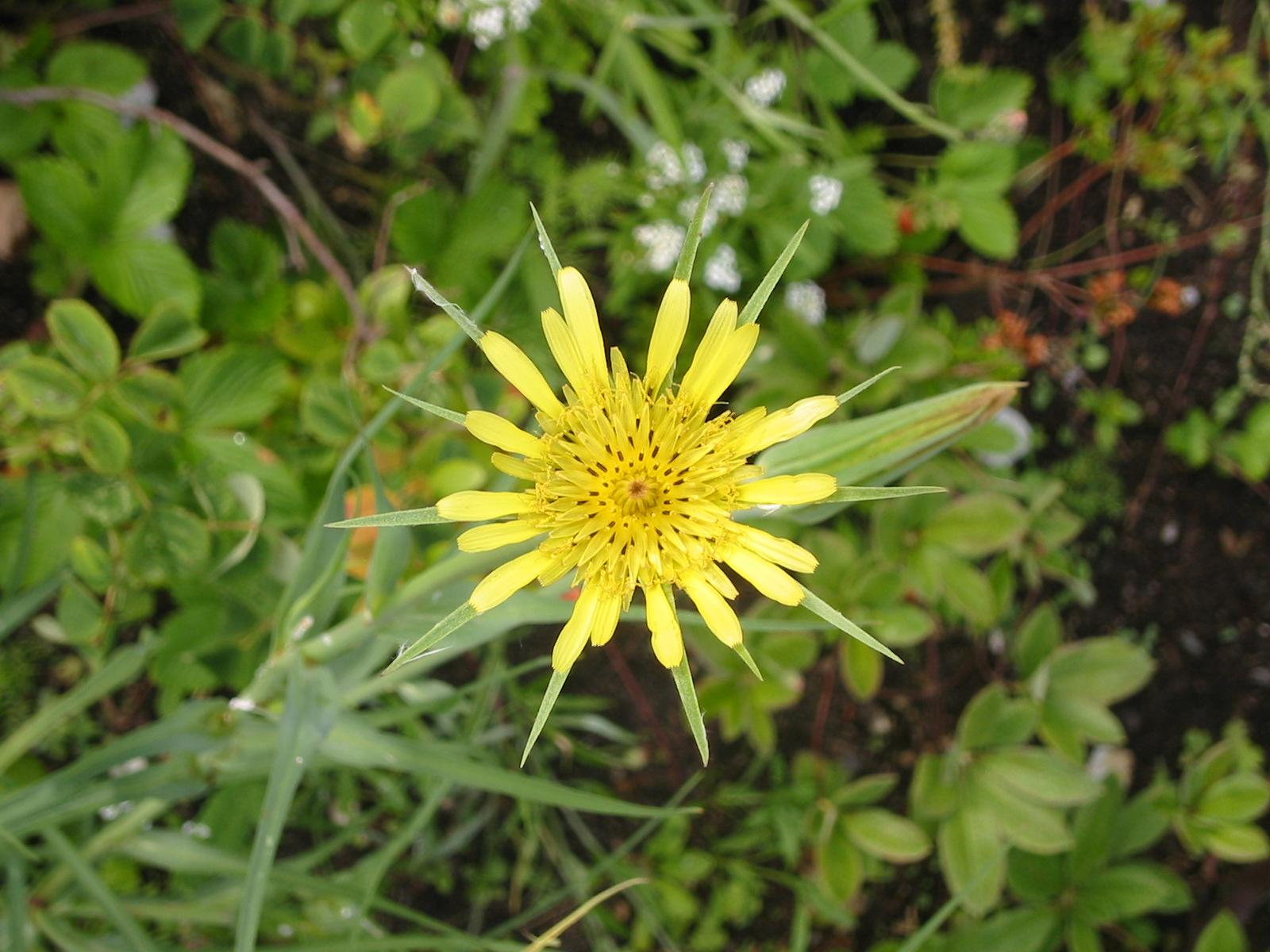
At first glance, the flower head can be mistaken for the flower itself. This pseudanthium (“false flower”) is made up from numerous individual yellow ray florets. The flower heads are enclosed by notably larger green bracts.
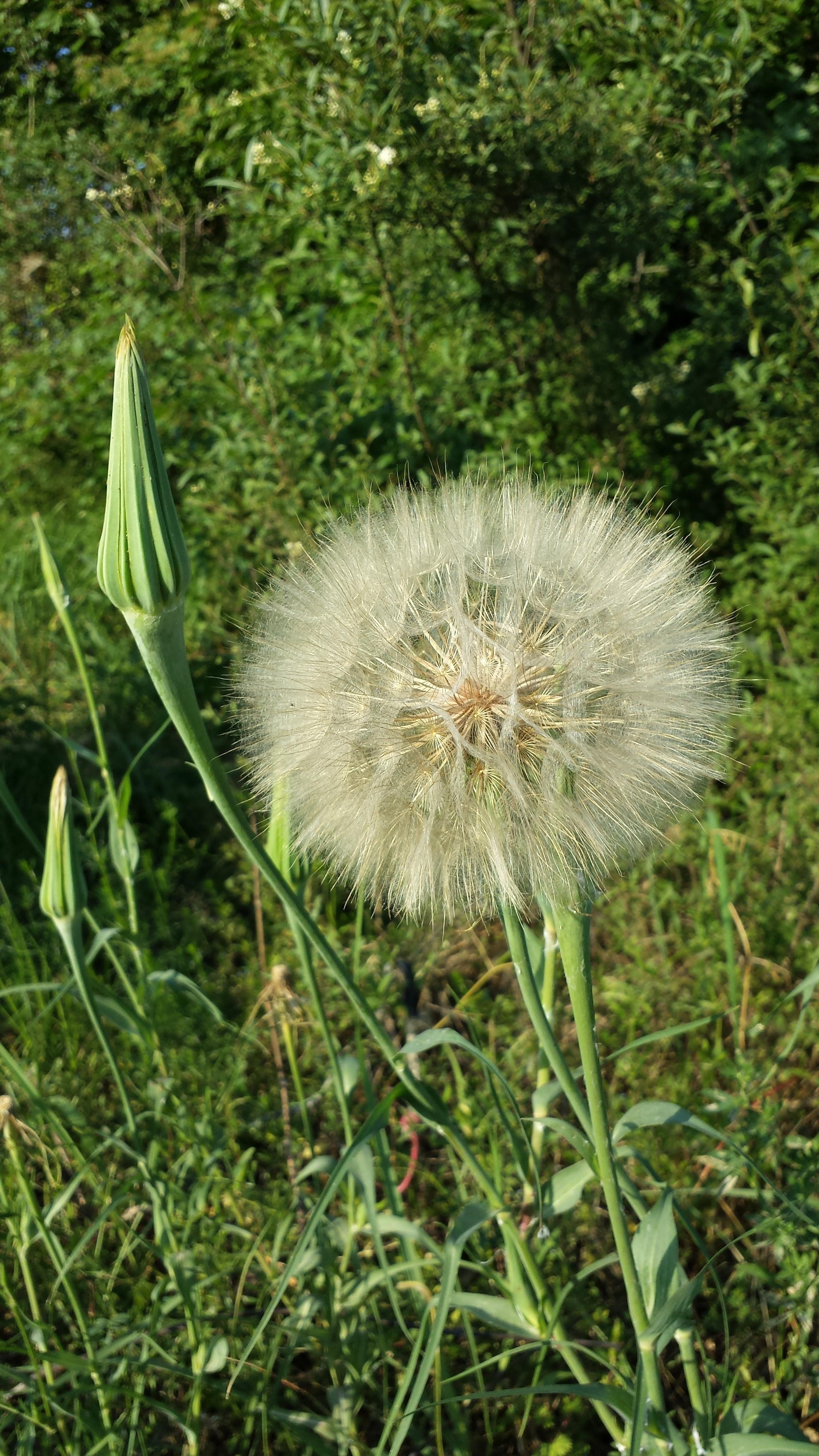
The seeds are small beaked nut fruits with a ring of feathery hairs.
Features
Yellow salsify
Tragopogon dubius
stem notably thickened below the flower head
In the city
Yellow salsify is comparatively rare in an urban environment. It can generally be found along paths, embankments, on railway land and dry lawns. It prefers sunny and warm locations with calcareous soils. It is sometimes planted as an ornamental plant.
The parachutes of the fruits are a popular toy, because they are particularly large and can fly long distances.
Fun Facts
Young shoots can be prepared like asparagus. The sugar-containing leaves can be eaten raw in salads.
It flowers from May to July.
The flower heads of the yellow salsify open early in the morning and already close at lunchtime.
Pollination is carried out by insects.
The fruits are mainly spread with the wind.
- Endangerment level Germany: not endangered
Yellow salsify is closely related to black salsify (Scorzonera hispanica). Its taproot is also edible.
Sources
Blüten, Birger Fricke, CC BY-SA 3.0, https://commons.wikimedia.org/wiki/File:TragopogonDubius1.jpg

Habitus, Matt Lavin, CC BY-SA 2.0, https://commons.wikimedia.org/wiki/File:Tragopogon_dubius_(4049556535).jpg
.jpg)
Fruchtstand, Stefan.lefnaer, CC BY-SA 3.0, https://commons.wikimedia.org/wiki/File:Tragopogon_dubius_sl4.jpg

Schauer, T., Caspari, C. & Caspari, S. (2015) Der illustrierte BLV-Pflanzenführer für unterwegs. 1150 Blumen, Gräser, Bäume und Sträucher, München: BLV.
Page „Großer Bocksbart“. : Wikipedia, The Free Encyclopedia. Date of last revision: 22.07.2016, 12:48 UTC. URL: https://de.wikipedia.org/w/index.php?title=Gro%C3%9Fer_Bocksbart&oldid=156362871 (Accessed: 20.09.2016).
Bundesamt für Naturschutz (n.d.) Artensteckbriefe, URL: http://floraweb.de/pflanzenarten/artenhome.xsql?suchnr=5996& (Accessed: 20.09.2016).