
Short Description
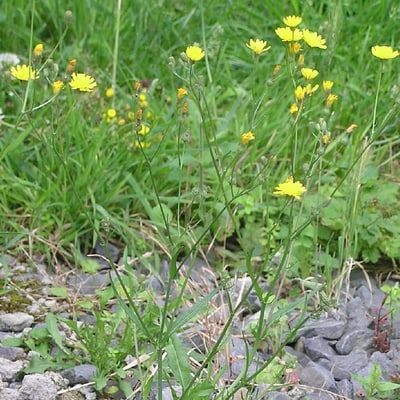
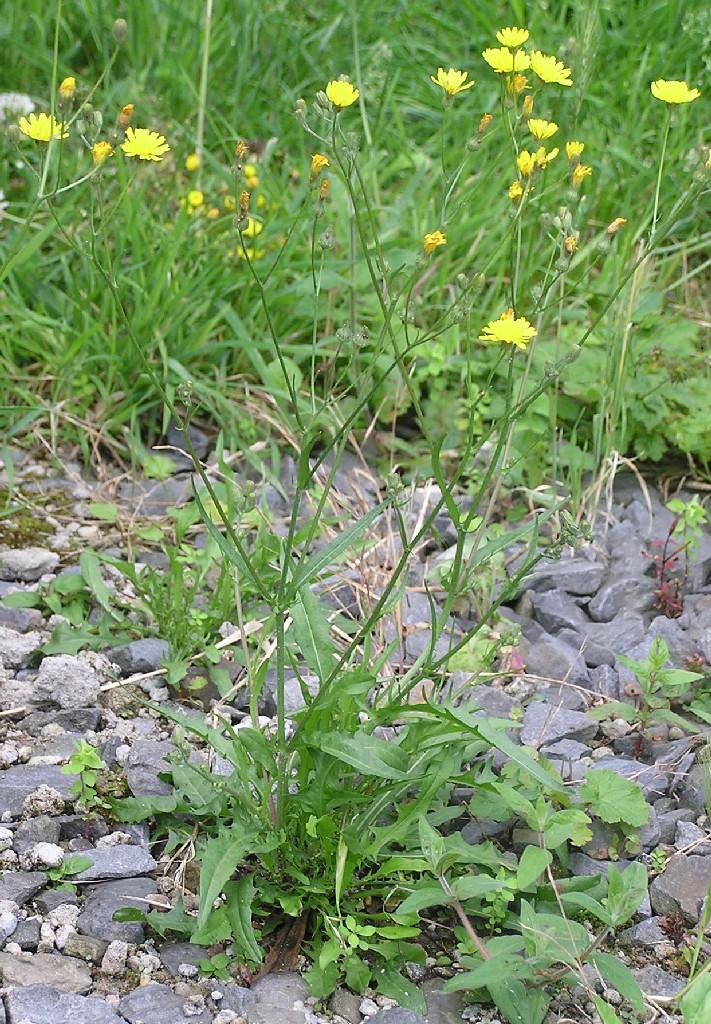
The smooth hawksbeard can grow up to one metre high.
The leaves near the ground form a rosette and are lobed. Their surface is bare or covered with a few hairs. The upper leaves sit on the stem and are arrow-shaped at the base.
The stem is usually not very branched but lacticiferous.
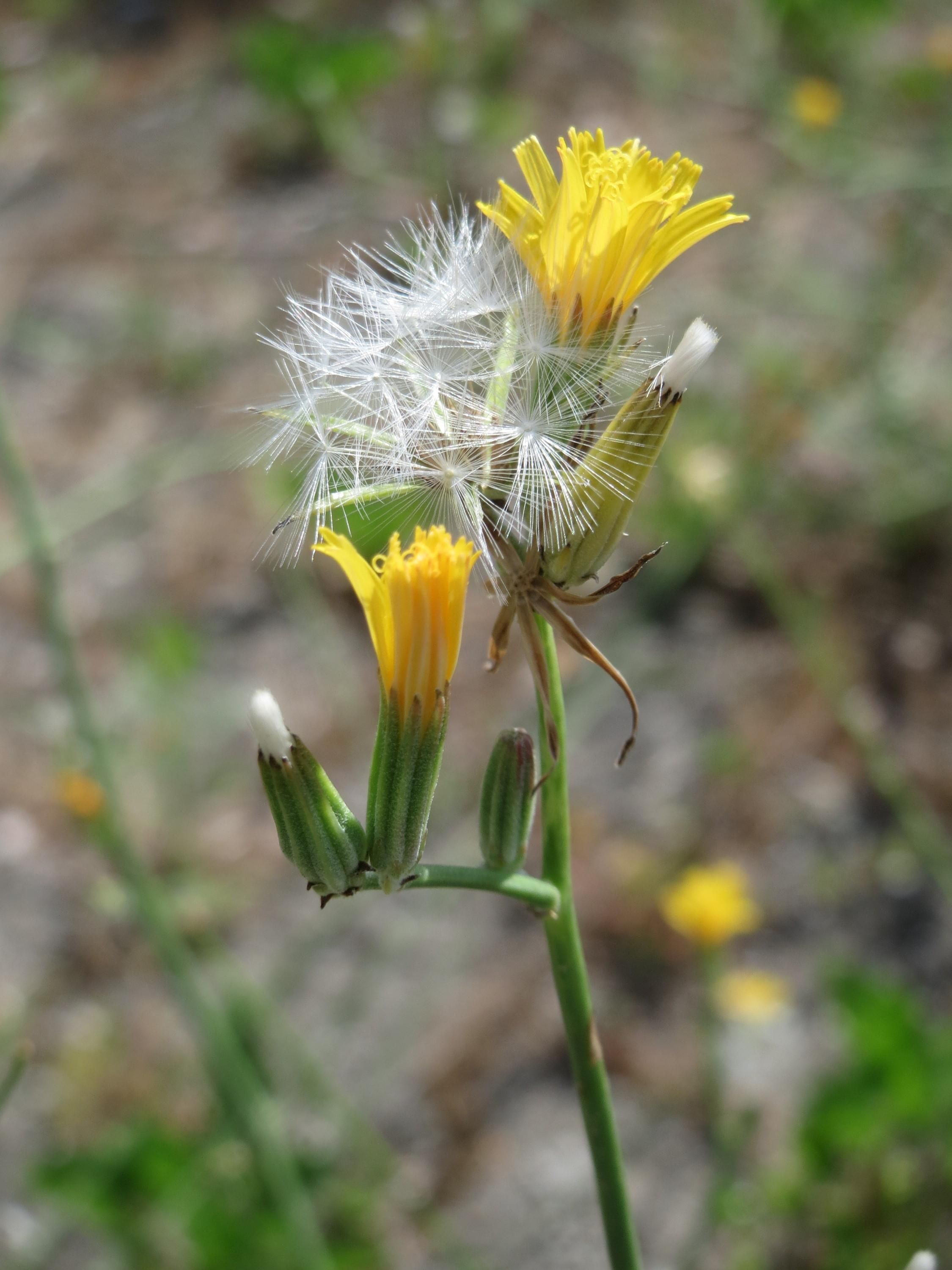
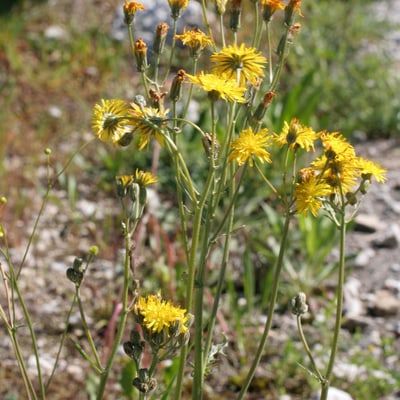
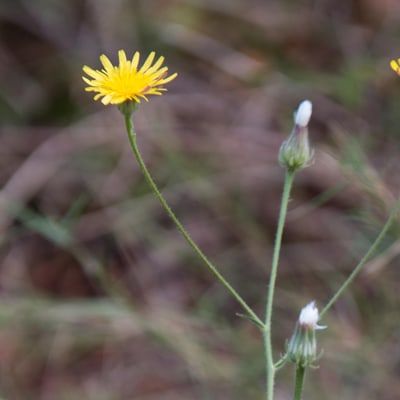
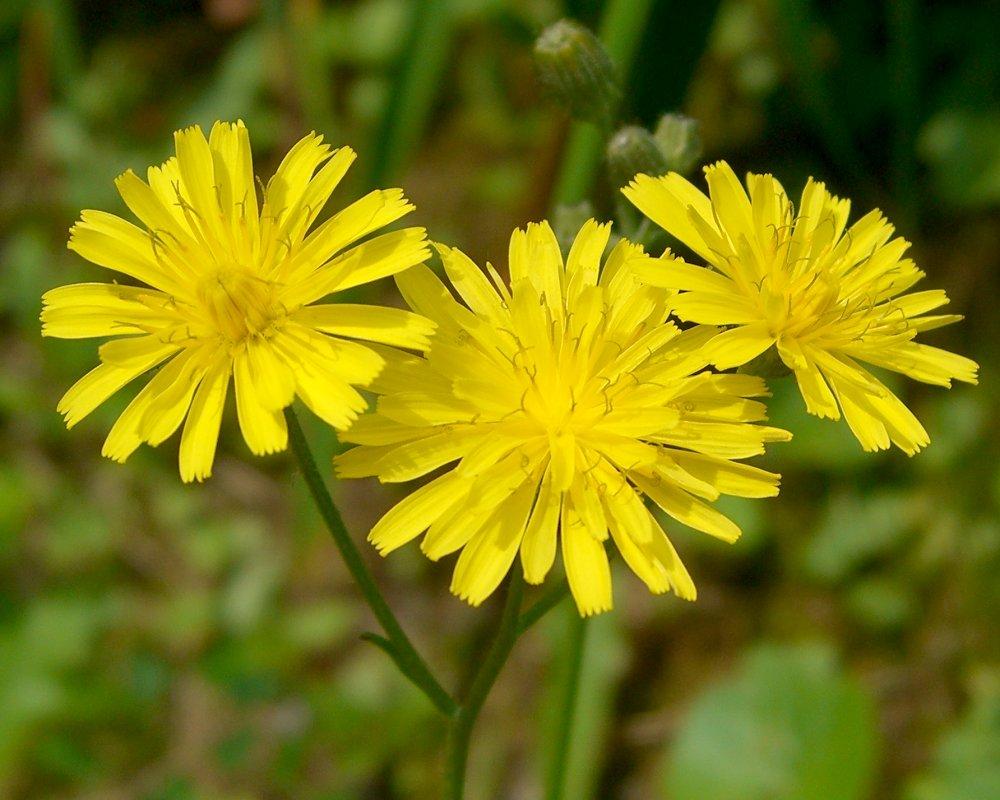
At first glance, the flower head can be mistaken for the flower. However, it is a pseudo flower. It consists of numerous individual yellow ray florets. The green outermost involucral bract surrounding the flower head are usually shorter than the rest of the involucral bract.
The plant forms small, nut-like fruits with a ring of hairs.
Features
Smooth hawksbeard
Crepis capillaris
yellow flower heads
bearing latex-like juice (lacticiferous)
In the city
In the city, the smooth hawksbeard is often found on park meadows and in roadside greenery.
Fun Facts
The stem can be cooked as a vegetable.
The flowering period is from May to September.
It is an annual plant. This means the plant lives for one year, flowers and dies after the seeds have ripened.
Pollination is carried out by insects.
- Endangerment level Germany: not endangered
The genus name "Crepis" is derived from the Latin "crepida" = "shoe sole" and "capillaris" = "hair".
The young leaves can be eaten as a salad.
Sources
Blüten und Früchte, AnRo0002, CC0, https://commons.wikimedia.org/wiki/File:20170703Chondrilla_juncea10.jpg

Blütenstand, Jason Hollinger, CC BY-SA 2.0, https://commons.wikimedia.org/wiki/File:Smooth_Hawksbeard_(1047592171).jpg
.jpg)
Habitus, Michael Becker, CC BY-SA 3.0, https://commons.wikimedia.org/wiki/File:Crepis_capillaris_2005.07.10_09.09.34.jpg

Page „Kleinköpfiger Pippau“. : Wikipedia, The Free Encyclopedia. Date of last revision: 19.11.2016, 16:32 UTC. URL: https://de.wikipedia.org/w/index.php?title=Kleink%C3%B6pfiger_Pippau&oldid=159848587 (Accessed: 14.06.2017).
Eggenberg, S. & Möhl, A. (2007) Flora Vegetativa: Ein Bestimmungsbuch für Pflanzen der Schweiz im blütenlosen Zustand, Bern, Stuttgart, Wien: Haupt Verlag.
Jäger, E. J. (2011) Rothmaler - Exkursionsflora von Deutschland. Gefäßpflanzen: Grundband, Heidelberg: Spektrum Akademischer Verlag.
Kammer, P. M. (2016) Pflanzen einfach bestimmen. Schritt für Schritt einheimische Arten kennenlernen, Bern: Haupt Verlag.
Bundesamt für Naturschutz (n.d.) Artensteckbriefe, URL: http://floraweb.de/pflanzenarten/artenhome.xsql?suchnr=1716& (Accessed: 14.06.2017).