
Short Description
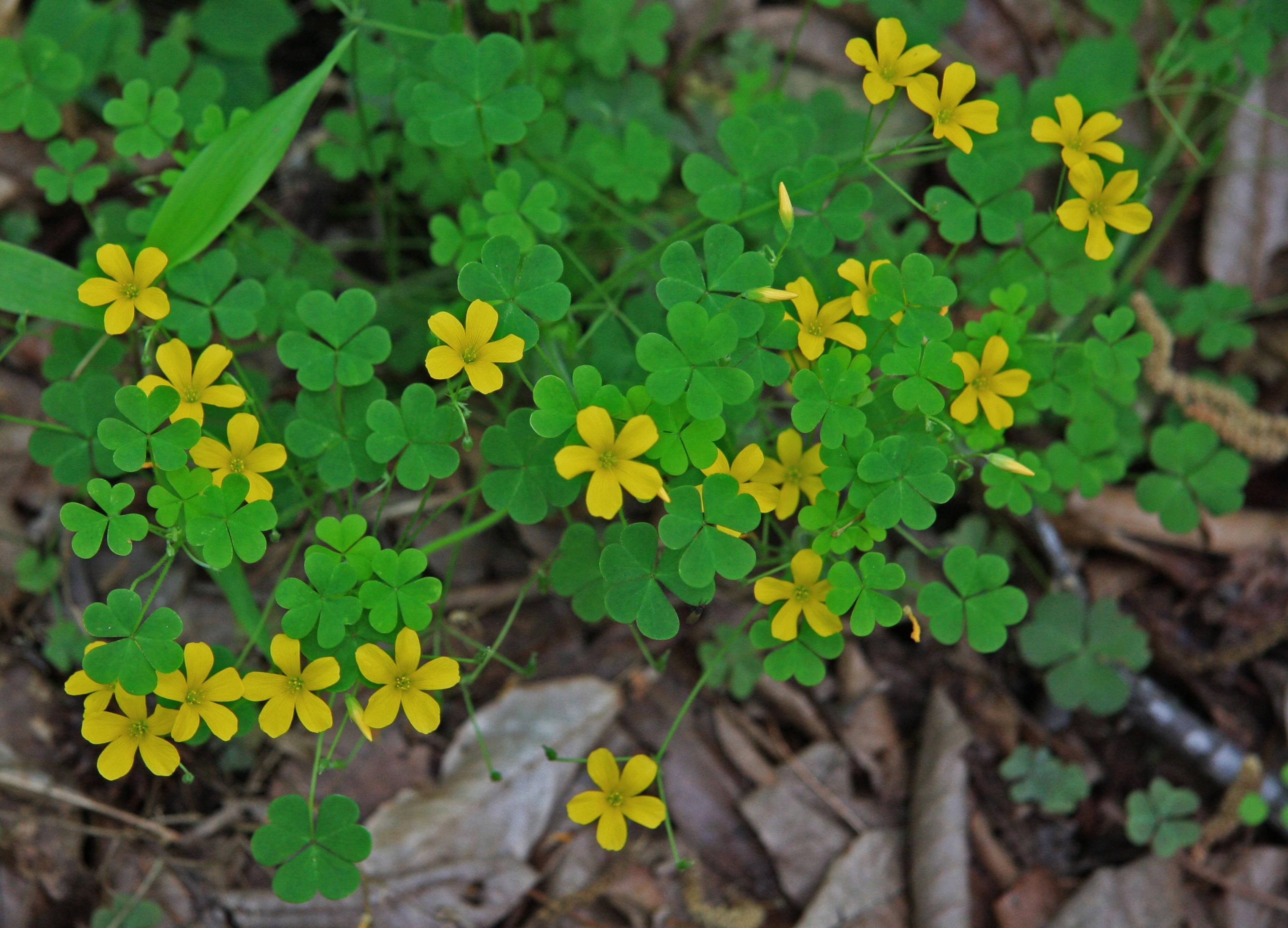
The common yellow woodsorrel can grow up to 40 centimetres high.
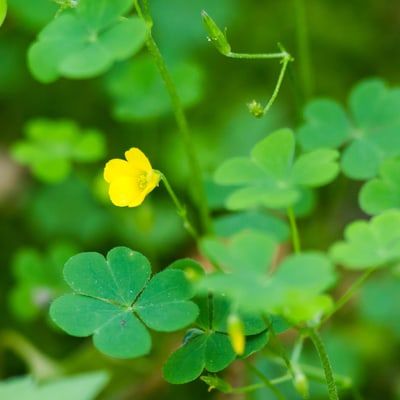
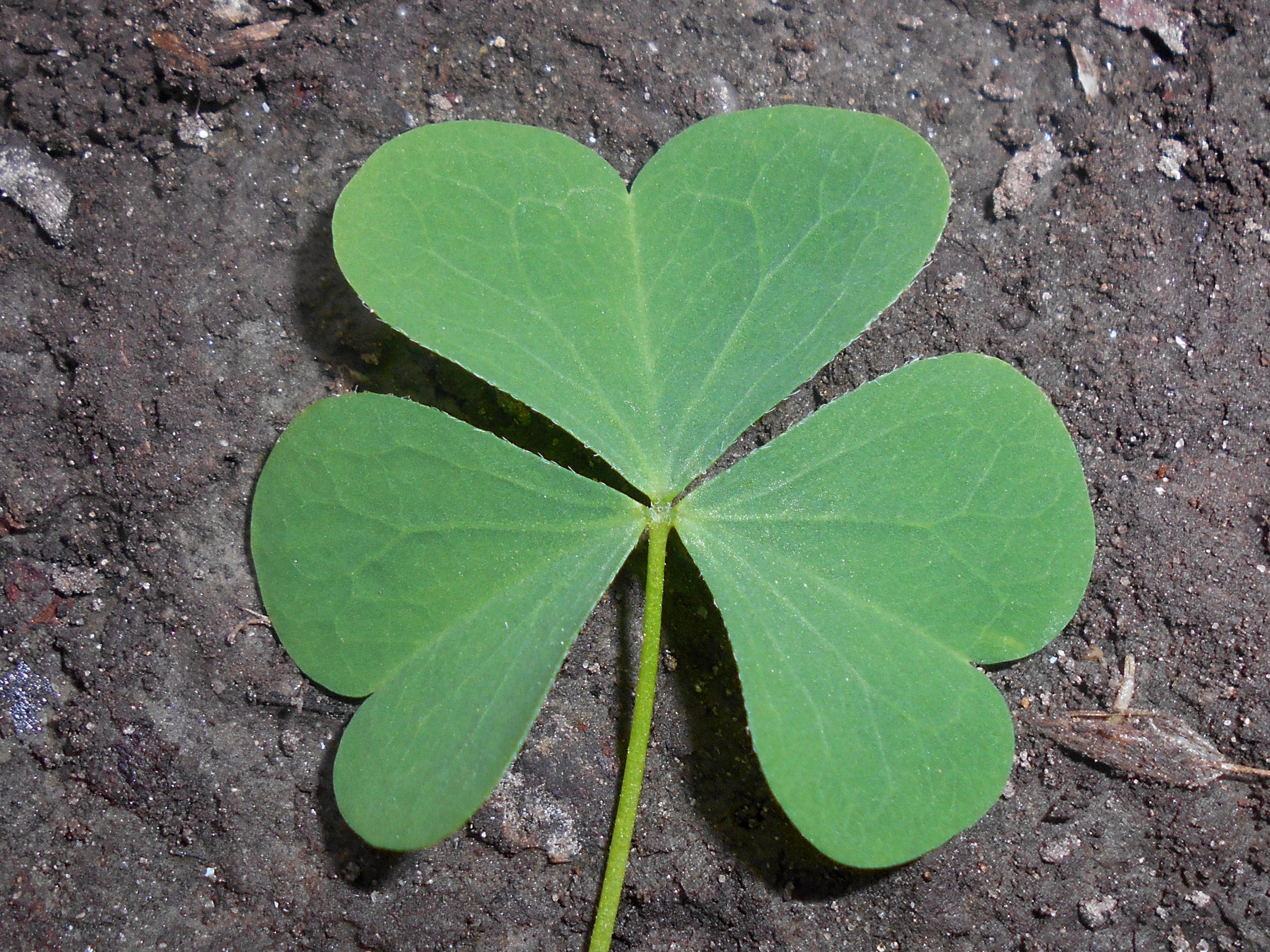
The light green leaves are divided into three heart-shaped subleaves (pinnate). They look like typical clover leaves.
The green stem grows upright.
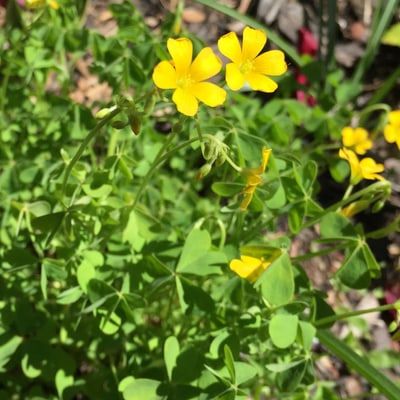
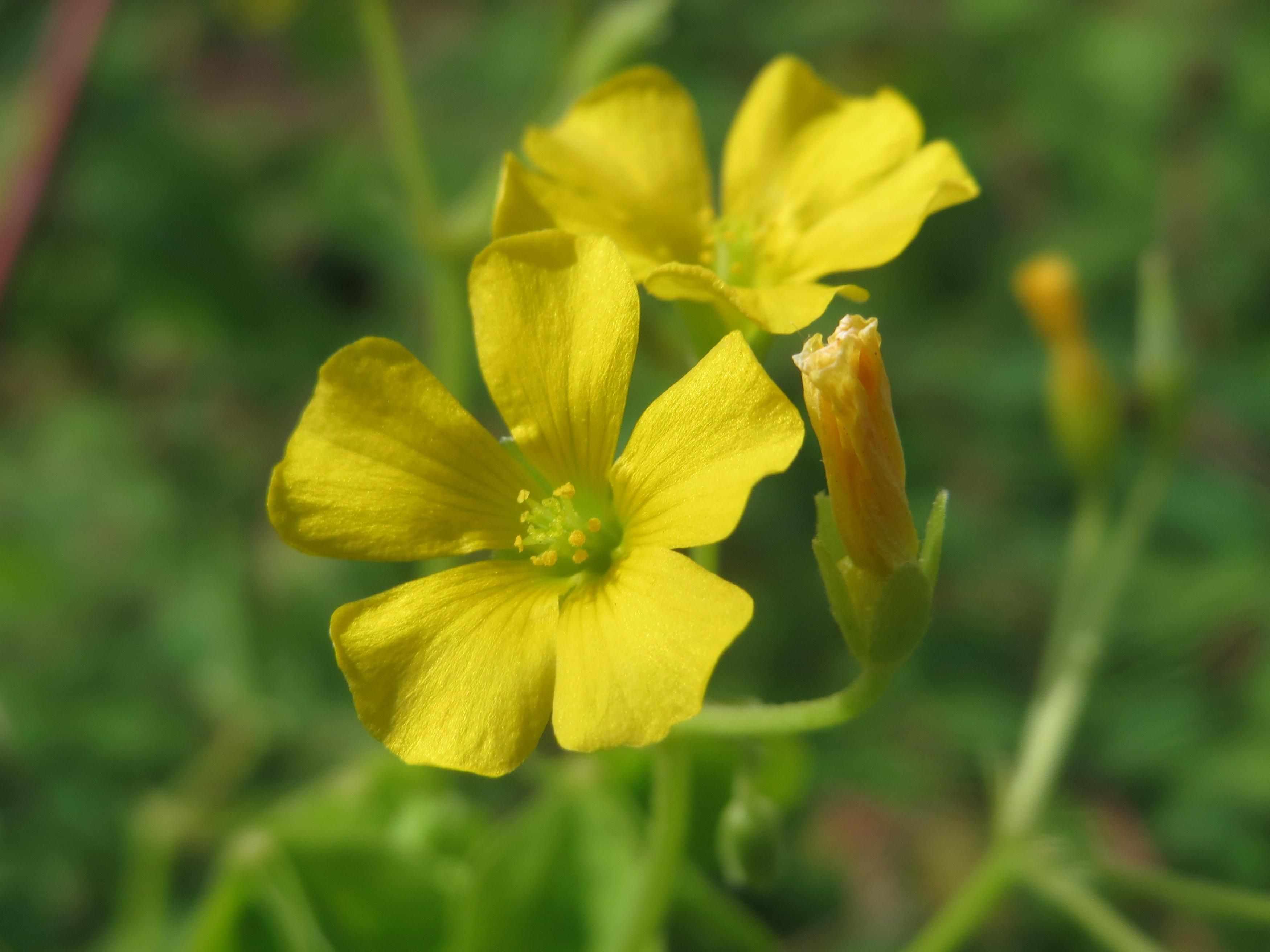
The light yellow flowers have five petals arranged in a circle.
The fruits are elongated, glabrous and pentagonal capsules. They sit on long, upright stems.
Features
Common yellow woodsorrel
Oxalis stricta
Cloverleaf shape
yellow flowers
In the city
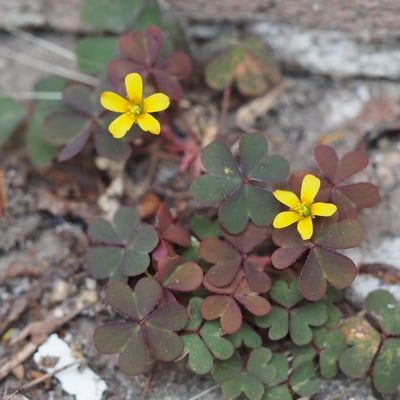
The common yellow woodsorrel finds optimal conditions in the city with nutrient-rich soils and warm locations and is therefore often found there. It grows in fields, cemeteries, rubble tips, along roadsides and in gardens.
It is a common weed and must be removed carefully, as plants that have been pulled out and left lying around will sprout roots again.
Fun Facts
The flowers only open when it is sunny and only for one day.
The ripe fruits are under pressure and open explosively when touched. The seeds are thrown up to four metres.
The flowering period is from June to October.
- Endangerment level Germany: not evaluated
- Usage:
The leaves can be used to flavour pastries. Lemonade and herbal tea are also prepared from the plant. The plant juice is used as a vinegar substitute.
The common yellow woodsorrel originates from North America and first appeared in the north of Germany at the beginning of the 19th century. It belongs to the non-native plants (neophytes).
The leaves, flowers and capsule fruits are edible. The leaves, however, contain a lot of oxalic acid, which deprives the body of calcium.
Sources
Habitus, Dcrjsr, CC BY-SA 3.0, https://commons.wikimedia.org/wiki/File:Oxalis_stricta_yellow_wood_sorrel.jpg

Blüten, AnRo0002, CC0 1.0, https://commons.wikimedia.org/wiki/File:20160521Oxalis_stricta2.jpg

Blatt, Salicyna, CC BY-SA 4.0, https://commons.wikimedia.org/wiki/File:Oxalis_stricta_2017-07-23_3510.jpg

Kammer, P. M. (2016) Pflanzen einfach bestimmen. Schritt für Schritt einheimische Arten kennenlernen, Bern: Haupt Verlag.
Schauer, T., Caspari, C. & Caspari, S. (2015) Der illustrierte BLV-Pflanzenführer für unterwegs. 1150 Blumen, Gräser, Bäume und Sträucher, München: BLV.
Spohn, M., Golte-Bechtle, M. & Spohn, R. (2015) Was blüht denn da? Stuttgart: Franckh Kosmos Verlag.
Page „Aufrechter Sauerklee“. : Wikipedia, The Free Encyclopedia. Date of last revision: 03.07.2018, 13:00 UTC. URL: https://de.wikipedia.org/w/index.php?title=Aufrechter_Sauerklee&oldid=178834438 (Accessed: 16.08.2018).