
Short Description
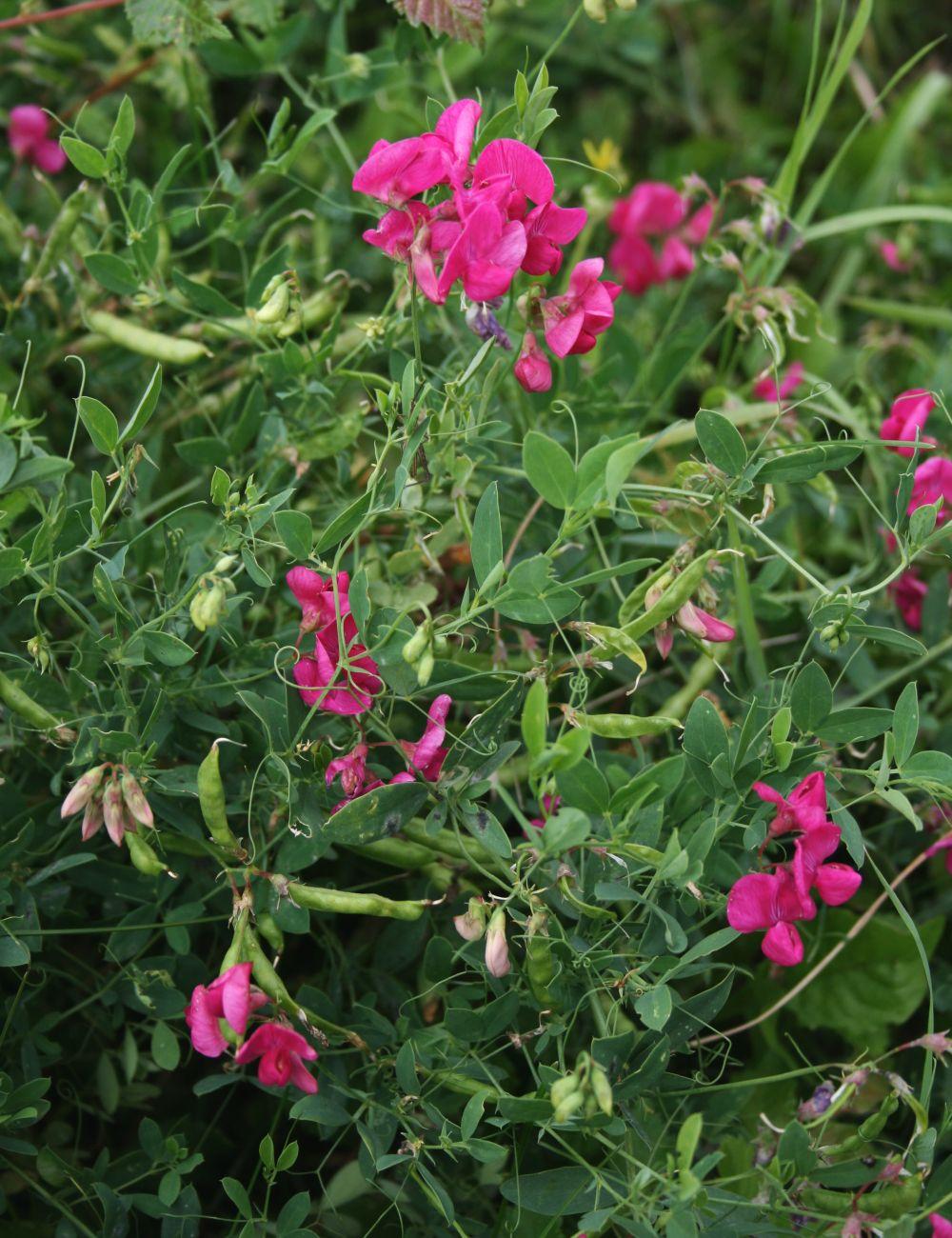
The tuberous pea can grow up to one metre long.
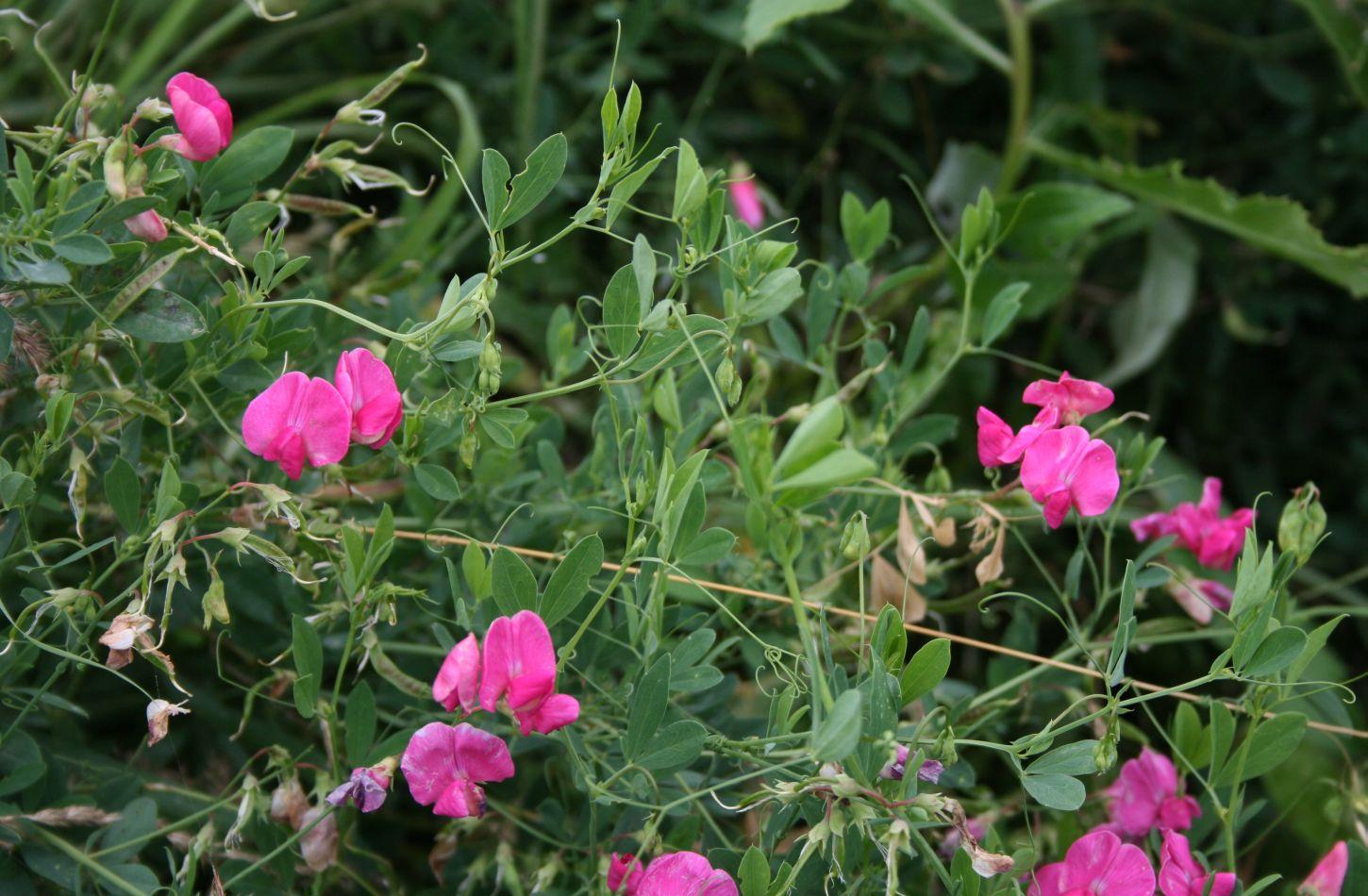
A leaf consists of two partial leaves and ends in a branched tendril (pinnate). The individual leaflets are broadly lanceolate to ovate and bluish on the lower surface.
The stem grows prostrate to climbing. It is square and unwinged.
The flowers are bright pink and stand together in racemes (inflorescences). They consist of five petals that form the typical, zygomorphic pea-flower-type (papilionaceous) within this family. The large, upper petal is the standard and projects upwards. The two smaller lateral petals are the wings. The two lower leaves form a hollow keel that surrounds the anthers and the pistil.
The fruit is a leathery brown, elongated and compressed pod.
Features
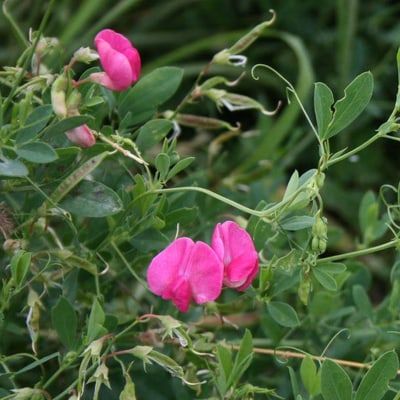
Tuberous pea
Lathyrus tuberosus
slightly poisonous
leaves with tendril
unwinged stem
In the city
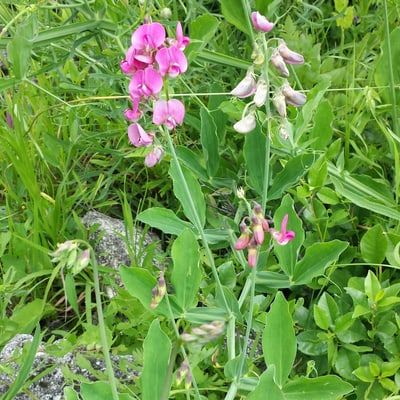
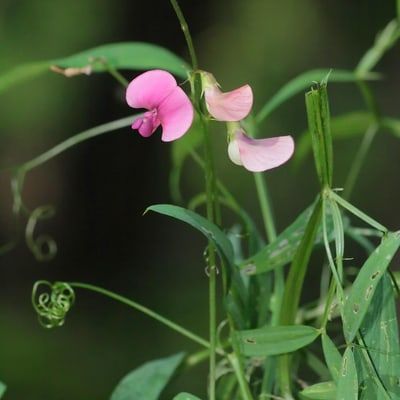
The tuberous pea prefers warm, moderately dry and calcareous soils. In the city, it therefore often grows along roadsides, hedges and rubble piles. It is also found in cereal fields and gardens, as it was often cultivated as a crop in the past.
Fun Facts
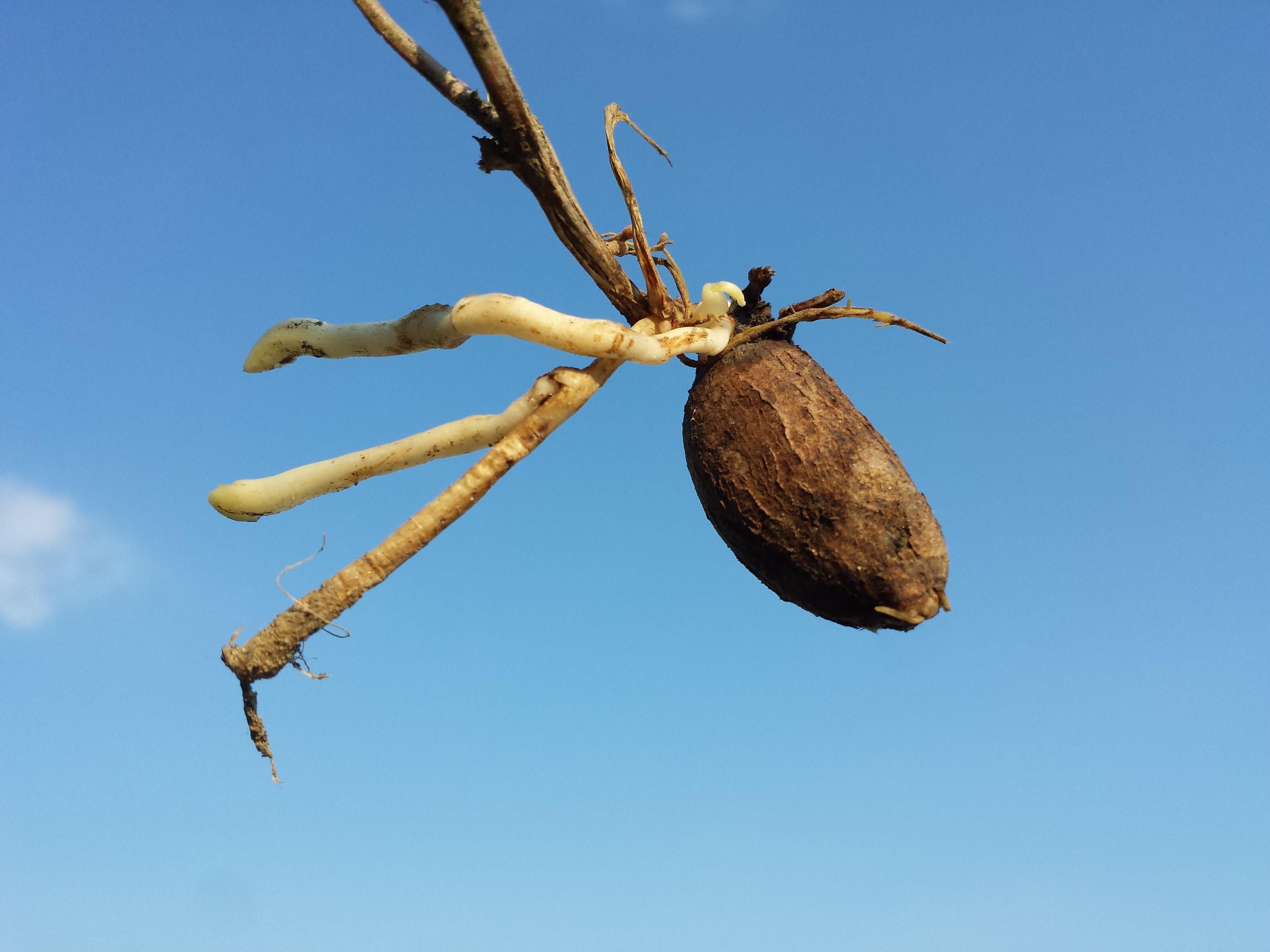
The hazelnut-sized root tubers are also called "earth acorns" because of their shape.
Living together with root nodule bacteria is typical for the legume family. The bacteria supply the plant with nitrogen. Since the bacteria need a plant for nitrogen fixation, this coexistence has a positive effect on both species (symbiosis).
The flowering period is from June to August.
It lives for several years and generally flowers and fruits annually (perennial plant).
The starch-rich root tubers can be eaten raw or cooked. They used to be cultivated for fattening pigs or as a nutritious food.
- Endangerment level Germany: not endangered
- Usage:
In the 16th century, perfume was made from the strongly scented flowers.
It is native to Germany. Its original range is from Europe to western Asia. In North America, it was introduced by humans.
The plant is slightly poisonous.
Sources
Habitus, Franz Xaver, CC BY-SA 3.0, https://commons.wikimedia.org/wiki/File:Lathyrus_tuberosus_4.jpg

Wurzelknolle, Stefan.lefnaer, CC BY-SA 4.0, https://commons.wikimedia.org/wiki/File:Lathyrus_tuberosus_sl24.jpg

Habitus, Franz Xaver, CC BY-SA 3.0, https://commons.wikimedia.org/wiki/File:Lathyrus_tuberosus_1.jpg

Spohn, M., Golte-Bechtle, M. & Spohn, R. (2015) Was blüht denn da? Stuttgart: Franckh Kosmos Verlag.
Page „Knollen-Platterbse“. : Wikipedia, The Free Encyclopedia. Date of last revision: 27.02.2018, 14:38 UTC. URL: https://de.wikipedia.org/w/index.php?title=Knollen-Platterbse&oldid=174445983 (Accessed: 08.08.2018).