
Short Description
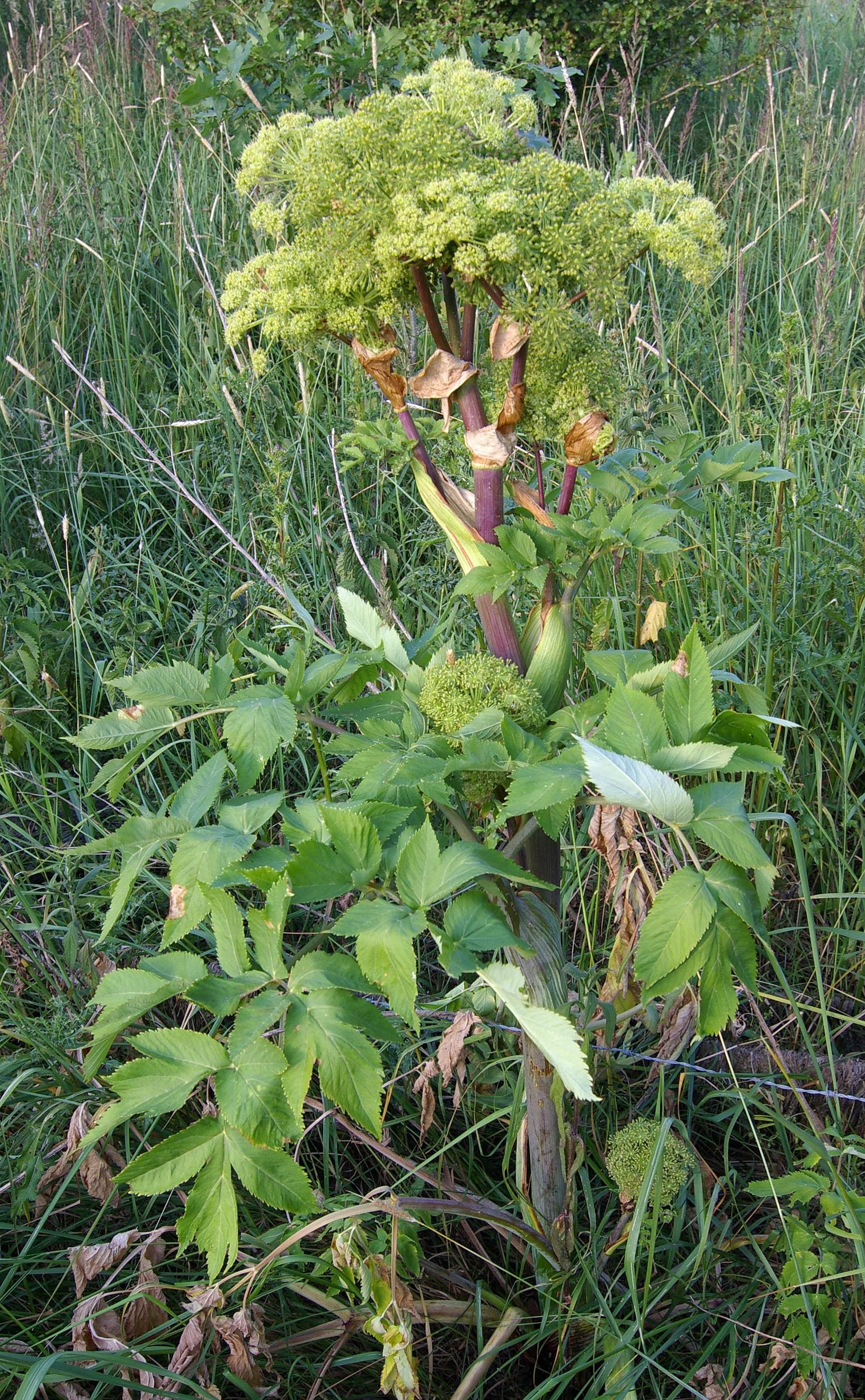
The garden angelica can grow up to three metres high.
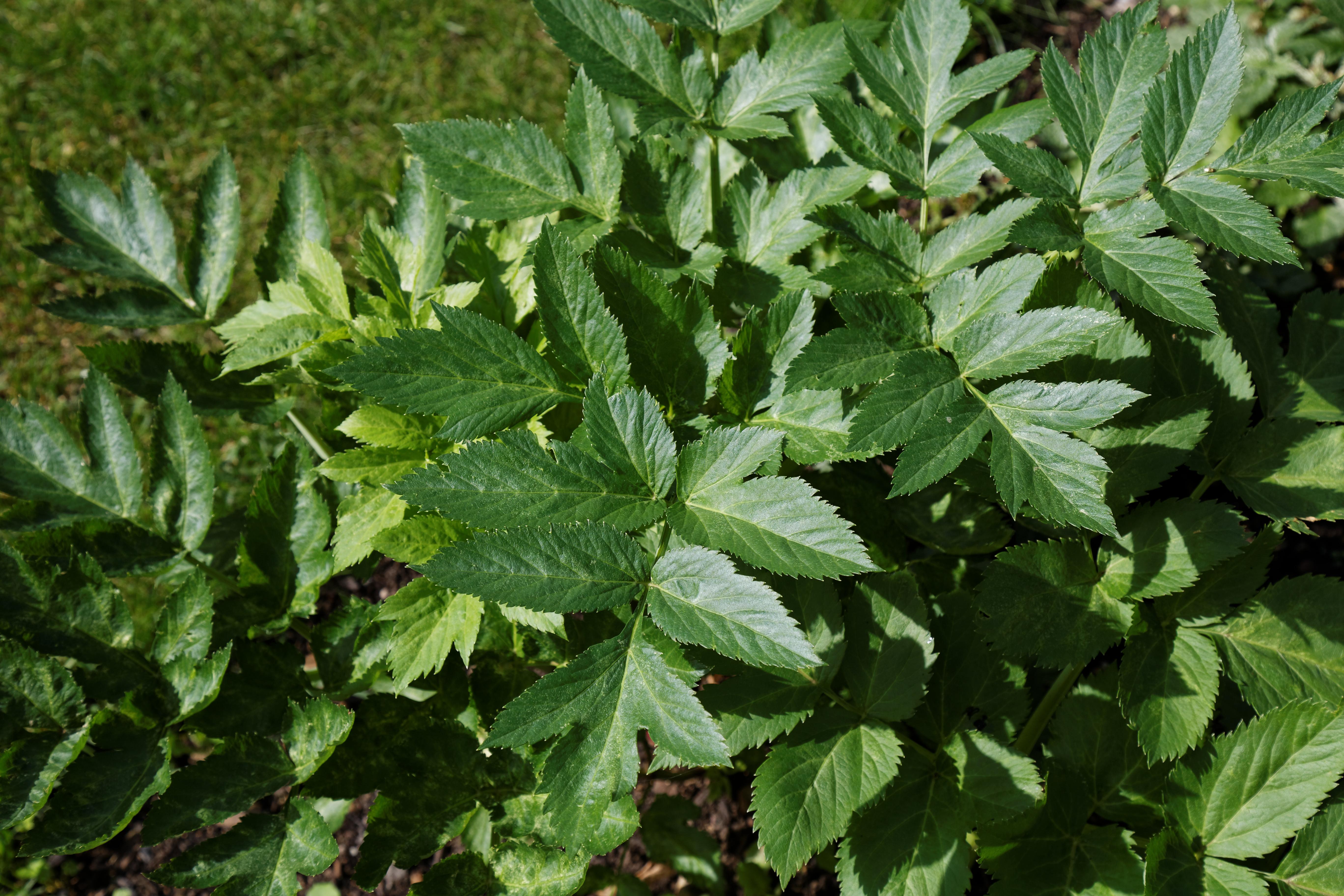
The light green leaves are divided into two to three smaller leaves (pinnate). The leaflets are broadly ovate and have a serrated edge. The leaflet at the tip is always divided into three parts. At the base of each leaf a large, inflated leaf sheath encloses the stem.
The stem grows upright and can become as thick as an arm. It is round, hollow and slightly grooved. It tastes and smells spicy.
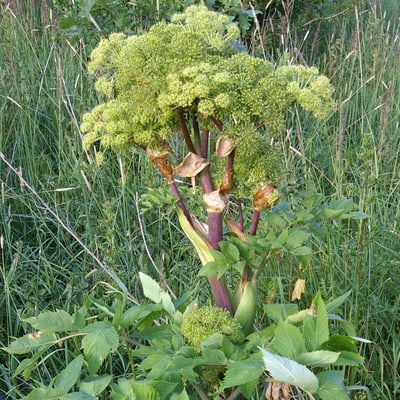
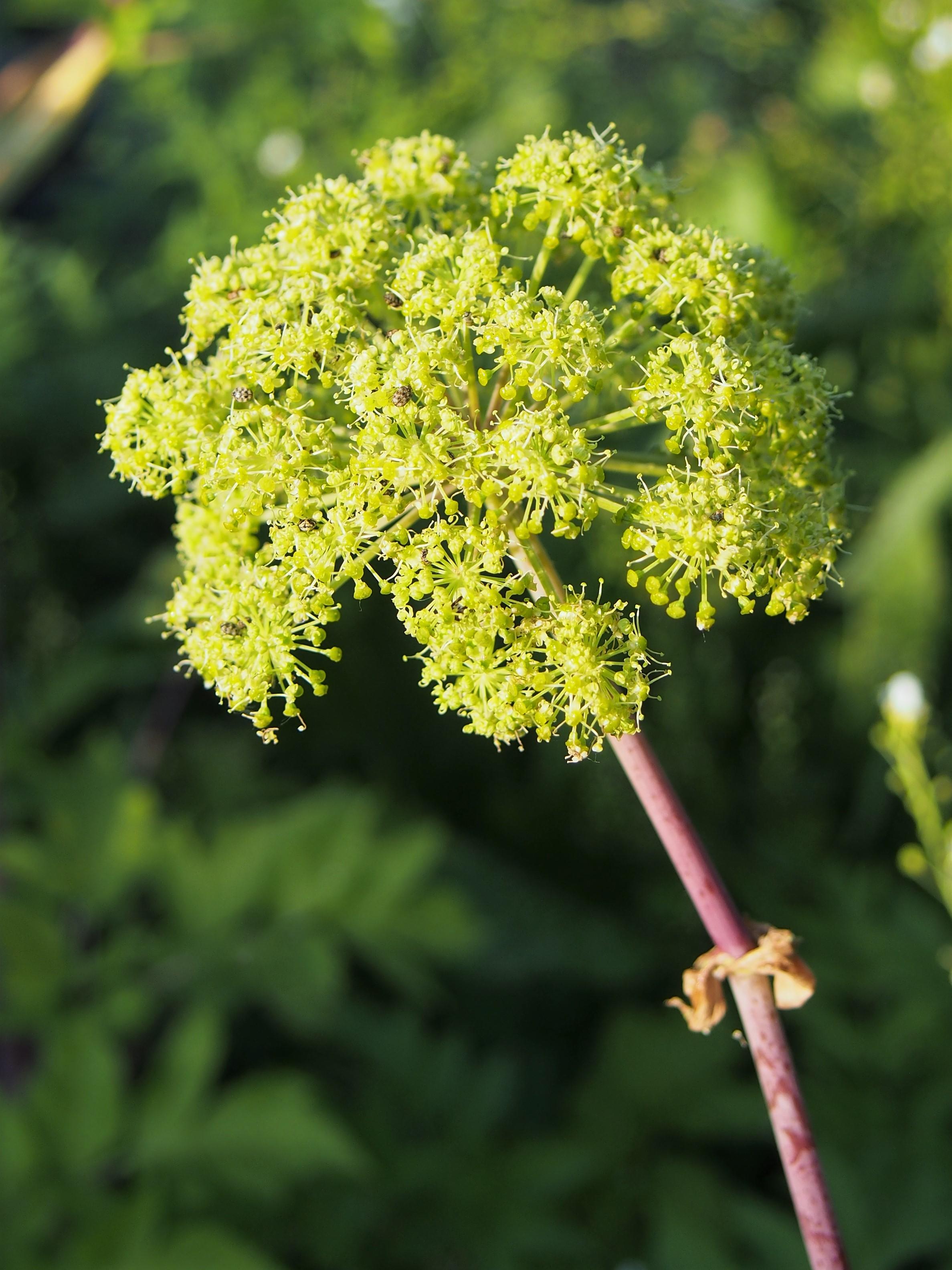
The rather inconspicuous, small flowers are yellow to greenish. They are arranged together in a large double umbel inflorescence. Each side branch of an umbel (umbrella-like branching) ends in turn with a smaller umbel.
The fruits are light yellow, oval schizocarps with wing-shaped edges.
Features
Garden angelica
Angelica archangelica
slightly poisonous
inflated leaf sheaths
spicy scent
Similar species
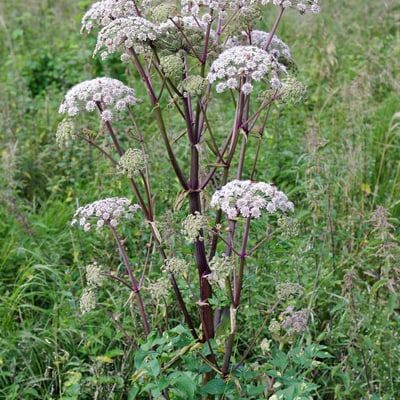
Wild angelica
Angelica sylvestris
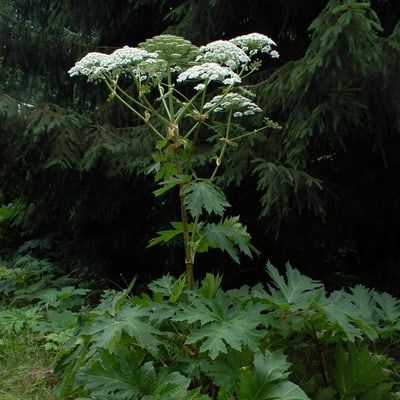
Giant hogweed
Heracleum mantegazzianum
In the city
The garden angelica needs moist and nutrient-rich soils and prefers to grow on damp meadows and riverbanks. It is rarely found wild in Germany and has high habitat requirements. Therefore, it is also rarely found in the city.
Fun Facts
The Sámi, the indigenous people of Lapland, make a traditional reed instrument called a "fadno" from the green stem.
It flowers and fruits only once in its life and then dies completely.
The flowering period is from July to August.
The flowers smell of honey and are pollinated by insects.
- Endangerment level Germany: not endangered
- Usage:
Parts of the plant are used as sweets, in liquors and even in snuff.
The medicinal angelica is cultivated commercially and has thus been able to run wild in some places.
Especially the root and the sap are slightly poisonous. Skin contact can lead to sometimes very painful skin inflammations when exposed to sunlight. In herbal medicine, however, it is also used to relieve mild stomach and intestinal complaints, insomnia and rheumatism.
Sources
Habitus, Christian Fischer, CC BY-SA 3.0, https://commons.wikimedia.org/wiki/File:AngelicaArchangelica1.jpg

Blütenstand, Agnieszka Kwiecień, CC BY-SA 4.0, https://commons.wikimedia.org/wiki/File:Angelica_archangelica_subsp._archangelica_Dzi%C4%99giel_litwor_2019-06-07_04.jpg

Blätter, Acabashi, CC BY-SA 4.0, https://commons.wikimedia.org/wiki/File:%27Angelica_archangelica%27_Capel_Manor_College_Gardens_Enfield_London_England.jpg

Roth, L., Daunderer, M. & Kormann, K. (2008) Giftpflanzen - Pflanzengifte. Vorkommen, Wirkung, Therapie. Allergische und phototoxische Reaktionen, Hamburg: Nikol Verlag.
Schönfelder, I. & Schönfelder, P. (2010) Der Kosmos-Heilpflanzenführer. Über 600 Heil- und Giftpflanzen Europas, Stuttgart: Franckh Kosmos Verlag.
Page „Arznei-Engelwurz“. : Wikipedia, The Free Encyclopedia. Date of last revision: 09.12.2017, 00:03 UTC. URL: https://de.wikipedia.org/w/index.php?title=Arznei-Engelwurz&oldid=171793796 (Accessed: 14.12.2017).