
Short Description
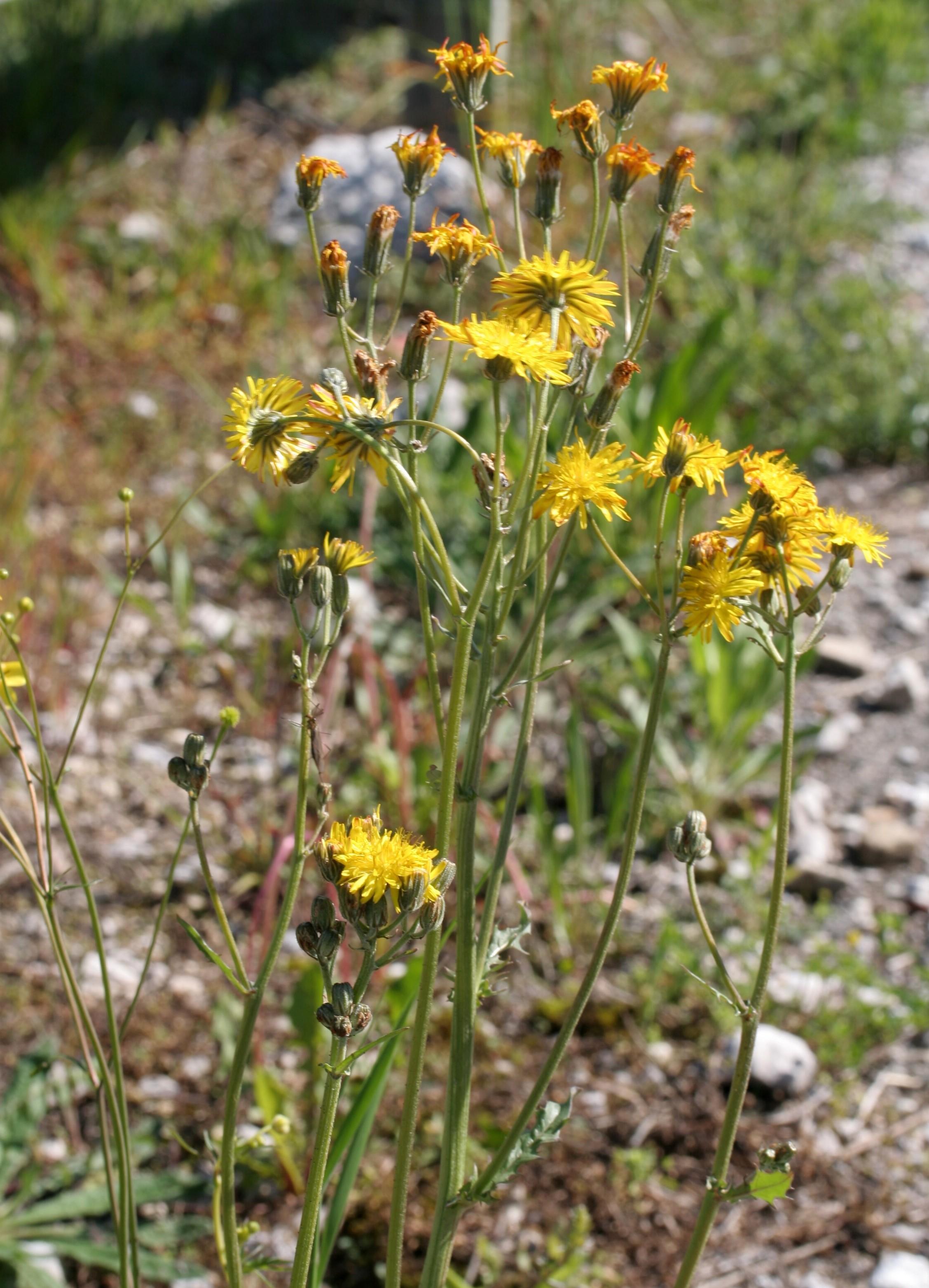
Rough hawksbeard can grow to 1.2 m high.
The leaves close to the ground grow in rosette form and are undivided. They have triangular, rearward facing teeth. The upper leaves are narrow and lance-shaped and sometimes surround the stem.
The stem is generally hairy, highly branched and contains a milky sap. It lignifies (turns woody) at the base.
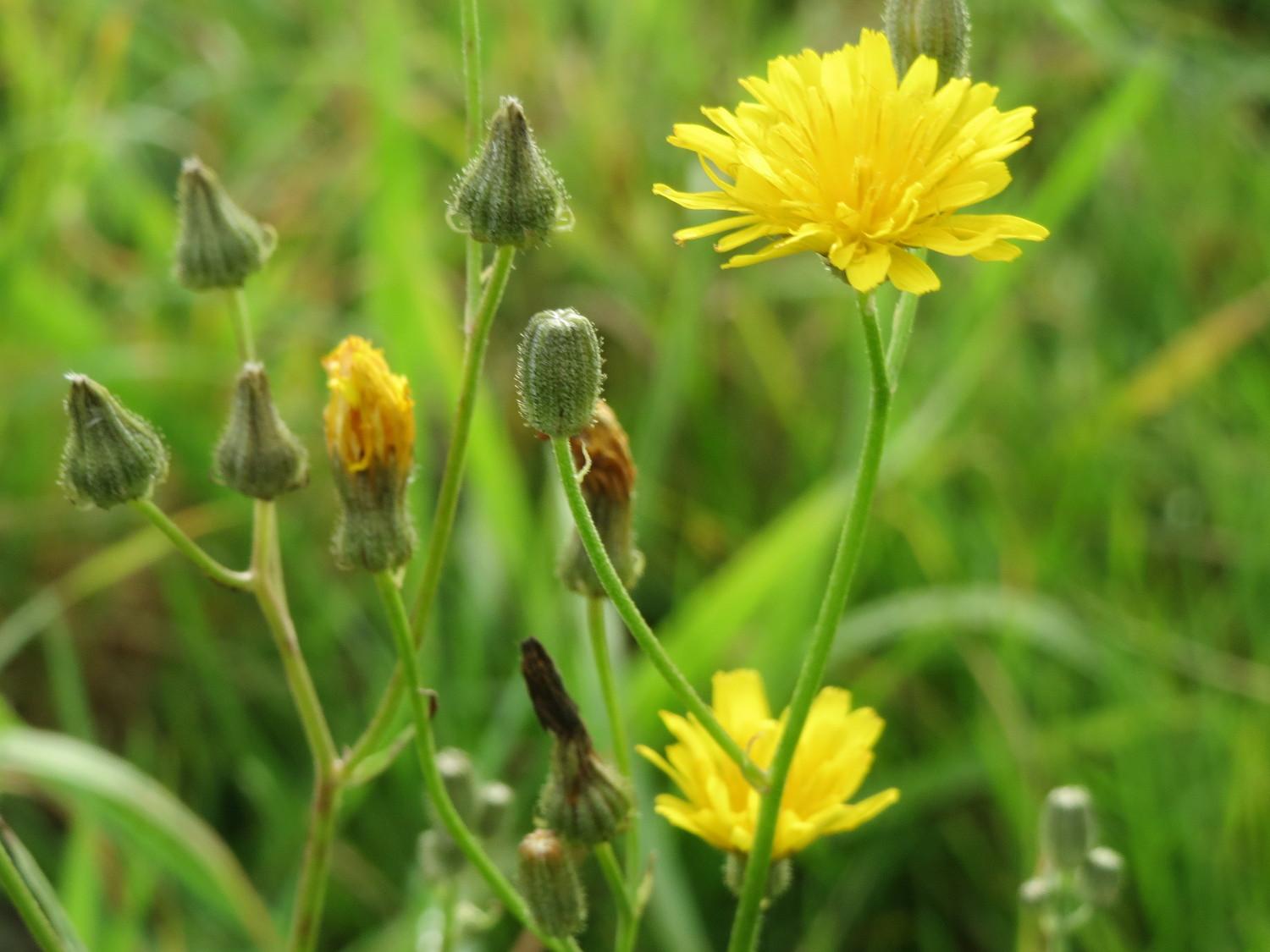
At first glance, the flower head can be mistaken for the flower itself. But it is a pseudanthium (“false flower”). This pseudanthium (“false flower”) is made up from numerous individual yellow ray florets.
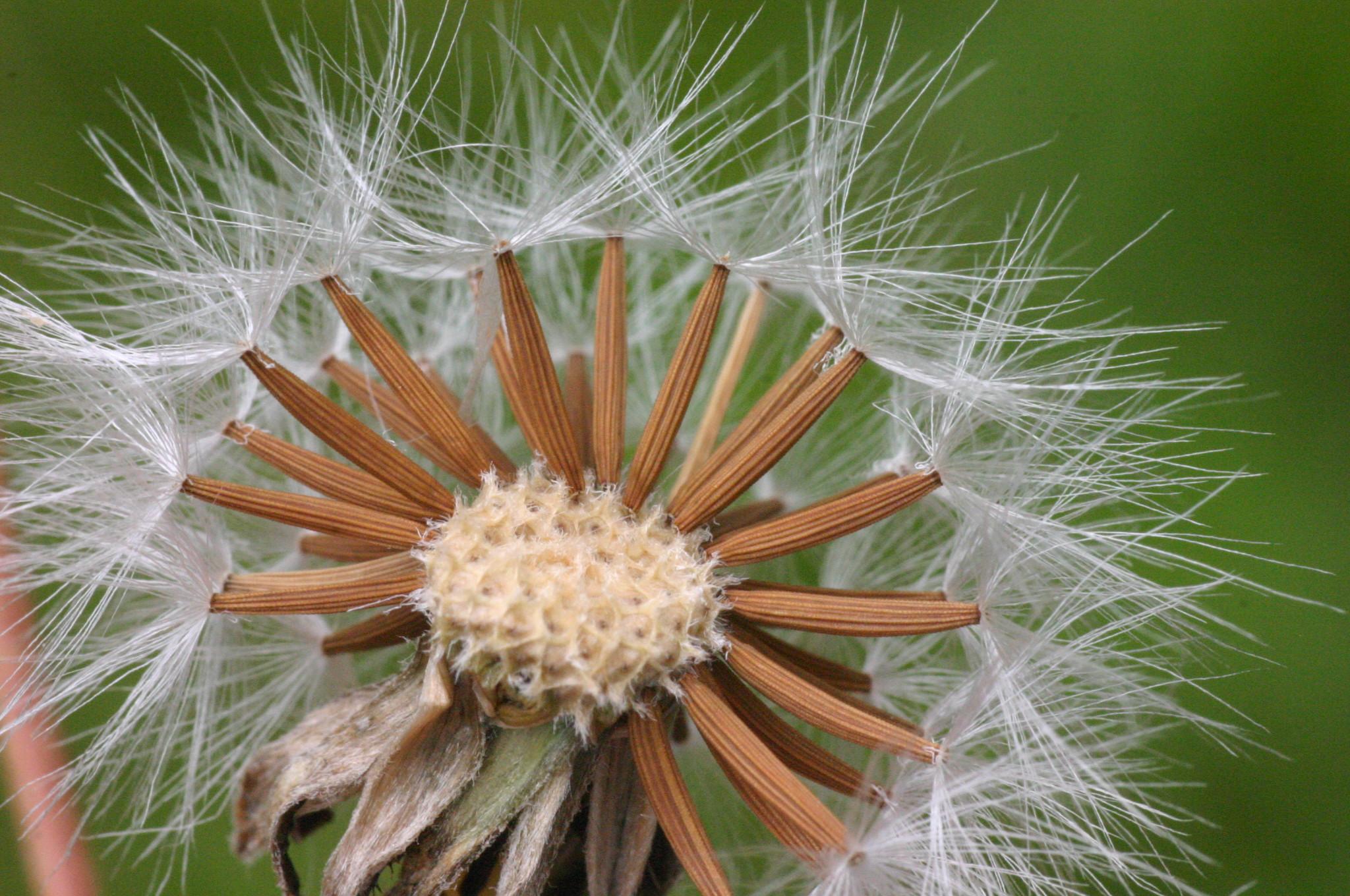
The seeds are small nut fruits with a ring of unbranched feathery hairs.
Features
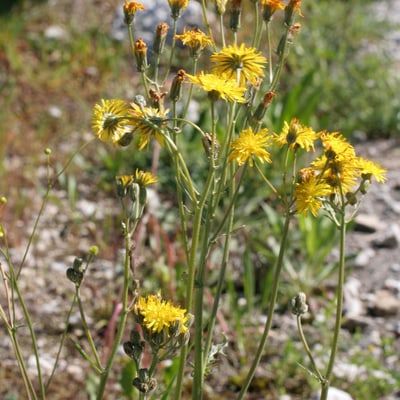
Rough hawksbeard
Crepis biennis
many yellow, branched flower baskets
milky sap
Similar species
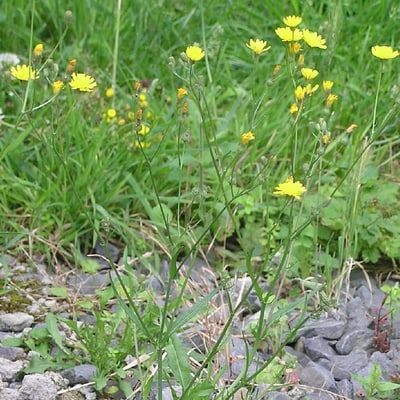
Smooth hawksbeard
Crepis capillaris
Common hawkweed
Hieracium lachenalii
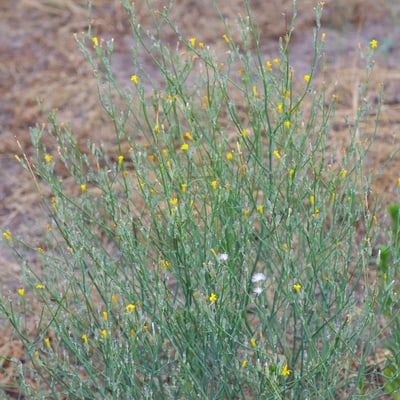
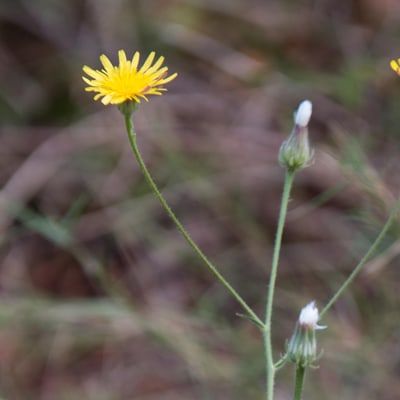
Rush skeletonweed
Chondrilla juncea
In the city
In an urban environment, rough hawksbeard can often be found in uncultivated land and along the verges of roads and paths.
Fun Facts
Rough hawksbeard does not tolerate grazing and disappears as soon as hay meadows are turned into animal pastures.
It can proliferate by self-pollination (autogamy) and develops fruits even without external pollination.
It flowers from May to June.
- Endangerment level Germany: not endangered
- Usage:
The fruits can be used as food for canaries.
Rough hawksbeard has most likely migrated to Central Europe from the grassy steppes of south-eastern Europe.
The leaves can be added to salad; they have a slightly bitter taste, but milder than dandelion.
Sources
Habitus, Enrico Blasutto, CC BY-SA 3.0, https://commons.wikimedia.org/wiki/File:Crepis_biennis_ENBLA02.JPG

Früchte, HermannSchachner, CC0, https://commons.wikimedia.org/wiki/File:Crepis_biennis_(Wiesen-Pippau)_IMG_9702.jpg
_IMG_9702.jpg)
Blütenstand, AnRo0002, CC0, https://commons.wikimedia.org/wiki/File:20141013Crepis_biennis1.jpg

Page „Wiesen-Pippau“. : Wikipedia, The Free Encyclopedia. Date of last revision: 08.07.2016, 21:16 UTC. URL: https://de.wikipedia.org/w/index.php?title=Wiesen-Pippau&oldid=155980655 (Accessed: 05.08.2016).
Fitter, R., Fitter, A. & Blamey, M. (1986) Pareys Blumenbuch. Wildblühende Pflanzen Deutschlands und Nordwesteuropas, London: Verlag Collins Publishers.
Lippert, W. & Podlech, D. (1993) GU Naturführer. Blumen: die wichtigen Blütenpflanzen Mitteleuropas erkennen und bestimmen, München: Gräfe und Unzer Verlag.
Schauer, T., Caspari, C. & Caspari, S. (2015) Der illustrierte BLV-Pflanzenführer für unterwegs. 1150 Blumen, Gräser, Bäume und Sträucher, München: BLV.
Weymar, H. (1988) Lernt Pflanzen kennen, Leipzig, Radebeul: Neumann Verlag.