
Short Description
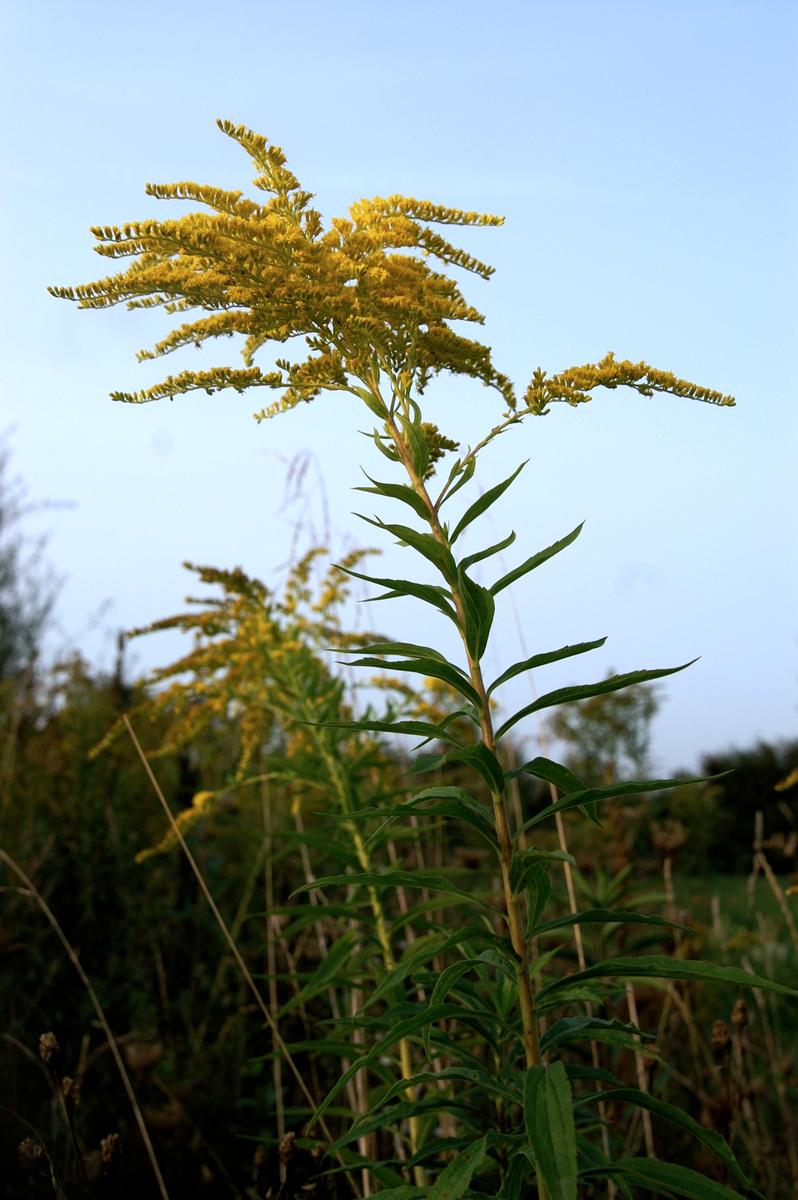
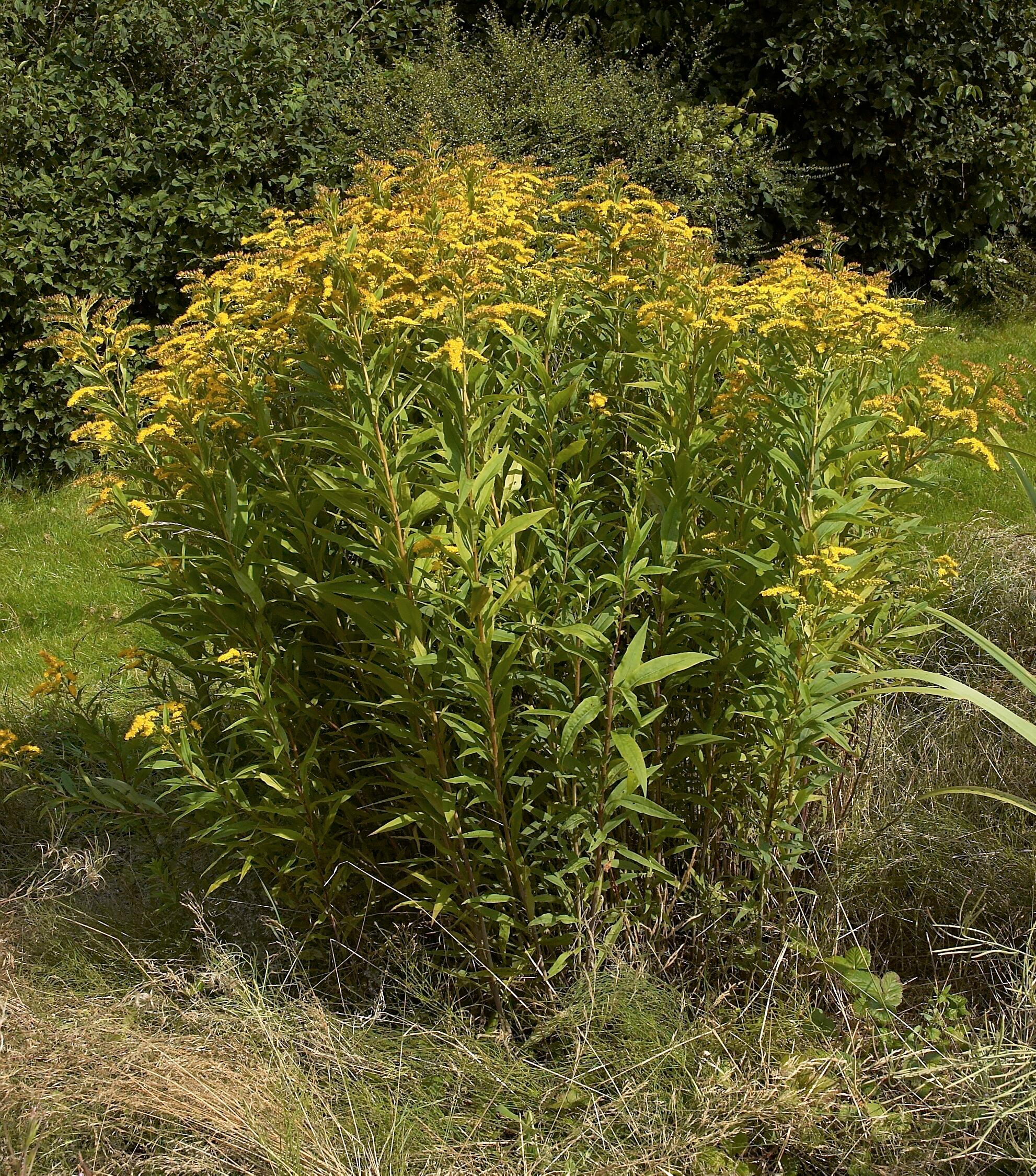
The giant goldenrod can grow up to two metres tall.
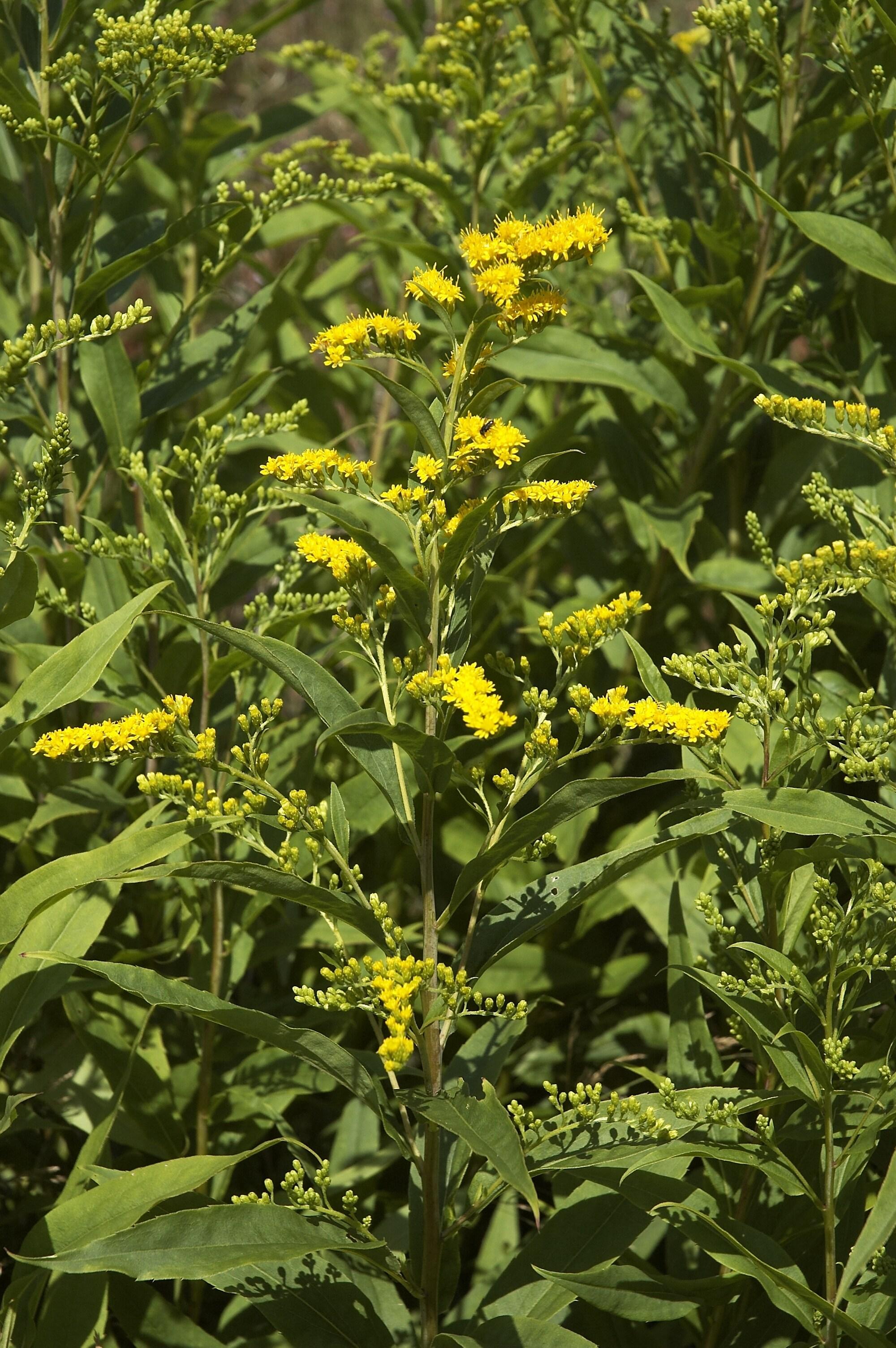
The leaves are elongated and narrow. The leaf margin is toothed.
The stem is erect, glabrous, densely leafy and only branched in the area of the inflorescence. It is often reddish.
The plant forms numerous, one-sided, kite-shaped inflorescences. They consist of many flower heads. At first glance, the flower heads can be mistaken for flowers. However, these false flowers consist of numerous individual yellow tubular and clearly longer ray florets.
The plant forms small, nut-like fruits with a white crown of hairs.
Features
Giant goldenrod
Solidago gigantea
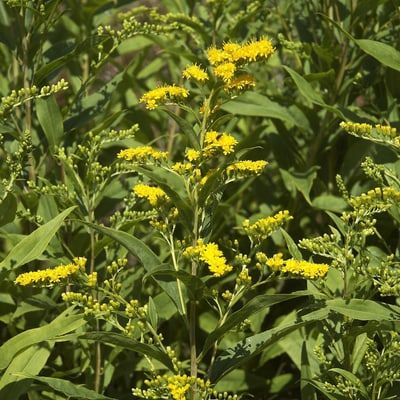
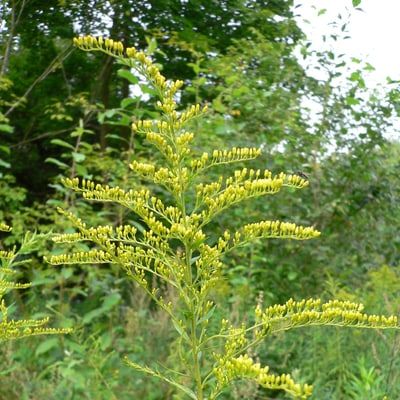
large, expanding inflorescences
glabrous stem
In the city
Giant goldenrod prefers moist, nitrogenous clay soil. In the city, it is found in riparian bushes, meadows, forest clearings, wasteland and on embankments.
Even short stolons are enough to develop a new plant. It also forms very dense stands and thus suppresses the emergence of other plant species. It is very difficult to control and requires regular mowing over several years as well as the disposal of the plant parts in the household waste and not in the compost.
Fun Facts
Up to 15,000 fruits are produced per infructescence.
The flowering period is from August to October.
It lives for several years and generally flowers and fruits annually (perennial plant).
Pollination is carried out by bees and bumblebees.
- Endangerment level Germany: not evaluated
- Usage:
The very young plants can be eaten cooked as a salad or like asparagus.
Giant goldenrod originates from North America and was introduced as an ornamental plant in the 18th century. It therefore belongs to the non-native plant species (neophytes).
The dried, flowering, above-ground parts of the plant are used as a tea drug. They have a diuretic, antispasmodic and anti-inflammatory effect.
Sources
Blütenstand, Benjamin Zwittnig, CC BY-SA 2.5 , https://commons.wikimedia.org/wiki/File:Solidago_gigantea_PID1756.jpg

Habitus, Wouter Hagens, PD, https://commons.wikimedia.org/wiki/File:Solidago_gigantea_C.jpg

Habitus, Wouter Hagens, PD, https://commons.wikimedia.org/wiki/File:Solidago_gigantea_A.jpg

Kammer, P. M. (2016) Pflanzen einfach bestimmen. Schritt für Schritt einheimische Arten kennenlernen, Bern: Haupt Verlag.
Page „Riesen-Goldrute“. : Wikipedia, The Free Encyclopedia. Date of last revision: 24.02.2018, 20:57 UTC. URL: https://de.wikipedia.org/w/index.php?title=Riesen-Goldrute&oldid=174358501 (Accessed: 04.09.2018).