
Short Description
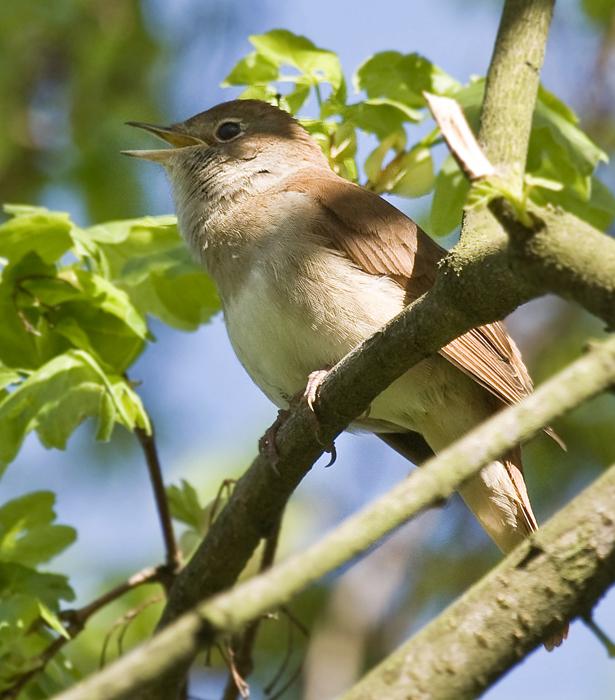
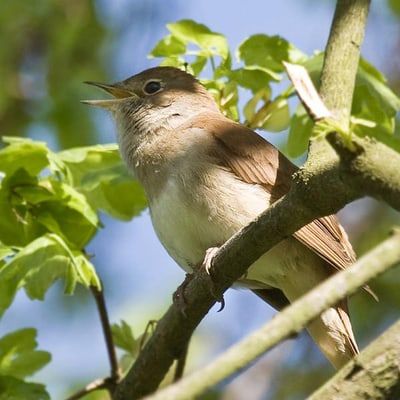
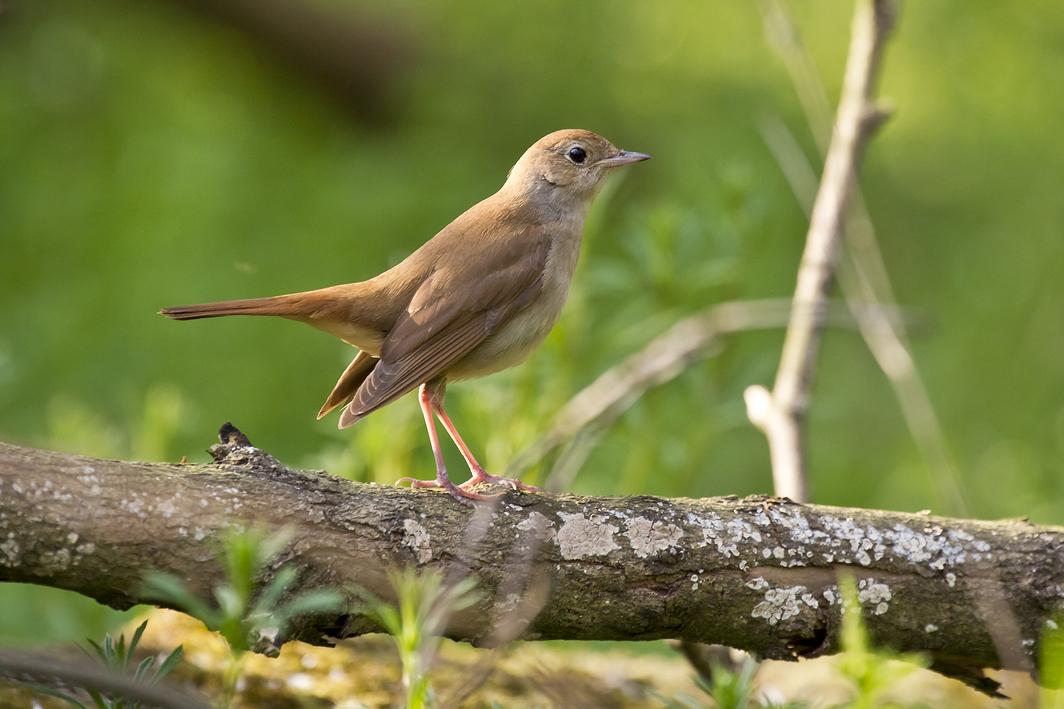
The nightingale is small, brown and rather inconspicuous. The plumage is reddish brown on the upper side of the body and light grey to brownish on the underside. The black eyes are white-rimmed. The bill and legs are yellowish pink. It can easily be recognised by its characteristic song.
Features
Nightingale
Luscinia megarhynchos
striking song
Gesang
Frommolt, CC BY-SA 3.0

Similar species
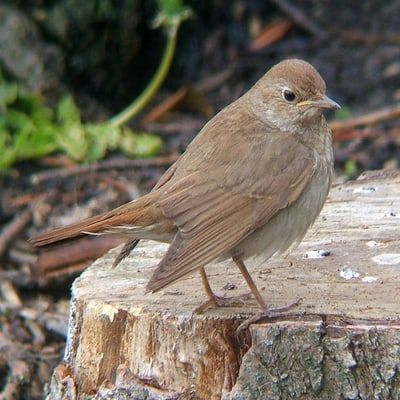
Thrush nightingale
Luscinia luscinia
In the city
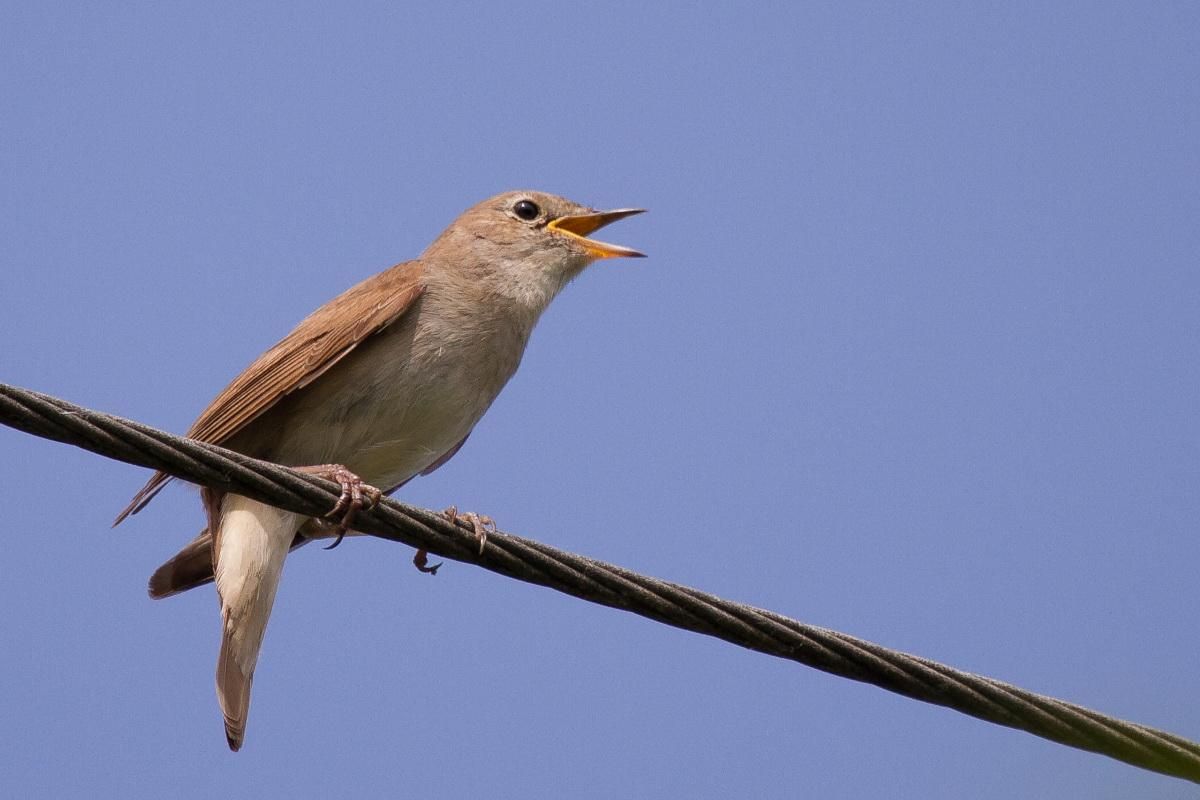
The nightingale is often found in the city. It prefers cemeteries, parks and gardens. However, it is becoming increasingly rare for it to find suitable breeding sites there, as the necessary dense undergrowth and the protective layer of fallen leaves are being removed by more intensive maintenance measures.
Fun Facts
Berlin is called the capital of nightingales.
Urban nightingales sing much louder than those living in forests. With more than 100dB, they can sing louder than the traffic on city roads. They can be heard particularly well around midnight.
Only the male birds sing. They first have to learn to sing and are therefore difficult to recognise as nightingales in the first year.
Nightingales can be observed from April to June. In folklore, they are considered harbingers of spring.
Nightingales are migratory birds and can be observed in Germany from April to August. At the end of August, they fly to Middle Africa, particularly Liberia and Sudan.
It feeds mainly on berries, insects, worms and spiders.
- Endangerment level Germany: not endangered
In the past, the nightingale's song was considered to alleviate pain and was supposed to bring a gentle death to the dying and a speedy recovery to the sick.
The quotation "it was the nightingale and not the lark" comes from Shakespeare's "Romeo and Juliet" and refers to the male's nocturnal singing activity between midnight and the early hours of the morning. It is therefore considered a love bird, especially in English poetry.
Sources
Habitus , J. Dietrich, derivative work: Bogbumper (talk), CC BY-SA 3.0, https://commons.wikimedia.org/wiki/File:Nachtigall_%28Luscinia_megarhynchos%29-2.jpg
-2.jpg)
Habitus , Frebeck, CC BY-SA 3.0, https://commons.wikimedia.org/wiki/File:Nachtigall_singend_Stromkabel.jpg

Habitus , Marcel Burkhardt, CC BY-SA 4.0, https://commons.wikimedia.org/wiki/File:Luscinia_megarhynchos_megarhynchos_-_Marcel_Burkhardt.jpg

Page „Nachtigall“. : Wikipedia, The Free Encyclopedia. Date of last revision: 11.07.2020, 09:03 UTC. URL: https://de.wikipedia.org/w/index.php?title=Nachtigall&oldid=201774783 (Accessed: 26.11.2020).
Bejcek, V. (1988): Zugvögel: S.150, Verlag Werner Dausien, Hanau/Main.
Witt, K. & Steiof, K. (2013) Rote Liste und Liste der Brutvögel von Berlin, 3. version, 15.11.2013. : Berliner Ornithologische Arbeitsgemeinschaft e.V. (eds.) Berliner Ornithologischer Bericht, volume 23, Berlin: Berliner Ornithologische Arbeitsgemeinschaft e.V., 1-23.
NABU – Naturschutzbund Deutschland e.V. (2016) Rote Liste der Brutvögel Deutschlands. 5. version, published August 2016, URL: https://www.nabu.de/tiere-und-pflanzen/voegel/artenschutz/rote-listen/10221.html (Accessed: 07.04.2017).