
Short Description
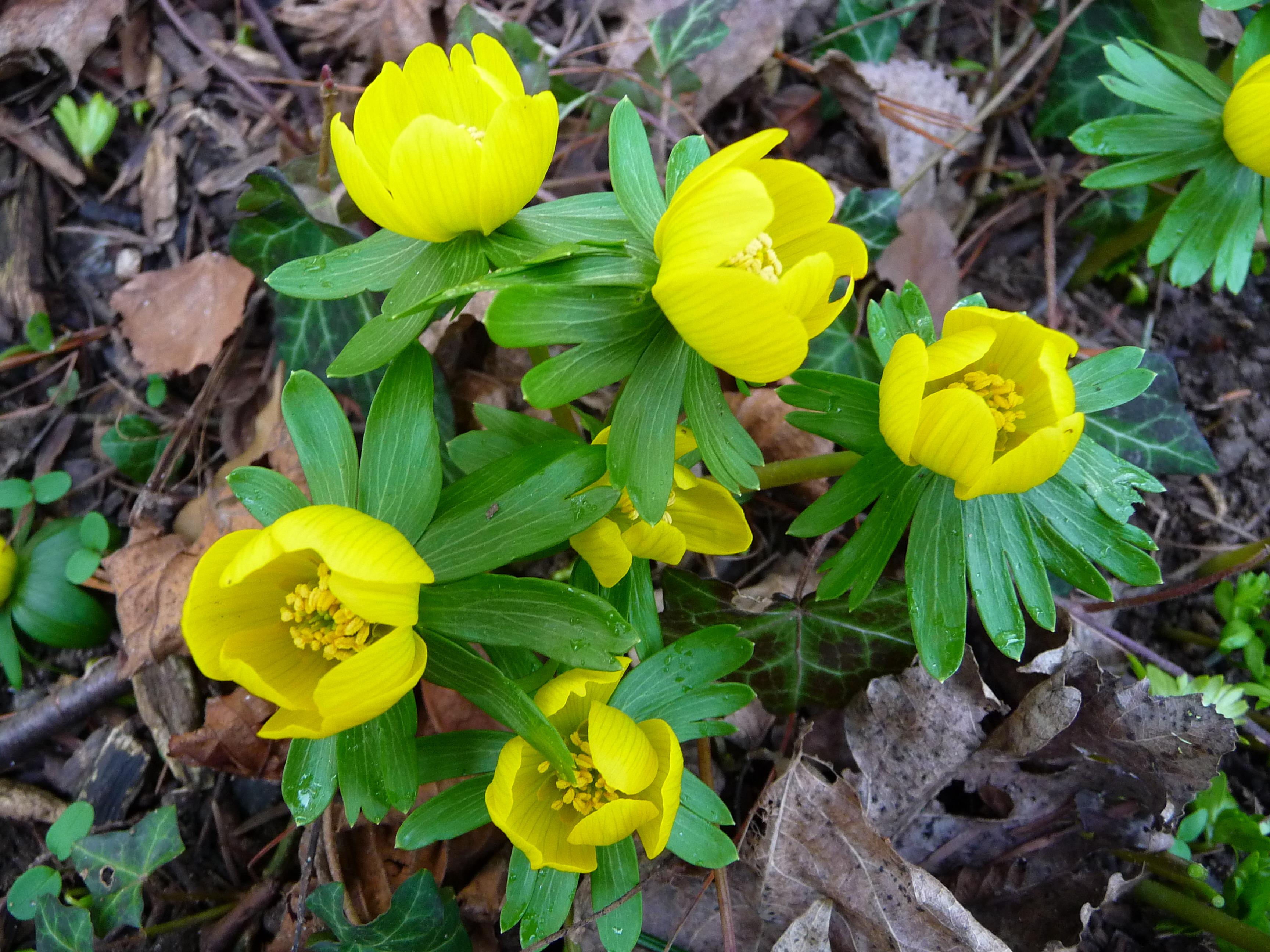
The winter aconite can grow up to 20 cm tall.
The leaves are rounded and deeply incised. They seem to come directly out of the soil. In addition, three stem leaves sit directly under the flower, forming a false whorl.
The stem grows erect and unbranched. It is solid and, apart from the three stem leaves, has no other leaves.
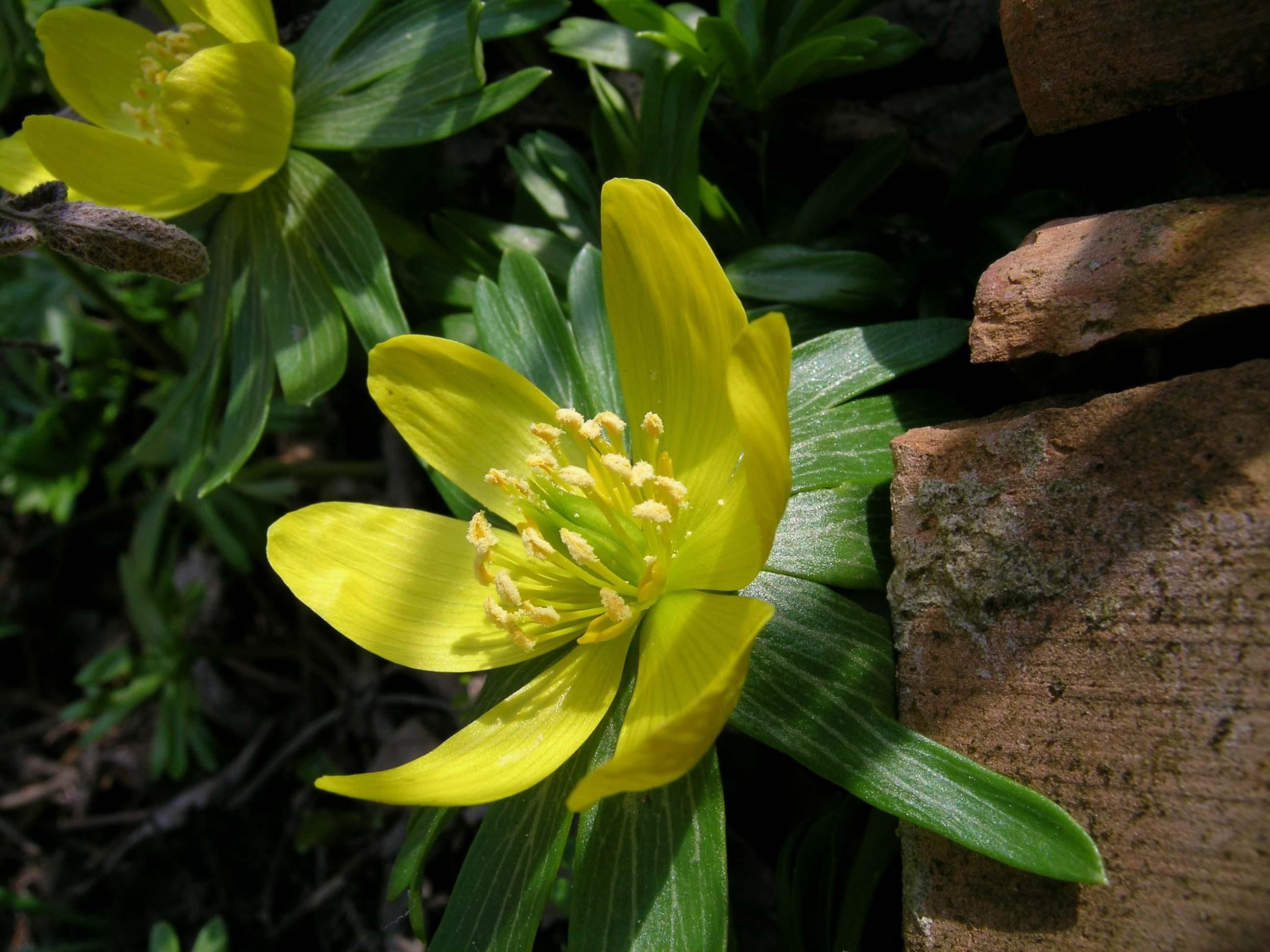
The flower usually has six yellow petals. It sits singly at the end of the stem.
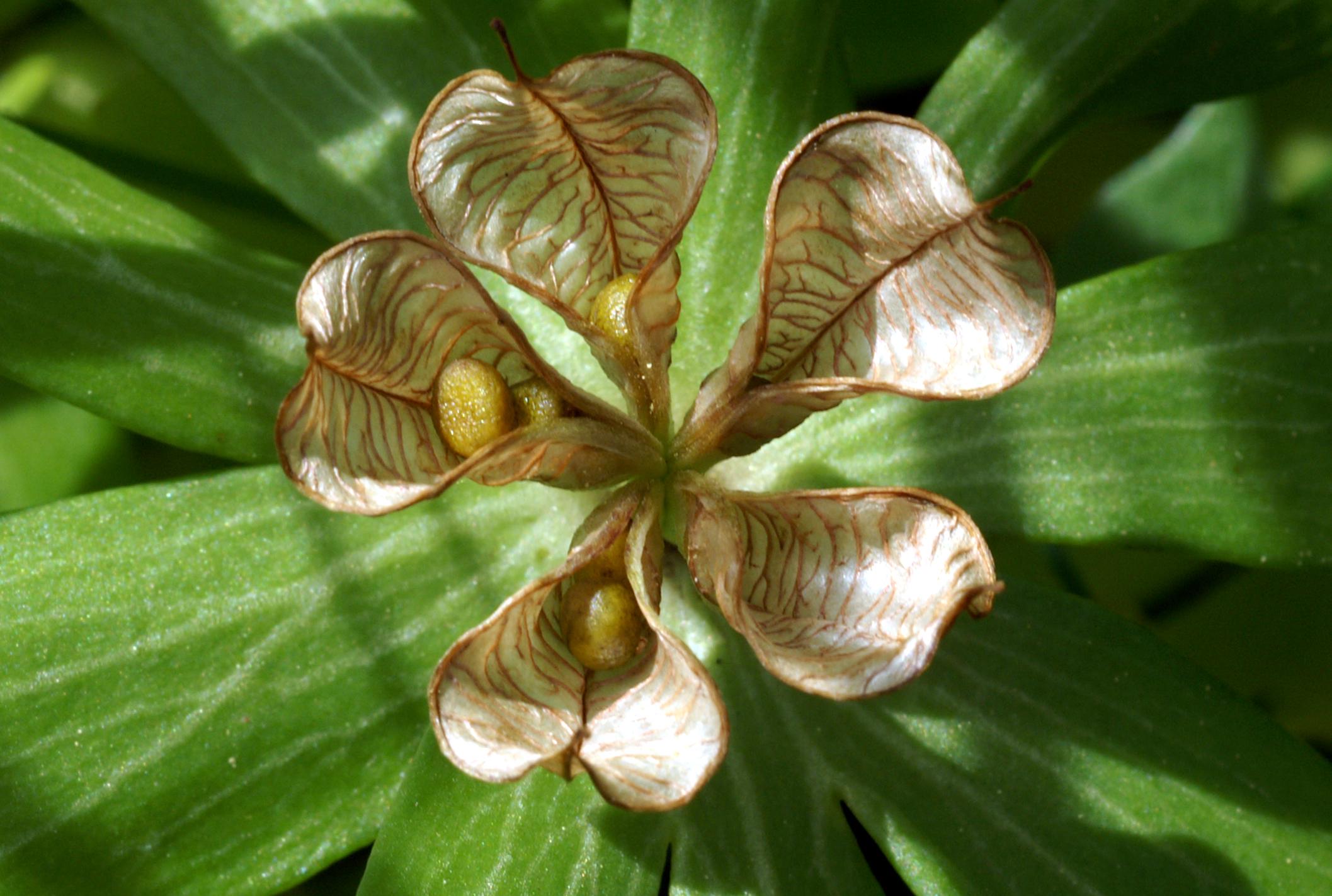
The plant forms several bellows fruits per flower, which open on the upper side.
Features
Winter aconite
Eranthis hyemalis
poisonous
flowers already in February
In the city
It thrives best in nutrient-rich, loose loamy soils in partial shade. It is a popular garden and park plant and occasionally runs wild in favourable conditions. It grows wild in vineyards, orchards and under bushes.
Fun Facts
The flowers open during the day and in good weather and close at night and in bad weather. This movement causes the petals to grow in length.
The flowers attract pollinators such as flies and bees. But only the latter have a long enough proboscis to reach the nectar.
The flowering period is from February to April. It lasts only one week.
It lives for several years and generally flowers and fruits annually (perennial plant).
- Endangerment level Germany: not evaluated
In Germany, it has been used as a garden plant since the 16th century. It belongs to the non-native plants (neophytes).
The entire plant is poisonous.
Sources
Habitus, 3268zauber, CC BY-SA 3.0, https://commons.wikimedia.org/wiki/File:Winterling_halb_ge%C3%B6ffnet.JPG

Blüte, gaucho, CC BY-SA 3.0, https://commons.wikimedia.org/wiki/File:Winterling-Bluete-70.jpg

Balgfrucht, Rüdiger Kratz, CC BY-SA 3.0, https://commons.wikimedia.org/wiki/File:Eranthis-hyemalis_028a.jpg

Seitz, B., Ristow, M., Meißner, J., Machatzi, B. & Sukopp, H. (2018) Rote Liste und Gesamtartenliste der etablierten Farn- und Blütenpflanzen von Berlin. : Der Landesbeauftragte für Naturschutz und Landschaftspflege / Senatsverwaltung für Umwelt, Klima und Verkehr (eds.) Rote Listen der gefährdeten Pflanzen, Pilze und Tiere von Berlin, URL: https://www.berlin.de/sen/uvk/natur-und-gruen/naturschutz/artenschutz/artenlisten-rote-listen/farn-und-bluetenpflanzen/ (Accessed: 26.03.2021).
Spohn, M., Golte-Bechtle, M. & Spohn, R. (2015) Was blüht denn da? Stuttgart: Franckh Kosmos Verlag.
Page „Winterling“. : Wikipedia, The Free Encyclopedia. Date of last revision: 02.05.2018, 20:26 UTC. URL: https://de.wikipedia.org/w/index.php?title=Winterling&oldid=177092825 (Accessed: 24.07.2018).