
Short Description
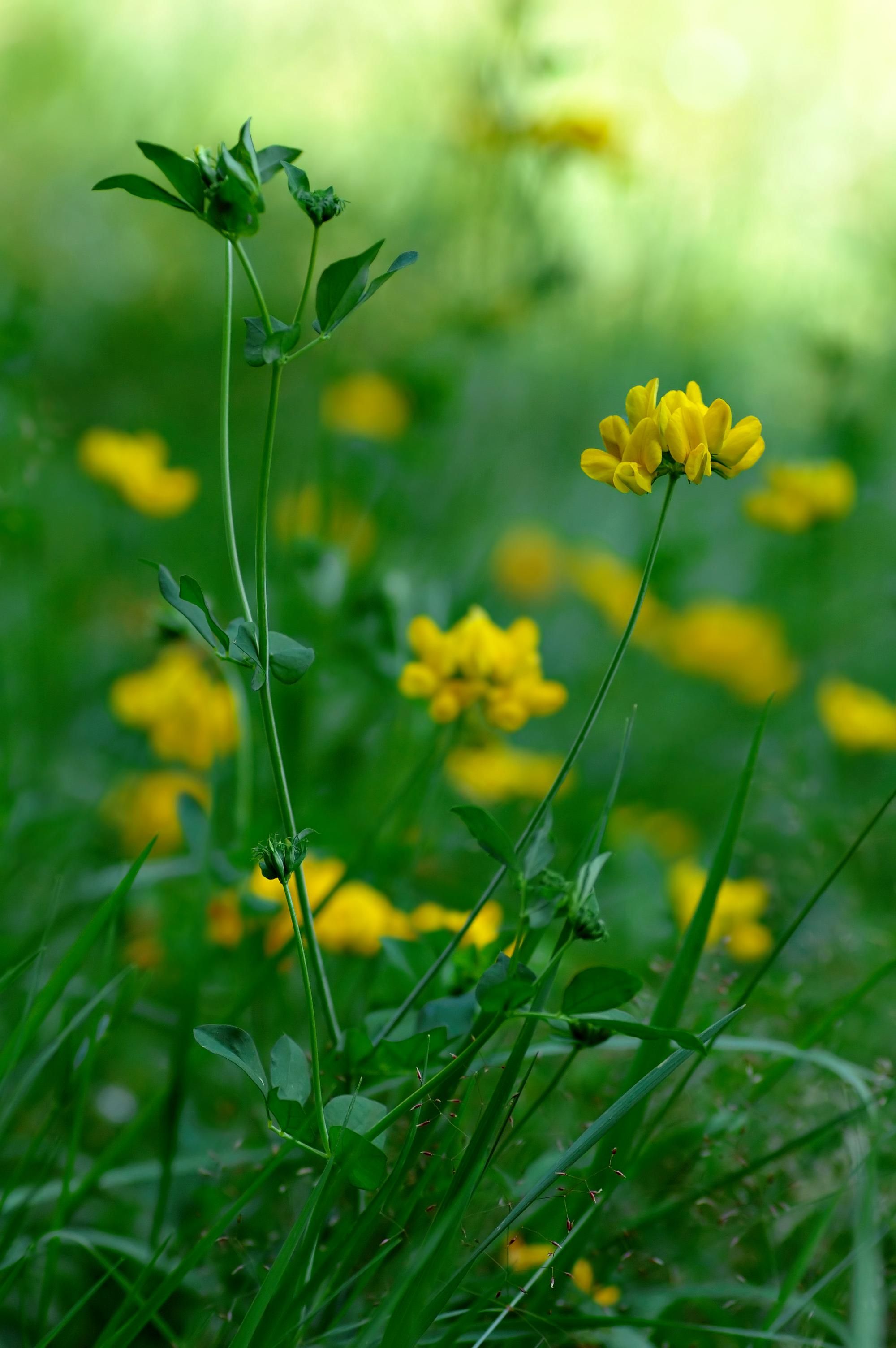
The greater bird's-foot-trefoil can grow up to 90 cm high.
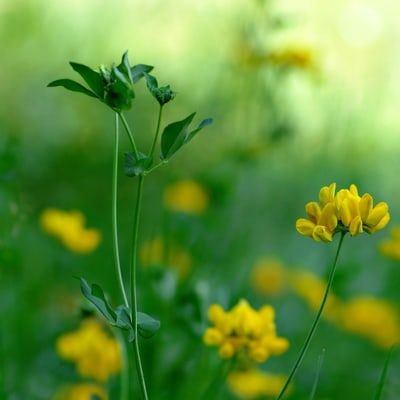
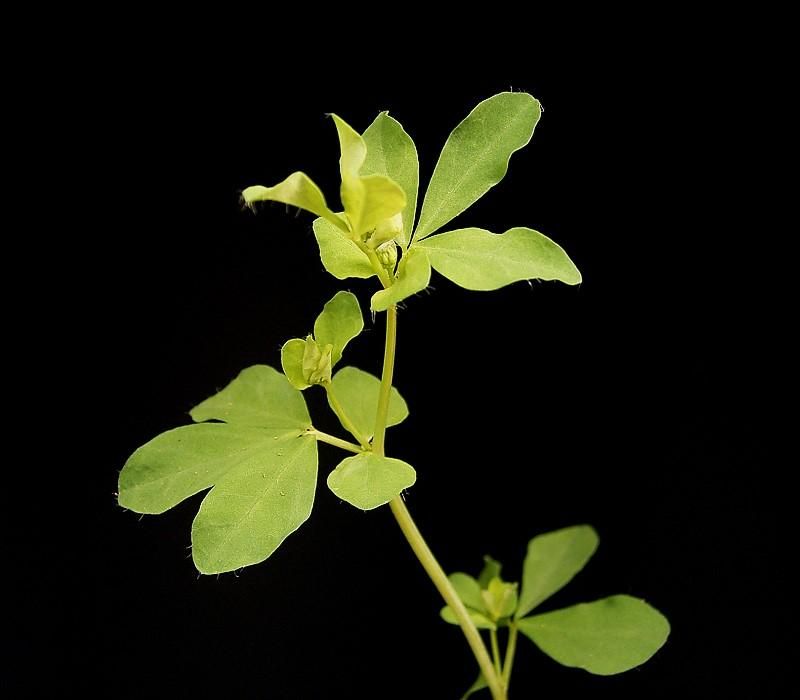
The leaves consist of five leaflets. The lower two leaflets are directly on the stem. The leaves are ovate, ciliated at the edge and bluish green on the underside.
The stem grows upright. It is round and hollow.
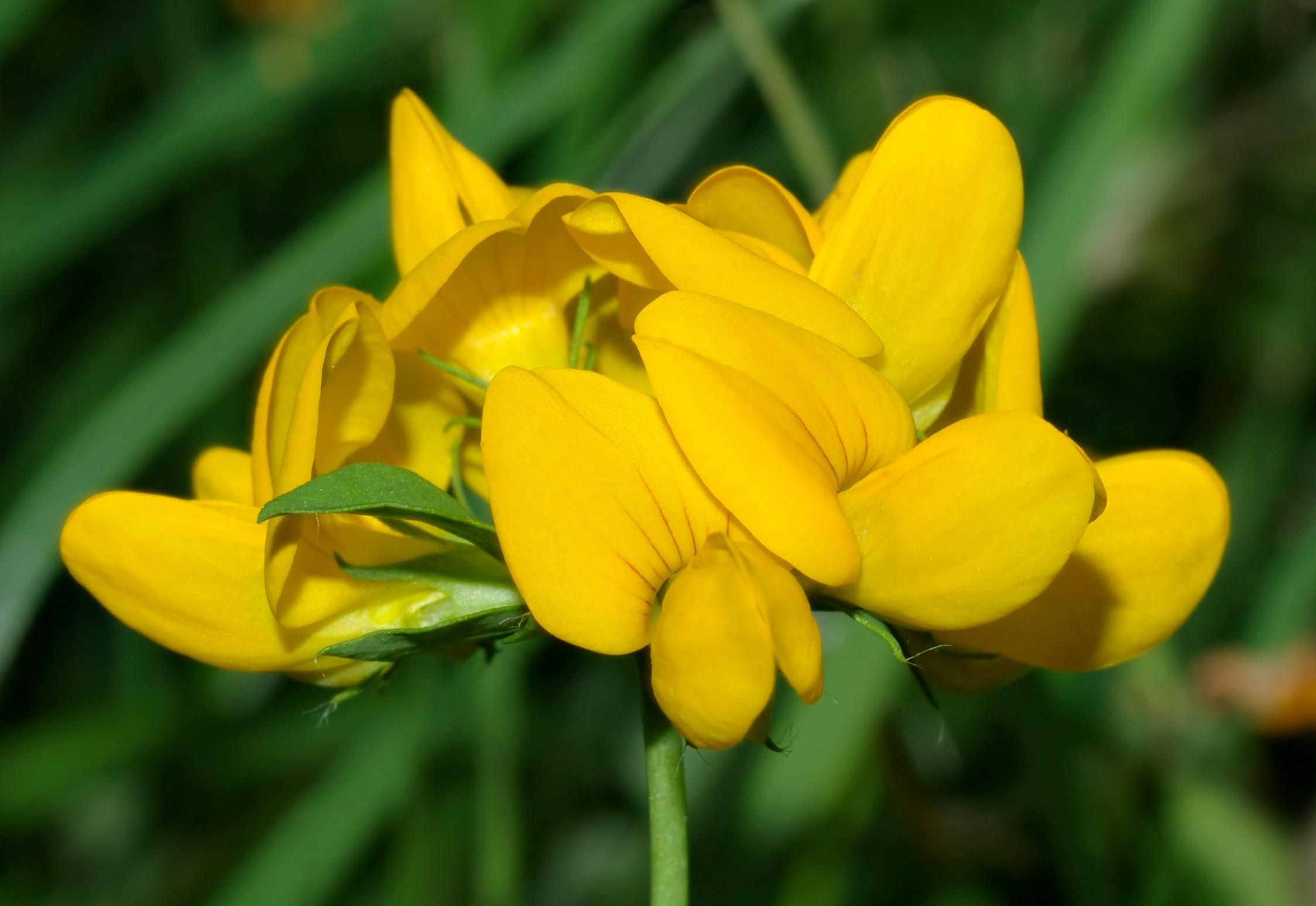
The flowers are bright yellow and stand in an umbellate inflorescence, i.e. the individual flowers arise from one point and stand at one level. It consists of five petals. The large upper petal protrudes upwards. The two lower petals form a hollow boat that surrounds the anthers and pistil.
The fruit is a glabrous legume and contains numerous seeds.
Features
Greater bird's-foot-trefoil
Lotus pedunculatus
hollow stem
fimbriated leaf margin
Similar species
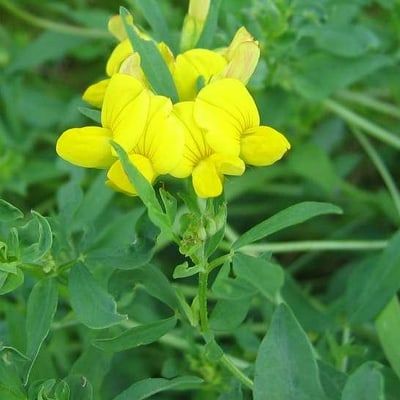
Bird's-foot trefoil
Lotus corniculatus
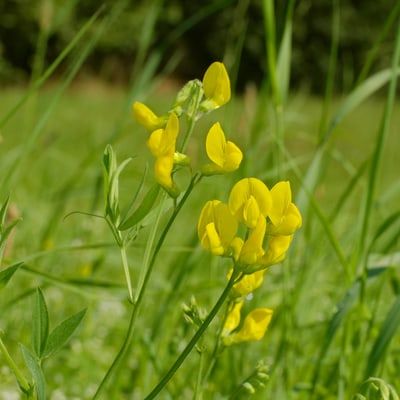
Meadow vetchling
Lathyrus pratensis
In the city
It prefers wet, nutrient-rich sites. In the city, it therefore often grows in wet meadows and pastures, on ditches and banks and on damp forest edges. It indicates nitrogen richness.
Fun Facts
The hollow stem ensures sufficient aeration of the plant in wet locations.
In warm weather, the legumes pop open and the seeds they contain are flung up to two metres.
Living together with Rhizobiaceae is typical for the legume family. The bacteria supply the plant with nitrogen. Since the bacteria need a plant for nitrogen fixation, this coexistence has a positive effect on both species (symbiosis).
The flowering period is from June to July.
It lives for several years and generally flowers and fruits annually (perennial plant).
- Endangerment level Germany: not endangered
It is native to Europe and North Africa.
Sources
Habitus, André Karwath, CC BY-SA 2.5, https://commons.wikimedia.org/wiki/File:Lotus_pedunculatus_-_one_plant_(aka).jpg
.jpg)
Blüten, André Karwath, CC BY-SA 2.5, https://commons.wikimedia.org/wiki/File:Lotus_pedunculatus_-_blossom_(aka).jpg
.jpg)
Blätter, Frank Vincentz, CC BY-SA 3.0, https://commons.wikimedia.org/wiki/File:Lotus_pedunculatus4_ies.jpg

Kammer, P. M. (2016) Pflanzen einfach bestimmen. Schritt für Schritt einheimische Arten kennenlernen, Bern: Haupt Verlag.
Spohn, M., Golte-Bechtle, M. & Spohn, R. (2015) Was blüht denn da? Stuttgart: Franckh Kosmos Verlag.
Page „Sumpf-Hornklee“. : Wikipedia, The Free Encyclopedia. Date of last revision: 14.03.2017, 20:54 UTC. URL: https://de.wikipedia.org/w/index.php?title=Sumpf-Hornklee&oldid=163588269 (Accessed: 15.03.2018).