
Short Description
The common daisy can grow to a height of 15 cm.
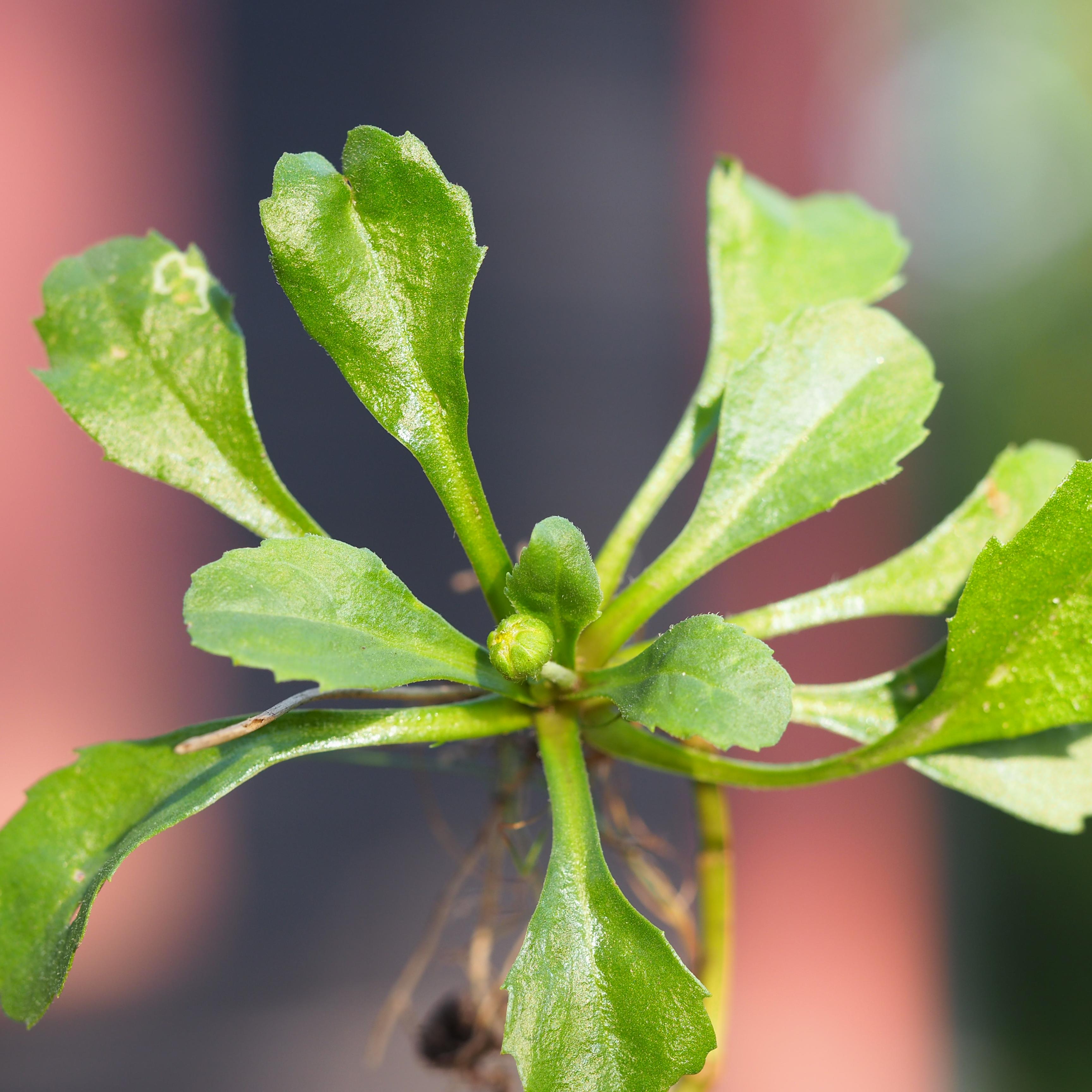
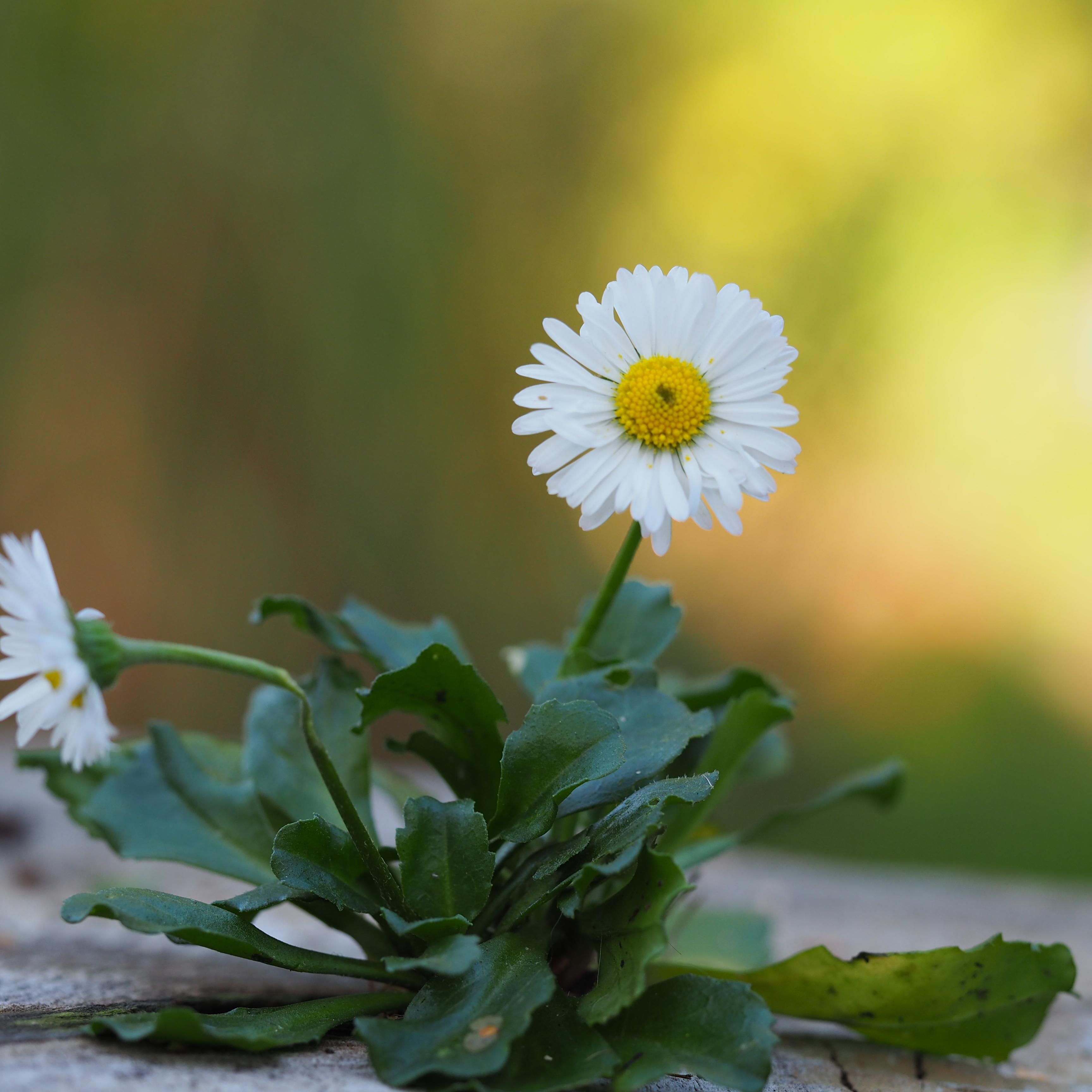
Its leaves are oval to rounded, bluntly serrated and sparsely haired. They have a stalk and grow close to the ground in a rosette.
The flower head stalk is leafless, finely haired and always carries one flower head.
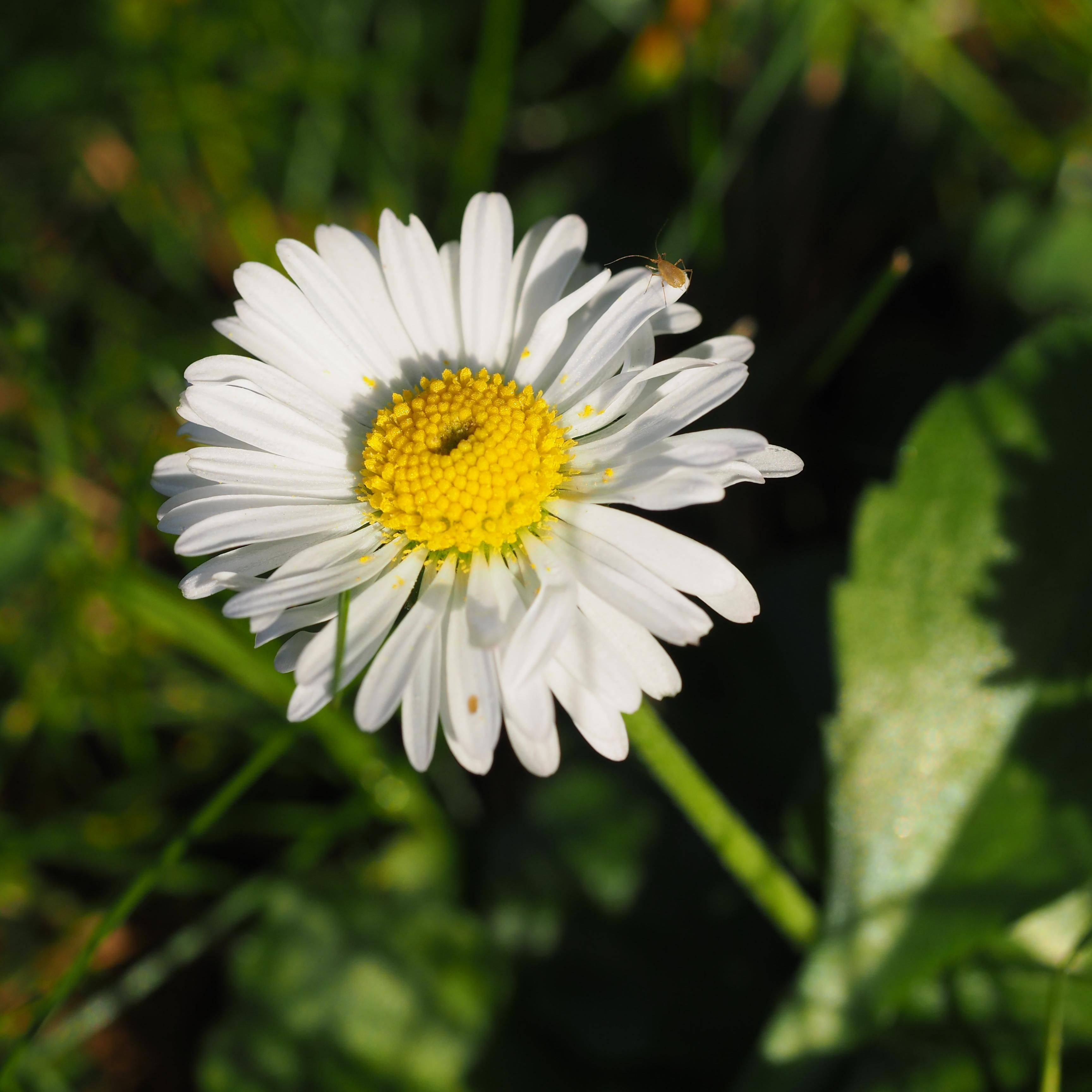
At first glance, the flower head can be mistaken for the flower itself. The pseudanthium (“false flower”) consists of numerous individual white or pink ray florets and yellow tubular florets.
The fruits are small nutlets.
Features
Common daisy
Bellis perennis
dense rosette of leaves
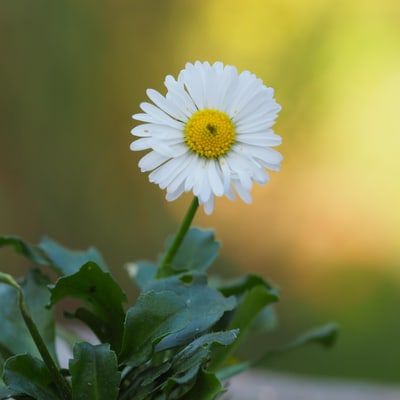
whitish-pink flower heads with a yellow centre
In the city
Daisies only began to spread in Europe with the development of meadows and pastures. In towns, it became more common with the cultivation of lawns in gardens and parks. It prefers nutrient-rich soils.
Daisies have spread to many areas of the world through contaminated grass seeds. Regular mowing encourages their growth.
Fun Facts
In folk medicine, daisies were used in the treatment of wounds, skin complaints and liver diseases.
Daisies used to be dedicated to the Nordic goddess Freya, the goddess of love and matrimony.
Filled varieties of daisy, ranging from white to dark red, are often sold as ornamental plants.
It flowers from March to November.
It is pollinated by insects (bees, bumble bees, hoverflies, flies). Its fruits are mainly spread by wind and rain. But animals (earthworms, grazing animals) also play a part.
It lives for several years and generally flowers and fruits annually (perennial plant).
- Endangerment level Germany: not endangered
- Usage:
Buds and half-opened flowers have a pleasantly nutty taste. Pickled buds are sometimes used in place of capers.
In Christianity, the daisy became the flower of Mary and is a symbol of imperishability.
In the 13th century daisies were a part of the coat of arms of the French King Louis IX.
Translated from Latin, the scientific name is composed of Bellis = beautiful and perennis = perennial.
Young leaves or flowers are edible and can be used in salads.
Sources
Blütenkorb, Alice Kracht, CC BY-SA 4.0, https://offene-naturfuehrer.de/web/Datei:Bellis_perennis_(8).JPG
.JPG)
Blattrosette, Alice Kracht, CC BY-SA 4.0, https://offene-naturfuehrer.de/web/Datei:Bellis_perennis_(17).JPG
.JPG)
Habitus, Alice Kracht, CC BY-SA 4.0, https://species-id.net/openmedia/File:Bellis_perennis_(11).JPG
.JPG)
Page „Gänseblümchen“. : Wikipedia, The Free Encyclopedia. Date of last revision: 23.06.2016, 16:24 UTC. URL: https://de.wikipedia.org/w/index.php?title=G%C3%A4nsebl%C3%BCmchen&oldid=155574742 (Accessed: 20.07.2016).
Fleischhauer, S. G., Guthmann, J. & Spiegelberger, R. (2007) Essbare Wildpflanzen. 200 Arten bestimmen und verwenden, Baden und München: AT Verlag.
Lippert, W. & Podlech, D. (1993) GU Naturführer. Blumen: die wichtigen Blütenpflanzen Mitteleuropas erkennen und bestimmen, München: Gräfe und Unzer Verlag.
Fitter, R., Fitter, A. & Blamey, M. (1986) Pareys Blumenbuch. Wildblühende Pflanzen Deutschlands und Nordwesteuropas, London: Verlag Collins Publishers.
Schauer, T., Caspari, C. & Caspari, S. (2015) Der illustrierte BLV-Pflanzenführer für unterwegs. 1150 Blumen, Gräser, Bäume und Sträucher, München: BLV.
Schönfelder, I. & Schönfelder, P. (2010) Der Kosmos-Heilpflanzenführer. Über 600 Heil- und Giftpflanzen Europas, Stuttgart: Franckh Kosmos Verlag.
Scherf, G. (2006) Wildpflanzen neu entdecken, München: BLV.
Bundesamt für Naturschutz (n.d.) Artensteckbriefe, URL: http://floraweb.de/pflanzenarten/artenhome.xsql?suchnr=814& (Accessed: 20.07.2016).