
Short Description
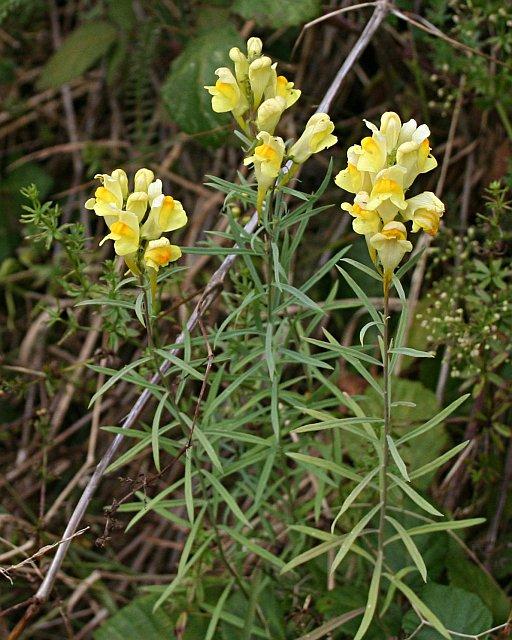
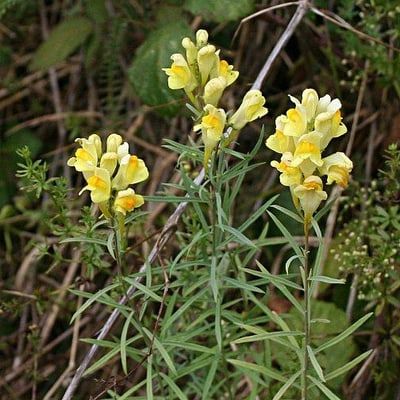
The common toadflax can grow up to 70 centimetres high.
The bluish-green leaves are elongated and narrow. They sit singly and alternately on the stem.
The stem grows erect and mostly unbranched. It can be somewhat branched at the base. It is thin and densely leafy.
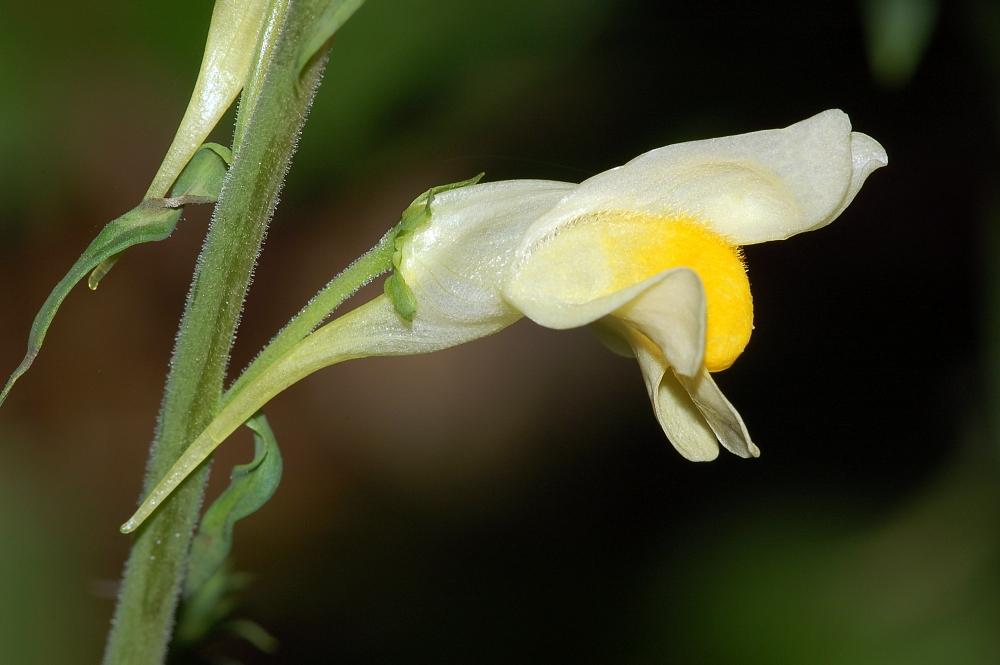
The corolla consists of two lips and a long, pointed bulge (spur). It is light yellow. The flower throat is closed by an orange-yellow "mask". The flowers are in dense inflorescences at the end of the stem.
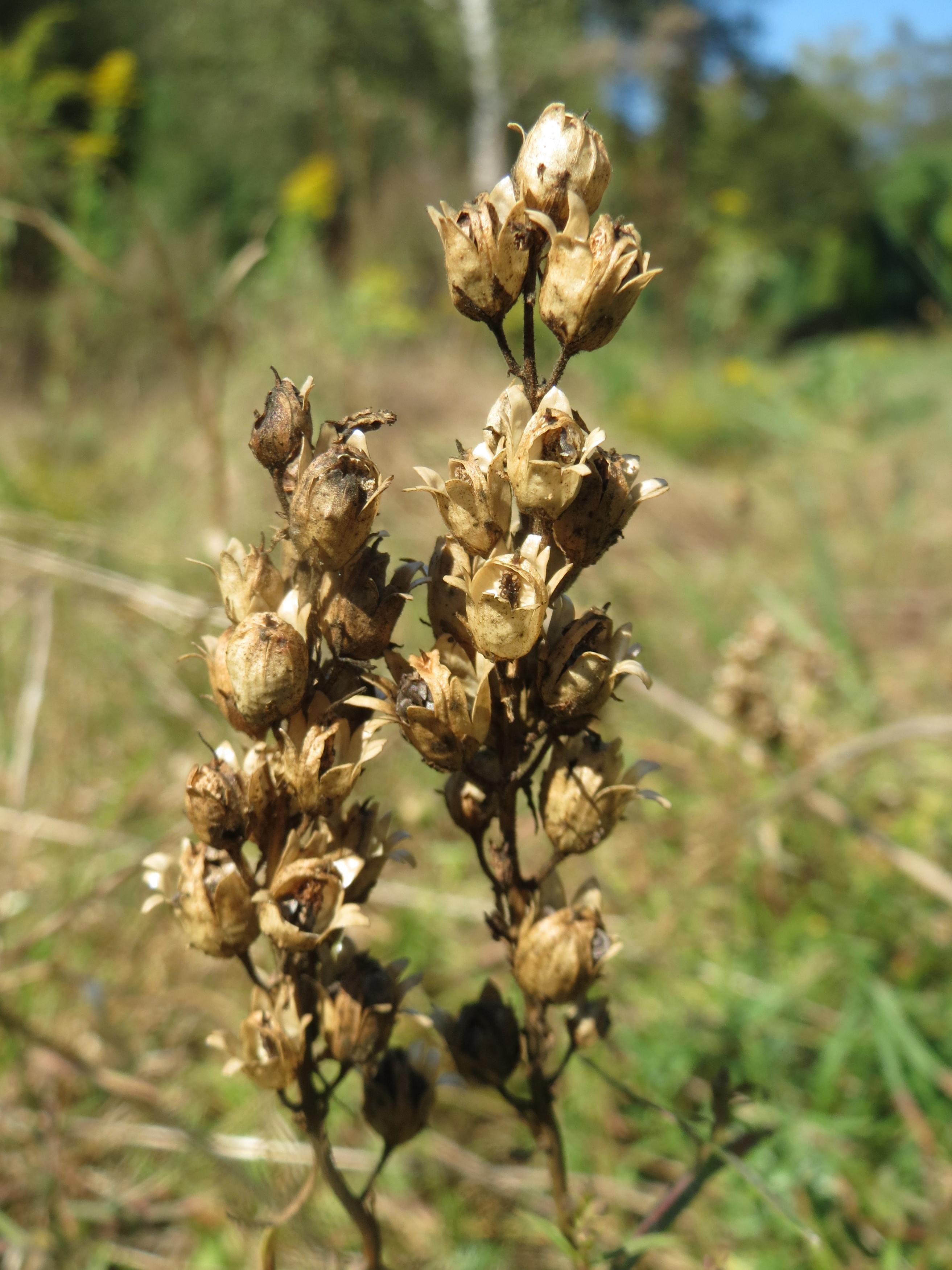
The fruits are ovoid capsules with small black seeds inside.
Features
Common toadflax
Linaria vulgaris
long spur on the flower
In the city
The common toadflax originally occurred near the coast. It prefers open, warm sites, which are more common in the city than in its natural environment. It is therefore very often found in human settlements. It is found on river gravels, railway embankments, fields, fallow land and roadsides.
Fun Facts
The "mask" imitates a large stamen and is intended to attract insects.
The flower is closed and can only be opened by powerful insects such as bumblebees and bees.
The flowering period is from June to October.
It lives for several years and generally flowers and fruits annually (perennial plant).
It produces up to 32,000 seeds per plant.
The seeds are spread by wind and rain, but also by ants.
- Endangerment level Germany: not endangered
The common toadflax is native to Central Europe.
The plant sap used to be regarded as a beauty remedy. Applied to the skin, it is said to lighten spots and freckles.
Sources
Habitus, Tony Atkin, CC-BY-SA 2.0, https://commons.wikimedia.org/wiki/File:Common_Toadflax_-_Linaria_vulgaris_-_geograph.org.uk_-_215978.jpg

Blüte, Fritz Geller-Grimm, CC BY-SA 2.5, https://commons.wikimedia.org/wiki/File:Linaria_vulgaris_fg01.jpg

Fruchtstand, AnRo0002, CC0 1.0, https://commons.wikimedia.org/wiki/File:20160925Linaria_vulgaris3.jpg

Kammer, P. M. (2016) Pflanzen einfach bestimmen. Schritt für Schritt einheimische Arten kennenlernen, Bern: Haupt Verlag.
Spohn, M., Golte-Bechtle, M. & Spohn, R. (2015) Was blüht denn da? Stuttgart: Franckh Kosmos Verlag.
Page „Echtes Leinkraut“. : Wikipedia, The Free Encyclopedia. Date of last revision: 24.02.2018, 22:02 UTC. URL: https://de.wikipedia.org/w/index.php?title=Echtes_Leinkraut&oldid=174360433 (Accessed: 13.03.2018).
Bundesamt für Naturschutz (n.d.) Artensteckbriefe, URL: http://floraweb.de/pflanzenarten/artenhome.xsql?suchnr=3433& (Accessed: 13.03.2018).