
Short Description
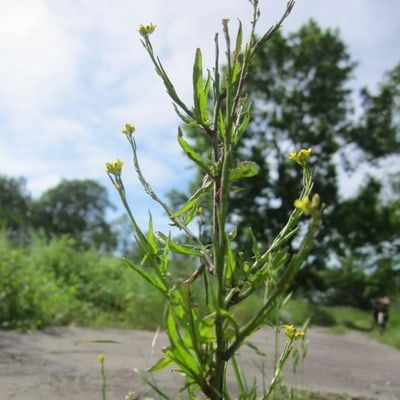
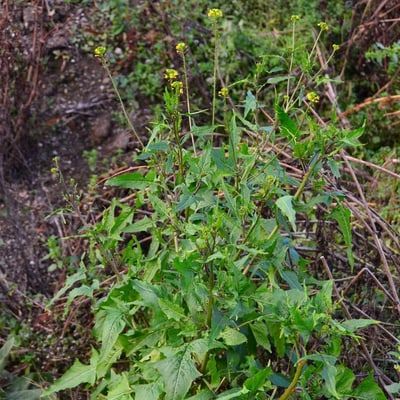
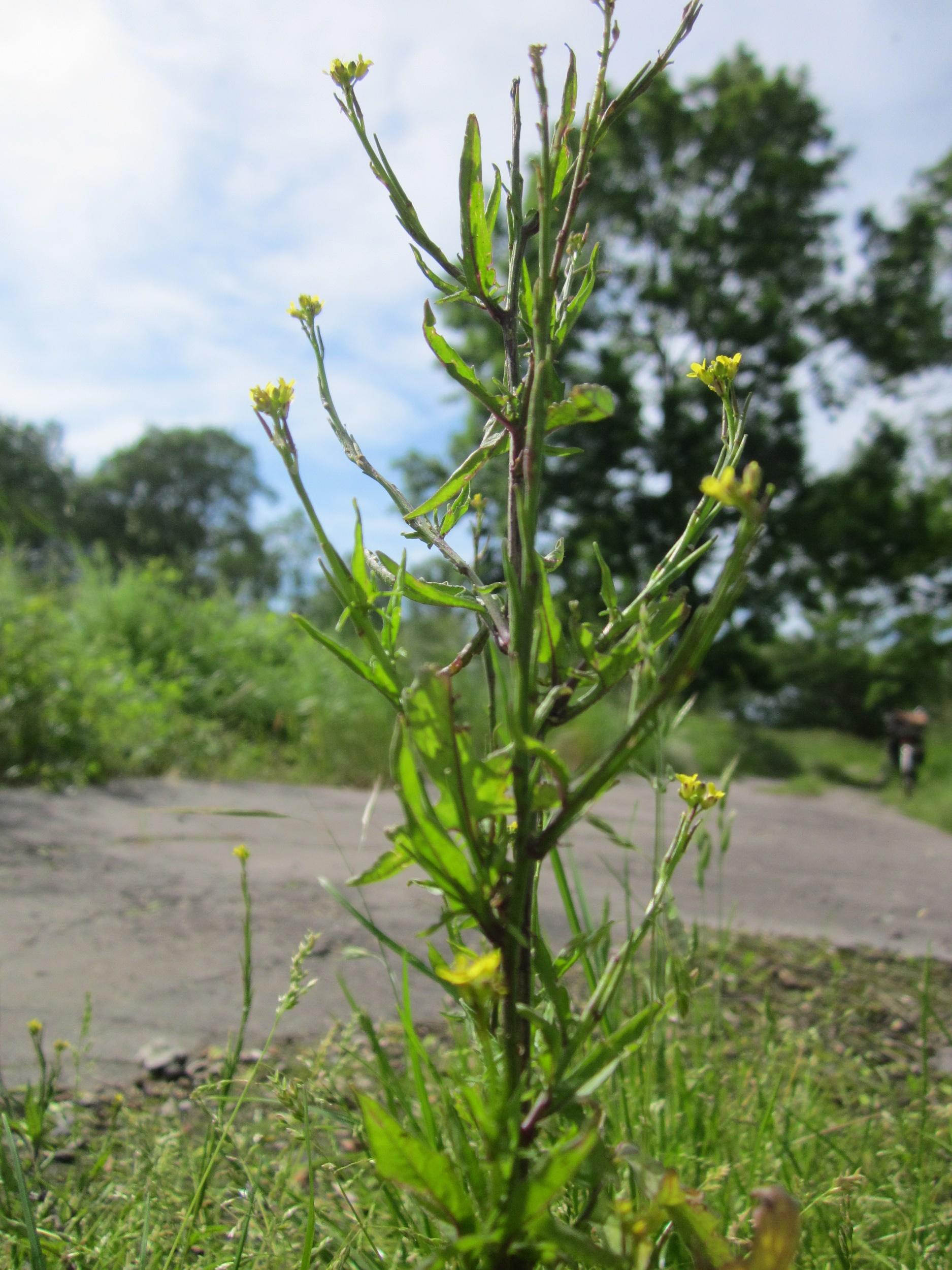
Hedge mustard can grow to a height of 70 cm.
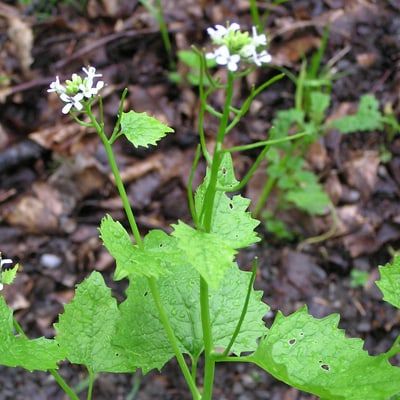
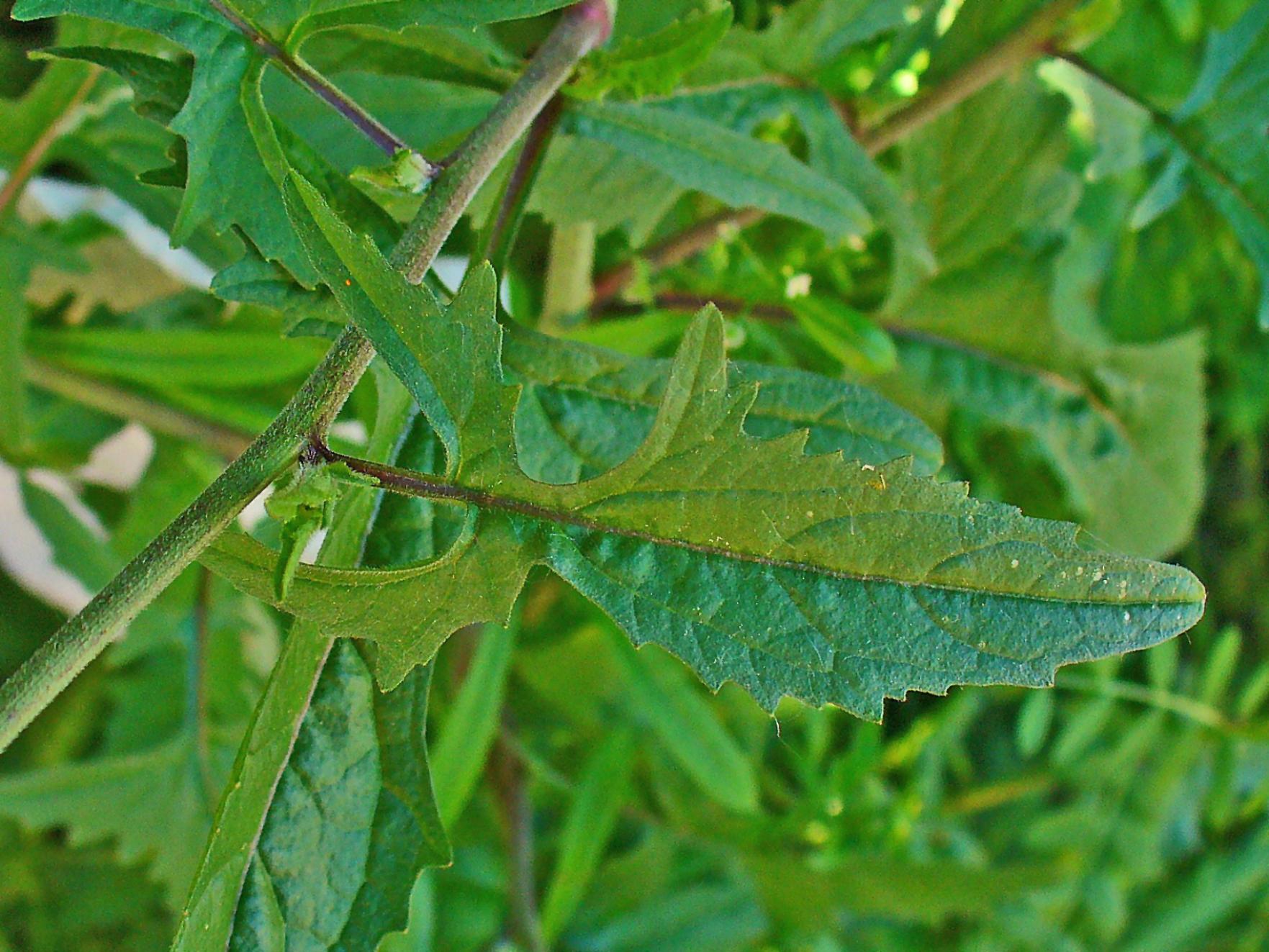
The leaves are deeply lobed almost to the central axis (pinnatisect). They grow alternately on the stem.
The stem is upright and with lateral branches, almost at right angles. It is coarsely haired with downward pointing hairs.
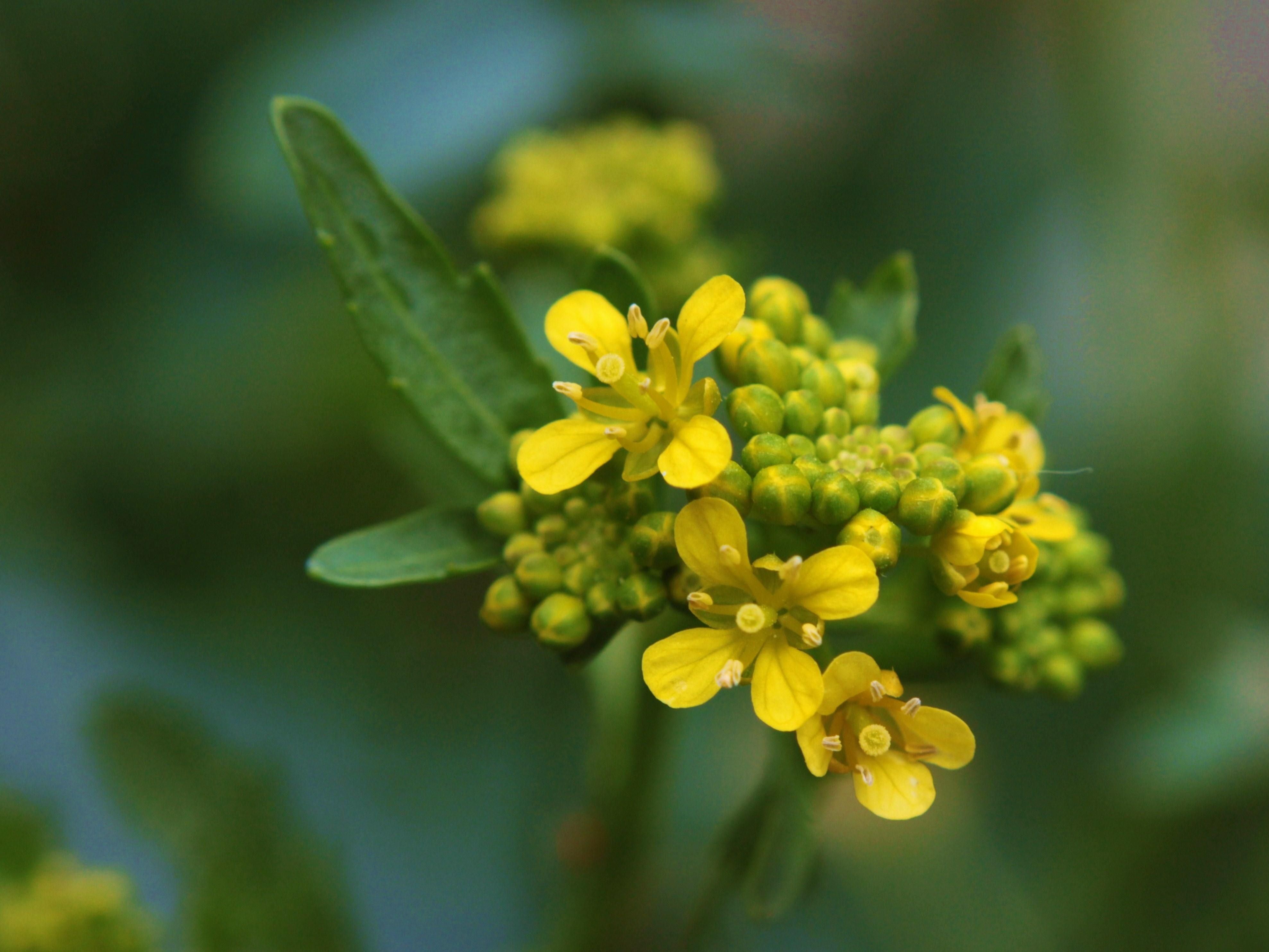
The flowers are clustered at the end of a botryoidal (shaped like a bunch of grapes) flower head. They are yellow with four petals. At the centre of each flower are four long and two shorter stamens.
The fruits are small pods that grow closely pressed to the stalk below the flowers.
Features
Hedge mustard
Sisymbrium officinale
poisonous
yellow flowers with four petals
fruits close to the stem
In the city
In an urban environment, hedge mustard can frequently be found along paths, in uncultivated land, dams and close to water. It is well adapted to high nutrient content of urban soils. It prefers fresh to moderately dry and warm sites with nutrient-rich soil. It is frequently seen as an unwelcome garden weed.
Fun Facts
In folk medicine, an infusion (tea) of hedge mustard is used as a remedy for hoarseness.
Hedge mustard belongs to the same family of plants as mustard and cabbage. It contains mustard oil glycosides that are common in the cruciferous plants.
It flowers from May to August.
It is an annual plant. This means that the plant dies after the seeds have ripened.
- Endangerment level Germany: not endangered
The young leaves and seeds were formerly used as flavouring and are said to taste similar to mustard. However, the entire plant is now considered poisonous so that only ingestion in very small doses is rated harmless.
Sources
Blüten, Dermorgendanach, CC-BY-SA 4.0, https://commons.wikimedia.org/wiki/File:Sisymbrium_officinale.JPG

Laubblatt, H. Zell, CC BY-SA 3.0, https://commons.wikimedia.org/wiki/File:Sisymbrium_officinale_002.JPG

Habitus, AnRo0002, CC0, https://commons.wikimedia.org/wiki/File:20130602Wegrauke_Alte_Landstrasse1.jpg

Eggenberg, S. & Möhl, A. (2007) Flora Vegetativa: Ein Bestimmungsbuch für Pflanzen der Schweiz im blütenlosen Zustand, Bern, Stuttgart, Wien: Haupt Verlag.
Spohn, M., Golte-Bechtle, M. & Spohn, R. (2015) Was blüht denn da? Stuttgart: Franckh Kosmos Verlag.
Jäger, E. J. (2011) Rothmaler - Exkursionsflora von Deutschland. Gefäßpflanzen: Grundband, Heidelberg: Spektrum Akademischer Verlag.
Kammer, P. M. (2016) Pflanzen einfach bestimmen. Schritt für Schritt einheimische Arten kennenlernen, Bern: Haupt Verlag.
Lippert, W. & Podlech, D. (1993) GU Naturführer. Blumen: die wichtigen Blütenpflanzen Mitteleuropas erkennen und bestimmen, München: Gräfe und Unzer Verlag.
Schauer, T., Caspari, C. & Caspari, S. (2015) Der illustrierte BLV-Pflanzenführer für unterwegs. 1150 Blumen, Gräser, Bäume und Sträucher, München: BLV.
Page „Weg-Rauke“. : Wikipedia, The Free Encyclopedia. Date of last revision: 18.12.2016, 13:31 UTC. URL: https://de.wikipedia.org/w/index.php?title=Weg-Rauke&oldid=160770063 (Accessed: 19.01.2017).