
Short Description
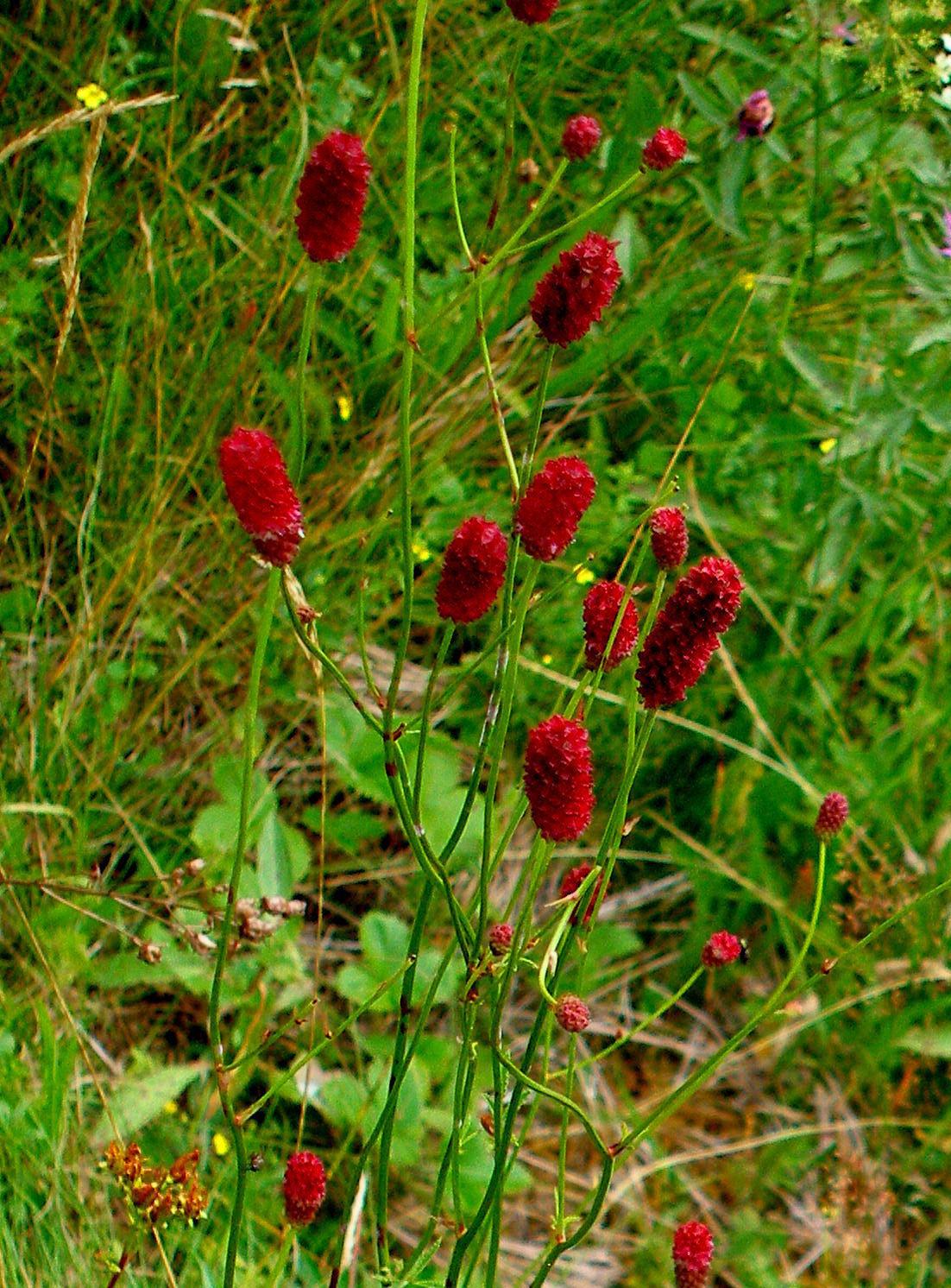
Great burnet can grow to a height of 1.2 metre.
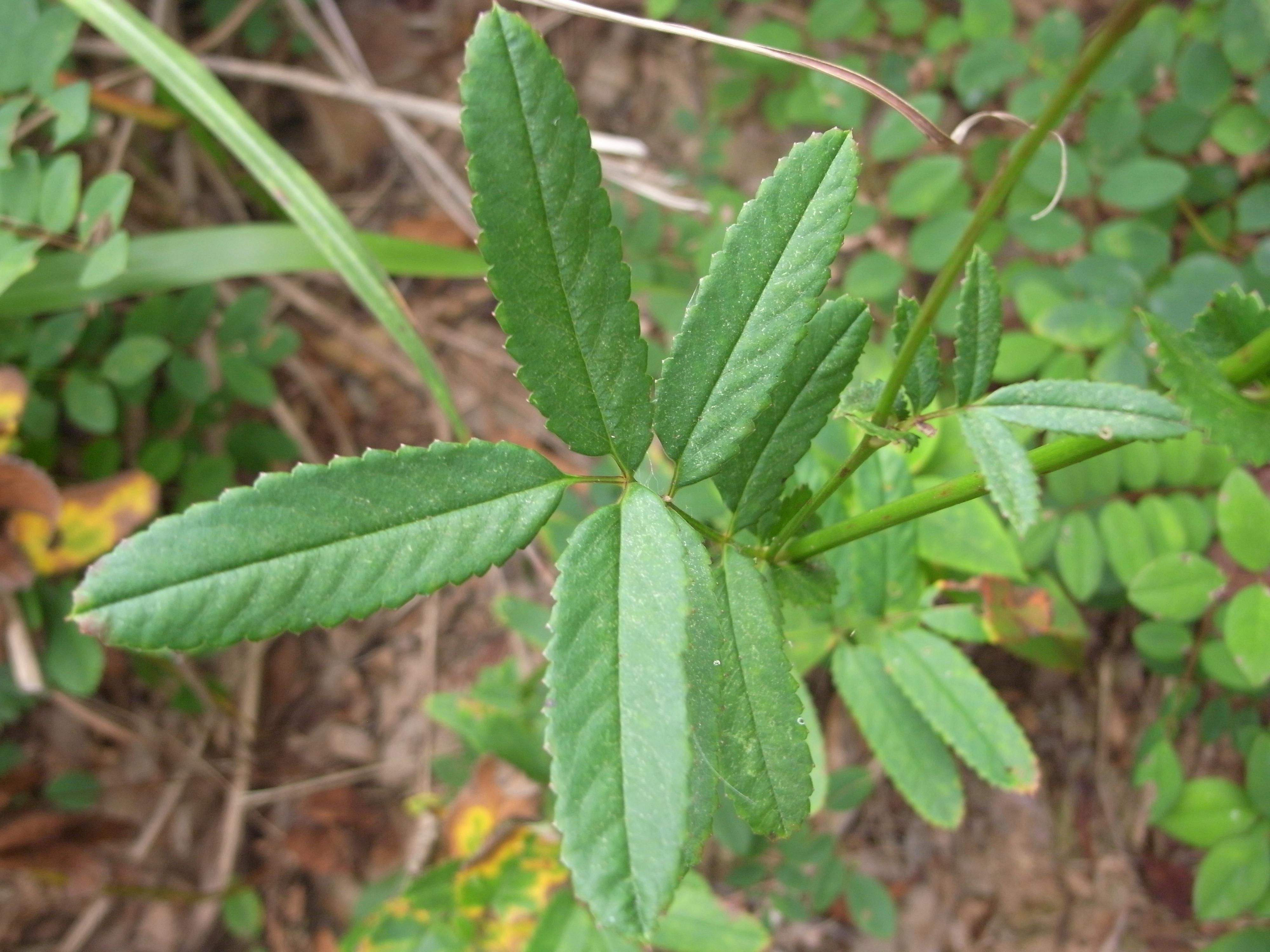
Most leaves are close to the ground. Few leaves grow alternately on the stem. Each leaf consists of several leaflets that finish with a single terminal leaflet (imparipinnate). Their margins are roughly serrated. The upper side of the leaf is dark green and the underside grey-green.
The stem is upright, grooved and bare to sparsely hairy.
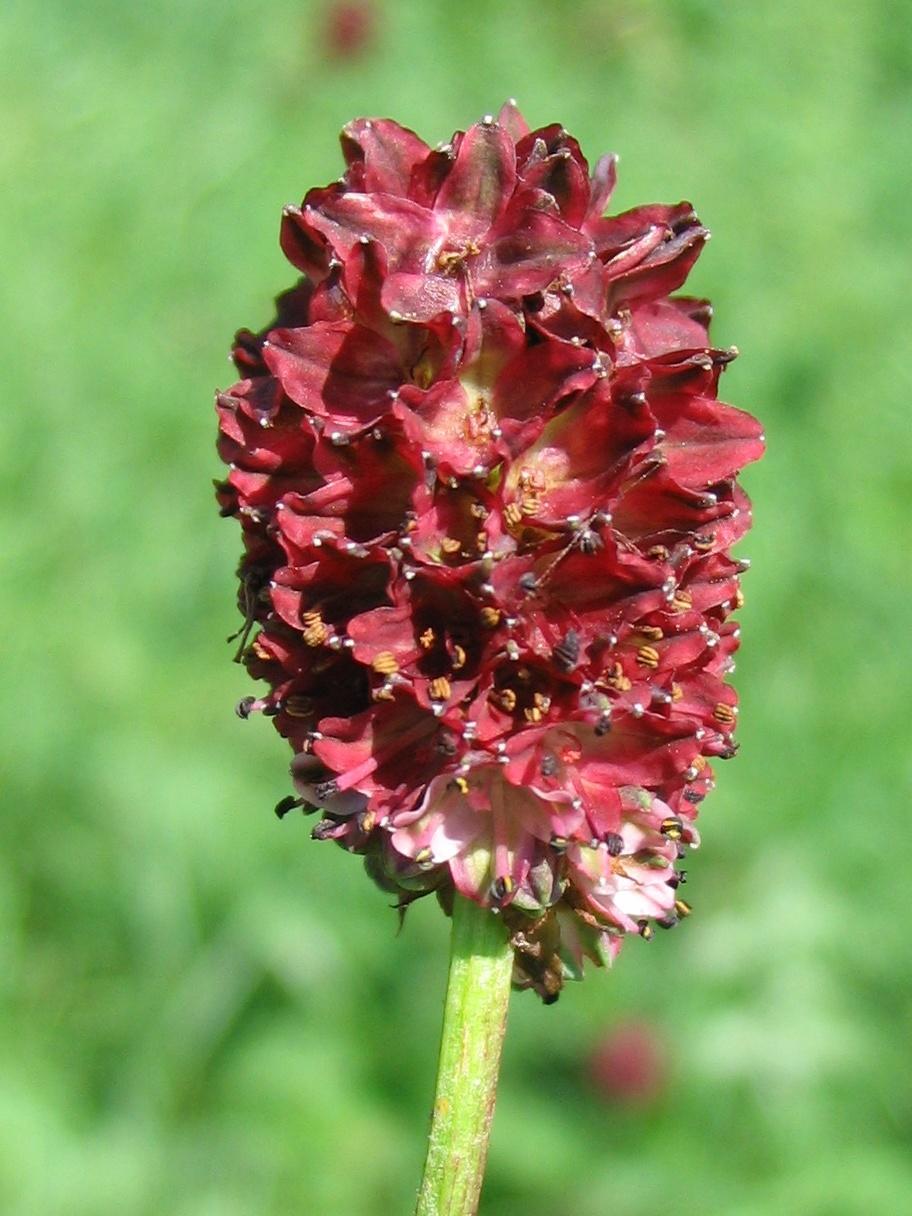
The flower is a spherical to oval head consisting of numerous brown-red flowers.
The fruits are small nutlets enclosed by a four-sided calyx.
Features
Great burnet
Sanguisorba officinalis
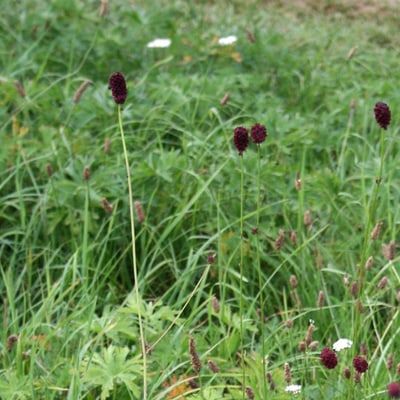
brown-red flowers in roundish flower heads
leaves with a grey-green underside
In the city
In the city, the great burnet is comparatively rare and may be seen on the banks of streams, in damp ditches and in wet meadows and moorland. It prefers damp to wet, sunny to semi-shaded sites with nutrient-rich soil.
Ornamental varieties of great burnet, such as "Red Thunder”, are commercially available.
Fun Facts
Great burnets are the main food sources for the caterpillars of the scarce large blue and dusky large blue butterflies.
Great burnett is a good forage plant.
It flowers from June to September.
It lives for several years and generally flowers and fruits annually (perennial plant).
- Endangerment level Germany: not endangered
In folk medicine, it was used as a plant with haemostatic properties, i.e. to stop bleeding.
Sources
Blütenstand, Ing.Mgr.Jozef Kotulič, CC BY-SA 4.0, https://commons.wikimedia.org/wiki/File:Gerlachov_17Slovakia.jpg

Blatt, Dalgial, CC BY 3.0, https://commons.wikimedia.org/wiki/File:Sanguisorba_officinalis_1.JPG

Blüten, Björn Appel, CC BY-SA 3.0, https://commons.wikimedia.org/wiki/File:Sanguisorba-officinalis.jpg

Eggenberg, S. & Möhl, A. (2007) Flora Vegetativa: Ein Bestimmungsbuch für Pflanzen der Schweiz im blütenlosen Zustand, Bern, Stuttgart, Wien: Haupt Verlag.
Spohn, M., Golte-Bechtle, M. & Spohn, R. (2015) Was blüht denn da? Stuttgart: Franckh Kosmos Verlag.
Jäger, E. J. (2011) Rothmaler - Exkursionsflora von Deutschland. Gefäßpflanzen: Grundband, Heidelberg: Spektrum Akademischer Verlag.
Kammer, P. M. (2016) Pflanzen einfach bestimmen. Schritt für Schritt einheimische Arten kennenlernen, Bern: Haupt Verlag.
Lippert, W. & Podlech, D. (1993) GU Naturführer. Blumen: die wichtigen Blütenpflanzen Mitteleuropas erkennen und bestimmen, München: Gräfe und Unzer Verlag.
Schauer, T., Caspari, C. & Caspari, S. (2015) Der illustrierte BLV-Pflanzenführer für unterwegs. 1150 Blumen, Gräser, Bäume und Sträucher, München: BLV.
Page „Großer Wiesenknopf“. : Wikipedia, The Free Encyclopedia. Date of last revision: 31.05.2016, 11:43 UTC. URL: https://de.wikipedia.org/w/index.php?title=Gro%C3%9Fer_Wiesenknopf&oldid=154860049 (Accessed: 06.02.2017).
Bundesamt für Naturschutz (n.d.) Artensteckbriefe, URL: http://floraweb.de/pflanzenarten/artenhome.xsql?suchnr=5235& (Accessed: 06.02.2017).