
Short Description
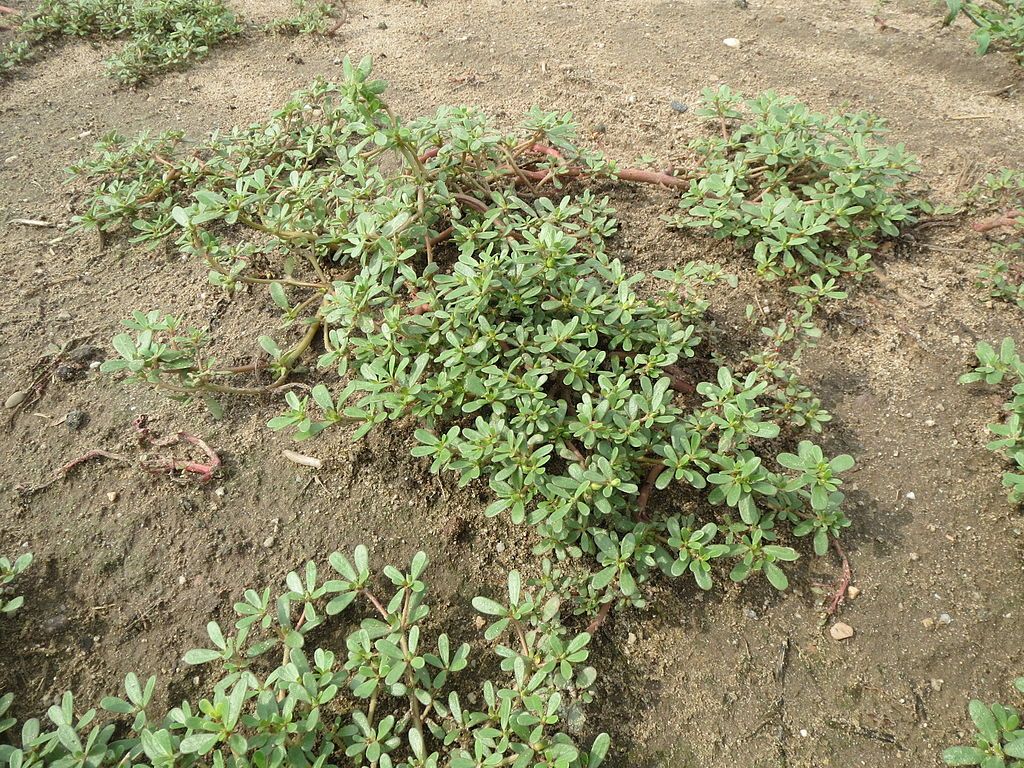
The purslane can grow up to 30 cm tall.
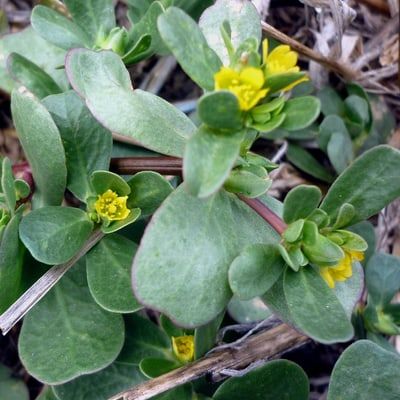
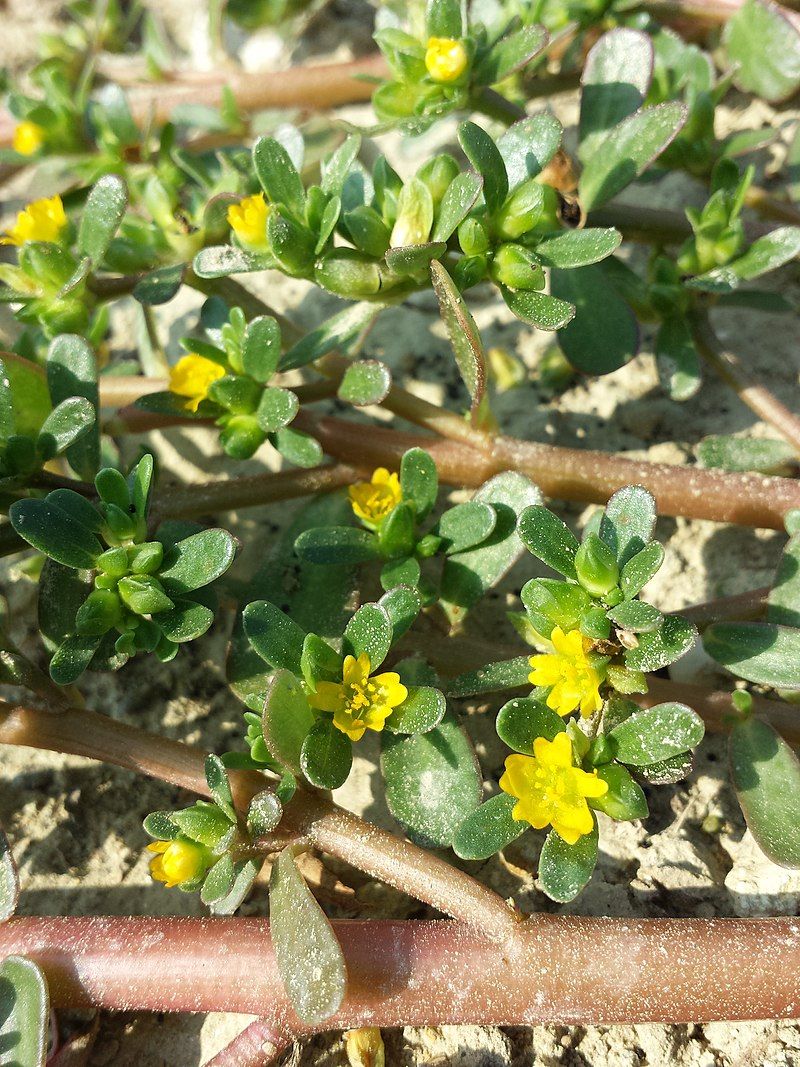
The leaves are thick and fleshy (succulent). They are elongated to obovate and are clustered at the end of a stem. In sunny locations they often have a reddish tinge.
The stem usually grows horizontally and branched. It is green and often has a reddish tinge.
The yellow flowers have five petals that are slightly heart-shaped. They usually sit in groups of one to three flowers above four leaves.
The fruits are green capsules with a lid. They contain many small, spherical, black seeds.
Features
Common purslane
Portulaca oleracea
fleshy leaves
leaves clustered at the ends of the stems
In the city
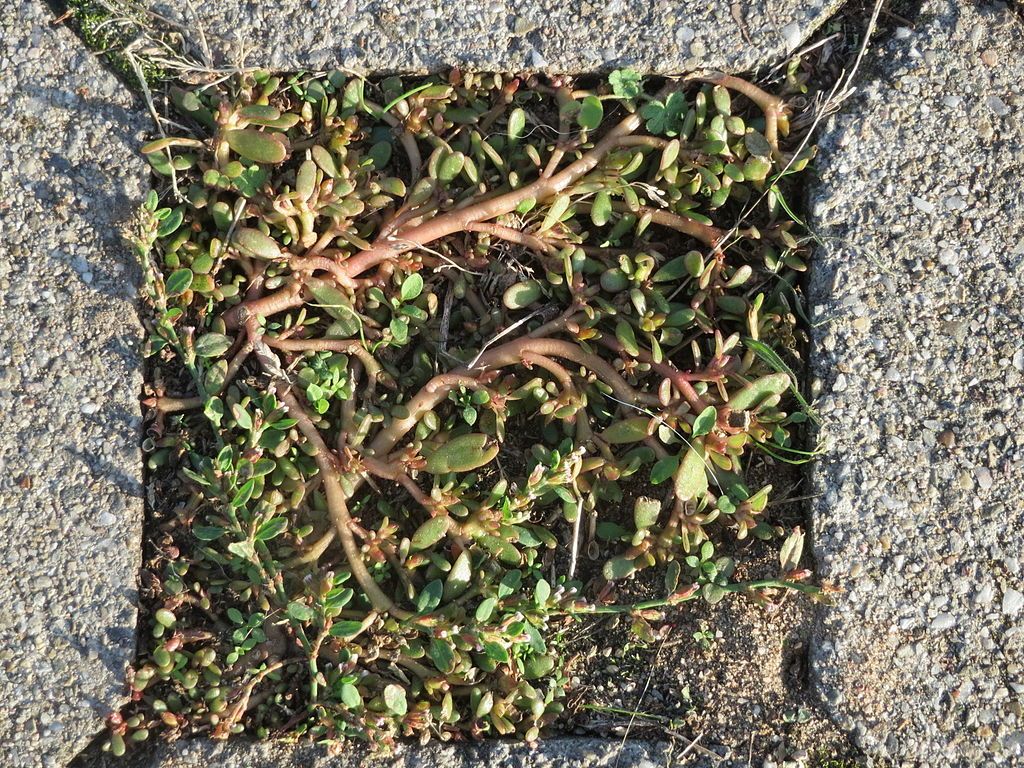
Purslane prefers nitrogenous, loose, humus-rich sandy or loamy soils in areas where summers are warmer and drier than average. It is therefore often found in cities, especially in the south. It grows in gardens, along roadsides, in pavement joints and in cemeteries.
Fun Facts
The flower buds can be used in a similar way to capers.
The flowers are only open for one morning and usually self-pollinate.
The plant is sensitive to frost and needs temperatures above 25°C for optimal germination.
The flowering period is from June to September.
It is an annual plant. This means it flowers for one summer and dies after the seeds have ripened.
- Endangerment level Germany: not evaluated
- Usage:
The plant contains large amounts of vitamin C and omega-3 fatty acids and was already considered a vegetable and medicinal plant in ancient Egypt. However, it should not be confused with winter purslane (Claytonia perfoliata).
Its original home is probably southern and south-eastern Europe. Today, however, it is widespread in warm temperate zones all over the world. In Germany, it probably belongs to the non-native plants (neophytes).
Young leaves can be eaten as a salad and taste slightly sour, salty and nutty. Older leaves, on the other hand, become bitter.
Sources
Habitus, AnRo0002 , CC0, https://de.wikipedia.org/wiki/Portulak#/media/Datei:20140722Portulaca_oleracea1.jpg

Habitus, AnRo0002, CC0, https://de.wikipedia.org/wiki/Portulak#/media/Datei:20151003Portulaca_oleracea4.jpg

Blüten, Stefan.lefnaer , CC BY-SA 4.0, https://de.wikipedia.org/wiki/Portulak#/media/Datei:Portulaca_oleracea_sl7.jpg

Spohn, M., Golte-Bechtle, M. & Spohn, R. (2015) Was blüht denn da? Stuttgart: Franckh Kosmos Verlag.
Page „Portulak“. : Wikipedia, The Free Encyclopedia. Date of last revision: 06.06.2018, 10:57 UTC. URL: https://de.wikipedia.org/w/index.php?title=Portulak&oldid=178079326 (Accessed: 21.08.2018).