
Short Description
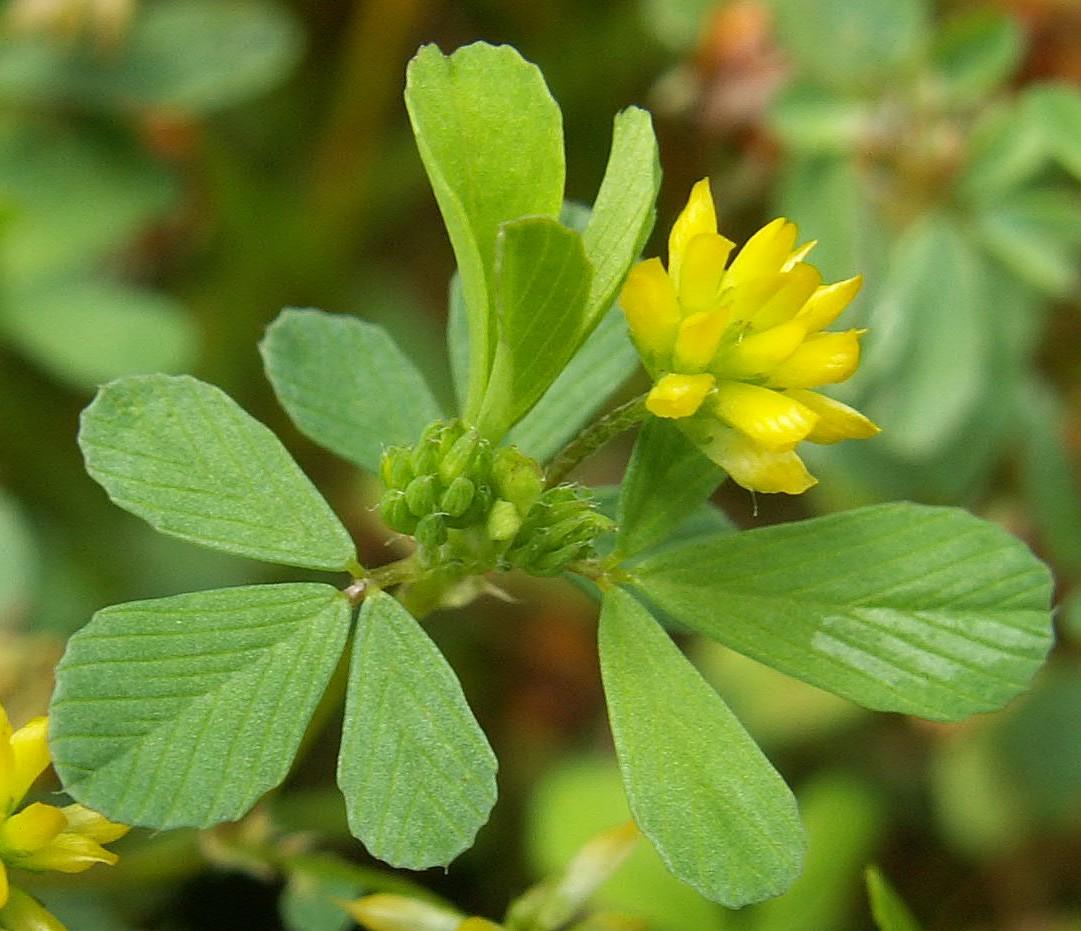
esser hop trefoil can grow up to 30 cm high.
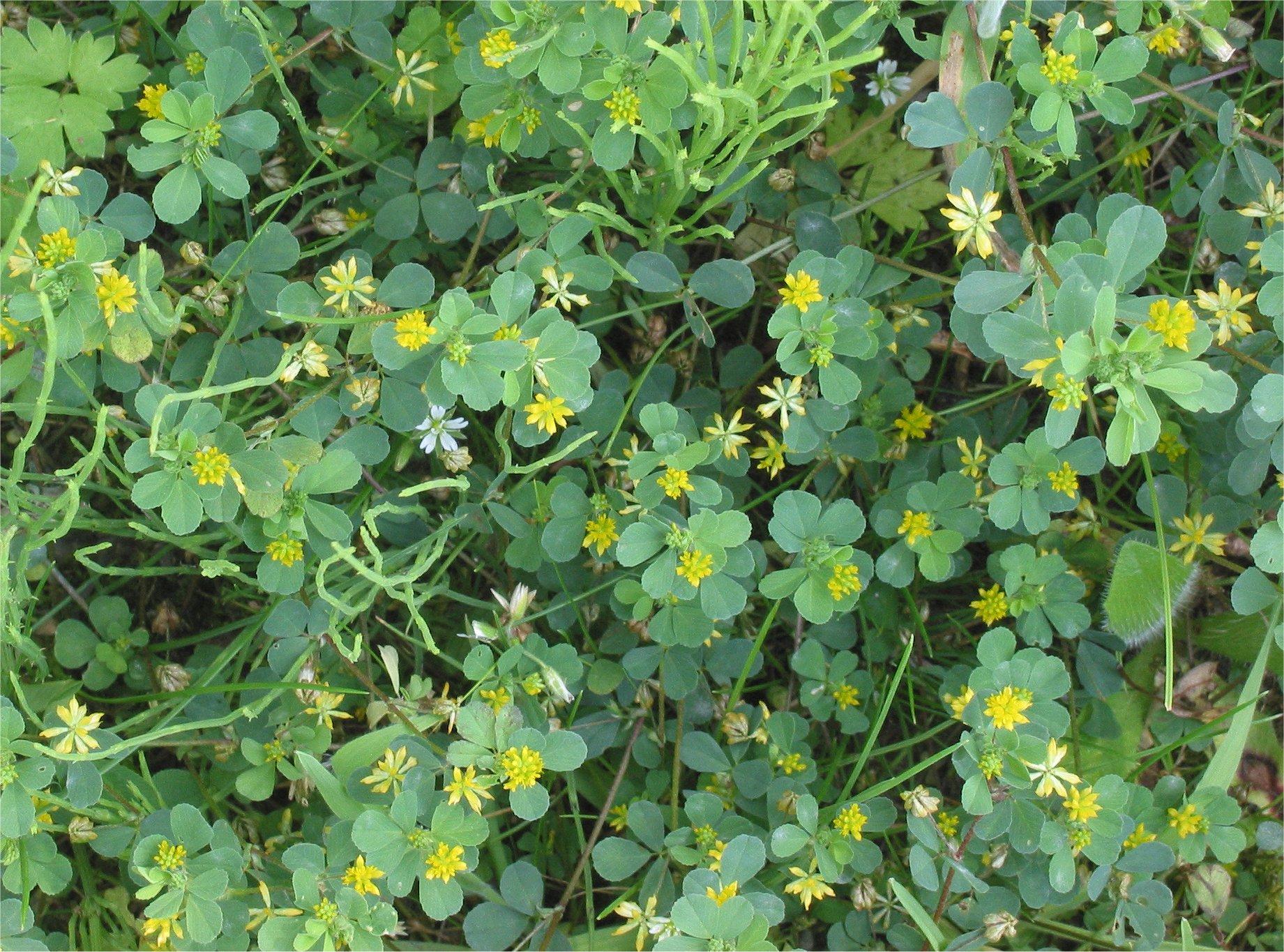
The bluish green leaves are composed of three leaflets (tripinnate). The leaflets are ovate to heart-shaped (cordiform). They are toothed at the front edge. However, they do not have a tip.
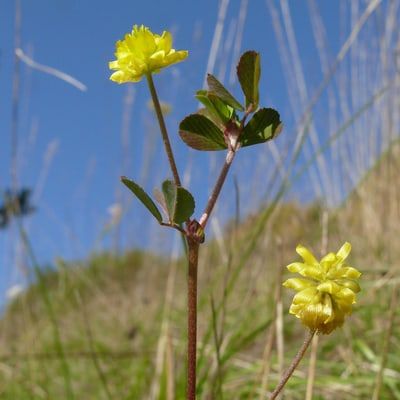
The slightly brownish hairy stem usually grows horizontally. It is often twisted and not branched.
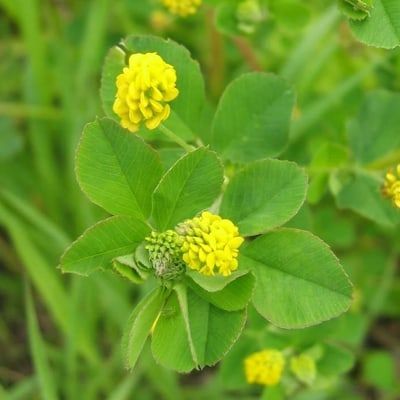
The flowers stand numerous in head-like inflorescences. The individual flowers are light yellow and consist of five petals. The large upper petal protrudes upwards. The two lower petals form a hollow boat that surrounds the anthers and pistil.
The fruit is a legume. It is oval and light brown. The fruit remains enclosed by the wilted petals.
Features
Lesser hop trefoil
Trifolium dubium
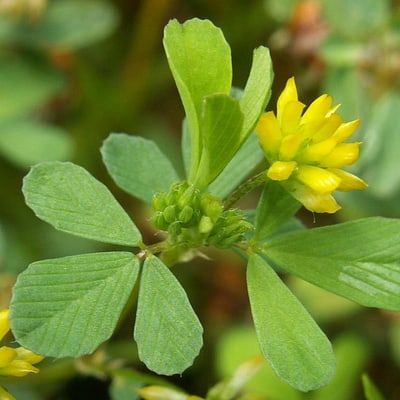
dense yellow inflorescences
wilted flowers do not fall off
Similar species
In the city
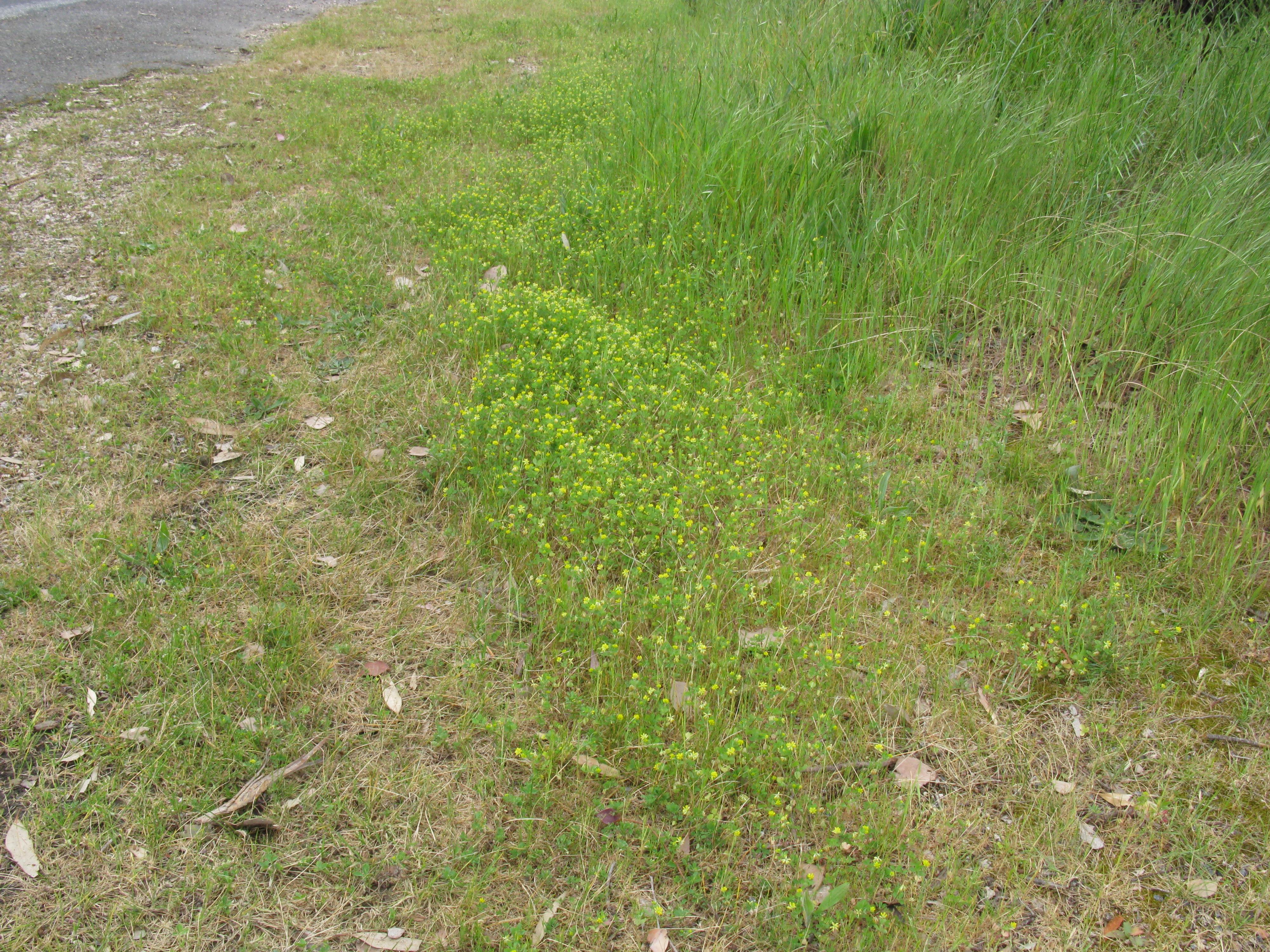
Lesser hop trefoil has only low habitat requirements and is therefore common. It can be found in meadows, pastures, fields, along paths, forest edges and embankments.
Fun Facts
The seeds remain germinable for over 20 years.
The flowering period is from May to September.
Lesser hop trefoil is an annual plant. It lives for one year, flowers and dies after the seeds have ripened.
Bumblebees are common pollinators.
The seeds are usually dispersed by the wind (anemochory).
- Endangerment level Germany: not endangered
Lesser hop trefoil is native to Central Europe.
A pulp made from crushed leaves is said to have a haemostatic effect when applied to wounds.
Sources
Blüten und Blätter, Kenraiz, CC BY-SA 3.0, https://commons.wikimedia.org/wiki/File:Trifolium_dubium_kz1.jpg

Habitus, Rasbak, CC BY-SA 3.0, https://commons.wikimedia.org/wiki/File:Trifolium_dubium.jpg

Habitus, Harry Rose, CC BY-SA 2.0, https://commons.wikimedia.org/wiki/File:Trifolium_dubium_habit2_(15057336184).jpg
.jpg)
Kammer, P. M. (2016) Pflanzen einfach bestimmen. Schritt für Schritt einheimische Arten kennenlernen, Bern: Haupt Verlag.
Roth, L., Daunderer, M. & Kormann, K. (2008) Giftpflanzen - Pflanzengifte. Vorkommen, Wirkung, Therapie. Allergische und phototoxische Reaktionen, Hamburg: Nikol Verlag.
Spohn, M., Golte-Bechtle, M. & Spohn, R. (2015) Was blüht denn da? Stuttgart: Franckh Kosmos Verlag.
Page „Faden-Klee“. : Wikipedia, The Free Encyclopedia. Date of last revision: 07.10.2017, 14:31 UTC. URL: https://de.wikipedia.org/w/index.php?title=Faden-Klee&oldid=169764924 (Accessed: 20.03.2018).
Bundesamt für Naturschutz (n.d.) Artensteckbriefe, URL: http://floraweb.de/pflanzenarten/artenhome.xsql?suchnr=6029& (Accessed: 20.03.2018).