
Short Description
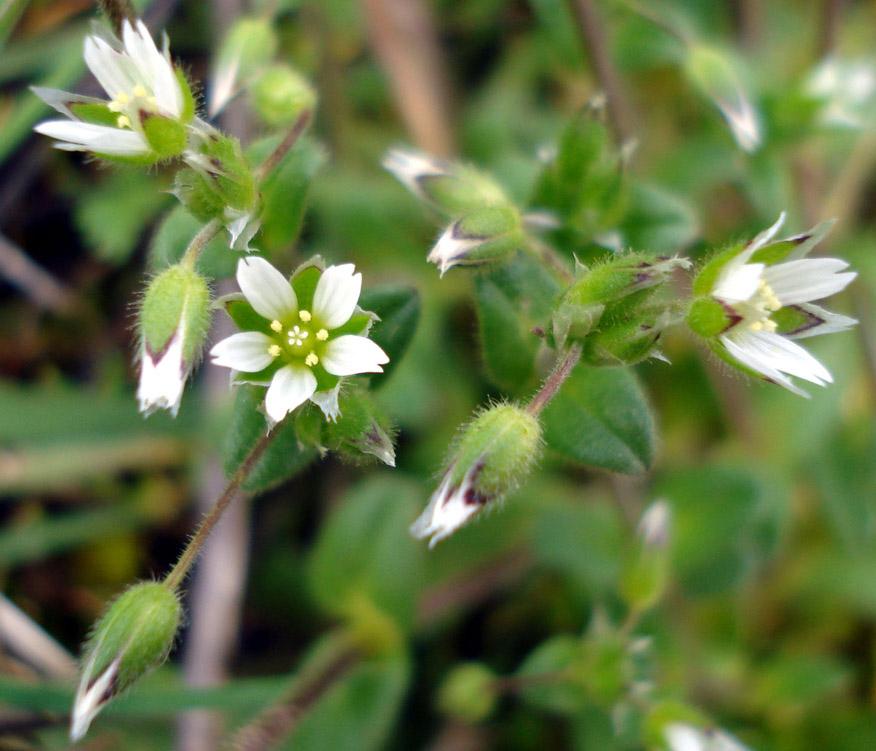
The little mouse-ear can grow up to 20 cm high.
The leaves are oval and sit opposite each other. They are yellow-green and glandular to haired. The upper bracts have a broad light margin.
The stem grows upright and is round. It is slightly hairy. There are no non-flowering branches or shoots.
The flowers have five white petals that are very slightly split at the upper edge.
The fruit is a small, elongated capsule fruit which, when it opens, has ten teeth.
Features
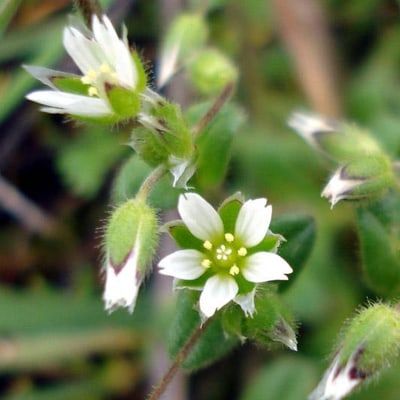
Little mouse-ear
Cerastium semidecandrum
slightly split petals
wide light margin on sepals and upper bracts
Similar species
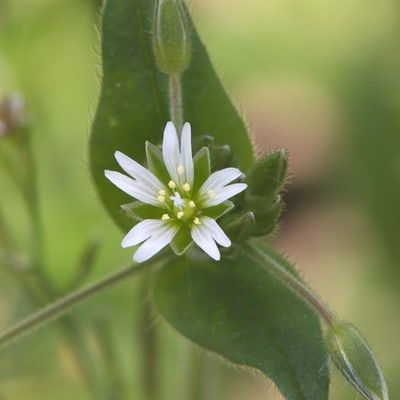
Mouse-ear chickweed
Cerastium fontanum
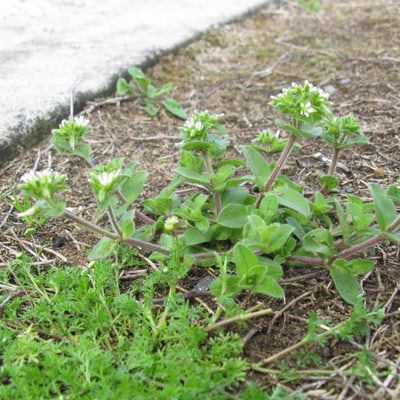
Sticky mouse-ear chickweed
Cerastium glomeratum
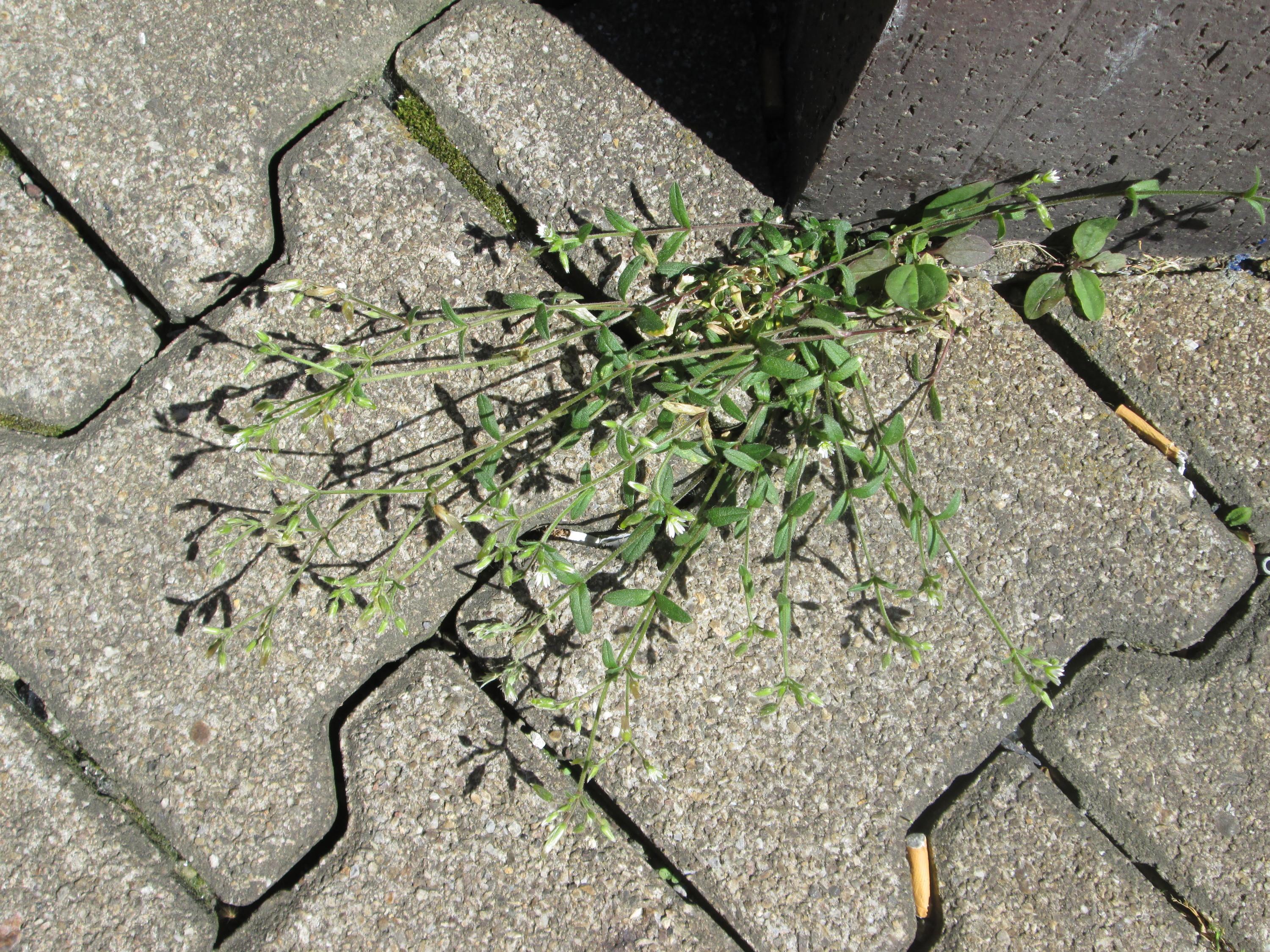
In the city
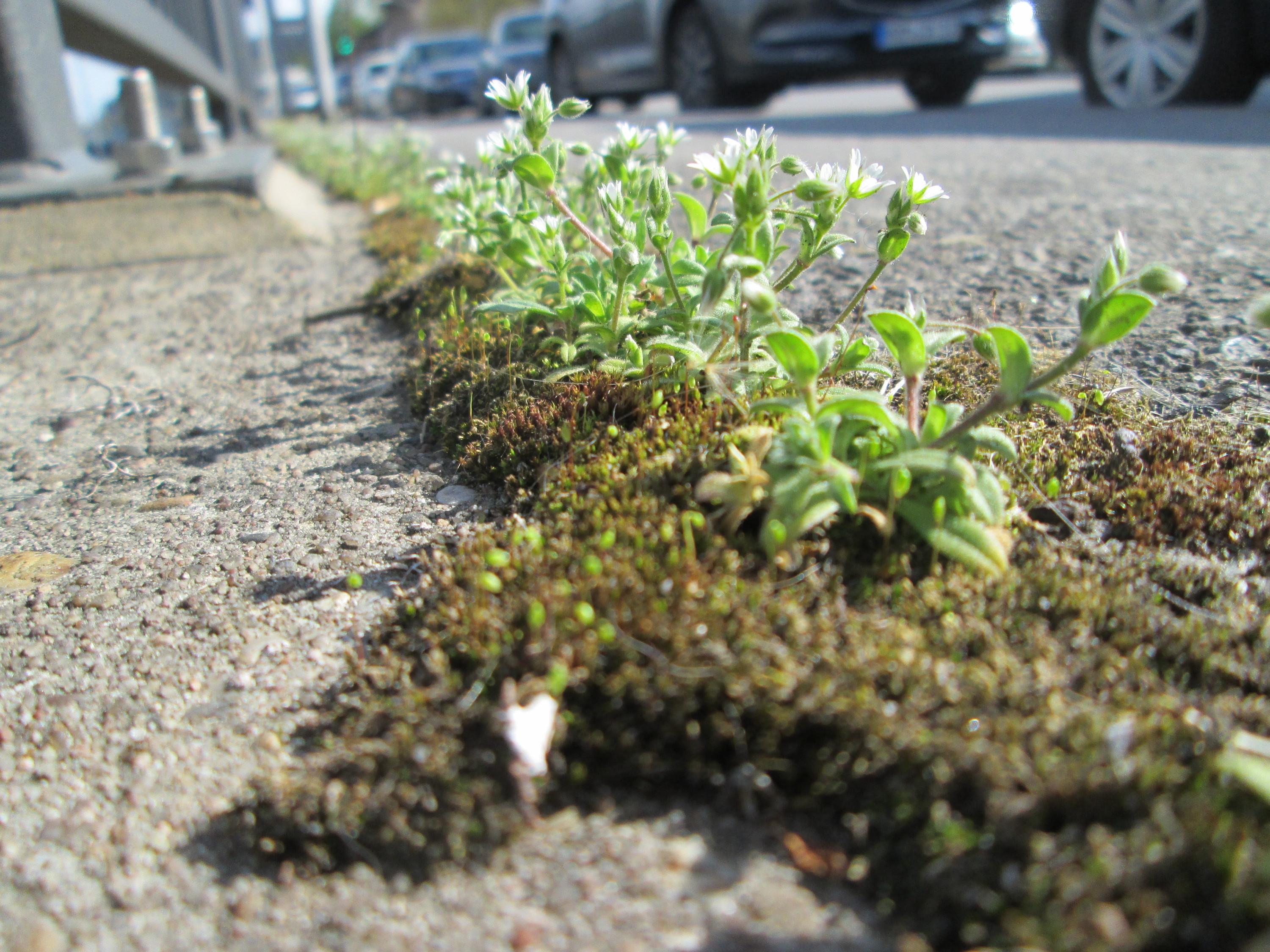
Little mouse-ear has low site requirements and thrives well on sand. It can therefore colonise unfavourable sites in the city such as fallow land, roadsides and railway areas. It prefers summer-dry, moderately nutritious, humus-rich, loose sandy soils, It is a sand indicator.
Fun Facts
The flowering period is from March to May.
Little mouse-ear is an annual to biennial plant. It lives for one or two years, but flowers only once and dies after the seeds have matured.
The flowers are pollinated by insects.
- Endangerment level Germany: not endangered
The little mouse-ear originates from Europe and North Africa.
The epithet semidecandrum refers to the Latin words semi=half, dec=ten and the Greek word andrum=stamen. This is why the little mouse-ear is also called five-stamen chickweed.
Sources
Habitus, Fornax, CC BY-SA 3.0, https://commons.wikimedia.org/wiki/File:Cerastium_semidecandrum_W.jpg

Habitus, AnRo0002, CC0 1.0, https://commons.wikimedia.org/wiki/File:20180507Cerastium_semidecandrum.jpg

Habitus, AnRo0002, CC0 1.0, https://commons.wikimedia.org/wiki/File:20180412Cerastium_semidecandrum3.jpg

Kammer, P. M. (2016) Pflanzen einfach bestimmen. Schritt für Schritt einheimische Arten kennenlernen, Bern: Haupt Verlag.
Page „Sand-Hornkraut“. : Wikipedia, The Free Encyclopedia. Date of last revision: 27.08.2017, 20:14 UTC. URL: https://de.wikipedia.org/w/index.php?title=Sand-Hornkraut&oldid=168538749 (Accessed: 04.01.2018).