
Short Description
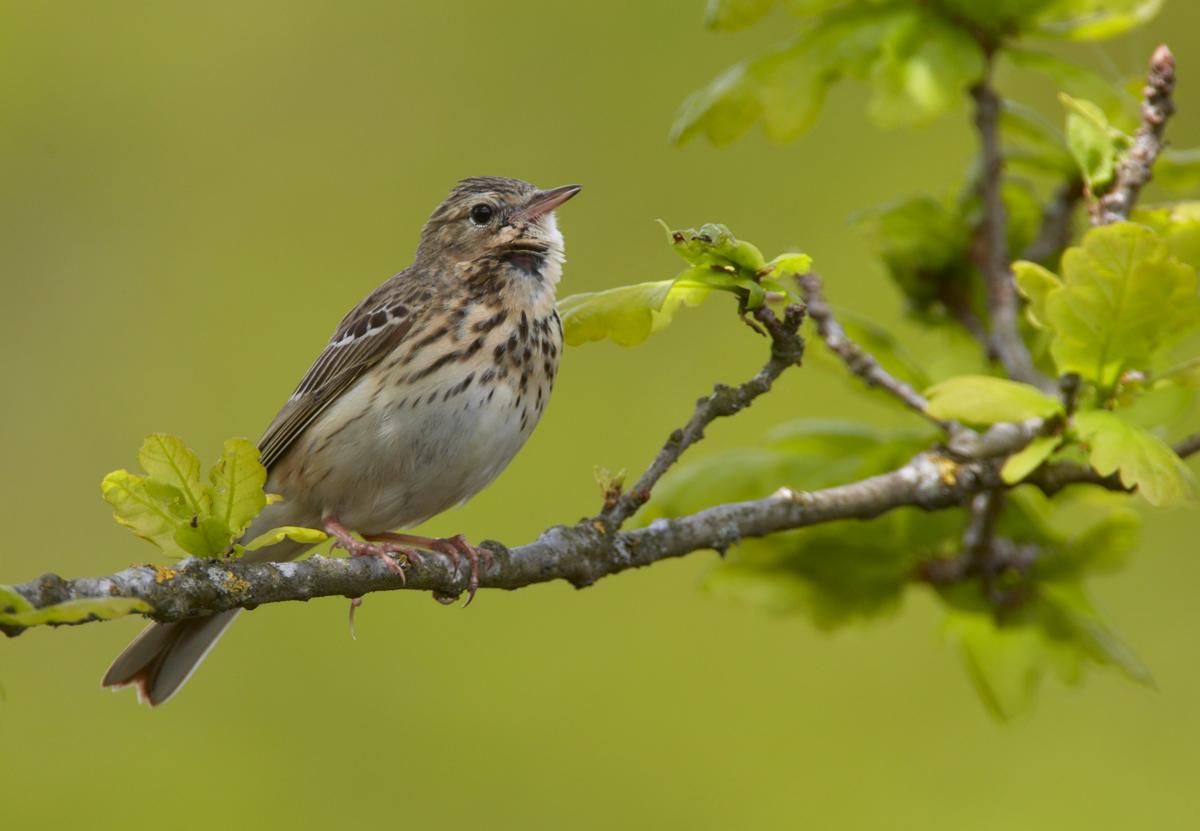
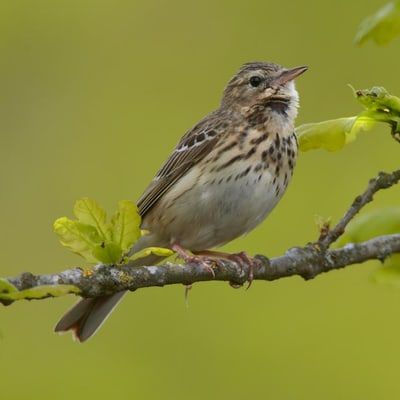
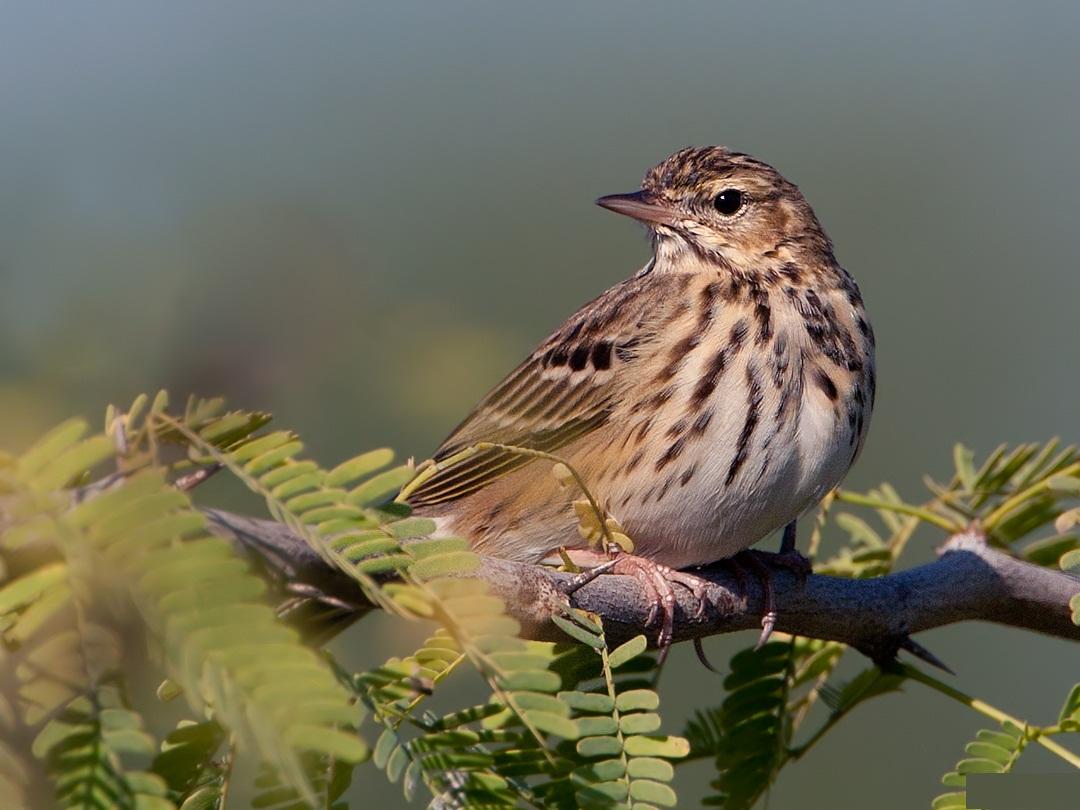
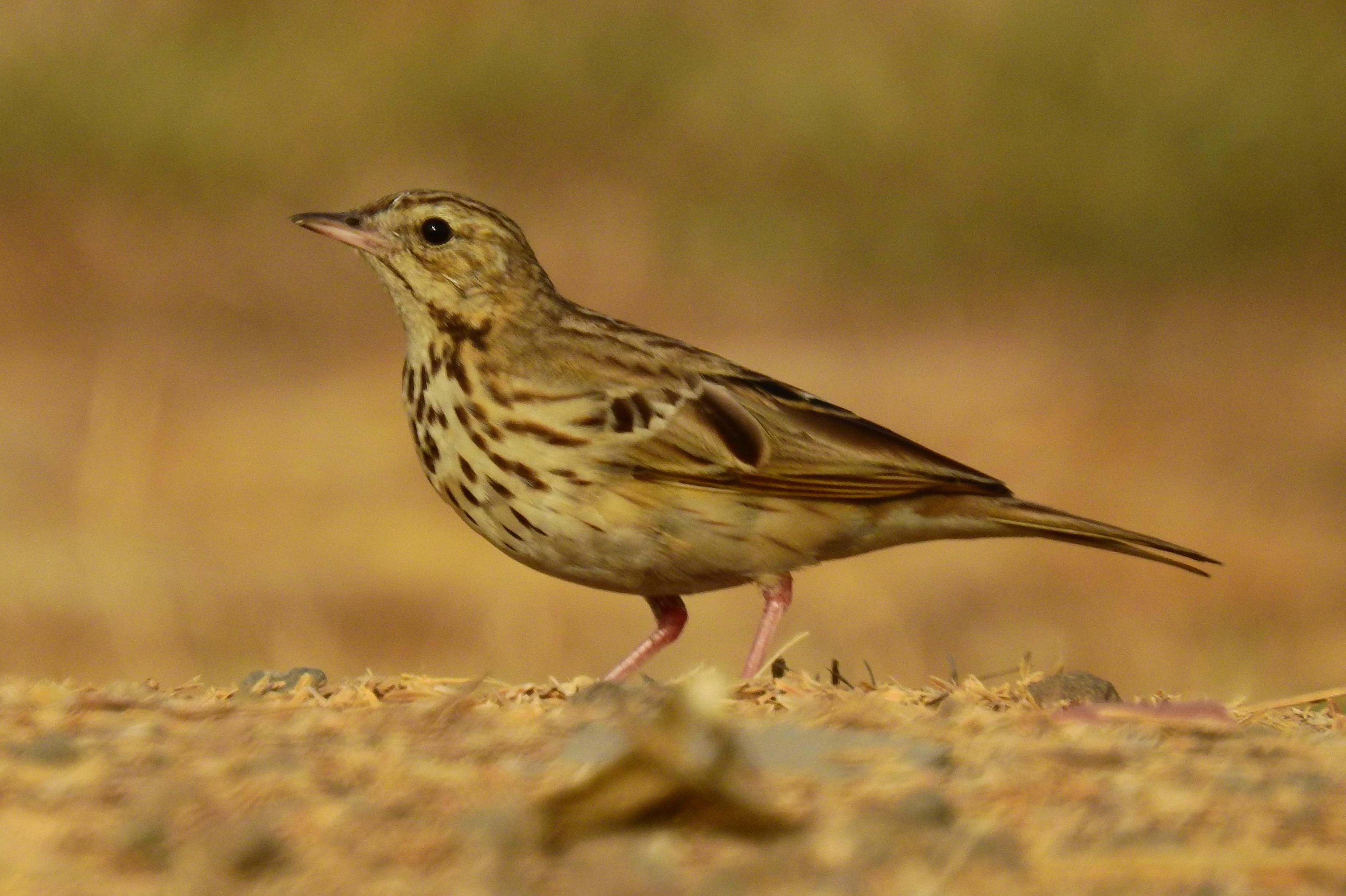
The tree pipit is reminiscent of a sparrow, but is smaller, more delicate and slender. The brown upper parts and the light-brown chest have strong dark-brown to black lengthways streaks.
In young birds, the rump is speckled darkish-brown.
Features
Tree pipit
Anthus trivialis
often perches in trees
steeply curved hind claw
Gesang
Conrads, CC BY-SA 3.0

Similar species
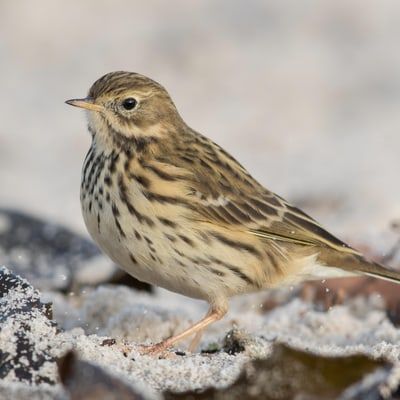
Meadow pipit
Anthus pratensis
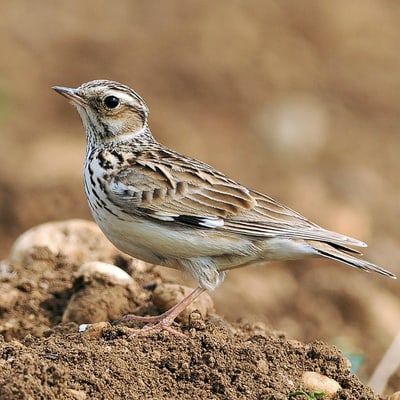
Woodlark
Lullula arborea
In the city
Tree pipits regularly inhabit forests at the urban fringe. They rarely appear in intensively used green spaces such as urban parks or gardens. As ground-nesters, tree pipits require undisturbed green spaces with adjacent trees that are not always easy to find in an urban environment.
Fun Facts
In case of danger, the female bird distracts predators from the nest by feigning inability to fly. For the same reason, tree pipits never land directly by the nest, but a few metres away and walk the remaining distance.
At present, tree pipits are still semi-common in Berlin but classified as endangered. Populations in Germany as a whole are also falling.
The tree pipit is a migratory bird. It breeds in Europe between April and August and hibernates in the Sahara.
- Endangerment level Germany: endangered
Sources
Habitus , Chris Romeiks, CC BY-NC-SA 3.0, https://commons.wikimedia.org/wiki/File:Anthus_trivialis_vogelartinfo_chris_romeiks_CHR4025.jpg

Habitus , Cks3976, CC BY-SA 3.0, https://commons.wikimedia.org/wiki/File:Oriental_Tree_Pipit.jpg

Habitus , Dr. Raju Kasambe, CC BY-SA 4.0, https://commons.wikimedia.org/wiki/File:Tree_Pipit_Anthus_trivialis_by_Dr._Raju_Kasambe_DSCN7208_(cropped).jpg
.jpg)
Page „Baumpieper“. : Wikipedia, The Free Encyclopedia. Date of last revision: 21.07.2020, 23:38 UTC. URL: https://de.wikipedia.org/w/index.php?title=Baumpieper&oldid=202100514 (Accessed: 10.02.2021).
Witt, K. & Steiof, K. (2013) Rote Liste und Liste der Brutvögel von Berlin, 3. version, 15.11.2013. : Berliner Ornithologische Arbeitsgemeinschaft e.V. (eds.) Berliner Ornithologischer Bericht, volume 23, Berlin: Berliner Ornithologische Arbeitsgemeinschaft e.V., 1-23.
Bejcek, V. (1988) Zugvögel, Hanau/Main: Verlag Werner Dausien.
Fiedler, W. (2015) Die Vögel Mitteleuropas sicher bestimmen - Schlüssel zur Art-, Alters- und Geschlechtsbestimmung, Wiebelsheim: Quelle & Meyer Verlag.
Makatsch, W. (1989) Wir bestimmen die Vögel Europas, Leipzig: Neumann Verlag.
Voigt, A. (2006) Exkursionsbuch zum Studium der Vogelstimmen, Heidelberg: Quelle & Meyer Verlag.
Svensson, L. (2011) Der Kosmos Vogelführer - Alle Arten Europas, Nordafrikas und Vorderasiens, Stuttgart: Franckh Kosmos Verlag.
Harrison, C. (1975) Jungvögel, Eier und Nester aller Vögel Europas, Nordafrikas und des Mittleren Ostens - Ein Naturführer zur Fortpflanzungsbiologie, Hamburg und Berlin: Verlag Paul Parey.