
Short Description
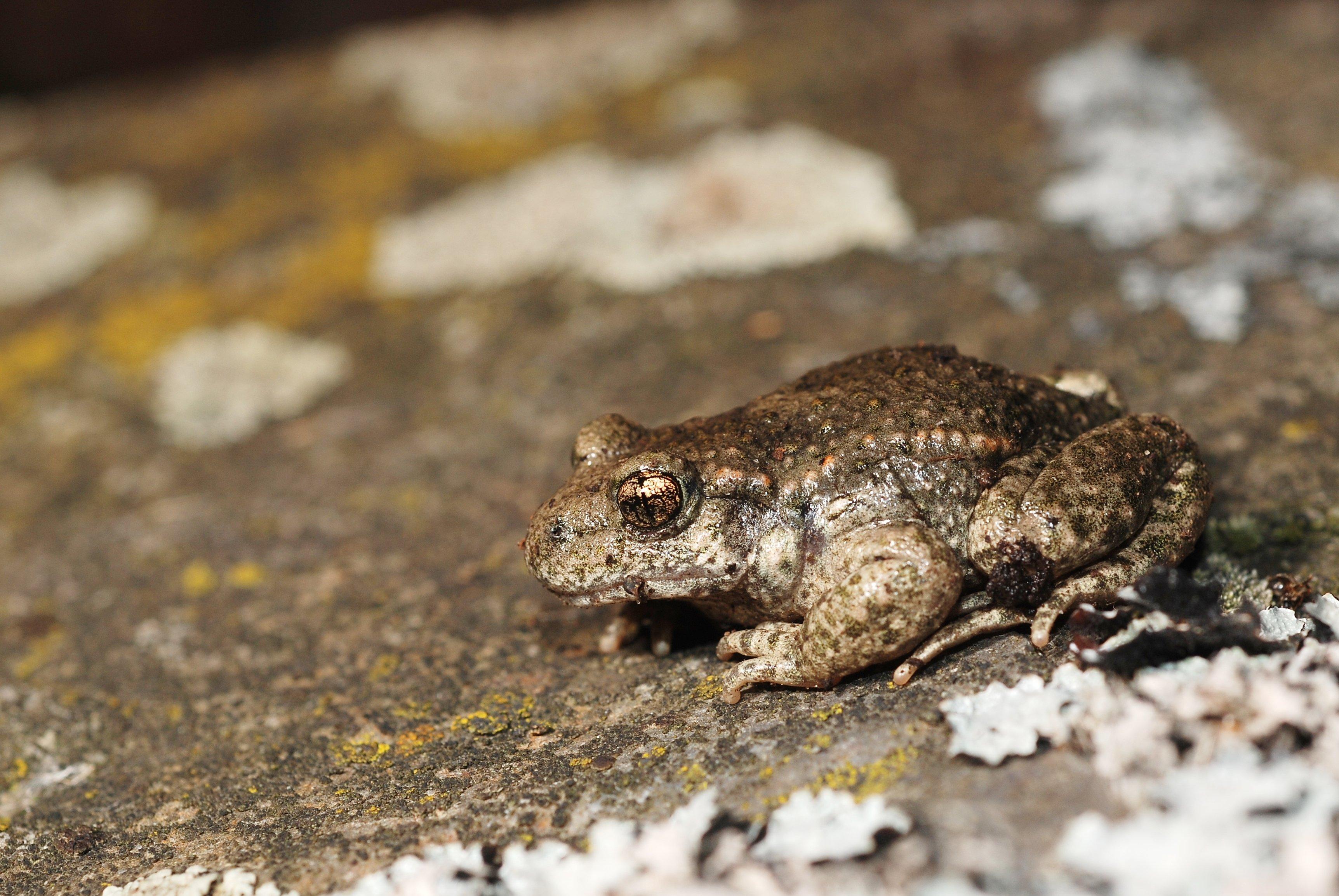
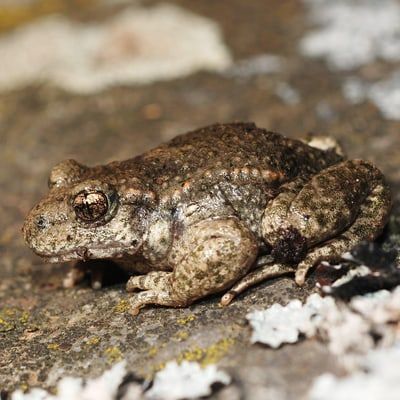
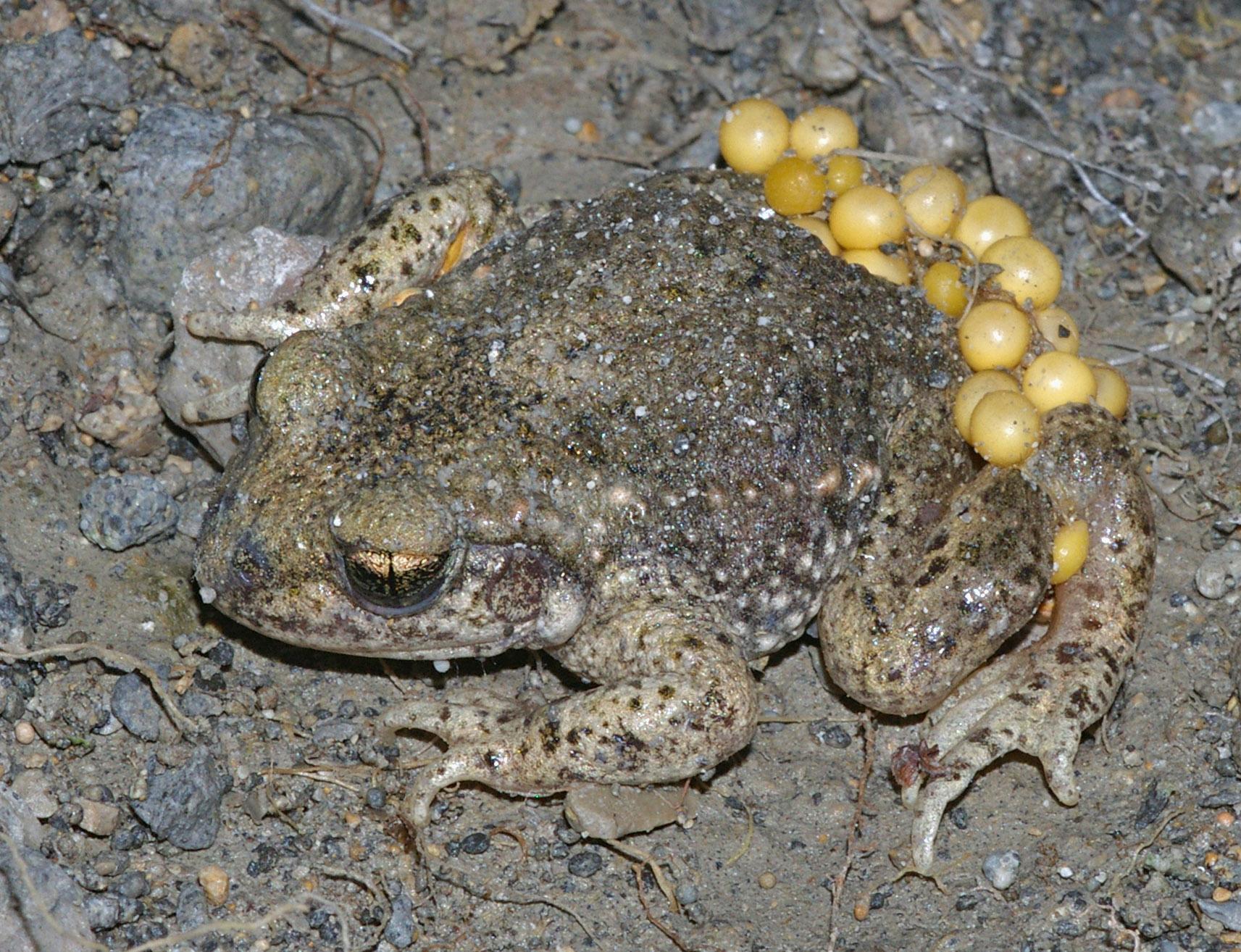
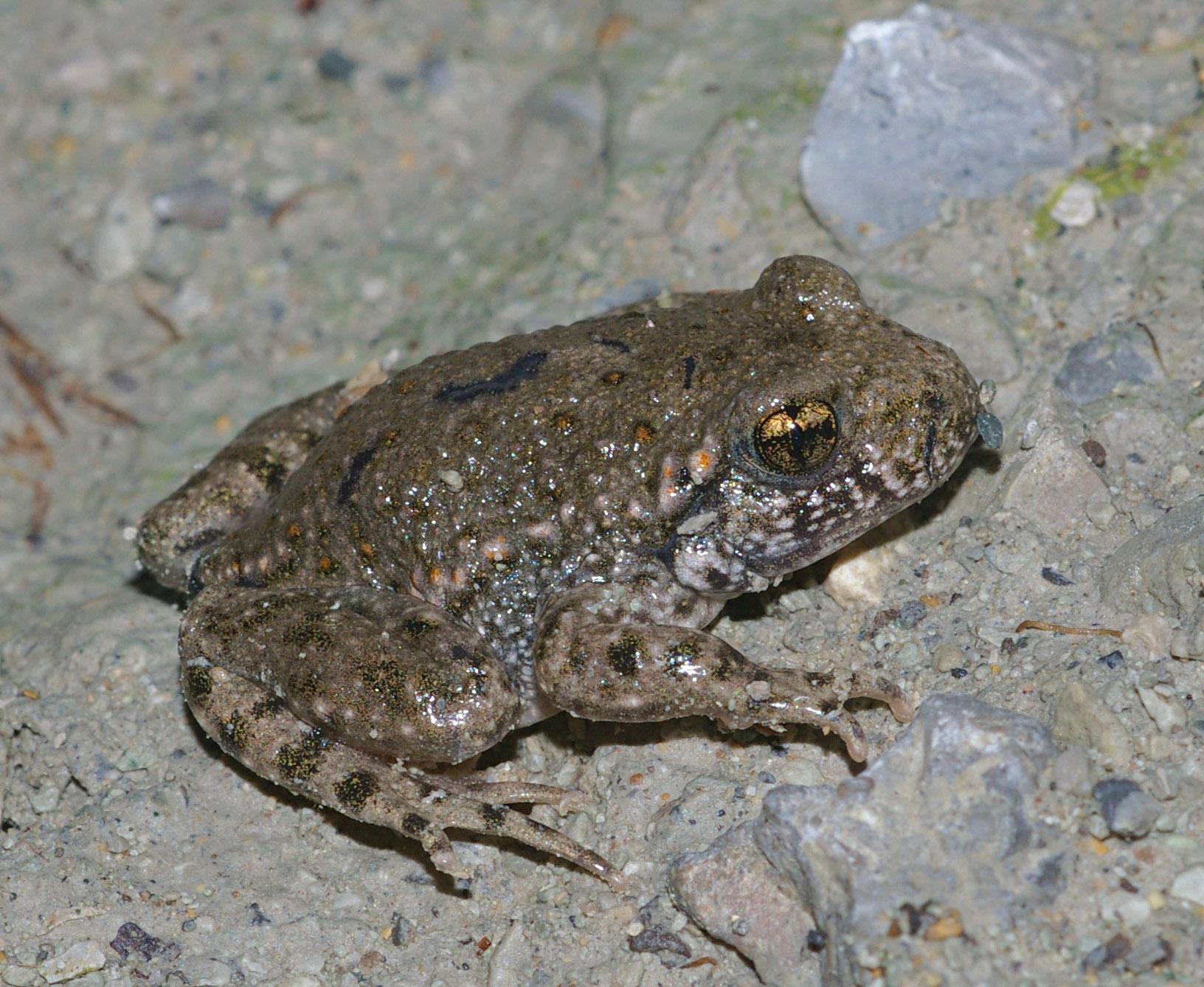
The midwife toad has a toad-like shape with short legs. The upper side is yellow, brown to olive green, often spotted with black and green and covered with small round, reddish warts. A characteristic feature is their golden iris with a vertical slit-shaped pupil. With a total length of approx. 5.5 cm, it is one of the smaller species.
Features
Common midwife toad
Alytes obstetricans
vertical slit pupil
Similar species
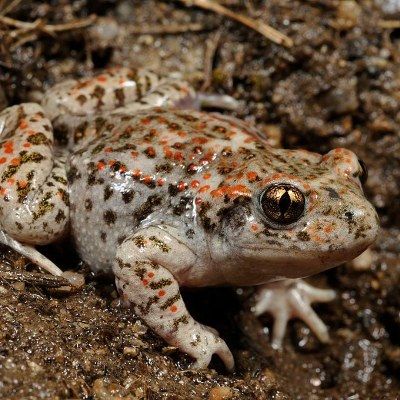
Iberian midwife toad
Alytes cisternasii
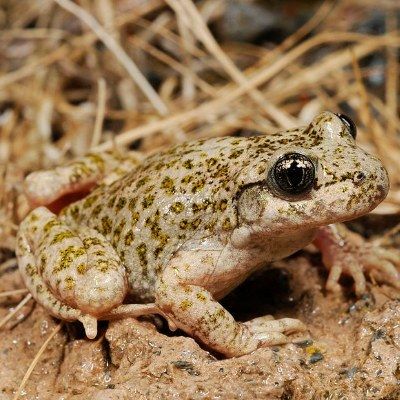
Betic midwife toad
Alytes dickhilleni
In the city
The typical habitats of the midwife toad are used quarries or clay pits with a body of water nearby. These habitat structures occur due to mining activities. It therefore has a close connection to these anthropogenically created secondary habitats. In urban areas, it can also be found in gardens or cemeteries.
Fun Facts
The midwife toad is the only native frog species in which both sexes can make mating calls.
Unlike other native amphibians, midwife toads mate several times from April to August.
Since the females live exclusively on land after they have developed, the eggs are tied to the hind legs of the male and transported to the body of water.
Males can carry up to 170 eggs and also the clutches of several females at the same time.
All European amphibians are specially protected and must not be captured, injured or killed.
- Endangerment level Germany: endangered
The name refers to the extraordinary reproductive biology.
Sources
Habitus , Gilles San Martin, CC BY-SA 2.0, https://commons.wikimedia.org/wiki/File:Alytes_obstetricans_(4536438842).jpg
.jpg)
Männchen mit gebundener Eierschnur am Hinterleib, Christian Fischer, CC-BY-SA-3.0, https://commons.wikimedia.org/wiki/File:AlytesObstetricansMaleWithEggs.jpg

Jungtier, Christian Fischer, CC-BY-SA-3.0, https://de.wikipedia.org/wiki/Datei:AlytesObstetricansJuv.jpg

Page „Gemeine Geburtshelferkröte“. : Wikipedia, The Free Encyclopedia. Date of last revision: 16.12.2017, 06:47 UTC. URL: https://de.wikipedia.org/w/index.php?title=Gemeine_Geburtshelferkr%C3%B6te&oldid=172012689 (Accessed: 15.02.2018).
NABU – Naturschutzbund Deutschland e.V. (n.d.) Unterwegs mit Eiern auf dem Rücken. Geburtshelferkröte (Alytes obstetricans), URL: https://www.nabu.de/tiere-und-pflanzen/amphibien-und-reptilien/amphibien/artenportraets/10665.html (Accessed: 15.02.2018).
Schulte, U. & Wagner, N. (2013) Artensteckbrief Gemeine Geburtshelferkröte (Alytes obstetricans), URL: https://feldherpetologie.de/heimische-amphibien-artensteckbrief/artensteckbrief-nordliche-geburtshelferkrote-alytes-obstetricans/ (Accessed: 15.02.2018).
Bundesfachausschuss Feldherpetologie/Ichthyofaunistik im NABU (n.d.) Artportrait Geburtshelferkröte, URL: http://www.amphibienschutz.de/amphib/gebuhekr.htm (Accessed: 15.02.2018).
Gebel, M. (2014) Geburtshelferkröte (Alytes obstetricans), URL: http://www.amphibien-reptilien.com/info-geburtshelferkroete-alytes-obstetricans.html (Accessed: 15.02.2018).
Kwet, A. (2015) Reptilien und Amphibien Europas. 250 Arten mit Verbreitungskarten, Stuttgart: Franckh Kosmos Verlag.
Blab, J. & Vogel, H. (2002) Amphibien und Reptilien erkennen und schützen, München: BLV.
Glandt, D. (2008) Heimische Amphibien: Bestimmen – Beobachten – Schützen, Wiebelsheim: AULA-Verlag.
Glandt, D. (2015) Die Amphibien und Reptilien Europas, Wiebelsheim: Quelle & Meyer Verlag.
Matz, G. & Weber, D. (1983) Amphibien und Reptielien – Die 169 Arten Europas farbig abgebildet, München: BLV.