
Short Description
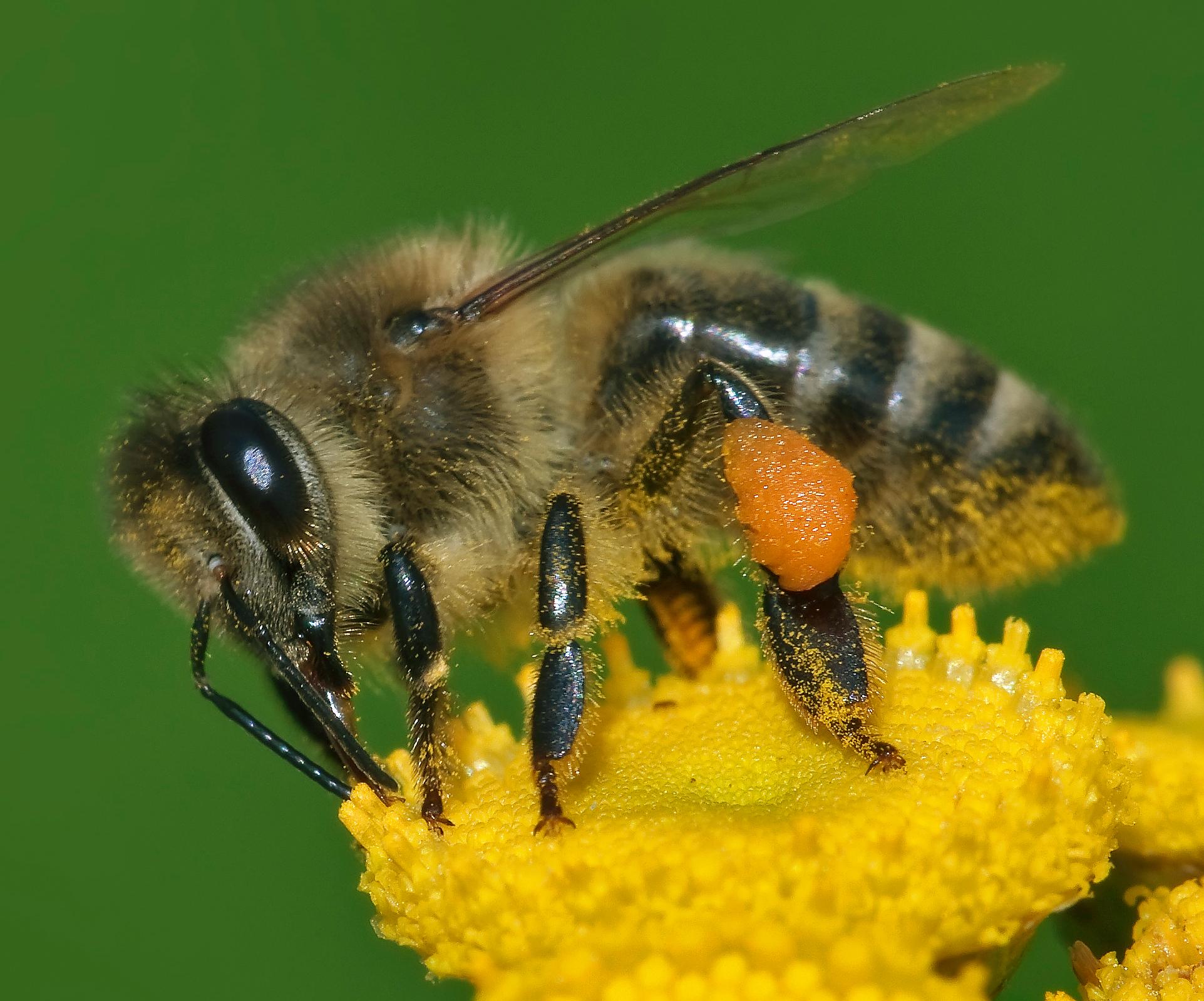
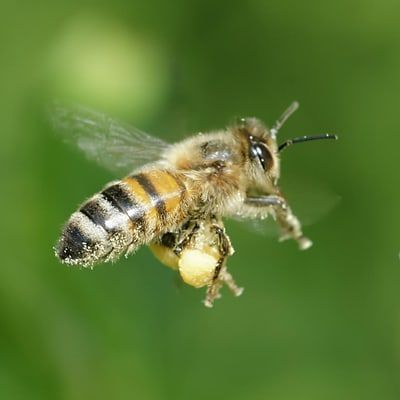
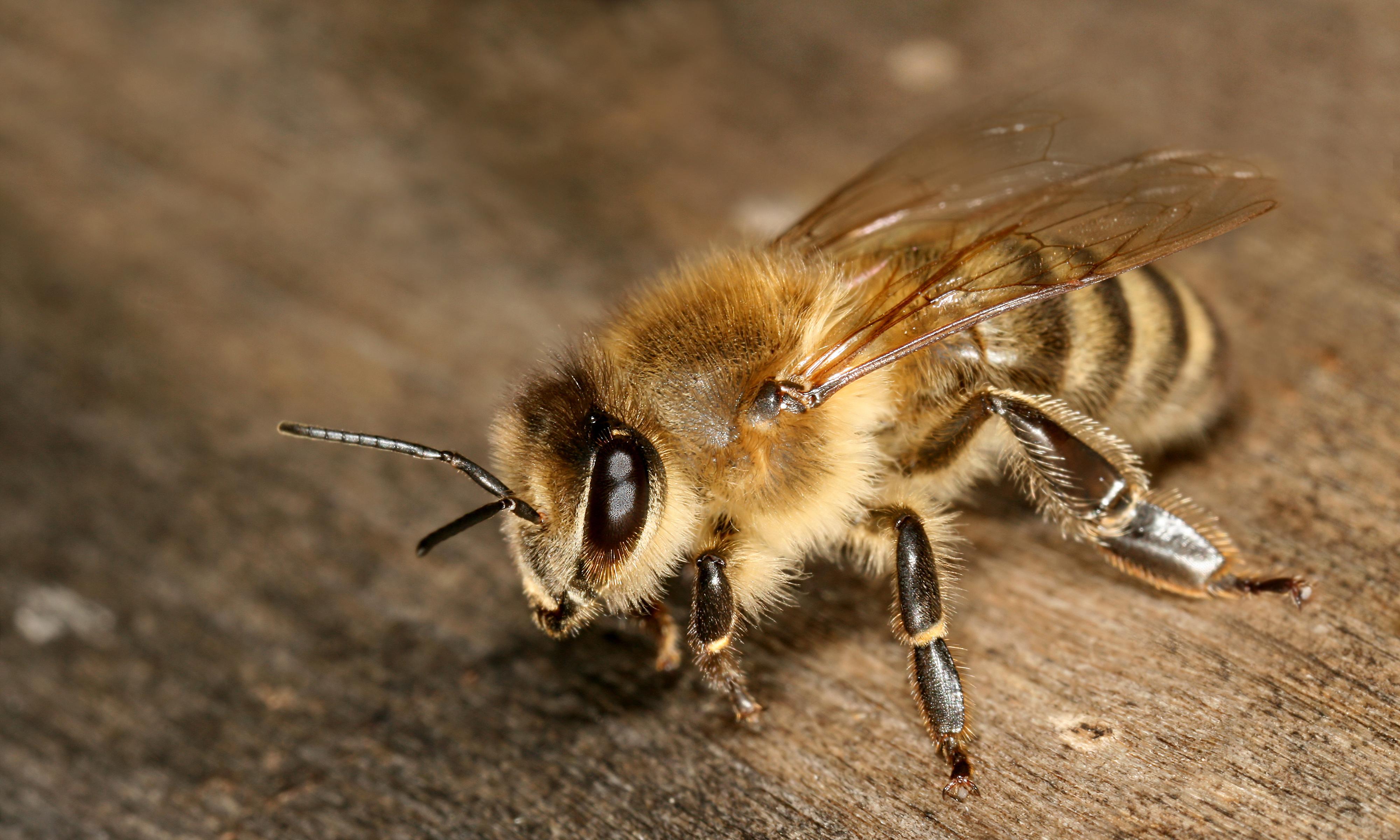
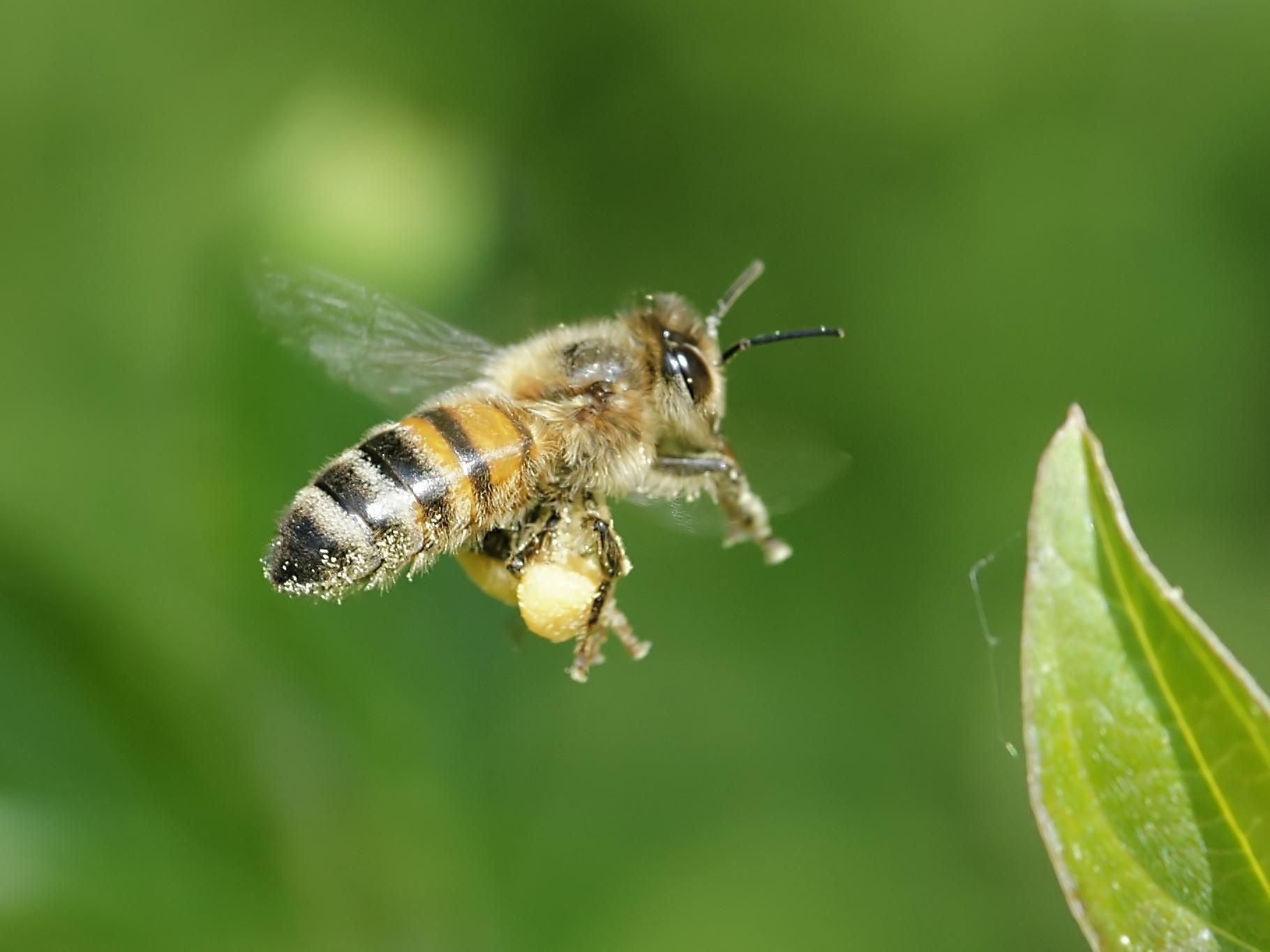
The western honeybee has a short, broad head and a stocky body. It is dark brown and has brownish to yellowish felt-like horizontal stripes. The thorax is brownish to reddish yellow. The head and eyes are black. The thorax and head are covered with many brownish, felt-like bristles. The forewing has a kidney-shaped curved and very long radial cell.
The males (drones) are larger and broader than the workers. They also do not have a stinger.
The queen and the workers are slender. The queen is longer than workers and the abdomen clearly overhangs the wings.
Features
Western honey bee
Apis mellifera
protruding hair
kidney-shaped curved and very long radial cell in the forewing
Similar species
In the city
Cities are the ideal habitat for honey bees. The often diverse range of different flowers ensures a continuous supply of nectar for the honey bee. The food diversity of the city can also have a positive effect on the honey bee's immune system. Also, pesticides, which can be harmful to honey bees, are usually not used extensively in cities.
Fun Facts
It flies from March to October.
It forms states that can exist for many years. They are composed of up to 80,000 workers, dominated by a queen.
It was originally found in the forest and prefers to build its nests in tree hollows.
The workers have their own language for communicating new food sources. It is unique among insects.
Queen larvae are fed royal jelly, a special food juice, for longer than worker larvae. It is virtually praised in sales as a miracle cure. In fact, it has no particularly positive effect on humans - on the contrary, it even poses health risks, such as triggering allergic reactions. In addition, queen and queen larvae have to be removed from the bee colony for its extraction. This is an extreme stress situation for the bee colony and massively upsets the colony's balance.
There are numerous subspecies and breeds.
- Endangerment level Germany: not endangered
Sources
Habitus, Andreas Trepte, CC BY-SA 2.5, https://commons.wikimedia.org/wiki/File:Apis_mellifera_Western_honey_bee.jpg

Habitus, Richard Bartz, Munich Makro Freak & Beemaster Hubert Seibring, CC BY-SA 2.5, https://commons.wikimedia.org/wiki/File:Apis_mellifera_carnica_worker_hive_entrance_3.jpg

Habitus, Hans Hillewaert, CC BY-SA 4.0, https://commons.wikimedia.org/wiki/File:Apis_mellifera_(in_flight).jpg
.jpg)
Bellmann, H. (1999) Der neue Kosmos-Insektenführer. Über1400 Fotos, Stuttgart: Franckh Kosmos Verlag.
Bellmann, H. (2005) Bienen, Wespen, Ameisen. Hautflügler Mitteleuropas, Stuttgart: Franckh Kosmos Verlag.
Page „Westliche Honigbiene“. : Wikipedia, The Free Encyclopedia. Date of last revision: 17.12.2017, 13:26 UTC. URL: https://de.wikipedia.org/w/index.php?title=Westliche_Honigbiene&oldid=172049058 (Accessed: 20.12.2017).
Tierdoku (2013) Westliche Honigbiene, URL: http://tierdoku.com/index.php?title=Europ%C3%A4ische_Honigbiene (Accessed: 20.12.2017).
Stadtbienen e.V. (n.d.) Bienen in der Stadt, URL: https://www.stadtbienen.org/wissen/bienenwissen/bienen-in-der-stadt/ (Accessed: 20.12.2017).
Saure, C. (2005) Rote Liste und Gesamtartenliste der Bienen und Wespen (Hymenoptera part.) von Berlin mit Angaben zu den Ameisen. : Der Landesbeauftragte für Naturschutz und Landschaftspflege / Senatsverwaltung für Stadtentwicklung (eds.) Rote Listen der gefährdeten Pflanzen und Tiere von Berlin, URL: https://www.berlin.de/sen/uvk/natur-und-gruen/naturschutz/artenschutz/artenlisten-rote-listen/insekten/ (Accessed: 29.03.2021).
Nuß, M., Liebig, W.-H. & Fritzsche, M. (2017) Westliche Honigbiene (Apis mellifera Linnaeus, 1758), URL: https://www.insekten-sachsen.de/Pages/TaxonomyBrowser.aspx?Id=231852 (Accessed: 20.12.2017).