
Short Description
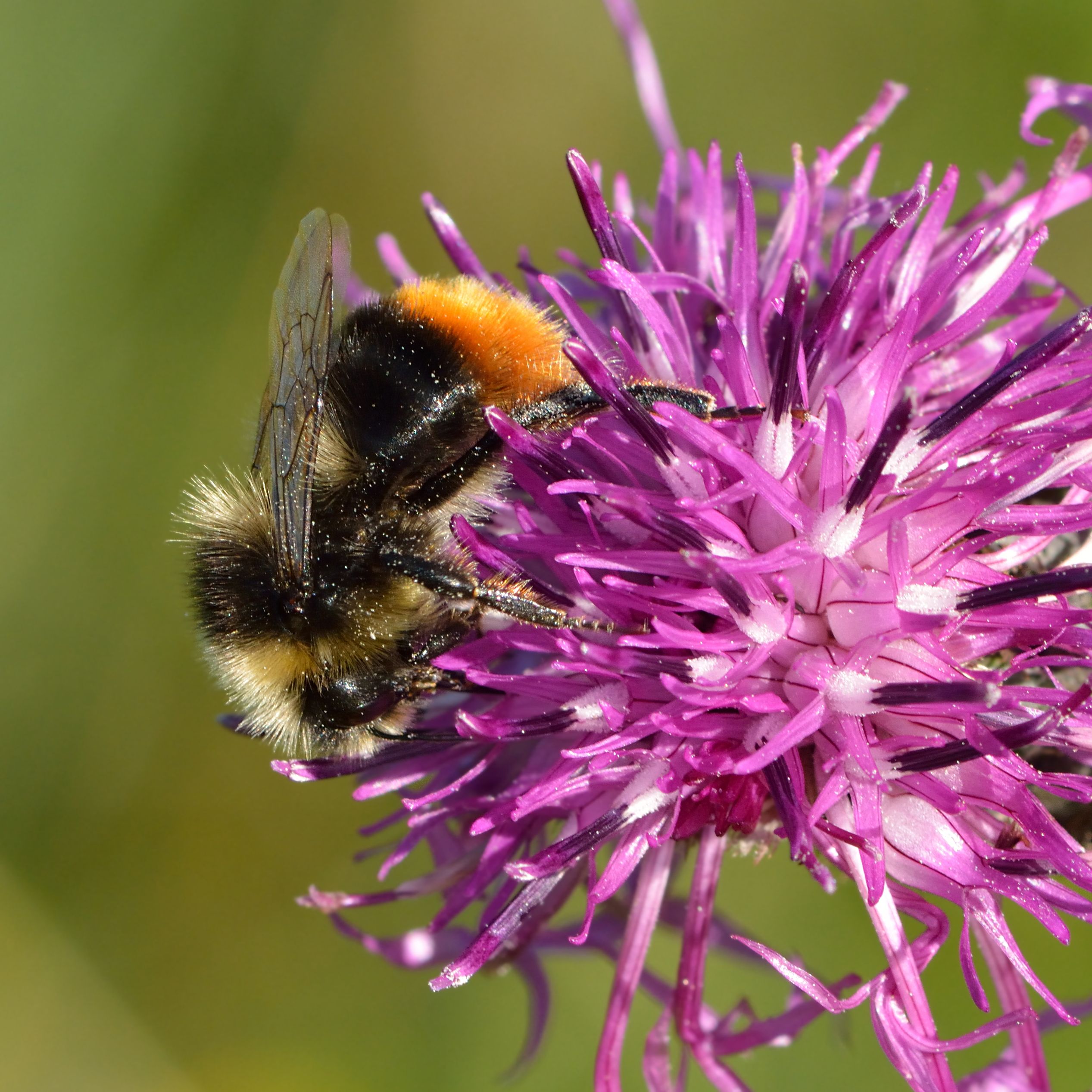
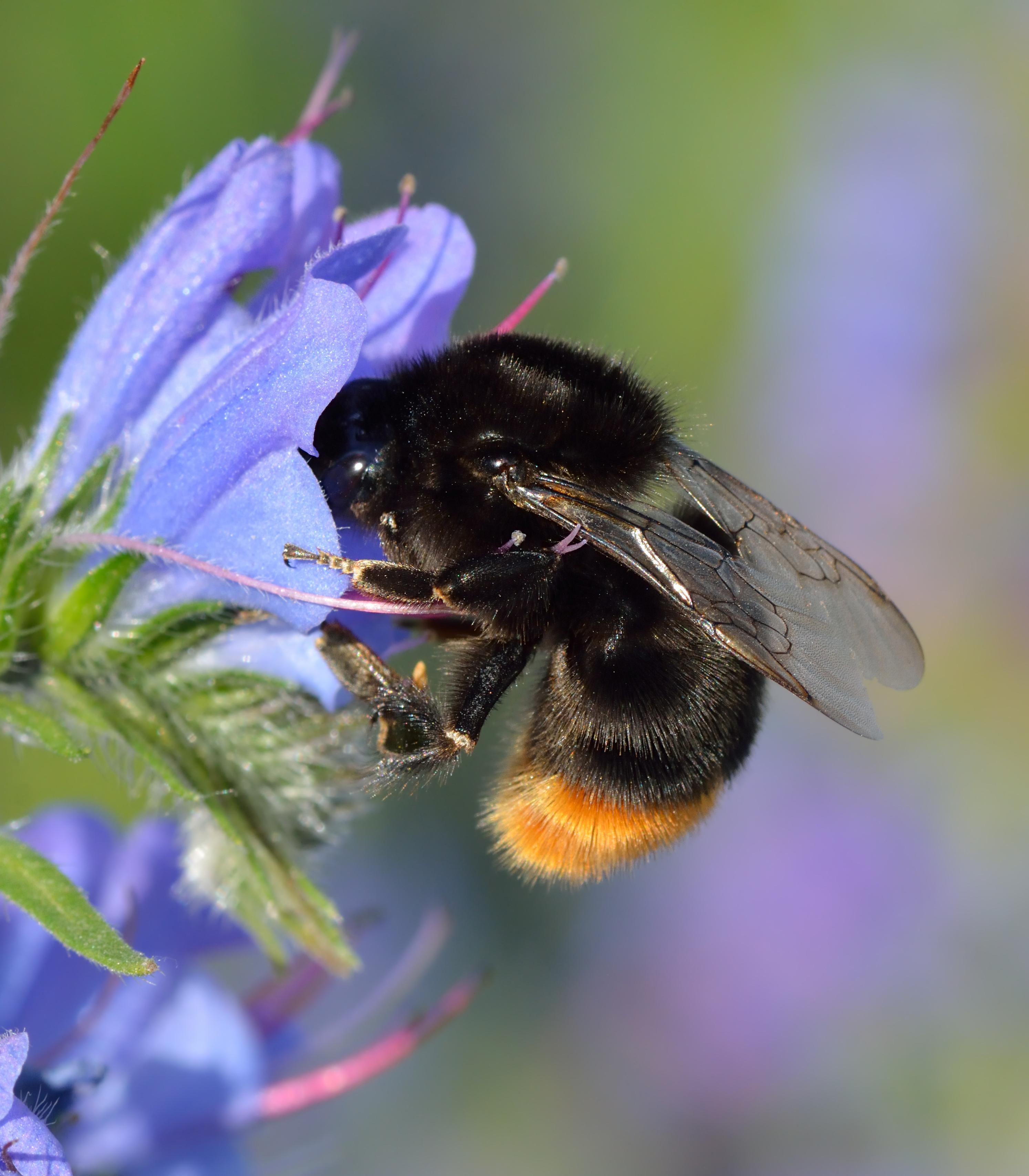
The red-tailed bumblebee has long hairs and is mostly pitch black. The end of the abdomen is deep red. It turns reddish or yellow-orange in older bumblebees. The hairs on the hind legs are red.
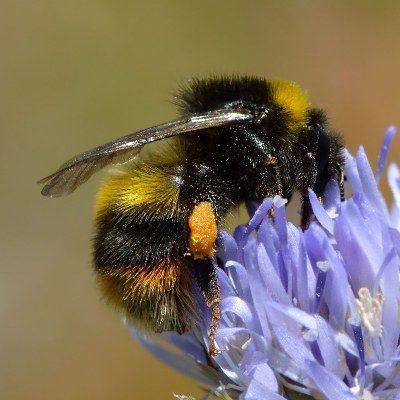
The males (drones) have a yellow band on their chest and are larger than the workers.
The queen is biggest.
Features
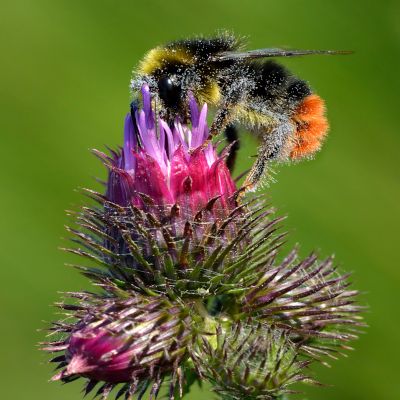
Red-tailed bumblebee
Bombus lapidarius
red abdomen
Similar species
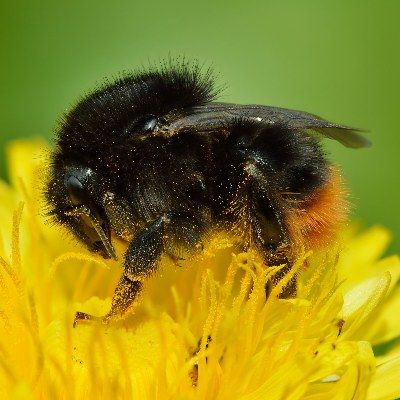
Red-shanked bumblebee
Bombus ruderarius
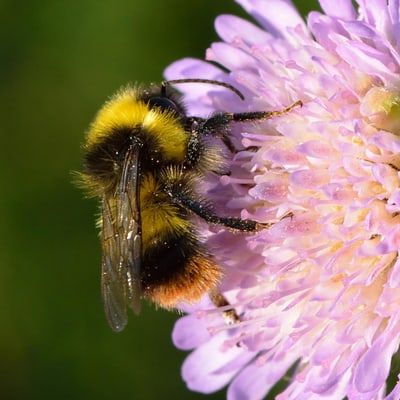
Early bumblebee
Bombus pratorum
Broken-belted bumblebee
Bombus soroeensis
In the city
Red-tailed bumblebees are found almost everywhere. However, they are not found in the forest. They often build their nests under stone piles or walls. Sometimes they also build nests in the straw of stables or in abandoned bird nests.
Fun Facts
It flies from March to October.
It is one of the most common species in Central Europe.
It prefers to feed on the nectar of clover and deadnettles.
Their colony consists of 100 to 200 workers.
Bumblebees can sting, but they are very peaceful and rather shy.
Bumblebees make an important contribution to the pollination of numerous flowers.
- Endangerment level Germany: not endangered
Sources
Männchen, Ivar Leidus, CC BY-SA 4.0, https://commons.wikimedia.org/wiki/File:Bombus_lapidarius_(male)_-_Centaurea_scabiosa_-_Keila.jpg
_-_Centaurea_scabiosa_-_Keila.jpg)
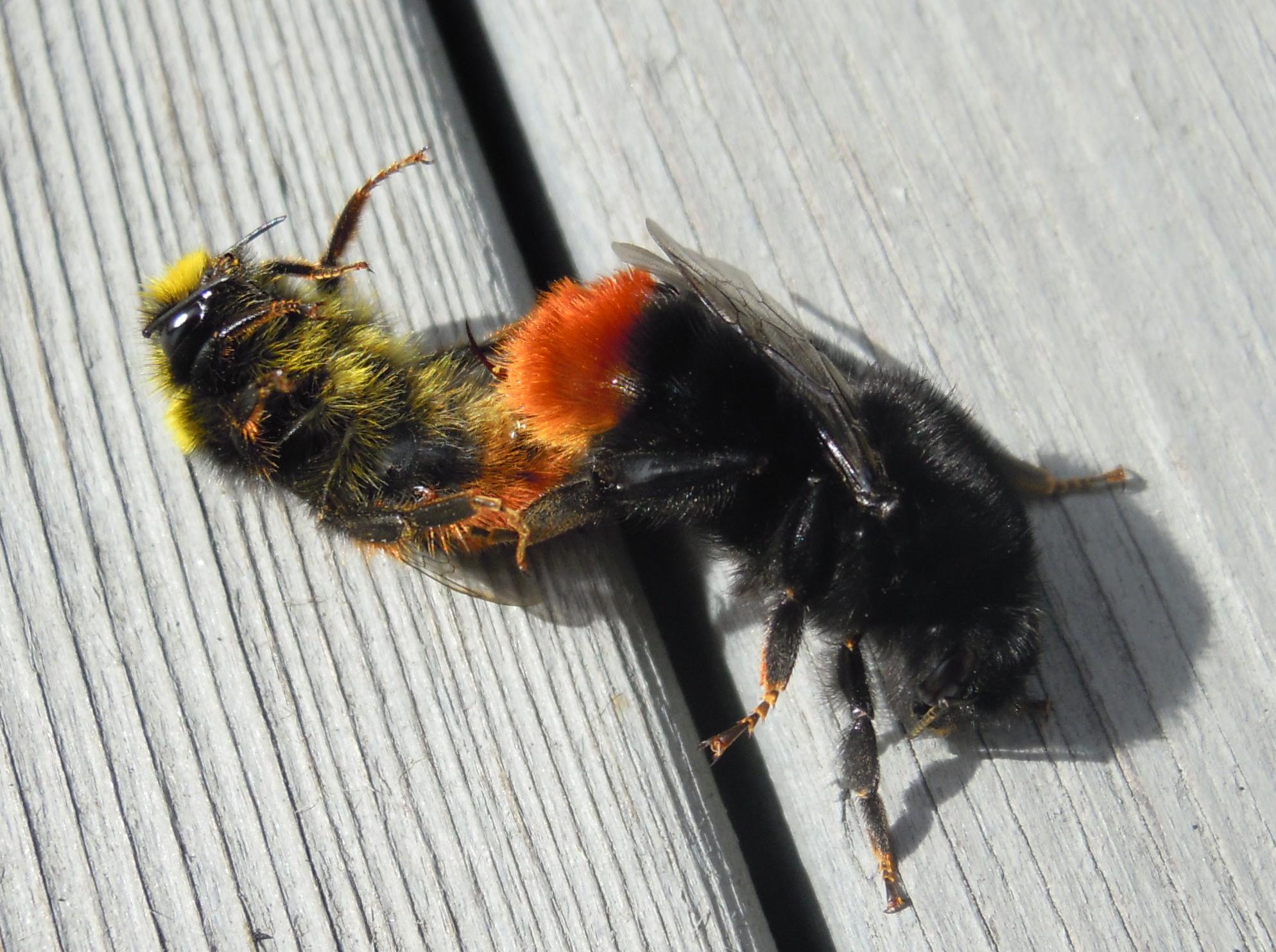
Paarung, Arnstein Rønning, CC BY-SA 3.0, https://commons.wikimedia.org/wiki/File:Bombus_lapidarius_Norway.JPG

Königin, Ivar Leidus, CC BY-SA 4.0, https://commons.wikimedia.org/wiki/File:Bombus_lapidarius_queen_-_Echium_vulgare_-_Keila.jpg

Bellmann, H. (1999) Der neue Kosmos-Insektenführer. Über1400 Fotos, Stuttgart: Franckh Kosmos Verlag.
Bellmann, H. (2005) Bienen, Wespen, Ameisen. Hautflügler Mitteleuropas, Stuttgart: Franckh Kosmos Verlag.
Saure, C. (2005) Rote Liste und Gesamtartenliste der Bienen und Wespen (Hymenoptera part.) von Berlin mit Angaben zu den Ameisen. : Der Landesbeauftragte für Naturschutz und Landschaftspflege / Senatsverwaltung für Stadtentwicklung (eds.) Rote Listen der gefährdeten Pflanzen und Tiere von Berlin, URL: https://www.berlin.de/sen/uvk/natur-und-gruen/naturschutz/artenschutz/artenlisten-rote-listen/insekten/ (Accessed: 29.03.2021).
Page „Steinhummel“. : Wikipedia, The Free Encyclopedia. Date of last revision: 24.07.2017, 21:29 UTC. URL: https://de.wikipedia.org/w/index.php?title=Steinhummel&oldid=167560019 (Accessed: 01.02.2018).
Funk, W. (2007-2018) Steinhummel, URL: http://www.insektenbox.de/hautfl/steihu.htm (Accessed: 01.02.2018).
Goulson, D. (2017) Bee Quest. In Search Of Rare Bees, München: Carl Hanser Verlag.
Kuratorium Insekt des Jahres (2005) Die Steinhummel. Bombus lapidarius. INSEKT DES JAHRES 2005, URL: http://www.senckenberg.de/files/content/forschung/institute/muencheberg/Insekt-des-Jahres-Flyer/2005_steinhummel.pdf (Accessed: 01.02.2018).
Martin, H.-J. (n.d.) Distelhummel – Bombus soroeensis, URL: http://www.wildbienen.de/b-soroee.htm (Accessed: 01.02.2018).
Nuß, M., Herzog, A. & Rothe, S. (2018) Steinhummel (Bombus lapidarius (Linnaeus, 1758)), URL: https://www.insekten-sachsen.de/Pages/TaxonomyBrowser.aspx?Id=231885 (Accessed: 01.02.2018).
Binot-Hafke, M., Balzer, S., Becker, N., Gruttke, H., Haupt, H., Hofbauer, N., Ludwig, G., Matzke-Hajek, G. & Strauch, M. (2011) Rote Liste gefährdeter Tiere, Pflanzen und Pilze Deutschlands. volume 3: Wirbellose Tiere (part 1), Bonn-Bad Godesberg: Bundesamt für Naturschutz.