
Short Description
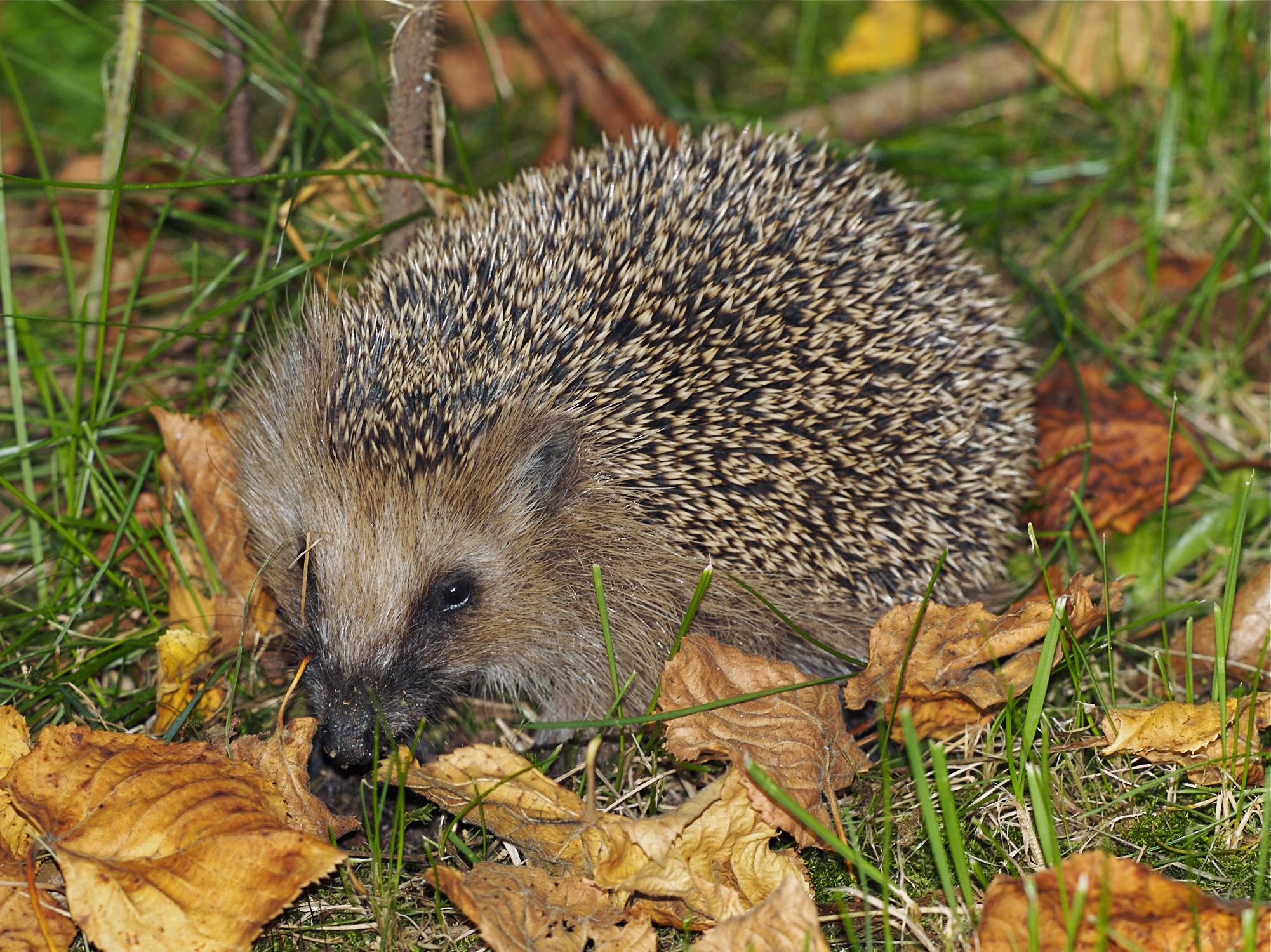
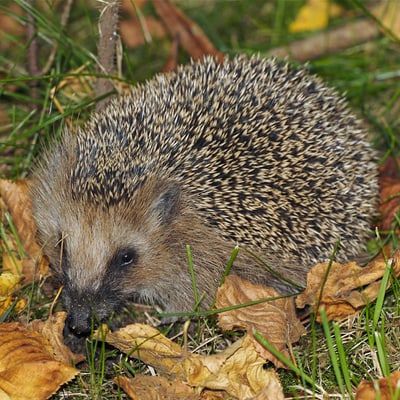
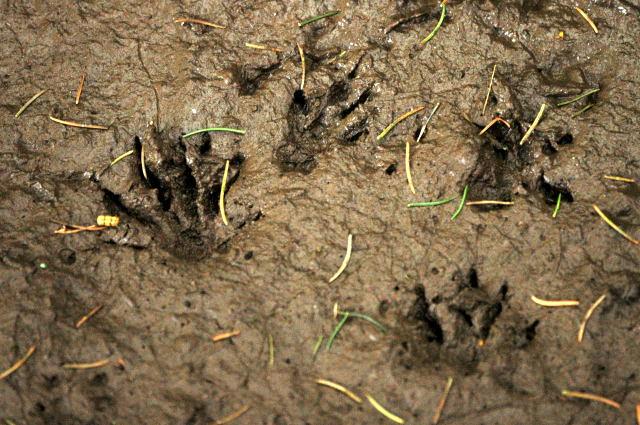
The hedgehog with its spiny coat is unique in Germany. It covers its head and back and consists of 6000 to 8000 long hard spines. Its track can be identified from foot prints with five claws. These are generally paired in a row or overlapping in a broad straddle.
Features
European hedgehog
Erinaceus europaeus
covered in spines
Schnaufen und Boxen
Tembrock, CC BY-SA 3.0

In the city
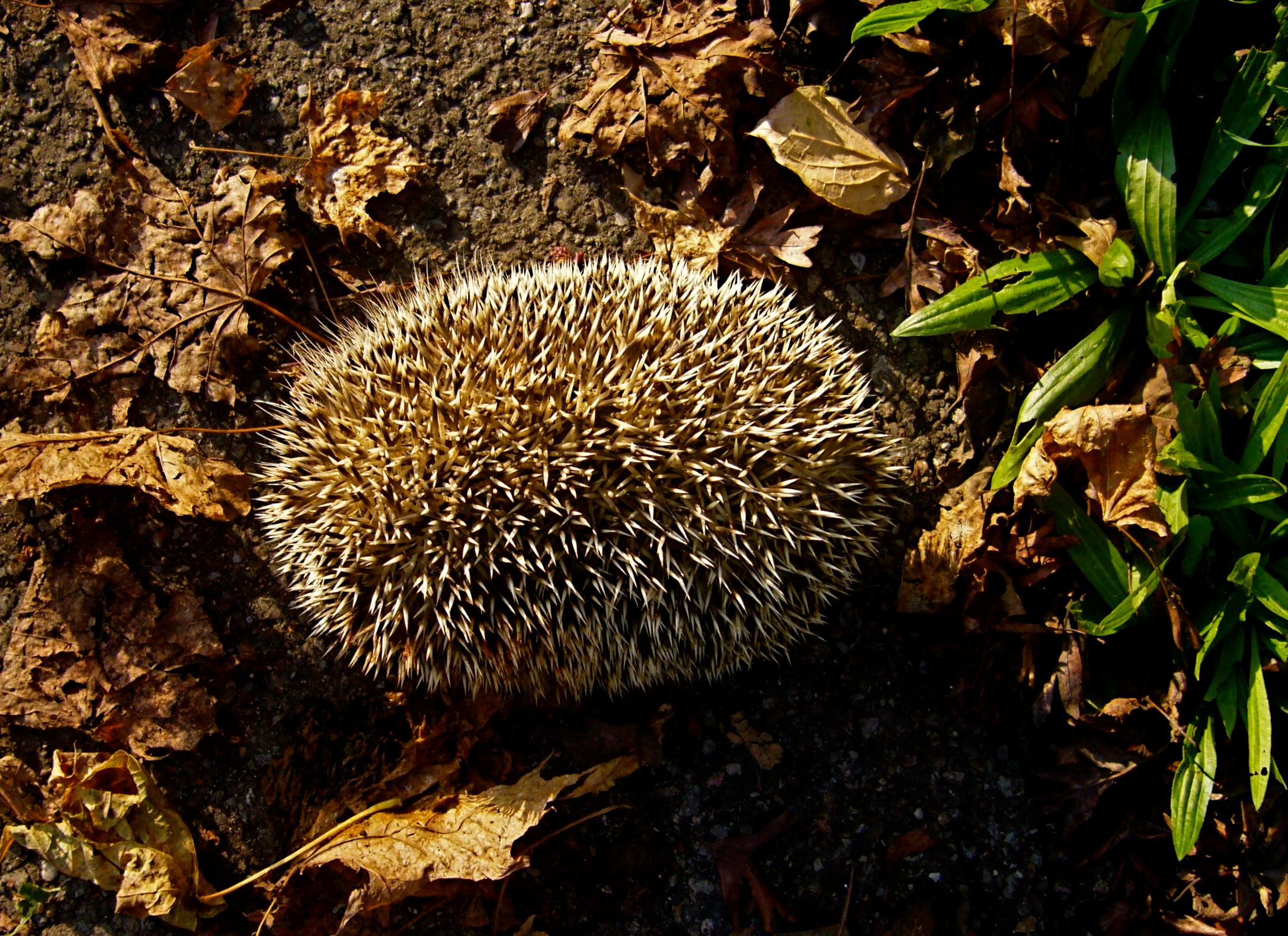
Nocturnal hedgehogs can be found in gardens, parks, cemeteries and uncultivated land. In an urban environment, it also feeds on cat food in addition to beetles, earthworms and slugs. Hedgehog-friendly gardens are equipped with piles of leaves, hedges or piles of stones in sufficient numbers which may serve the animals as their hibernation spots.
Hedgehogs often fall victim to car traffic when crossing larger roads.
Fun Facts
Hedgehogs hibernate from October to March. To this end, they look for warm places, for example dry piles of leaves or stones.
Hedgehogs are already born with approx. 100 soft white spines. In case of danger, they can curl almost entirely into their spiny coats.
Hedgehogs cannot digest plant-based food such as fruit, vegetables and berries because of their short unsophisticated digestive tract.
The spines are modified hairs. A spine generally lasts for 12 to 18 months before it drops out and is replaced.
As so-called "culture followers", hedgehogs prefer to live in human settlements. However, increasing building development and heavily frequented traffic routes are now leading to a decline in populations.
- Endangerment level Germany: Warning list
Sources
Habitus , Jörg Hempel, CC BY-SA 2.0, https://commons.wikimedia.org/wiki/File:Erinaceus_europaeus_LC0119.jpg

Trittsiegel, James Lindsey, CC BY-SA 3.0, http://popgen.unimaas.nl/~jlindsey/commanster.html
Habitus , Abderitestatos, CC BY-SA 3.0, https://commons.wikimedia.org/wiki/File:Erinaceus_europaeus_I.jpg

Leibniz-Institut für Zoo- und Wildtierforschung (n.d.) Braunbrustigel, URL: http://www.izw-berlin.de/braunbrustigel.html (Accessed: 06.05.2016).
Page „Braunbrustigel“. : Wikipedia, The Free Encyclopedia. Date of last revision: 19.04.2016, 08:24 UTC. URL: https://de.wikipedia.org/w/index.php?title=Braunbrustigel&oldid=153609833 (Accessed: 06.05.2016, 15:03 UTC)
Deutscher Jagdverband e.V. (2005) Fährten und Spuren: Bestimmungshilfe für Naturfreunde, URL: https://www.jagdverband.de/sites/default/files/Faehrten-und-Spuren_2015_RZ-vs.pdf (Accessed: 30.03.2021).
Landesbund für Vogelschutz in Bayern (LBV) e. V. (2021) Welches Tier hinterlässt welche Spuren? URL: https://www.igel-in-bayern.de/igel-spuren-abdruecke/ (Accessed: 30.03.2021).
Land Berlin (2015) Igel brauchen Winterschlaf, URL: http://www.berlin.de/special/haustiere/2840536-2840263-igel-brauchen-winterschlaf.html (Accessed: 06.05.2016).
BUND Darmstadt (n.d.) Igel richtig schützen – nur wenige Igel brauchen Hilfe im Herbst, URL: http://darmstadt.bund.net/service_und_beratung/igelschutz_aber_richtig/ (Accessed: 06.05.2016).
Haupt, H., Ludwig, G., Gruttke, H., Binot-Hafke, M., Otto C. & Pauly, A. (2009) Rote Liste gefährdeter Tiere, Pflanzen und Pilze Deutschlands. volume 1: Wirbeltiere, Bonn-Bad Godesberg: Bundesamt für Naturschutz.
Klawitter, J., Altenkamp, R., Kallasch, C., Köhler, D., Krauß, M., Rosenau, S. & Teige, T. (2005) Rote Liste und Gesamtartenliste der Säugetiere (Mammalia) von Berlin. : Der Landesbeauftragte für Naturschutz und Landschaftspflege / Senatsverwaltung für Stadtentwicklung (eds.) Rote Listen der gefährdeten Pflanzen und Tiere von Berlin, URL: https://www.berlin.de/sen/uvk/natur-und-gruen/naturschutz/artenschutz/artenlisten-rote-listen/saeugetiere/ (Accessed: 30.03.2021).
Boye, P. (1993) Heimische Säugetiere. Ein Bestimmungsschlüssel für die in der Bundesrepublik Deutschland wildlebenden Säugetiere, ausser den Ordnungen Robben, Paarhufer und Wale, Hamburg: Deutscher Jugendbund für Naturbeobachtungen.