
Short Description
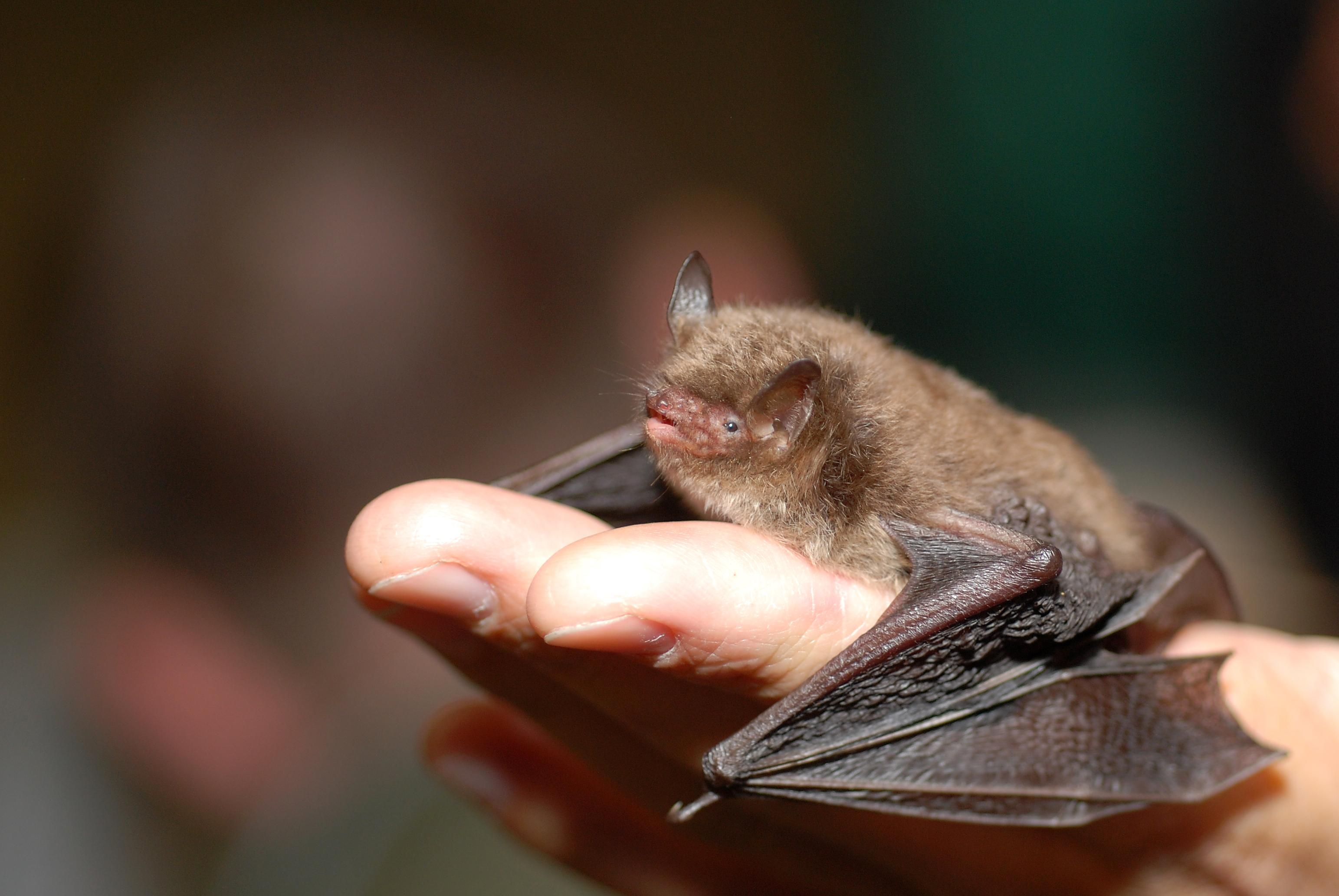
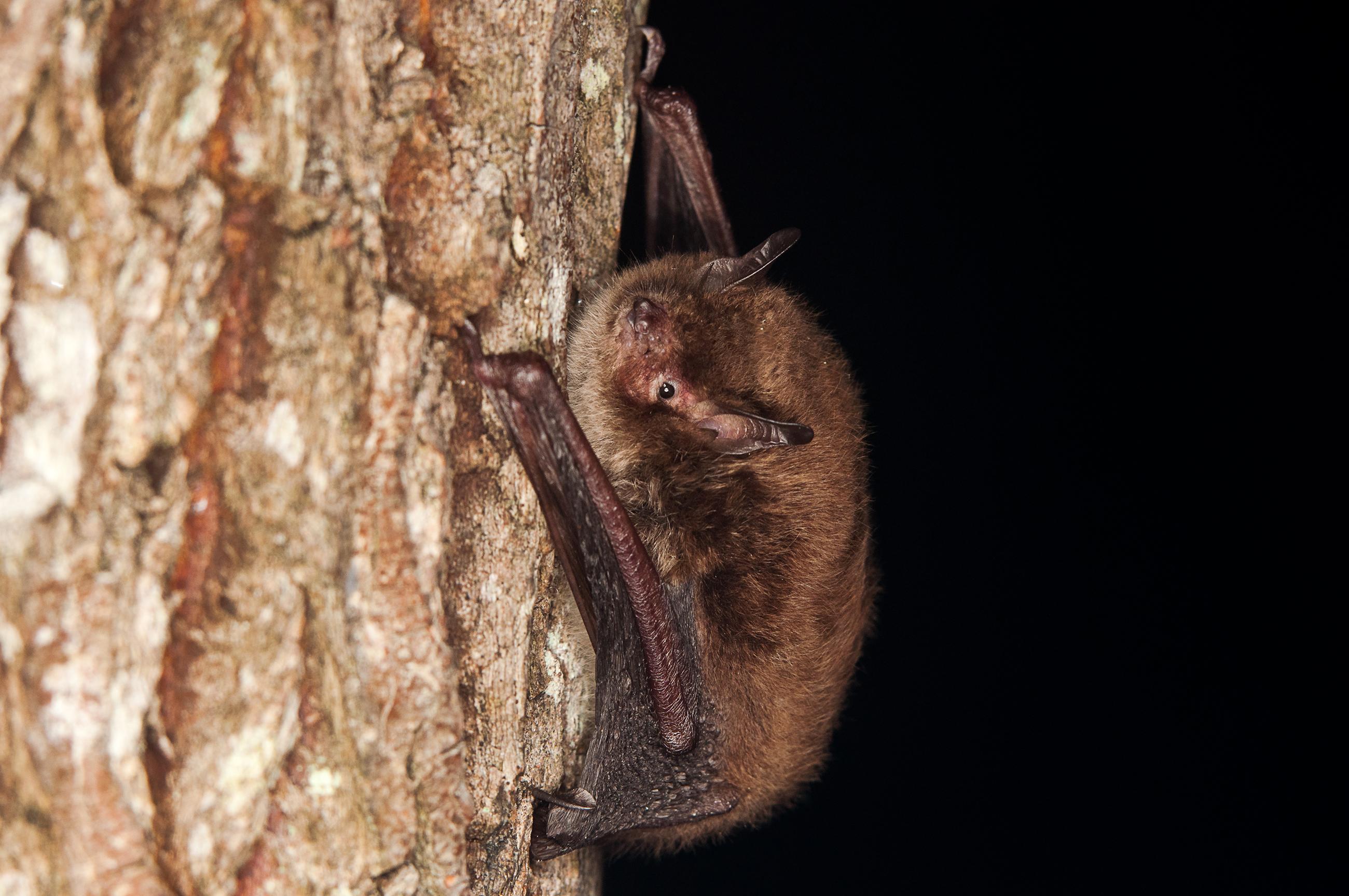
Daubenton’s bat is grey-brown with a paler underside and large feet. A typical feature is its hunting flight low over water.
Features
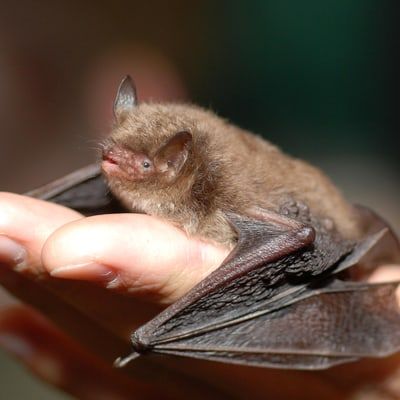
Daubenton’s bat
Myotis daubentonii
hunts low over water
Similar species
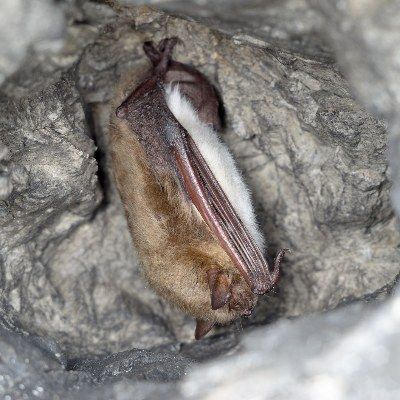
Pond bat
Myotis dasycneme
In the city
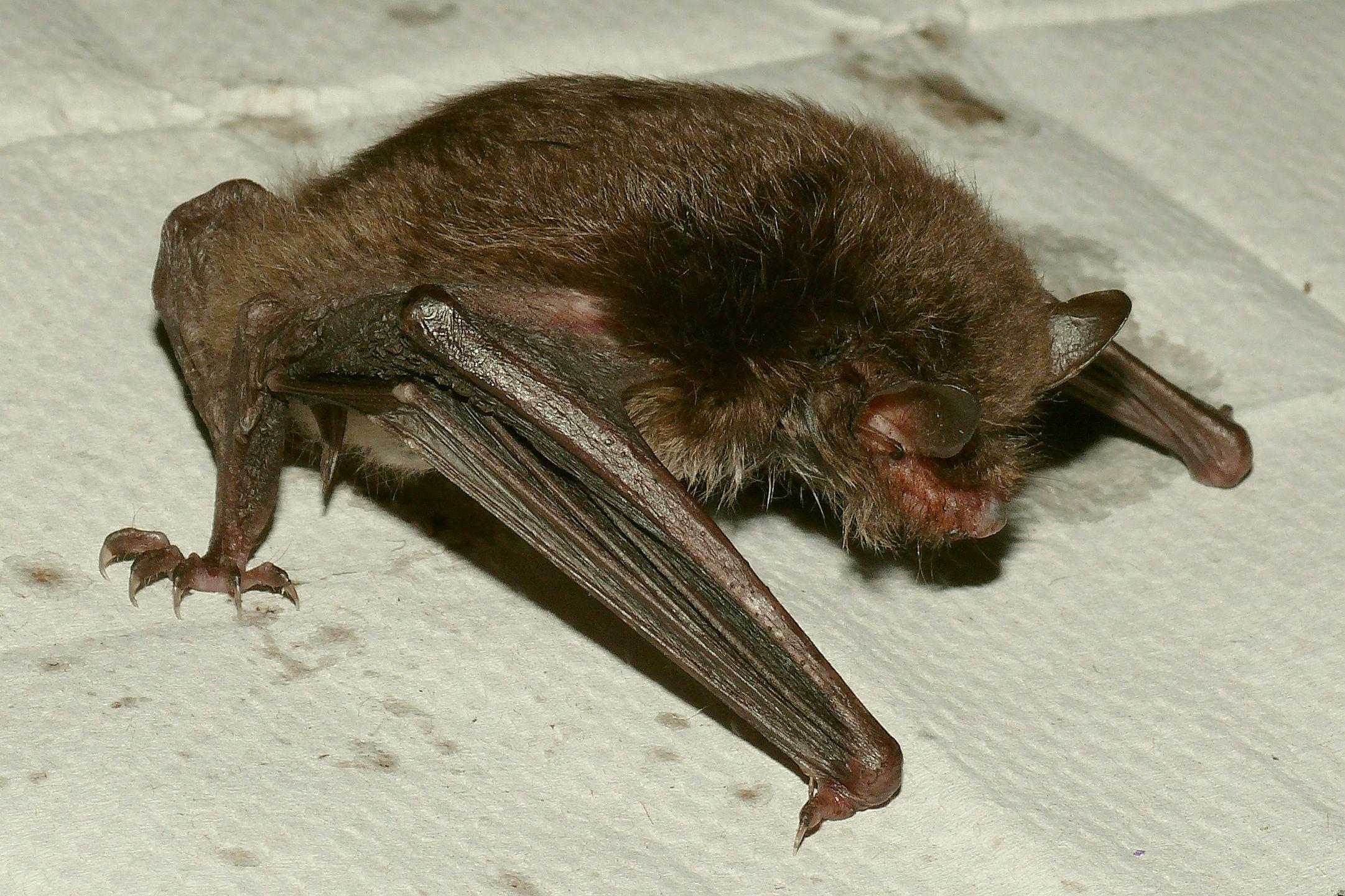
Daubenton’s bats hunt for insects such as midges over water. In an urban environment, they can be mainly found in parks in the summer; parks provide them with the required aquatic hunting grounds as well as with old trees for roosting. They hibernate in caves or buildings.
Fun Facts
Daubenton’s bats use their tail membrane like a scoop net.
About 300,000 bats are killed each year in Germany by wind turbines. Pressure variations near wind turbines cause their internal organs to burst (barotrauma).
Daubenton’s bats catch small insects from the water surface using their big feet.
In their hunting flight, they are guided by familiar flight routes. These are marked by tree trunks, hedges or the walls of buildings.
In winter, they hibernate together in a large group. For this, they seek out cool caves or niches with high humidity.
- Endangerment level Germany: not endangered
The scientific name honours the French zoologist Louis Jean-Marie Daubenton (1716-1799).
Sources
Habitus , Gilles San Martin, CC BY-SA 3.0, https://commons.wikimedia.org/wiki/File:Myotis_daubentoni.jpg

Habitus , Molekuel, CC BY-SA 2.5, https://commons.wikimedia.org/wiki/File:Myotis-P1040975.jpg

Habitus , Rauno Kalda, CC BY-SA 3.0, https://commons.wikimedia.org/wiki/File:Myotsi_daubentonii.jpg

Page „Wasserfledermaus“. : Wikipedia, The Free Encyclopedia. Date of last revision: 17.04.2016, 13:02 UTC. URL: https://de.wikipedia.org/w/index.php?title=Wasserfledermaus&oldid=153555366 (Accessed: 10.05.2016).
Leibniz-Institut für Zoo- und Wildtierforschung (n.d.) Zwergfledermaus, URL: http://www.izw-berlin.de/zwergfledermaus.html (Accessed: 11.05.2016).
Page „Teichfledermaus“. : Wikipedia, The Free Encyclopedia. Date of last revision: 03.04.2016, 21:20 UTC. URL: https://de.wikipedia.org/w/index.php?title=Teichfledermaus&oldid=153143225 (Accessed: 11.05.2016).
Landesfachausschuss Fledermausschutz NRW (NABU) (2000-2016) Wasserfledermaus (Myotis daubentonii), URL: http://www.fledermausschutz.de/fledermausarten-in-europa/wasserfledermaus-myotis-daubentonii/ (Accessed: 30.12.2016).
NABU – Naturschutzbund Deutschland e.V. (n.d.) Wasserfledermaus und Teichfledermaus. Nächtliche Flugshow über dem Wasser, URL: https://www.nabu.de/tiere-und-pflanzen/saeugetiere/fledermaeuse/arten/01337.html (Accessed: 30.12.2016).
Bundesamt für Naturschutz (n.d.) Wasserfledermaus, URL: http://www.ffh-anhang4.bfn.de/ffh-anhang4-wasserfledermaus.html (Accessed: 30.12.2016).
Klawitter, J., Altenkamp, R., Kallasch, C., Köhler, D., Krauß, M., Rosenau, S. & Teige, T. (2005) Rote Liste und Gesamtartenliste der Säugetiere (Mammalia) von Berlin. : Der Landesbeauftragte für Naturschutz und Landschaftspflege / Senatsverwaltung für Stadtentwicklung (eds.) Rote Listen der gefährdeten Pflanzen und Tiere von Berlin, URL: https://www.berlin.de/sen/uvk/natur-und-gruen/naturschutz/artenschutz/artenlisten-rote-listen/saeugetiere/ (Accessed: 30.03.2021).
Haupt, H., Ludwig, G., Gruttke, H., Binot.Hafke, M., Otto C. & Pauly, A. (RED.) (2009): Rote Liste gefährdeter Tiere, Pflanzen und Pilze Deutschlands. Band 1: Wirbeltiere. Bundesamt für Naturschutz, Bonn-Bad Godesberg