
Short Description
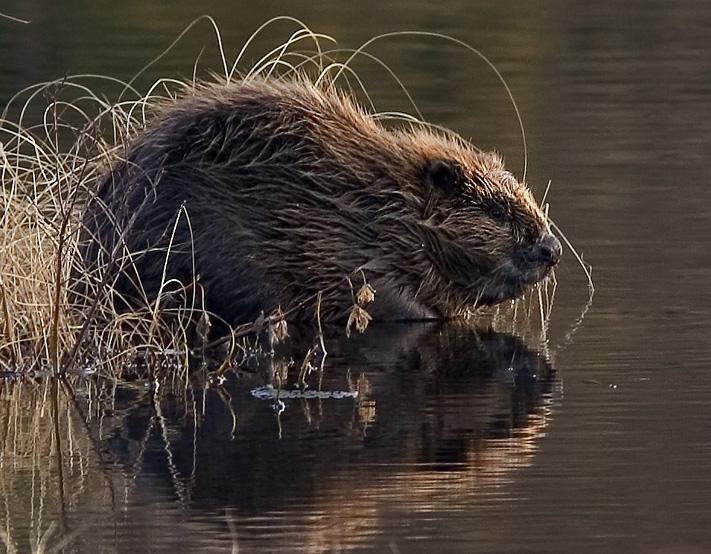
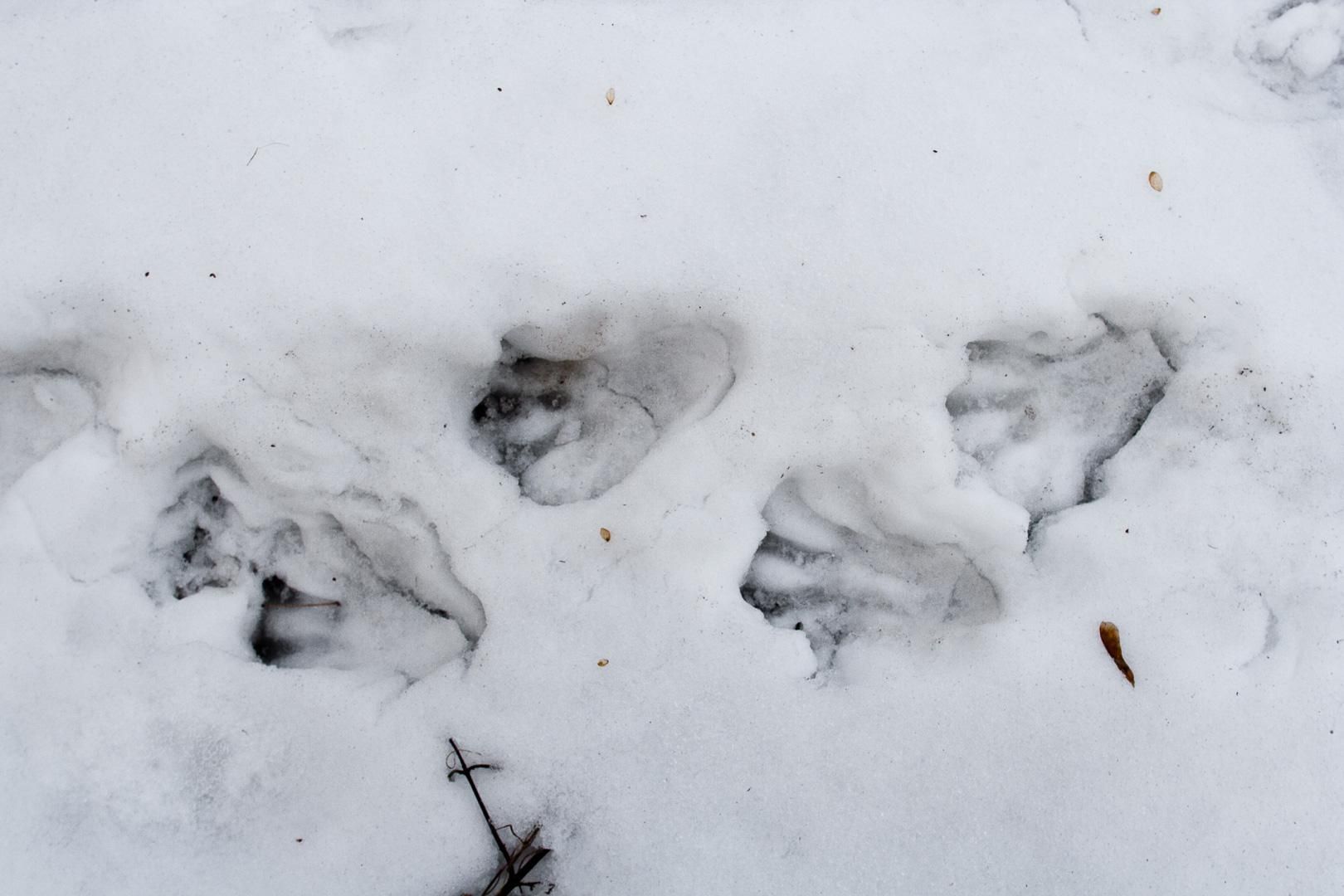
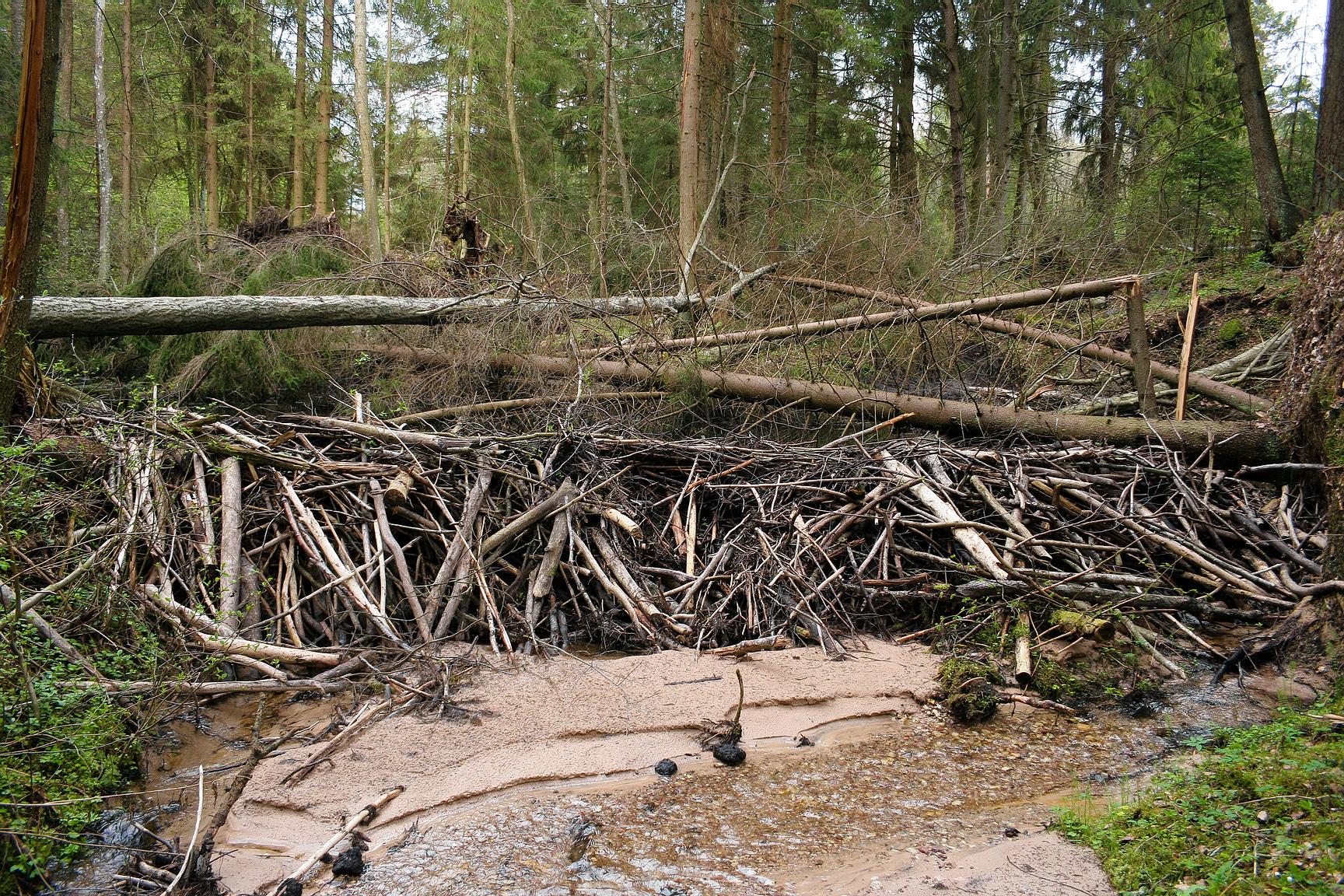
The beaver is the largest indigenous rodent. Its long flat scaly tail is unmistakable. Its fur is grey to dark-brown with a lighter abdomen. When swimming, its head and nape are visible out of the water. Mostly, though, only the traces of its activities can be seen: beaver lodges, dams and gnawed trees. It has five finger-like toes with webbing in between. On soft ground, the prints of the webbing and the main balls of the foot are generally easy to identify.

Features
European beaver
Castor fiber
flat, scaly tail
head and nape are visible when swimming
Similar species
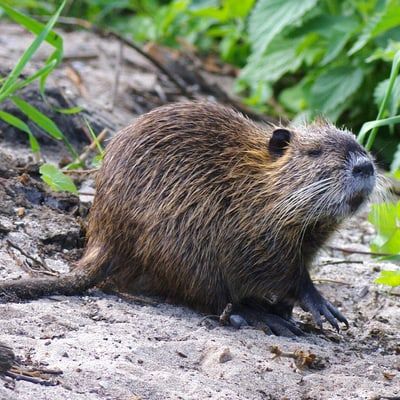
Nutria
Myocastor coypus
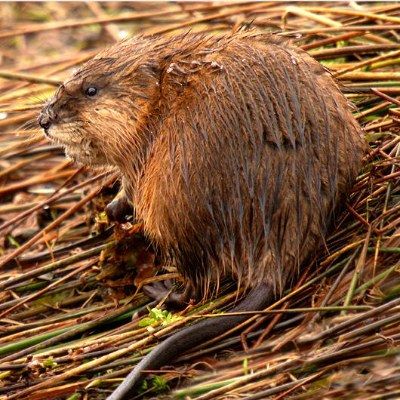
Muskrat
Ondatra zibethicus
In the city
Beavers can be found close to bodies of water with a minimum depth of 60-90 cm and suitable areas for the construction of beaver lodges. In Berlin, beaver populations have been reported in the park of Charlottenburg Palace, in Tiergarten and in the area of the Rummelsburger Bucht and elsewhere.
In rural areas, conflicts are more common, because beavers actively change the landscape and affect water levels. They also cause considerable damage to fruit trees and cultivated trees. By contrast, their move into the inner city has been reported positively in the press. However, they often fall victim to road traffic here.
Fun Facts
Beavers use their tails as rudders when swimming.
In the Middle Ages, beavers were declared fish so that they could be eaten during Lent.
Today, beavers are widespread in Germany. This is due to both migration and targeted introductions for species protection and water and floodplain conservation reasons.
With its dams, the beaver performs important storage functions that support natural floodplain dynamics and can even serve as flood protection. The habitats shaped by beavers also provide a home for many other species, thus promoting biodiversity in waterways and floodplains.
Beavers can grease their dense coats with the aid of special glands. This serves as protection against loss of body heat in the water.
A beaver’s long pointed incisors grow continuously. It wears them down on young shoots and tree trunks. Typical beaver traces include tree trunks gnawed to a point and deep scratch marks.
In the 20th century, beavers were reintroduced in Europe. In some instances, non-native species like the Canadian beaver were also introduced.
- Endangerment level Germany: Warning list
Sources
Habitus, Per Harald Olsen, CC BY-SA 3.0, https://commons.wikimedia.org/wiki/File:Beaver_pho34.jpg

Trittsiegel, Dariusz Kowalczyk, CC BY-SA 4.0, https://commons.wikimedia.org/wiki/File:Beaver_Castor_fiber_tracks_in_snow.jpg

Bau, Juliux, CC BY-SA 3.0, https://commons.wikimedia.org/wiki/File:Beaver_dam.jpg

Page „Europäischer Biber“. : Wikipedia, The Free Encyclopedia. Date of last revision: 29.04.2016, 09:37 UTC. URL: https://de.wikipedia.org/w/index.php?title=Europ%C3%A4ischer_Biber&oldid=153935803 (Accessed: 09.05.2016).
Artenfinder (2016) Castor fiber (Europäischer Biber), URL: https://arteninfo.net/elearning/saeugetiere/speciesportrait/3217 (Accessed: 09.05.2016).
Grand-Duché de Luxembourg Région wallonne (2007) Spuren/Trittsiegel erkennen. Spurensucherschulung: Europa LIFE, URL: http://www.loutres.be/IMG/pdf/Spurensucherschulung.pdf (Accessed: 01.12.2016).
Haupt, H., Ludwig, G., Gruttke, H., Binot-Hafke, M., Otto C. & Pauly, A. (2009) Rote Liste gefährdeter Tiere, Pflanzen und Pilze Deutschlands. volume 1: Wirbeltiere, Bonn-Bad Godesberg: Bundesamt für Naturschutz.
Klawitter, J., Altenkamp, R., Kallasch, C., Köhler, D., Krauß, M., Rosenau, S. & Teige, T. (2005) Rote Liste und Gesamtartenliste der Säugetiere (Mammalia) von Berlin. : Der Landesbeauftragte für Naturschutz und Landschaftspflege / Senatsverwaltung für Stadtentwicklung (eds.) Rote Listen der gefährdeten Pflanzen und Tiere von Berlin, URL: https://www.berlin.de/sen/uvk/natur-und-gruen/naturschutz/artenschutz/artenlisten-rote-listen/saeugetiere/ (Accessed: 30.03.2021).
Bezirksamt Lichtenberg von Berlin, Umwelt- und Naturschutzamt (n.d.) Biber (Castor fiber), URL: https://www.berlin.de/ba-lichtenberg/auf-einen-blick/freizeit/gruen/artikel.280128.php (Accessed: 09.05.2016).
BUND Landesverband Berlin (n.d.) Biber, URL: http://www.bund-berlin.de/bund_berlinde/home/naturschutz/artenschutz_in_der_stadt/berliner_biber.html (Accessed: 09.05.2016).
Laninger, T. (2014) Biber in Berlin - Die Großstadt als Freibad für die Nager, URL: http://www.morgenpost.de/berlin/article130853011/Biber-in-Berlin-Die-Grossstadt-als-Freibad-fuer-die-Nager.html (Accessed: 09.05.2016).
Schwaab, G. (2014) Handbuch für den Biberberater, URL: http://biberhandbuch.de/Biberhandbuch_Komplett/Handbuch_Biberberater_Webversion.pdf (Accessed: 26.09.2025).