
Short Description
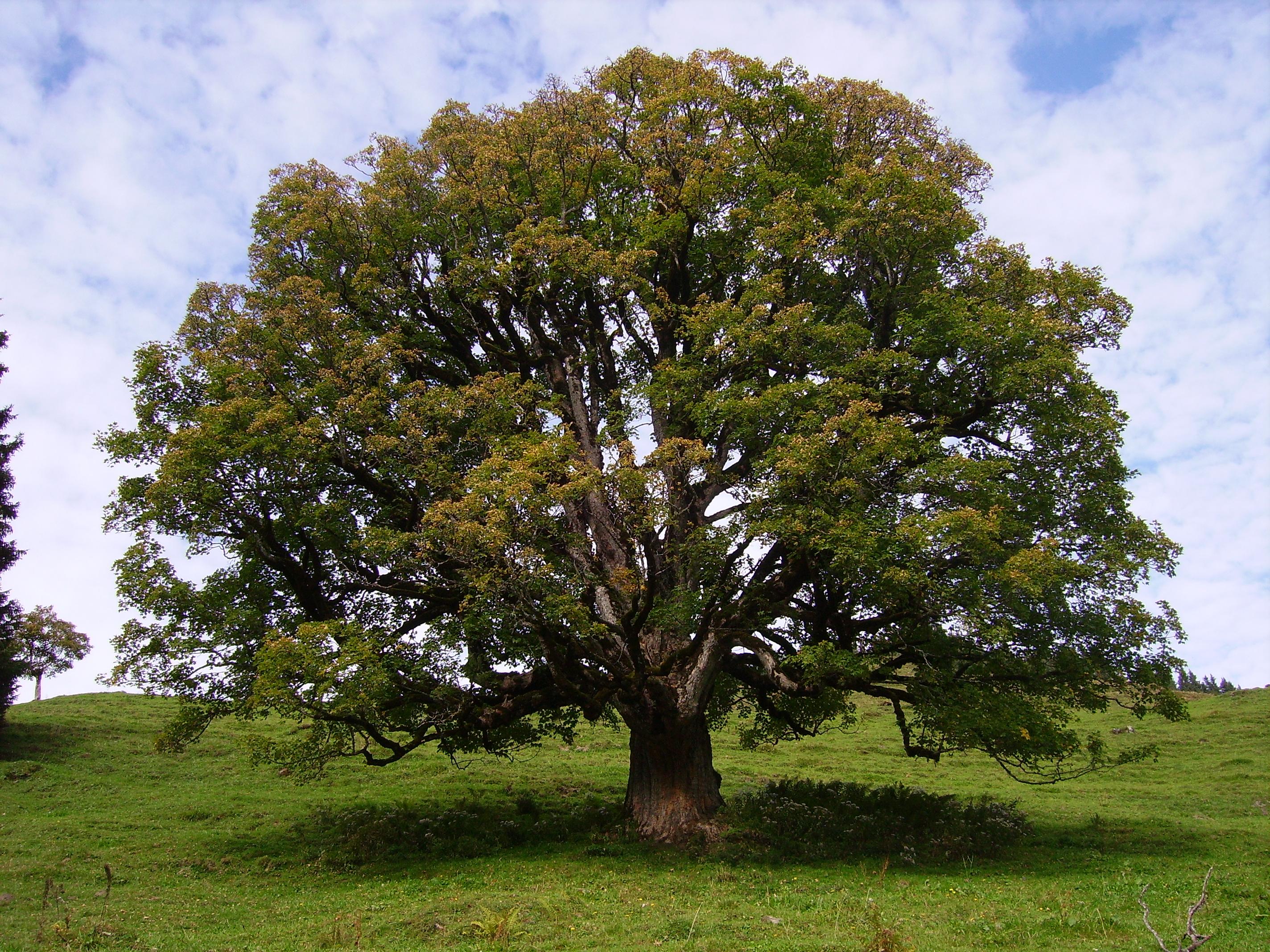
The sycamore is deciduous and can grow up to 35 m tall.
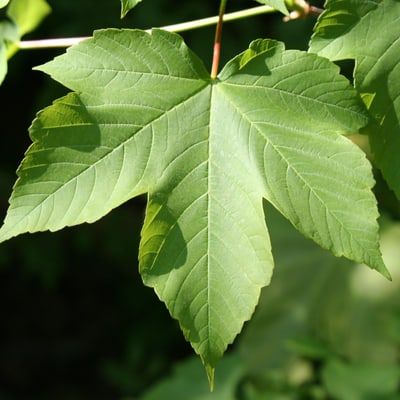
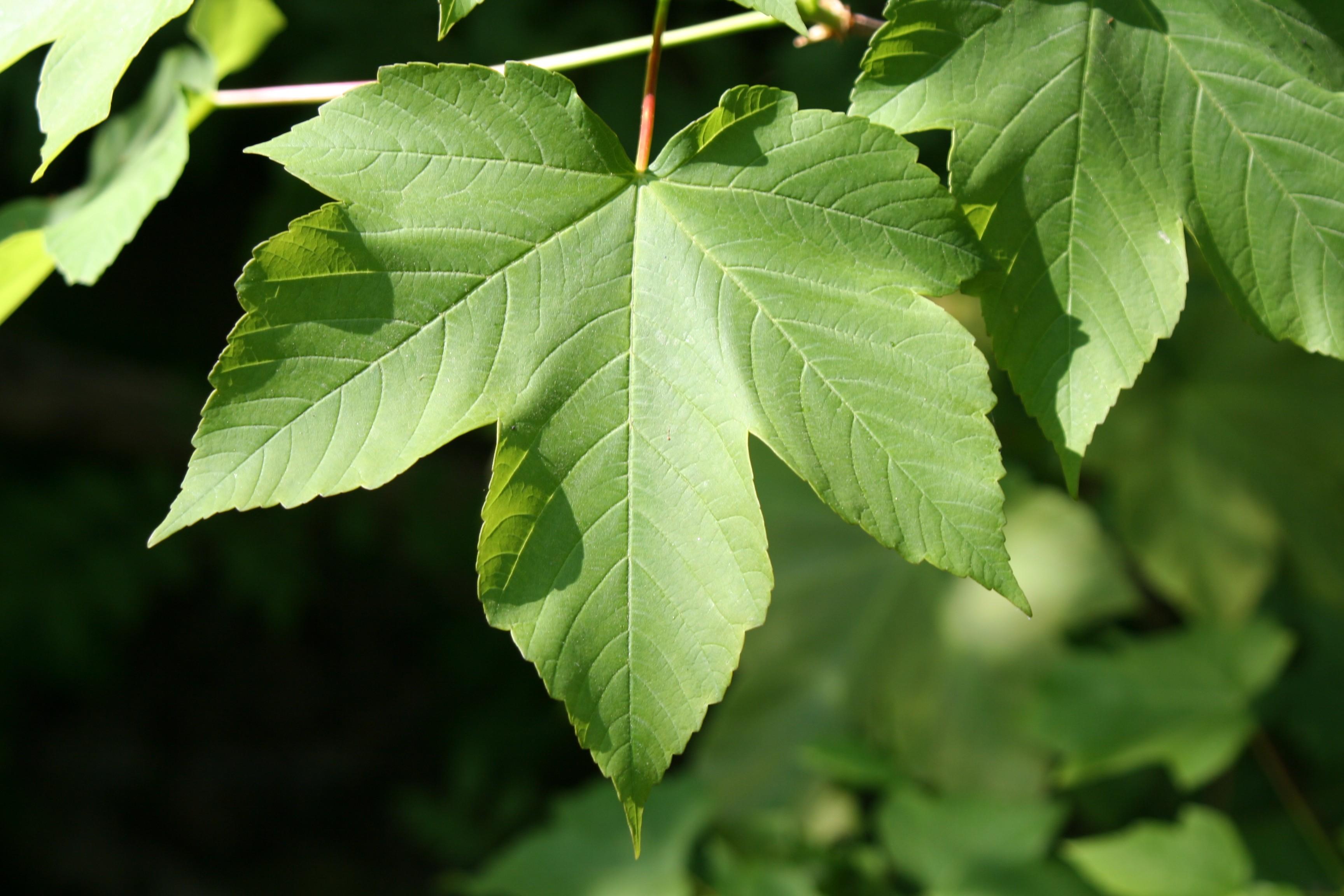
The leaves grow oppositely on the branch. They are palmately lobed with deep indentations and have a long stalk. The upper side is dark green. The underside is greyish-green and sparsely haired. The leaf margins are irregularly coarsely serrated.
The trunk is generally short and erect. The bark is initially grey-brown and smooth. With age, it becomes reddish with flaking scales.
The flowers are yellow-green and grow in pendulous elongated panicles.
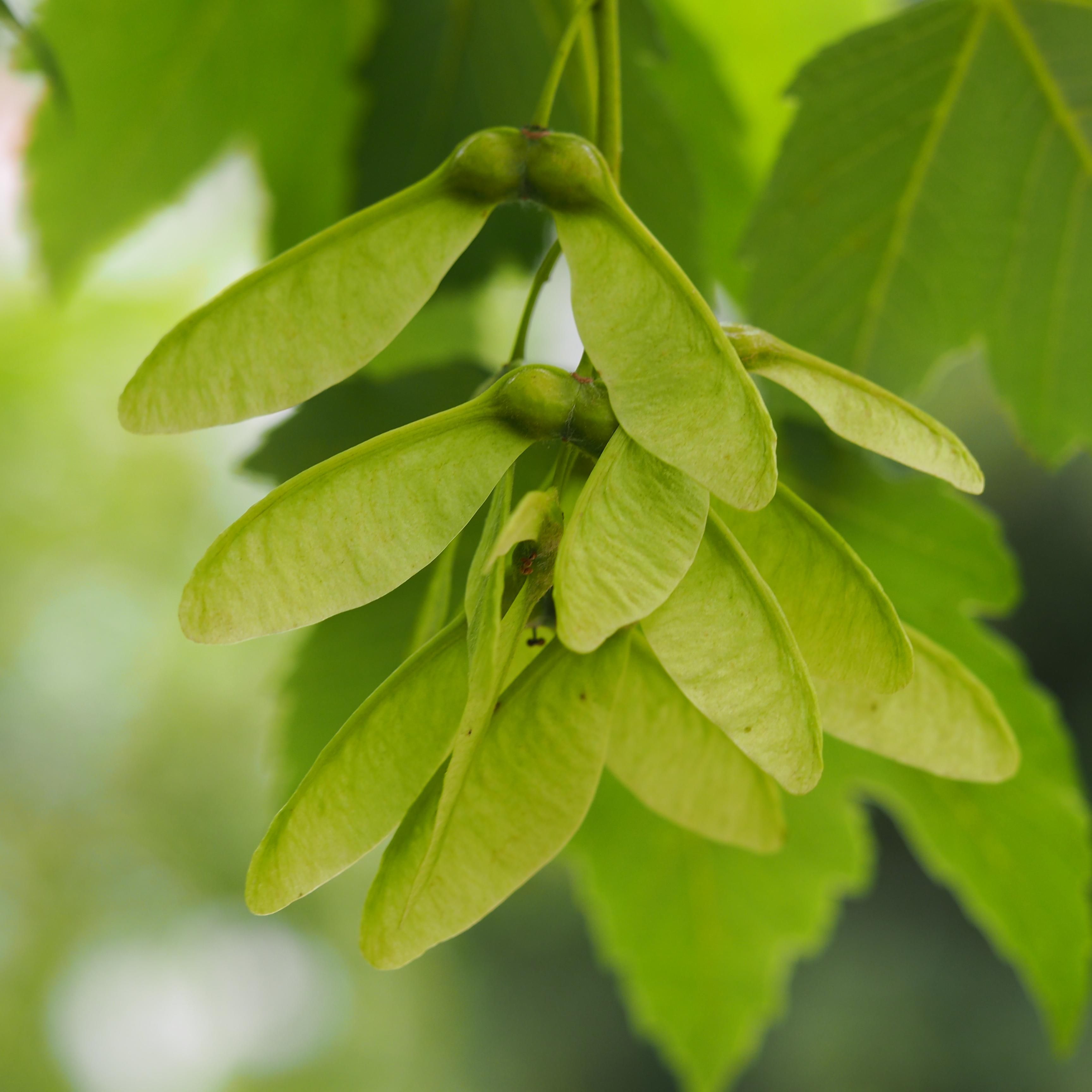
The fruit is a winged nut fruit. Two winged fruits form a schizocarp fruit. The wings are arranged at a sharp angle to each other.
Features
Sycamore
Acer pseudoplatanus
leaves very deeply lobed, hand-shaped
wings of the fruits at a sharp angle to each other
Similar species
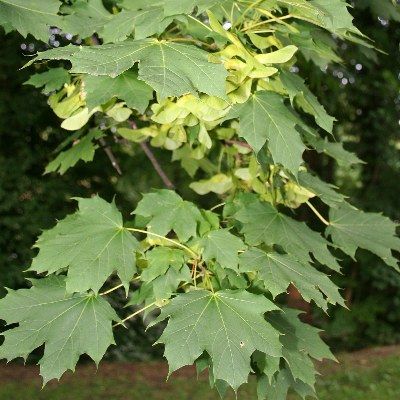
Norway maple
Acer platanoides
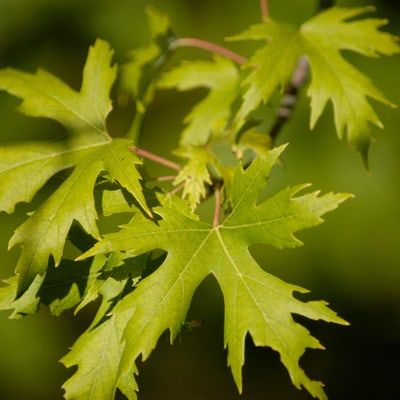
Silver maple
Acer saccharinum
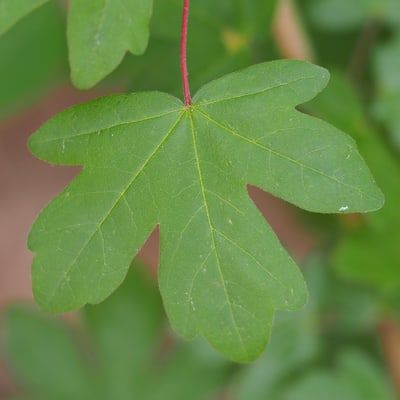
Field maple
Acer campestre
In the city
The species was often planted in the city in the past and is now very common. Many maple species produce numerous fruits, so that the trees can often spread by themselves within the city. Because of its large leaves, the sycamore provides relatively good noise protection along roads. Its potential for improving urban air quality by binding particulate matter is also discussed.
Fun Facts
The flowers of maple species are mainly bisexual, i.e. the flower contains female and male parts. However, there are also single-sex flowers, i.e. only male or only female parts are present. The reason for this is the development from insect pollination of the bisexual flowers to wind pollination of the single-sex flowers.
It flowers from April to May.
The fruit ripening season is in September to October.
- Endangerment level Germany: not endangered
Its leaves, branches and syrup are used in natural medicine. They are said to have an anti-inflammatory effect.
Sources
Frucht, Alice Kracht, CC BY-SA 4.0, https://offene-naturfuehrer.de/web/Datei:Acer_pseudoplatanus_(32).JPG
.JPG)
Habitus, MurielBendel, CC BY-SA 4.0, https://commons.wikimedia.org/wiki/File:Acer_pseudoplatanus_Chaltenbrunnen.jpg

Blatt, Rosenzweig, CC BY-SA 3.0, https://commons.wikimedia.org/wiki/File:Acer_pseudoplatanus_leaf_Weinsberg_20070506.jpg

Aas, G. & Riedmiller, A. (2002) Laubbäume. Bestimmen – Kennenlernen – Schützen, Bindlach: Gondrom Verlag.
Amann, G. & Richter, P. (1962) Bäume und Sträucher des Waldes, Melsungen: Verlag J. Neumann – Neudamm.
Forum DIE GRÜNE STADT (2013) Bäume und Pflanzen lassen Städte atmen. Schwerpunkt - Feinstaub, URL: https://www.die-gruene-stadt.de/baeume-und-pflanzen-lassen-staedte-atmen.pdfx (Accessed: 02.08.2018).
Umweltforschungszentrum Leipzig - Halle GmbH, Sektion Biozönoseforschung (n.d.) Datenbank biologisch-ökologischer Merkmale der Flora von Deutschland, URL: www.biolflor.de (Accessed: 20.04.2016).
Page „Berg-Ahorn“. : Wikipedia, The Free Encyclopedia. Date of last revision: 10.04.2016, 09:41 UTC. URL: https://de.wikipedia.org/w/index.php?title=Berg-Ahorn&oldid=153341704 (Accessed: 15.04.2016).