
Short Description
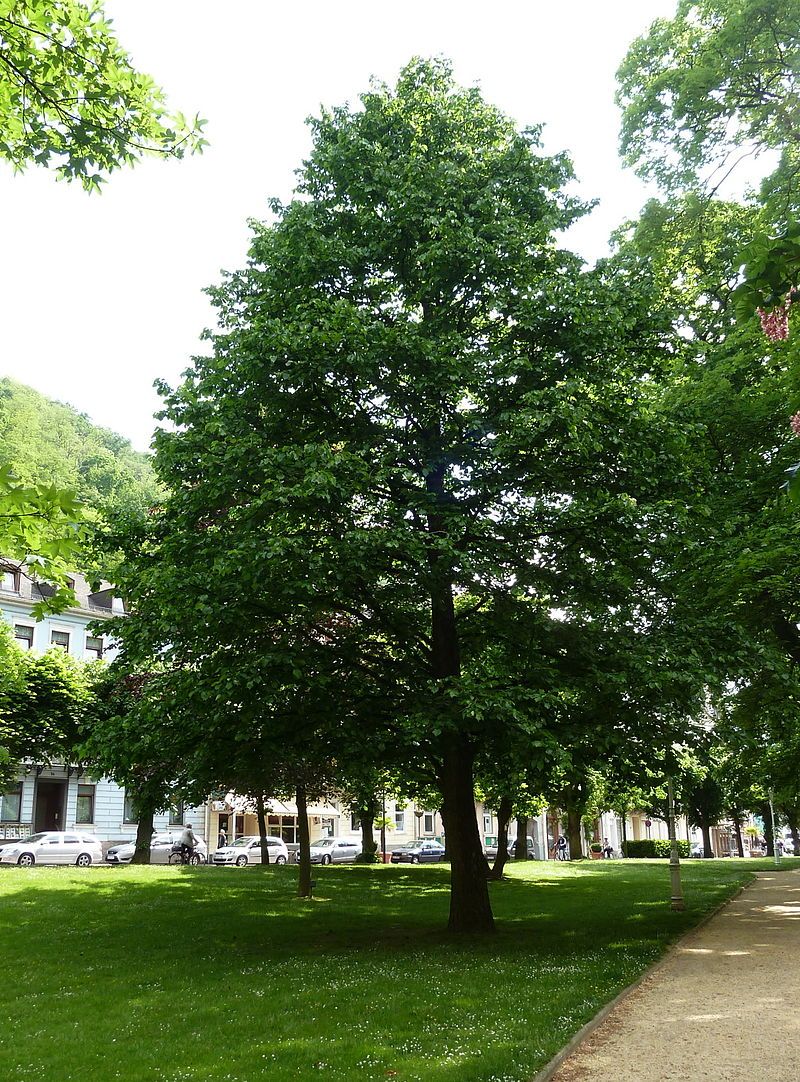
Turkish hazel is a single trunk tree with a dense cone-shaped crown; it can grow to a height of up to 20 m.
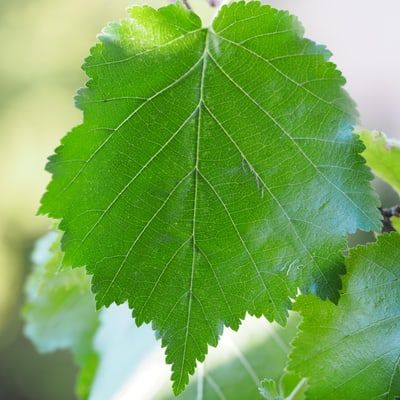
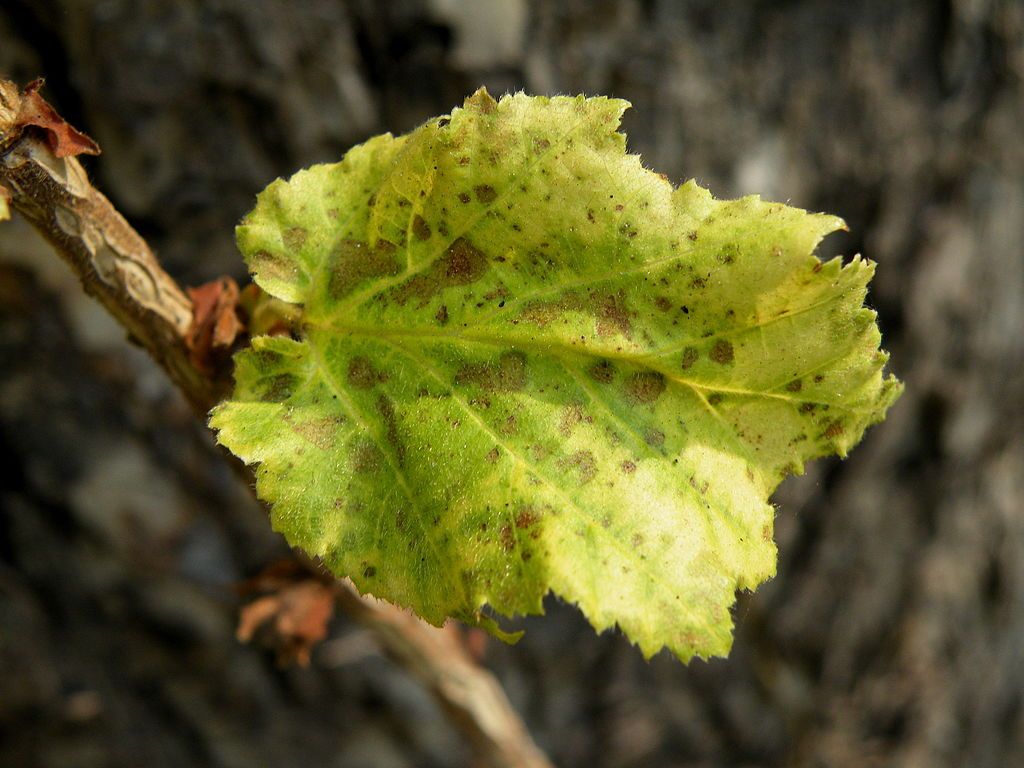
The leaves grow alternately on the branch. They are roundish in shape, pointed with a heart-shaped base. The leaf edges are double-serrated and often also slightly lobed.
The bark is reddish-brown with obvious furrows. With age, it turns dark brown with a rough scaly bark.
Male flowers are known as ‘catkins’ and are brownish in colour. The female flower heads look like leaf buds with protruding thread-like red scars.
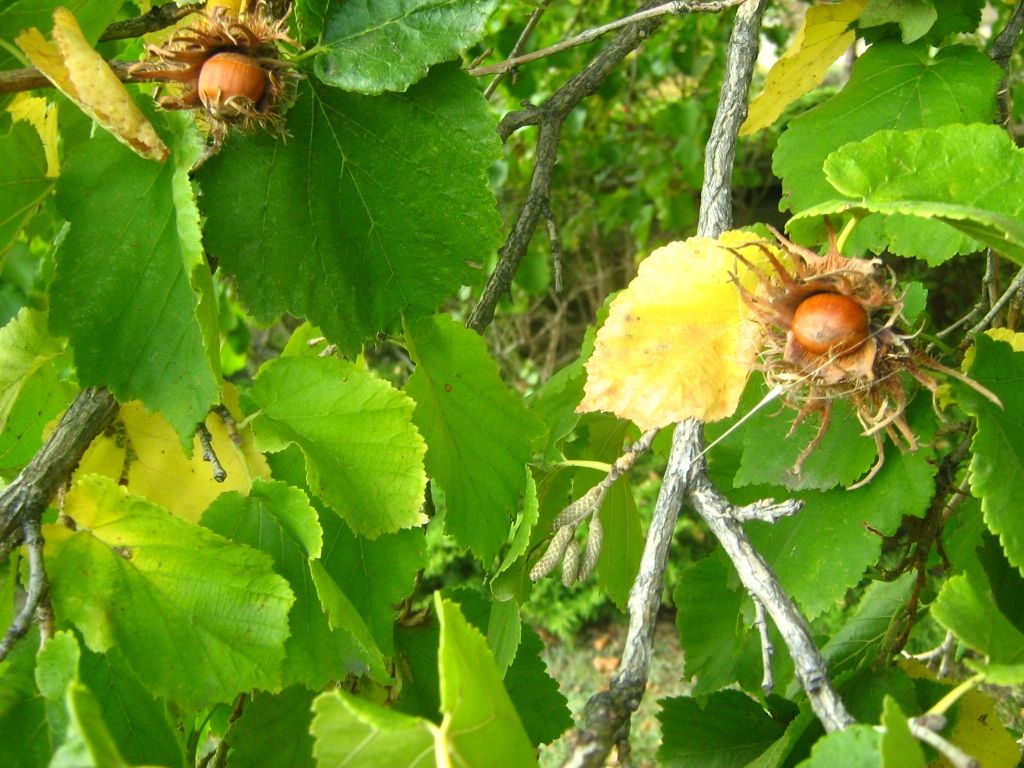
The fruit is a brownish nut. It is very similar to a hazelnut, but a bit flatter and with a thicker shell. Several nuts are born in a deeply slit glandular greenish husk (seed head).
Features
Turkish hazel
Corylus colurna
rounded leaves with double-serrated margins
single trunk
Similar species
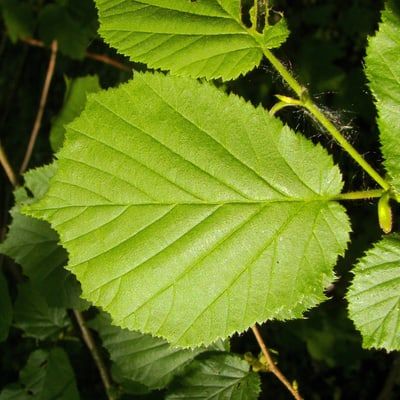
Corylus avellana
In the city
Turkish hazel can be found more frequently in Central European towns and cities. It is mainly planted as a roadside tree. It prefers warm and shady sites.
Fun Facts
Small mammals collect the fruit as winter fodder, thus contributing to the distribution of the species.
The wood is used to make furniture.
It flowers from February to April.
The fruit ripening season is in September to October.
- Endangerment level Germany: not evaluated
- Usage:
The seeds are edible and have multiple uses as food. They stand out due to their mild taste and long shelf-life.
Turkish hazel originates from the Balkan and the Middle East.
The pollen is allergenic.
Sources
Habitus, Warburg1866, CC BY-SA 4.0, https://commons.wikimedia.org/wiki/Category:Corylus_colurna#/media/File:BE_Corylus_Colurna.JPG

Früchte, Botaurus, Public Domain, https://commons.wikimedia.org/wiki/Category:Corylus_colurna#/media/File:Corylus-colurna-20-09-2009-21.jpg

Blatt, Marija Gajić, CC BY-SA 4.0, https://commons.wikimedia.org/wiki/Category:Corylus_colurna#/media/File:Corylus_colurna_(124).JPG
.JPG)
Aas, G. & Riedmiller, A. (2002) Laubbäume. Bestimmen – Kennenlernen – Schützen, Bindlach: Gondrom Verlag.
Mitchell, A. (1975) Die Wald- und Parkbäume Europas. Ein Bestimmungsbuch, Hamburg und Berlin: Verlag Paul Parey.
Roloff, A. (2013) Bäume in der Stadt. Besonderheiten - Funktion - Nutzen - Arten - Risiken, Stuttgart: Verlag Eugen Ulmer.
Page „Baum-Hasel“. : Wikipedia, The Free Encyclopedia. Date of last revision: 11.03.2016, 07:55 UTC. URL: https://de.wikipedia.org/w/index.php?title=Baum-Hasel&oldid=152391595 (Accessed: 04.05.2016).