
Short Description
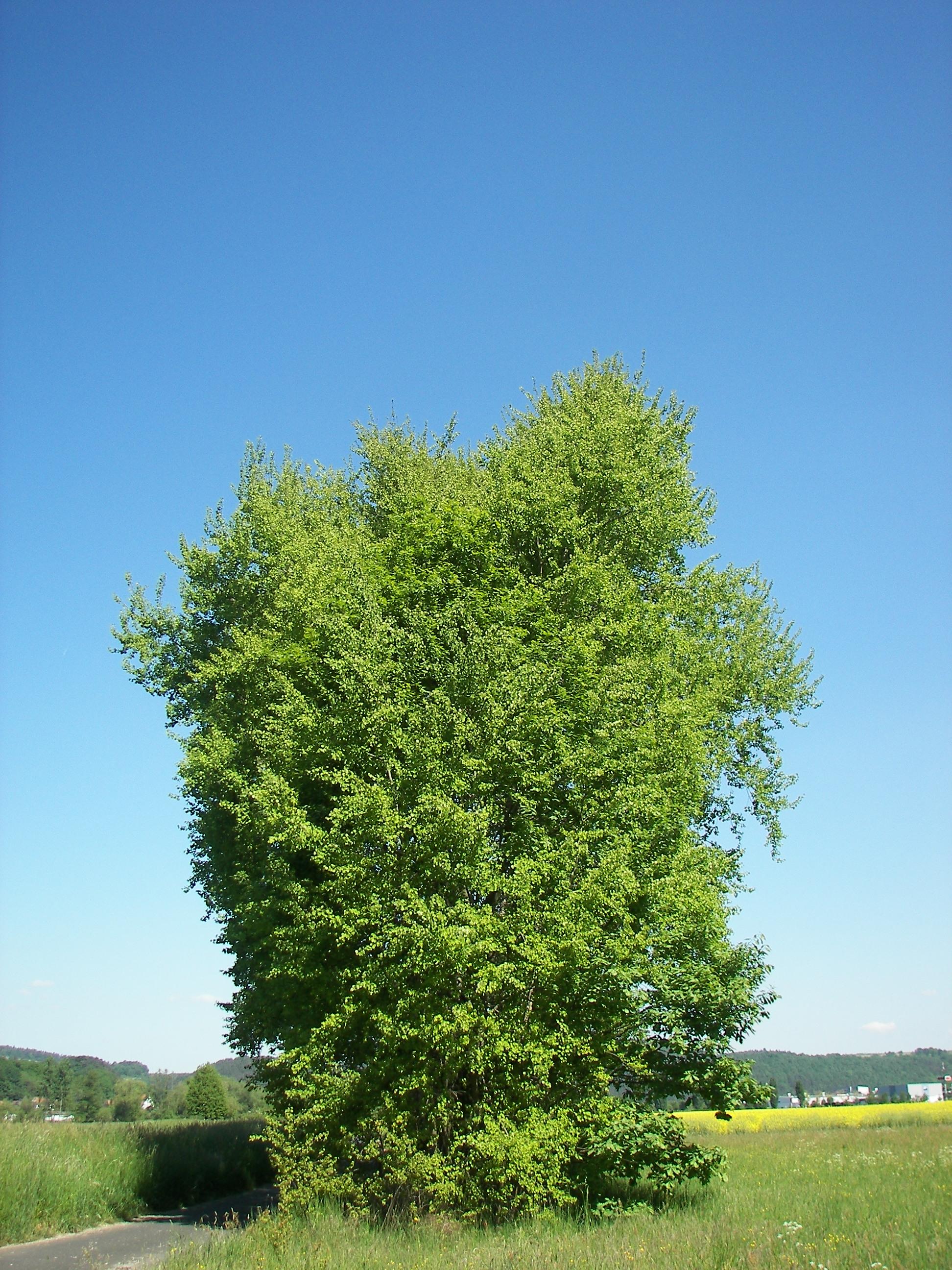
Aspen can grow up to 30 m tall. It is often multi-stemmed with a leaning stem. The crown is sparse and slightly irregular.
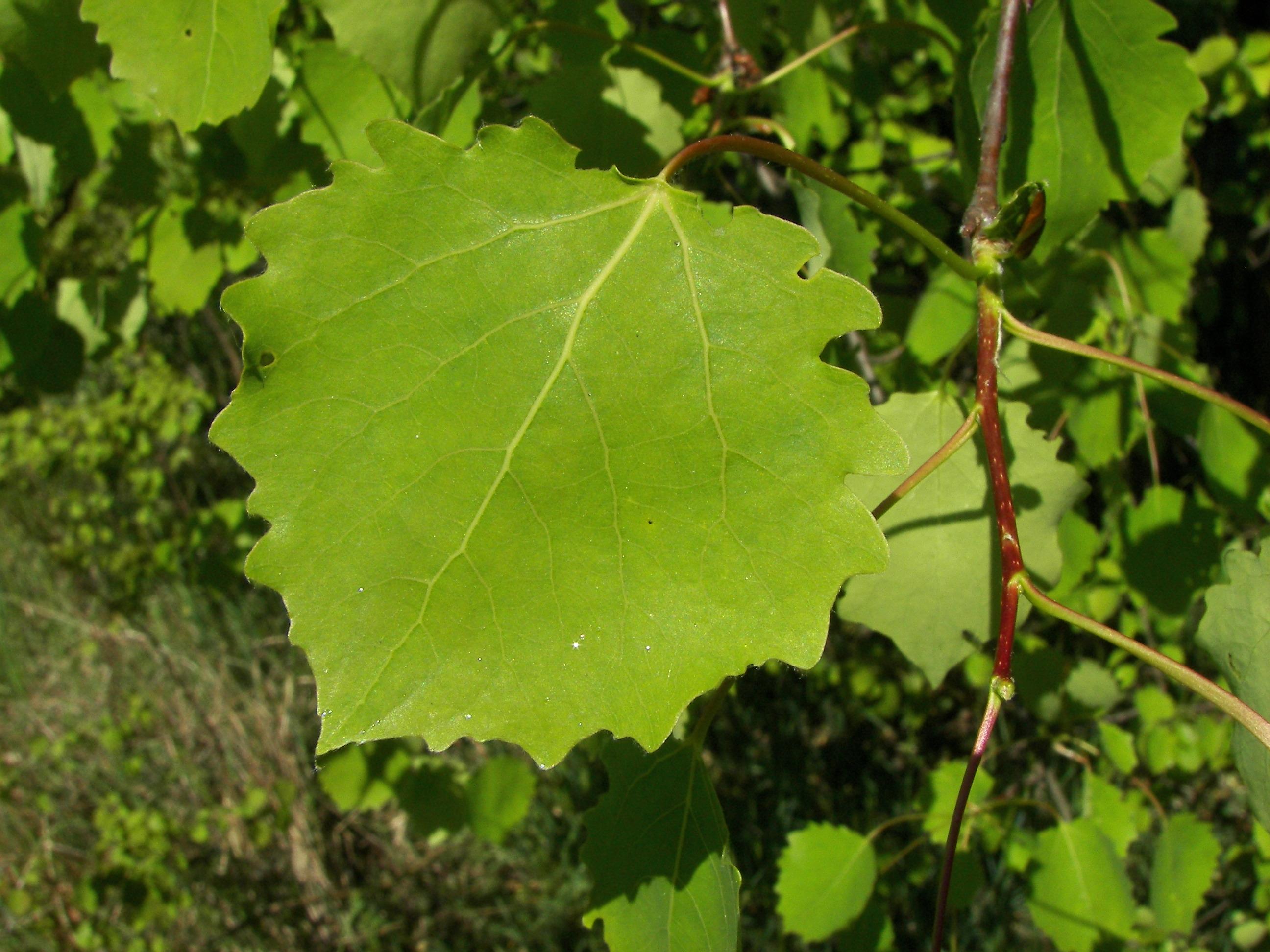
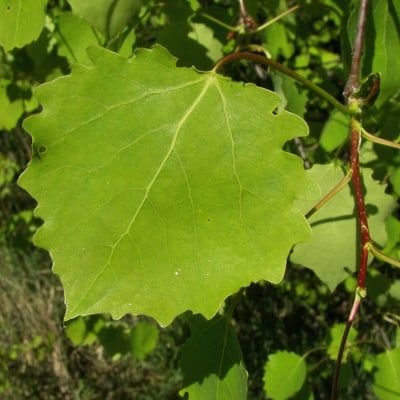
The leaves are rounded to heart-shaped and have a stalk. The upper side of the leaves is hairless and shiny. The leaf margin is rough and bluntly serrated.
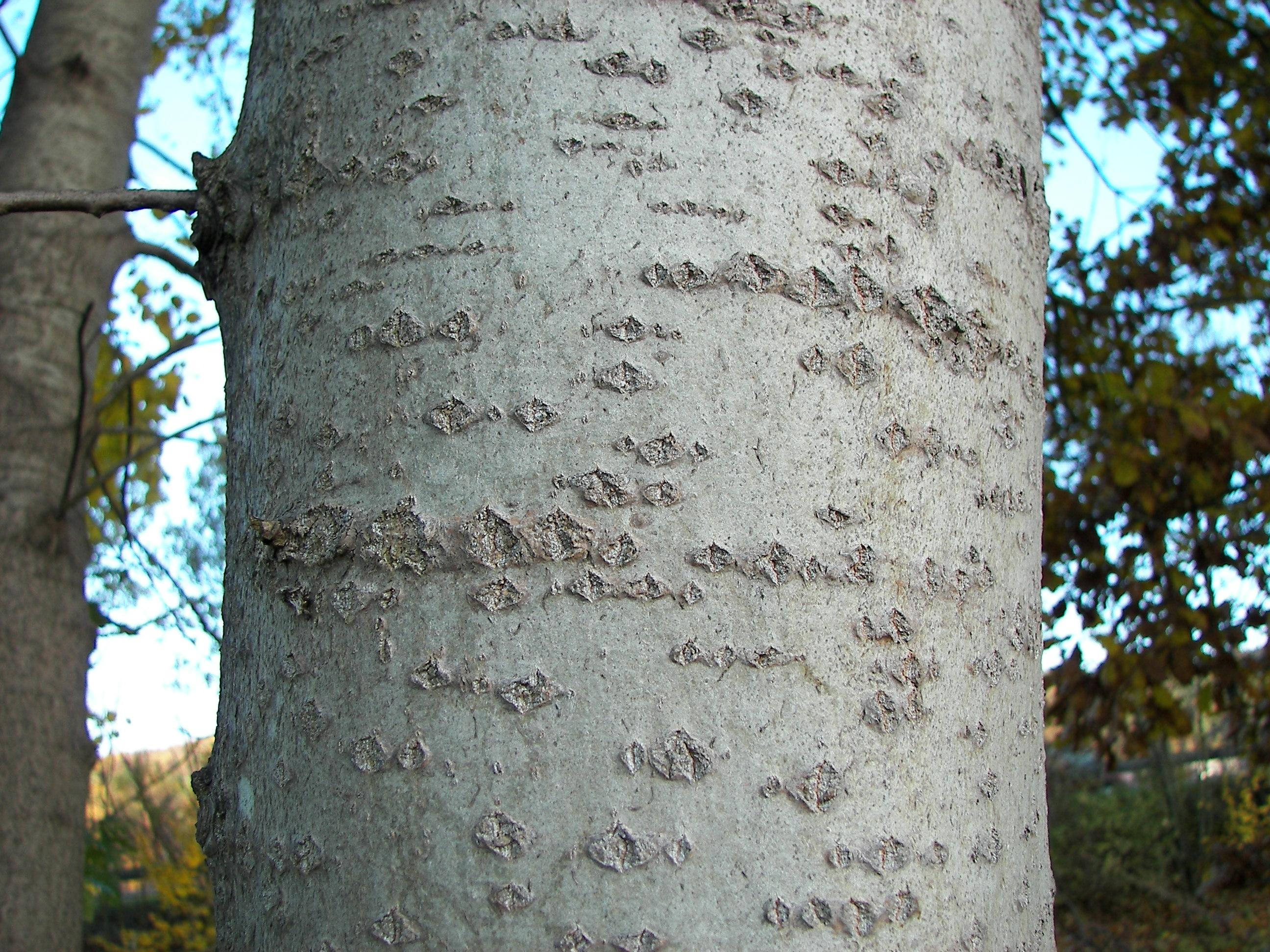
The bark is yellow-brown and smooth with large diamond-shaped cork warts. In older trees, the bark is grey-brown with vertical fissures.
Individual florets are clustered in catkins. There are male and female trees (dioecious). The male flowers are more brown, the female ones more green in colour.
The fruits are small capsules with light seeds that can be windblown. They are clustered in drooping seed heads. The seeds are embedded in downy fluff.
Features
Aspen
Populus tremula
round, hairless leaves
bluntly serrated margins
seeds with white tuft of hair
In the city
In an urban environment, aspens are often found in wastelands or in sunny sites in parks. They tolerate drought stress and equally well prolonged wetness. They are salt and emission tolerant. Their potential to improve urban air quality by binding particulate matter is also discussed. This makes aspen a very suitable urban tree. However, as its light requirement is quite high, it is rather unsuitable as a street tree.
Fun Facts
The leaves tend to tremble in the slightest breeze. Hence the expression: “trembling like an aspen leaf”.
Aspen buds are one of the sources of propolis, a substance collected and made by bees. It has been a much esteemed medicinal substance since Antiquity.
It flowers from February to April.
The fruit ripening season is from May to June.
- Endangerment level Germany: not endangered
The seed tufts (“poplar wool”) can be used to stuff cushions or quilts.
Sources
Blatt, Willow, CC BY-SA 2.5, https://commons.wikimedia.org/wiki/File:Populus_tremula_002.jpg

Rinde, Willow, CC BY-SA 2.5, https://commons.wikimedia.org/wiki/File:Populus_tremula_005.jpg

Habitus, Willow, CC BY-SA 2.5, https://commons.wikimedia.org/wiki/File:Populus_tremula_004.jpg

Aas, G. & Riedmiller, A. (2002) Laubbäume. Bestimmen – Kennenlernen – Schützen, Bindlach: Gondrom Verlag.
Amann, G. & Richter, P. (1962) Bäume und Sträucher des Waldes, Melsungen: Verlag J. Neumann – Neudamm.
Forum DIE GRÜNE STADT (2013) Bäume und Pflanzen lassen Städte atmen. Schwerpunkt - Feinstaub, URL: https://www.die-gruene-stadt.de/baeume-und-pflanzen-lassen-staedte-atmen.pdfx (Accessed: 02.08.2018).
Böhlmann, D. (2015) Laubbäume temperierter Klimate mit ihrer Artenvielfalt, Berlin: Patzer Verlag.
Mitchell, A. (1975) Die Wald- und Parkbäume Europas. Ein Bestimmungsbuch, Hamburg und Berlin: Verlag Paul Parey.
Quartier, A. (1989) Bäume und Sträucher, München: BLV.
Roloff, A. (2013) Bäume in der Stadt. Besonderheiten - Funktion - Nutzen - Arten - Risiken, Stuttgart: Verlag Eugen Ulmer.
Page „Espe“. : Wikipedia, The Free Encyclopedia. Date of last revision: 13.02.2016, 20:25 UTC. URL: https://de.wikipedia.org/w/index.php?title=Espe&oldid=151454448 (Accessed: 26.05.2016).