
Short Description
The European pear is a deciduous tree or shrub. The slender tree can grow up to 20 m tall and has a conical crown.
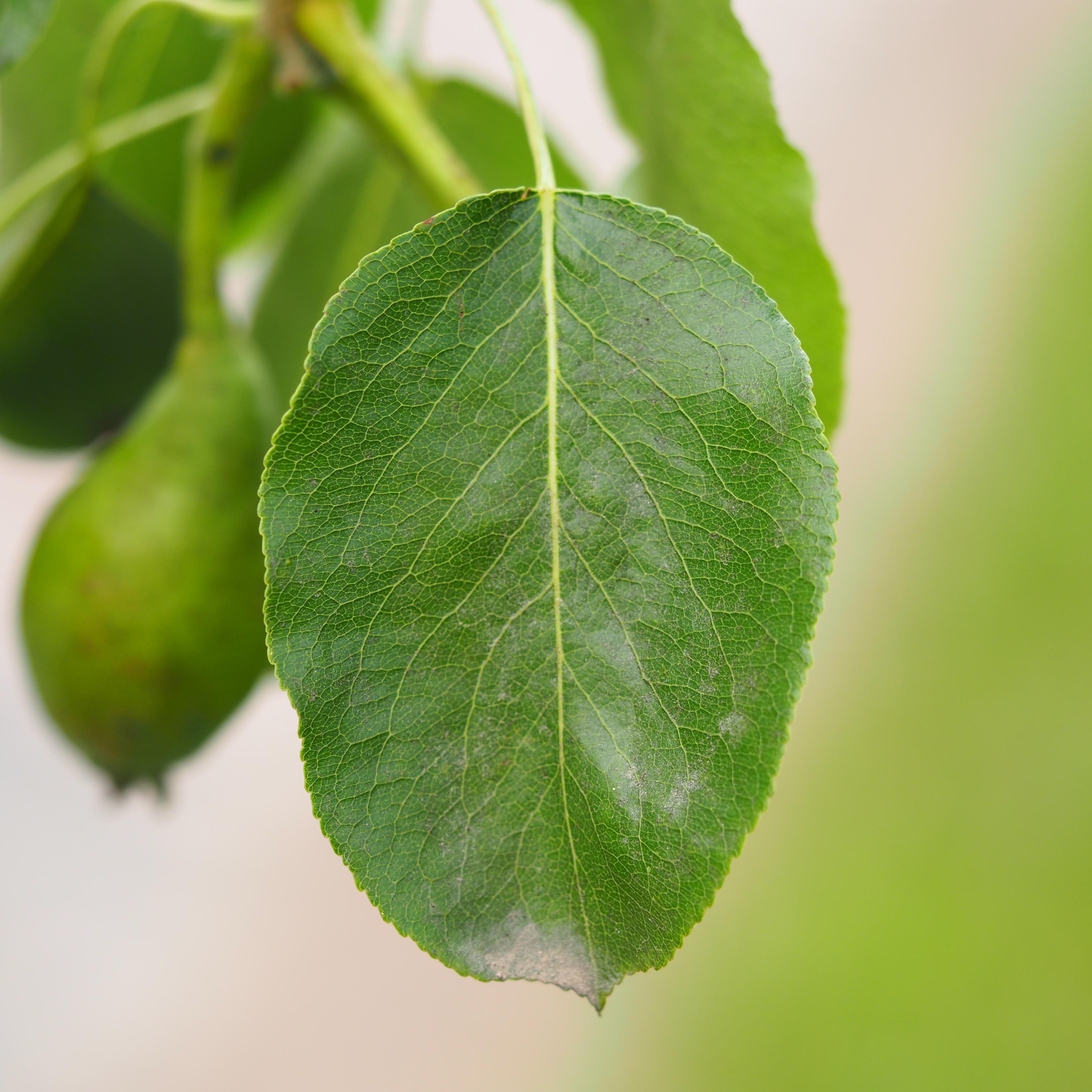
The leaves are alternate and varying in shape from pointed oval to roundish. The leaf margins are smooth to finely notched.
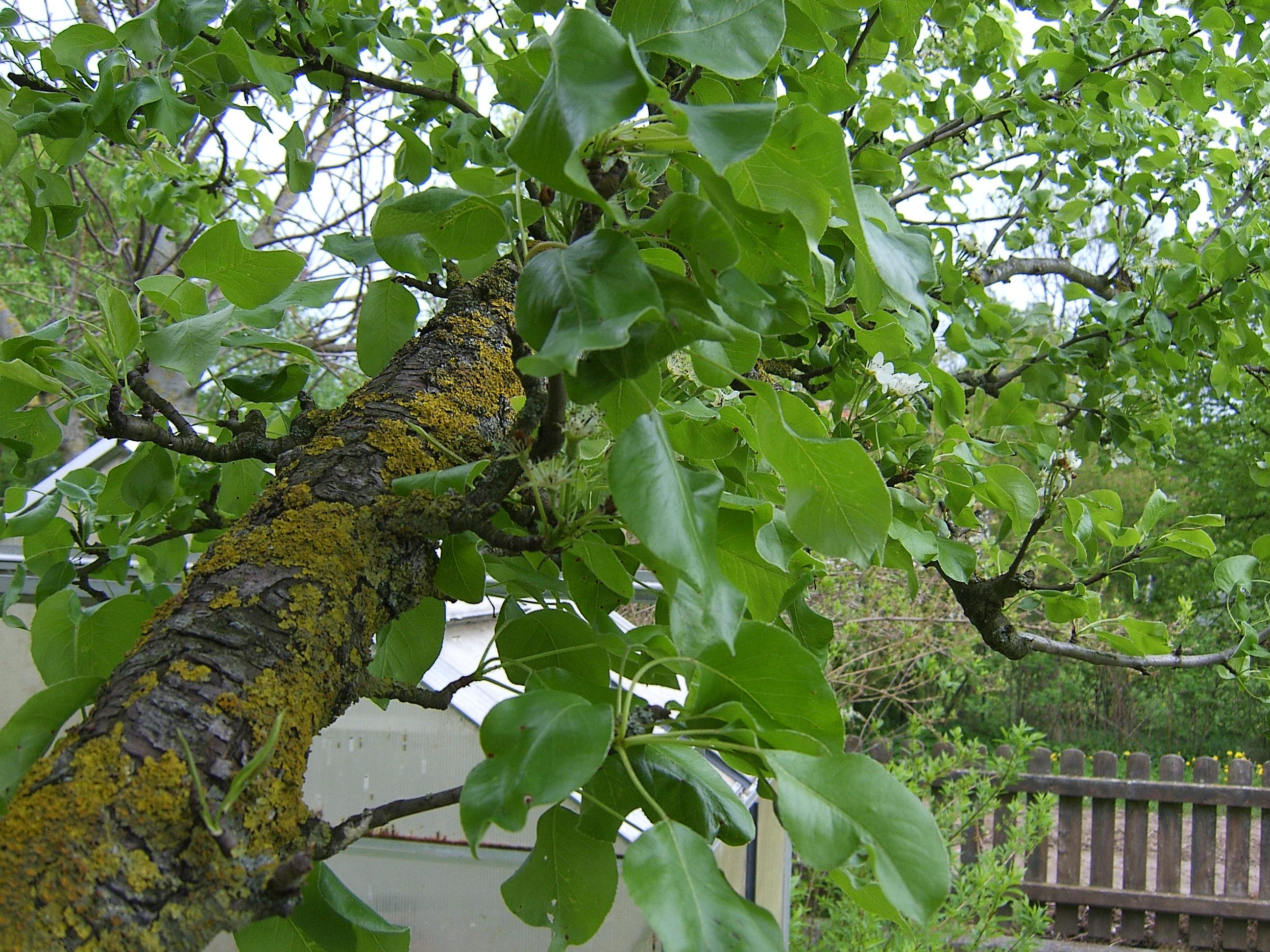
The bark is dark-brown to blackish with short deep vertical and horizontal fissures. The branches may have short thorns.
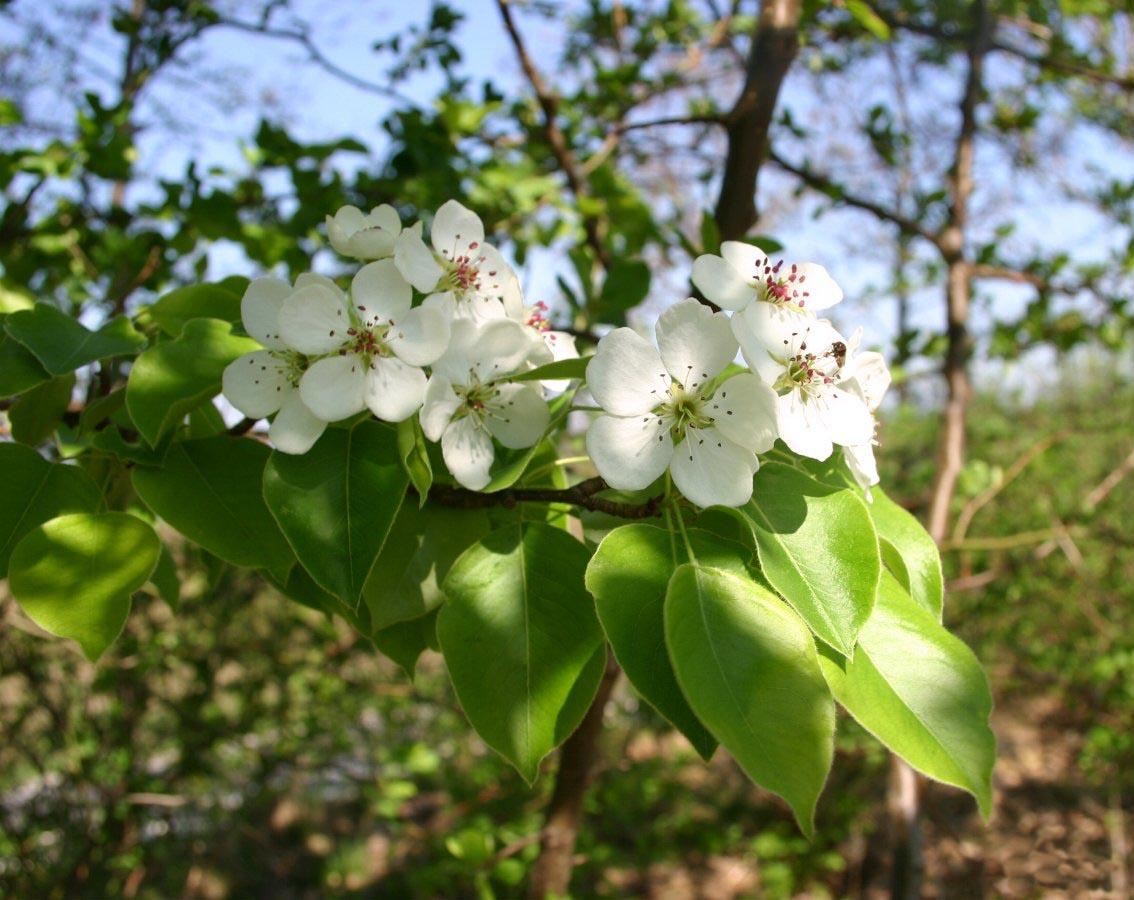
The white flowers are clustered in cymes. The anthers in the middle of the flower are generally red to purple.
The fruit is generally known as pear. Pears are yellowish and develop more brown spots with ripeness. A pear is an aggregate fruit consisting of five carpels enclosed by a fleshy covering.
Features
European pear
Pyrus communis
large fruits (pears)
In the city
The European pear is a common ornamental tree. In an urban environment varieties with smaller fruits are more common, as these are the preferred option in town planning.
Fun Facts
The flesh of pears contains stone cells that are experienced as small hard grit particles when eating this fruit.
Pyrus communis is the stem species of all cultivated varieties.
It flowers from April to June.
The fruit ripening season is in September.
- Endangerment level Germany: not evaluated
Its fruits are grown for food across the world and processed into innumerable products.
Sources
Blatt, Alice Kracht, CC BY-SA 4.0, https://offene-naturfuehrer.de/web/Datei:Pyrus_communis_(6).JPG
.JPG)
Blüte, Sten Porse, CC BY-SA 3.0, https://commons.wikimedia.org/wiki/File:Pyrus-communis-flower.JPG

Blatt, Christoph Neumüller, PD, https://commons.wikimedia.org/wiki/File:Birnenbaum.jpg

Aas, G. & Riedmiller, A. (2002) Laubbäume. Bestimmen – Kennenlernen – Schützen, Bindlach: Gondrom Verlag.
Amann, G. & Richter, P. (1962) Bäume und Sträucher des Waldes, Melsungen: Verlag J. Neumann – Neudamm.
Böhlmann, D. (2015) Laubbäume temperierter Klimate mit ihrer Artenvielfalt, Berlin: Patzer Verlag.
Mitchell, A. (1975) Die Wald- und Parkbäume Europas. Ein Bestimmungsbuch, Hamburg und Berlin: Verlag Paul Parey.
Quartier, A. (1989) Bäume und Sträucher, München: BLV.
Roloff, A. (2013) Bäume in der Stadt. Besonderheiten - Funktion - Nutzen - Arten - Risiken, Stuttgart: Verlag Eugen Ulmer.
Page „Kultur-Birne“. : Wikipedia, The Free Encyclopedia. Date of last revision: 28.12.2015, 10:40 UTC. URL: https://de.wikipedia.org/w/index.php?title=Kultur-Birne&oldid=149525724 (Accessed: 13.05.2016).