
Short Description
The silver birch is a deciduous tree that can grow up to 30 m tall.
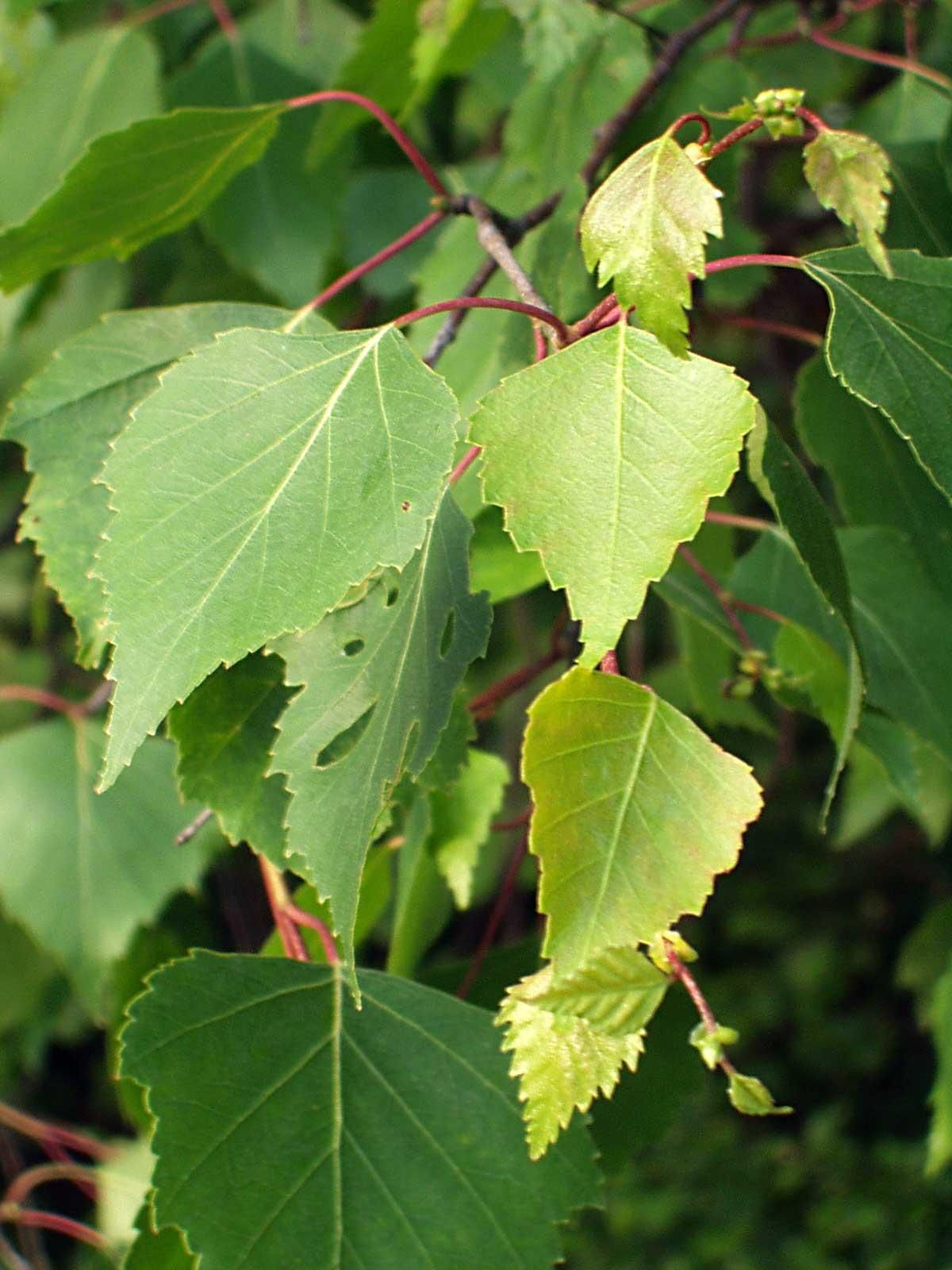
The leaflets are triangular to diamond-shaped and pointed. The leaf margin is double-serrated.
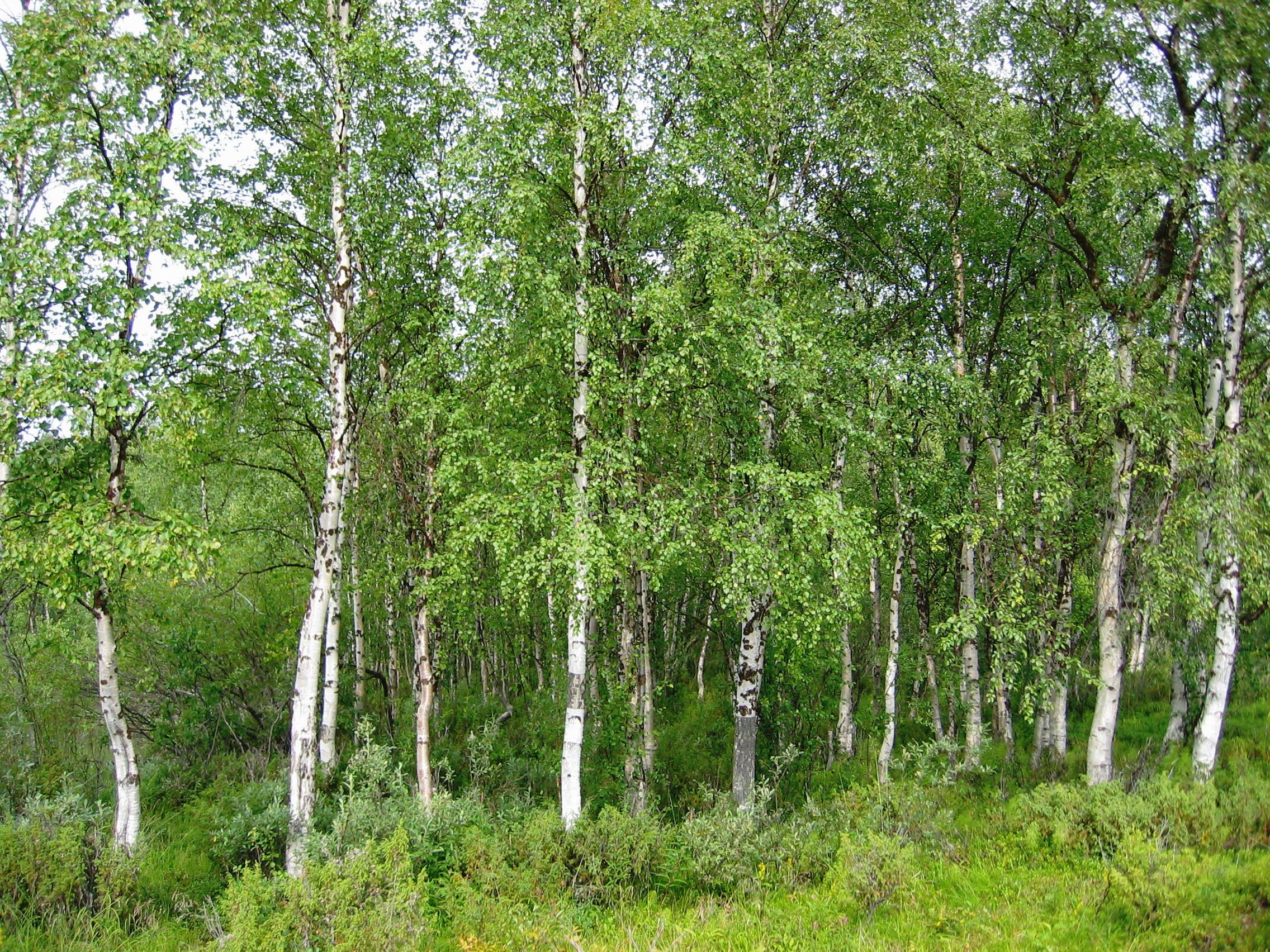
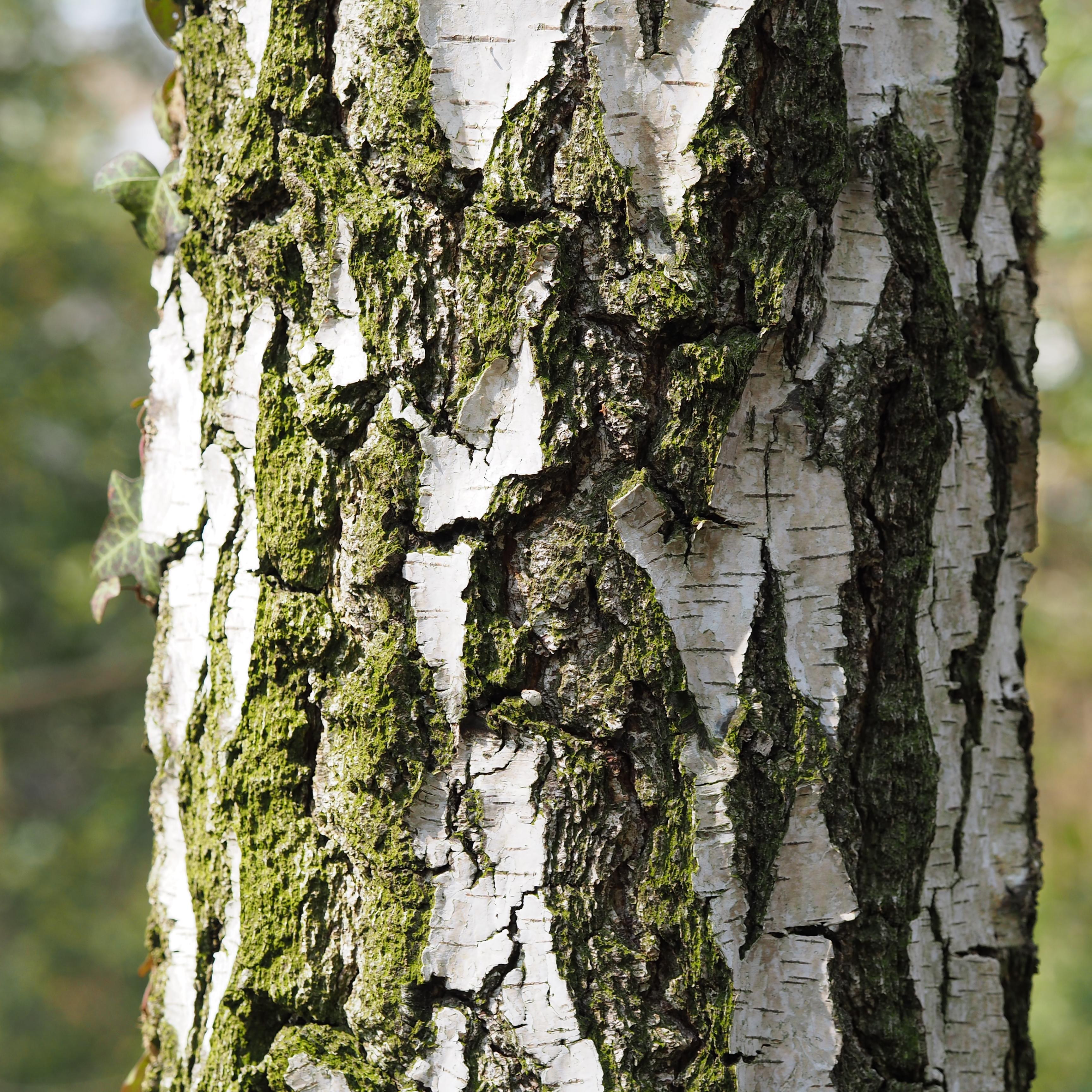
The stem is upright and slender with a thin, delicate crown. The branches are supple. A characteristic feature is the striking whitish shiny bark with transverse cork warts.
The flowers are clustered in catkins. Male catkins are long and brown. Female catkins are noticeably shorter and greenish.
The fruits are small nutlets, arranged in broad conelets.
Features
Silver birch
Betula pendula
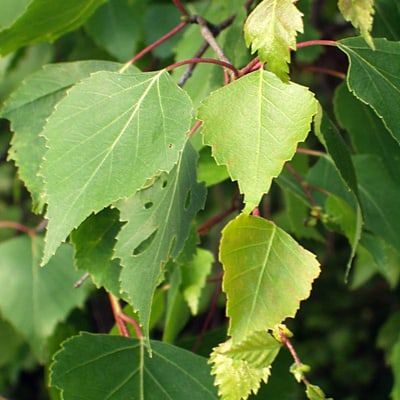
triangular to diamond-shaped leaves
striking light-coloured bark
In the city
The silver birch is found in open, sunny places such as fallow land, gardens and parks. It is often grouped in birch groves. It establishes itself extremely successfully in ruined structures and is therefore also called a rubble tree. The birch's natural habitat on rocks is thus replaced by structures within the city (substitute habitat). It tolerates high salt concentrations, which are often found along roads in the city, and its potential for improving urban air quality by binding particulate matter is also discussed.
Fun Facts
he white bark reduces the temperature of the bark in intense sunlight. This is seen as an adaptation to sites exposed to the sun. The stems of other urban trees in sun-exposed locations are sometimes painted white to protect them from solar radiation.
Birch sap is collected in spring by drilling into the bark; it is used as a beverage in Scandinavia, Eastern Europe and China. The sap is a clear, colourless liquid with a sweetish taste.
Betulin is the white pigment giving birch bark its colour.
It flowers from April to May.
The fruit ripening season is from July to September.
- Endangerment level Germany: not endangered
- Usage:
In natural medicine, it is used in the treatment of rheumatic disorders, hair loss and skin rashes.
Birch pollen is highly allergenic.
Sources
Blatt, Ralf Roletschek, CC BY-SA 3.0, https://commons.wikimedia.org/wiki/File:Birkenbl%C3%A4tter_Betula_pendula.jpg

Habitus, Percita, CC BY-SA 2.0, https://commons.wikimedia.org/wiki/File:Betula_pendula_Finland.jpg

Rinde, Alice Kracht, CC BY-SA 4.0, https://offene-naturfuehrer.de/web/Datei:Betula_pendula_(7).JPG
.JPG)
Aas, G. & Riedmiller, A. (2002) Laubbäume. Bestimmen – Kennenlernen – Schützen, Bindlach: Gondrom Verlag.
Amann, G. & Richter, P. (1962) Bäume und Sträucher des Waldes, Melsungen: Verlag J. Neumann – Neudamm.
Forum DIE GRÜNE STADT (2013) Bäume und Pflanzen lassen Städte atmen. Schwerpunkt - Feinstaub, URL: https://www.die-gruene-stadt.de/baeume-und-pflanzen-lassen-staedte-atmen.pdfx (Accessed: 02.08.2018).
Quartier, A. (1989) Bäume und Sträucher, München: BLV.
Roloff, A. (2013) Bäume in der Stadt. Besonderheiten - Funktion - Nutzen - Arten - Risiken, Stuttgart: Verlag Eugen Ulmer.
Page „Hänge-Birke“. : Wikipedia, The Free Encyclopedia. Date of last revision: 02.04.2016, 21:59 UTC. URL: https://de.wikipedia.org/w/index.php?title=H%C3%A4nge-Birke&oldid=153113872 (Accessed: 12.04.2016).