
Short Description
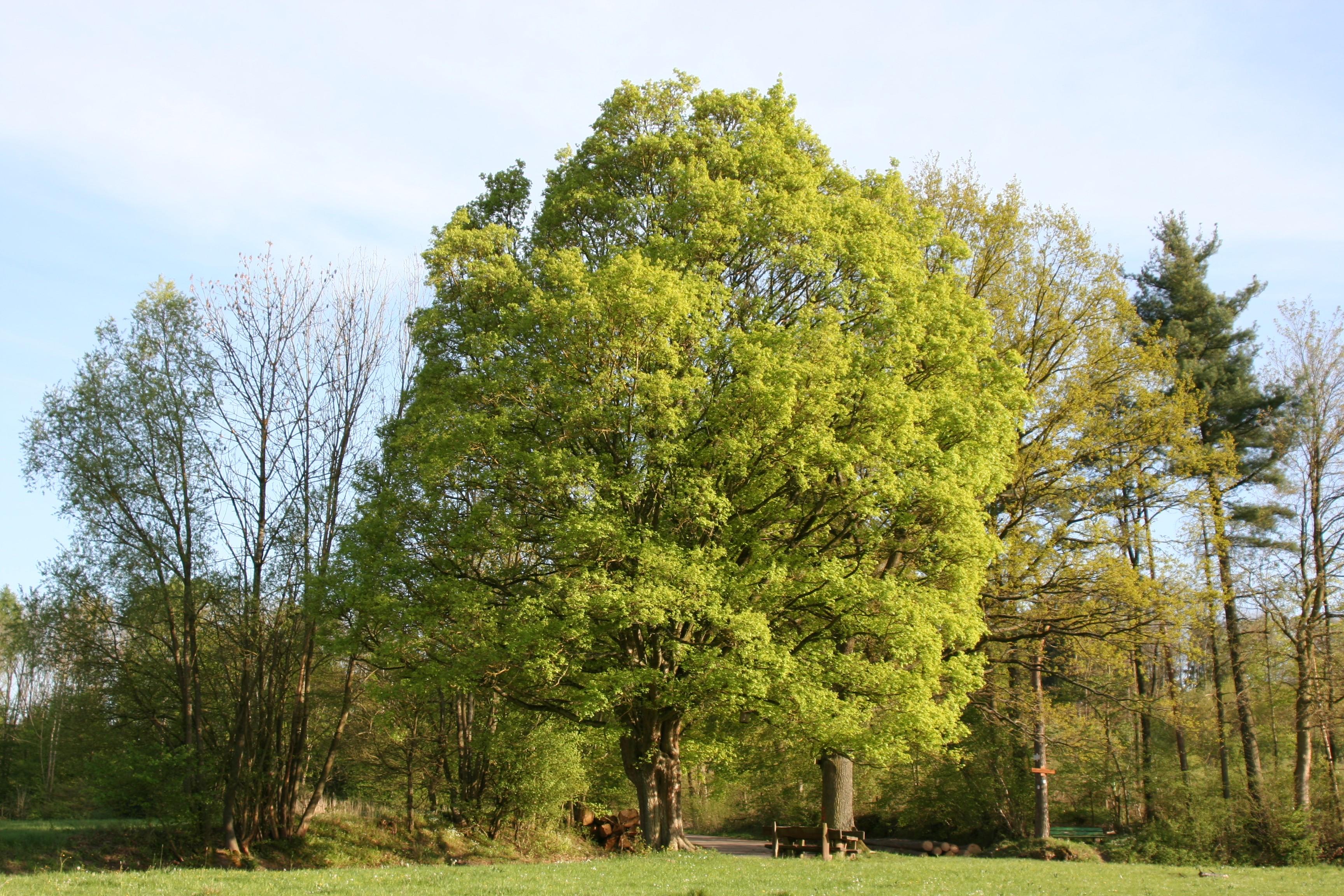
The field maple is a deciduous tree or shrub that can grow up to 20 m tall.
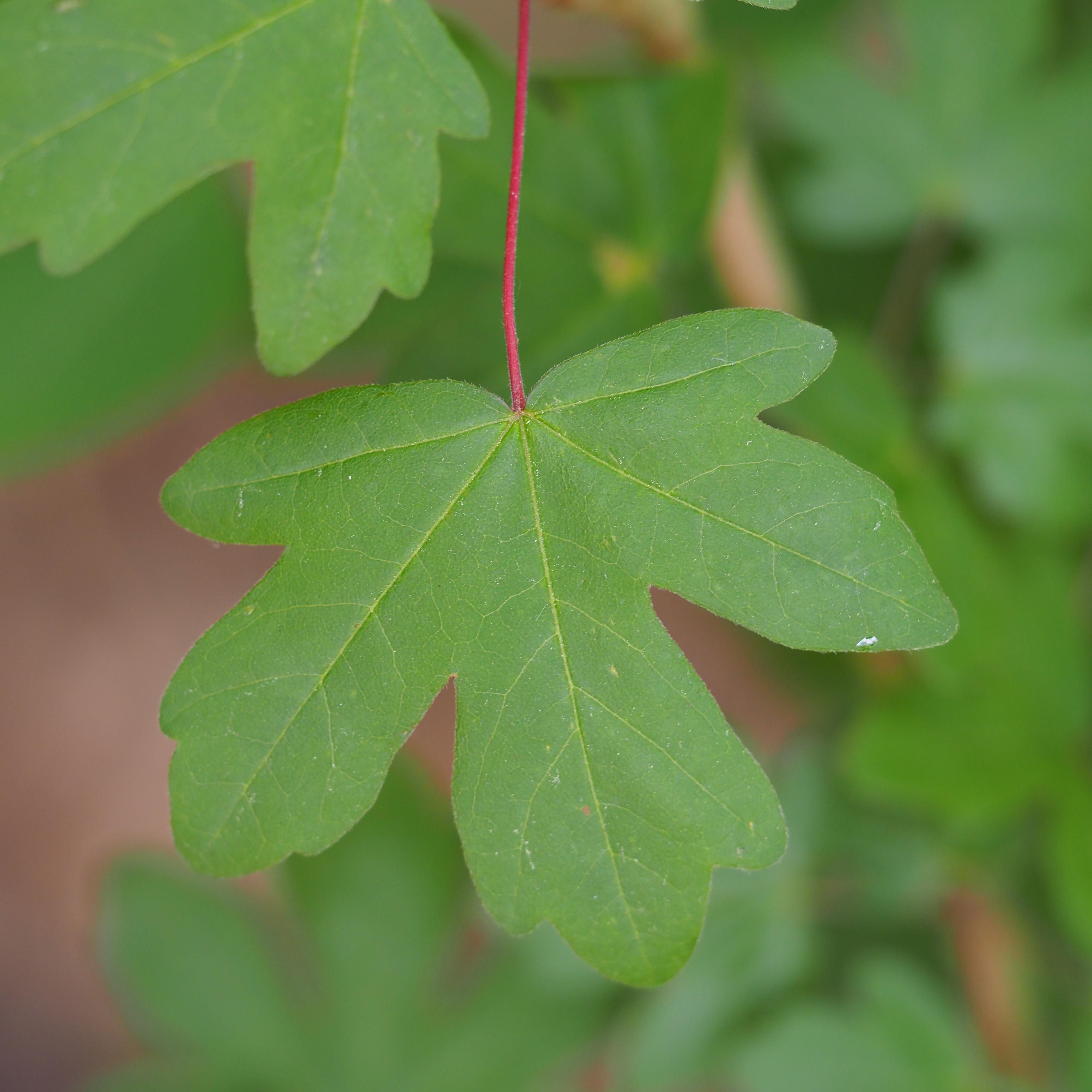
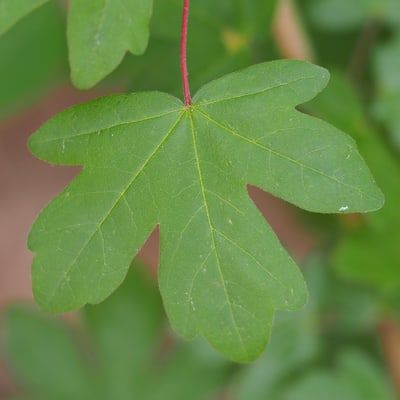
The leaves have long stalks and grow oppositely on the branch. They are generally rounded (blunt) with five lobes and a smooth margin. If the stalk is broken, a milky fluid (sap) is excreted.
The bark is grey-brown and with fine rectangular fissures. Larger branches often have cork ridges.
The yellow-green flowers are arranged in erect or pendulous panicles (flower heads). Flower stalks and perianth are hairy.
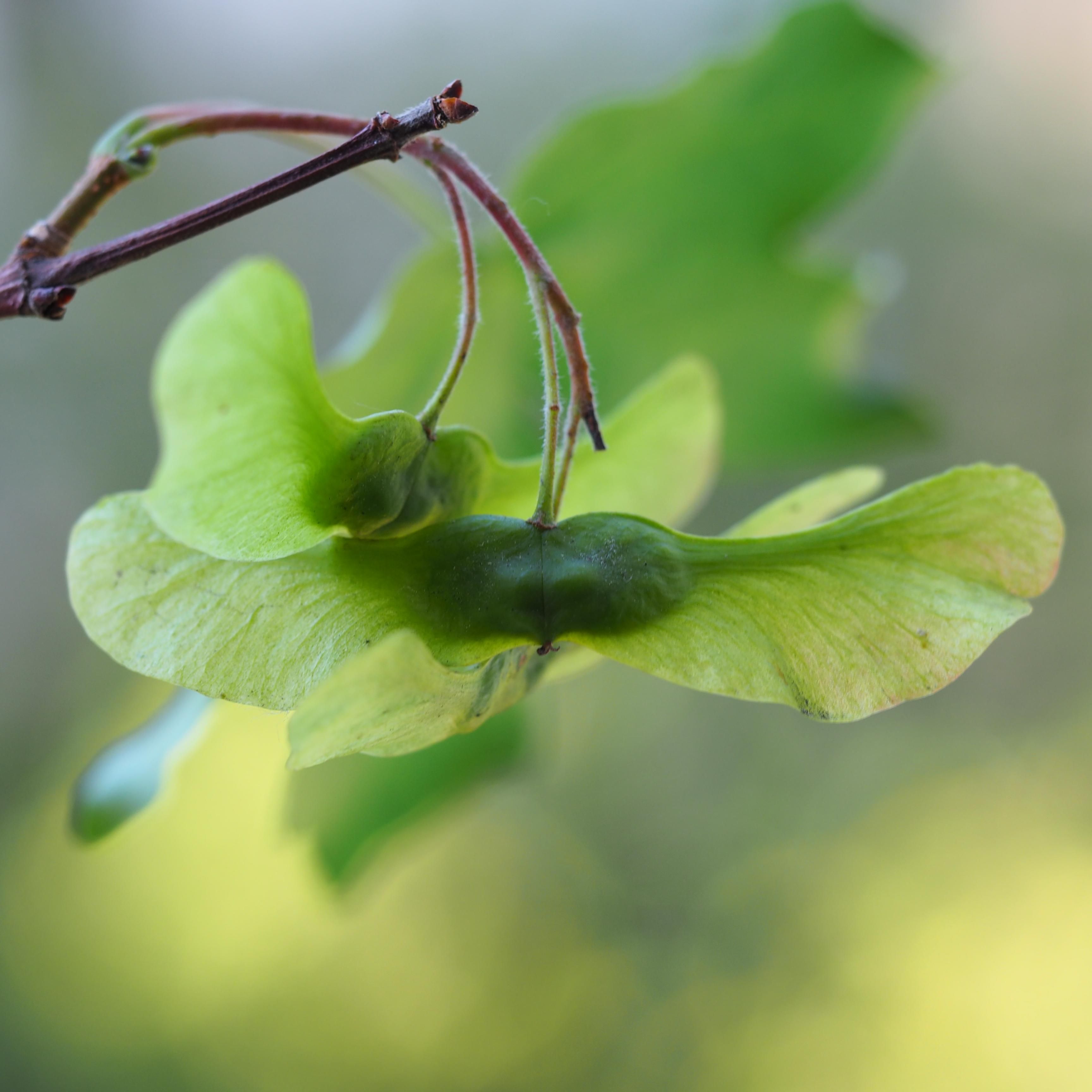
The schizocarp fruit consists of two winged nut fruits that are joined. Their wings are horizontally to each other.
Features
Field maple
Acer campestre
leaf stalk with a milky sap
wings of the fruits horizontally
wing-like cork ridges on branches
Similar species
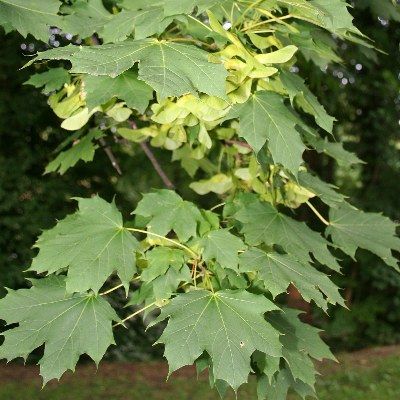
Norway maple
Acer platanoides
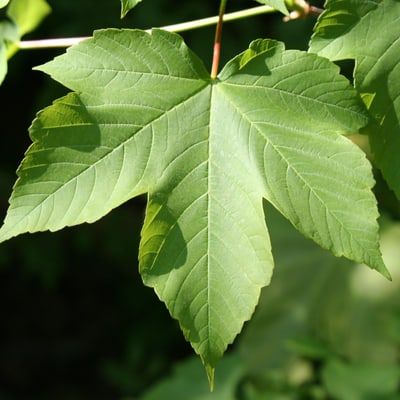
Sycamore
Acer pseudoplatanus
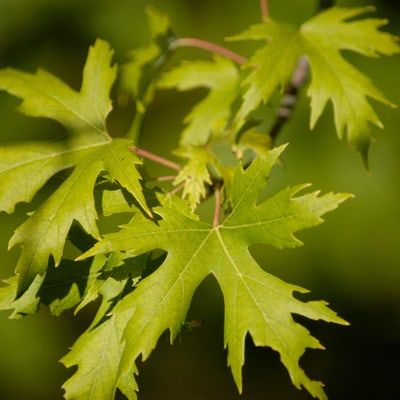
Silver maple
Acer saccharinum
In the city
Field maples can be found in parks and gardens or in tree-lined roads. They are also frequently used as hedging plants. Field maples prefer nutrient-rich wet to wet-dry sites. All maple trees produce numerous fruits so that the trees self-disseminate well in urban environments.
Fun Facts
In natural medicine, the rind was used as an infusion or tea to alleviate inflammation or regulate digestion.
The flowers of maple species are mainly bisexual, i.e. the flower contains female and male parts. However, there are also single-sex flowers, i.e. only male or only female parts are present. The reason for this is the development from insect pollination of the bisexual flowers to wind pollination of the single-sex flowers.
It flowers from April to May.
The fruit ripening season is in September to October.
- Endangerment level Germany: not endangered
Sources
Blatt, Alice Kracht, CC BY-SA 4.0, https://offene-naturfuehrer.de/web/Datei:Acer_campestre7.JPG

Frucht, Alice Kracht, CC BY-SA 4.0, https://offene-naturfuehrer.de/web/Datei:Acer_campestre_(17).JPG
.JPG)
Habitus, Rosenzweig, CC BY-SA 3.0, https://commons.wikimedia.org/wiki/File:Acer_campestre_Weinsberg_20070419_1.jpg

Aas, G. & Riedmiller, A. (2002) Laubbäume. Bestimmen – Kennenlernen – Schützen, Bindlach: Gondrom Verlag.
Amann, G. & Richter, P. (1962) Bäume und Sträucher des Waldes, Melsungen: Verlag J. Neumann – Neudamm.
Umweltforschungszentrum Leipzig - Halle GmbH, Sektion Biozönoseforschung (n.d.) Datenbank biologisch-ökologischer Merkmale der Flora von Deutschland, URL: www.biolflor.de (Accessed: 20.04.2016).
Page „Feldahorn“. : Wikipedia, The Free Encyclopedia. Date of last revision: 26.03.2016, 10:49 UTC. URL: https://de.wikipedia.org/w/index.php?title=Feldahorn&oldid=152878397 (Accessed: 20.04.2016).