
Short Description
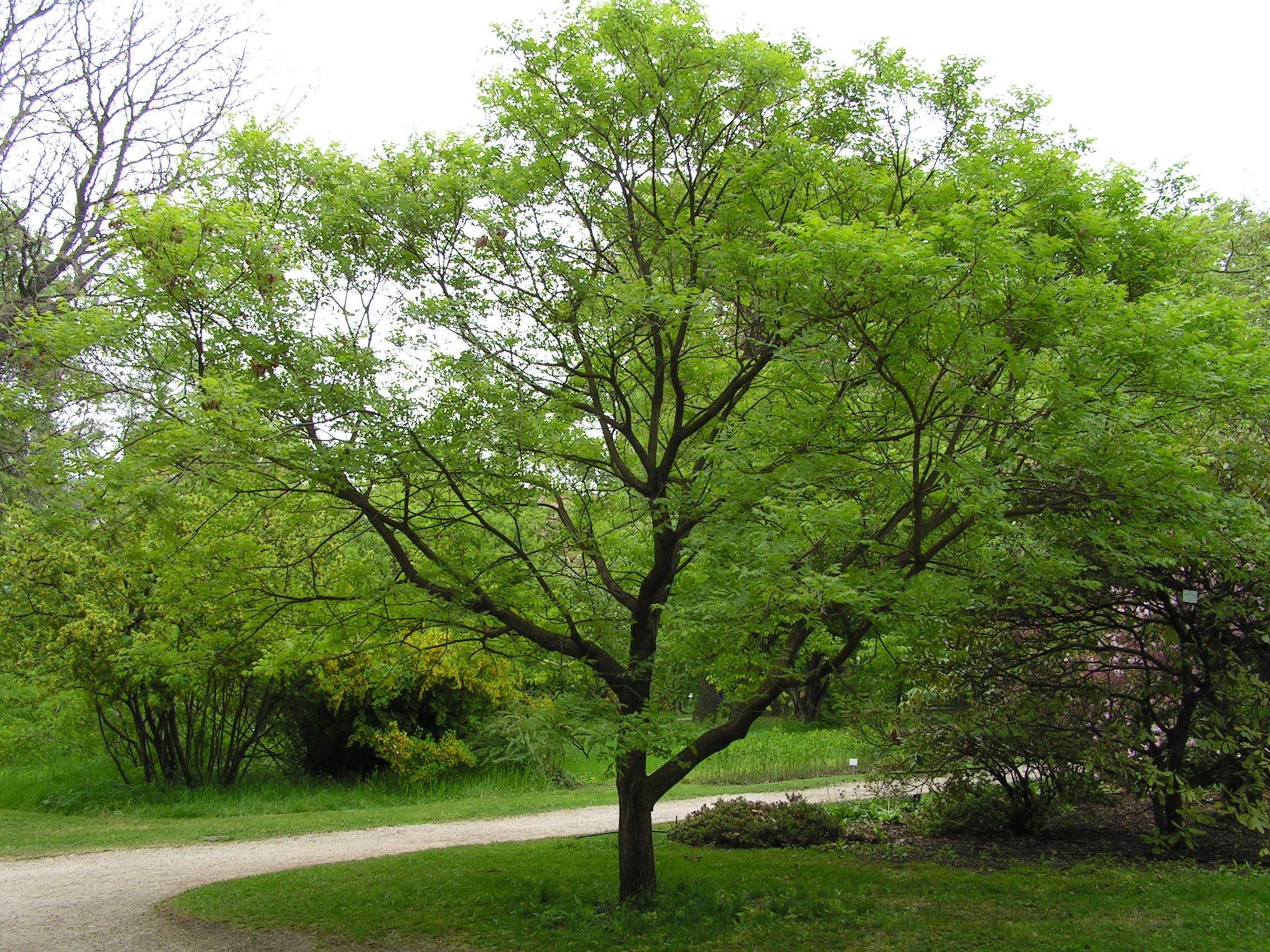
The goldenrain is an up to 15 m tall deciduous tree with a broad and expansive crown.
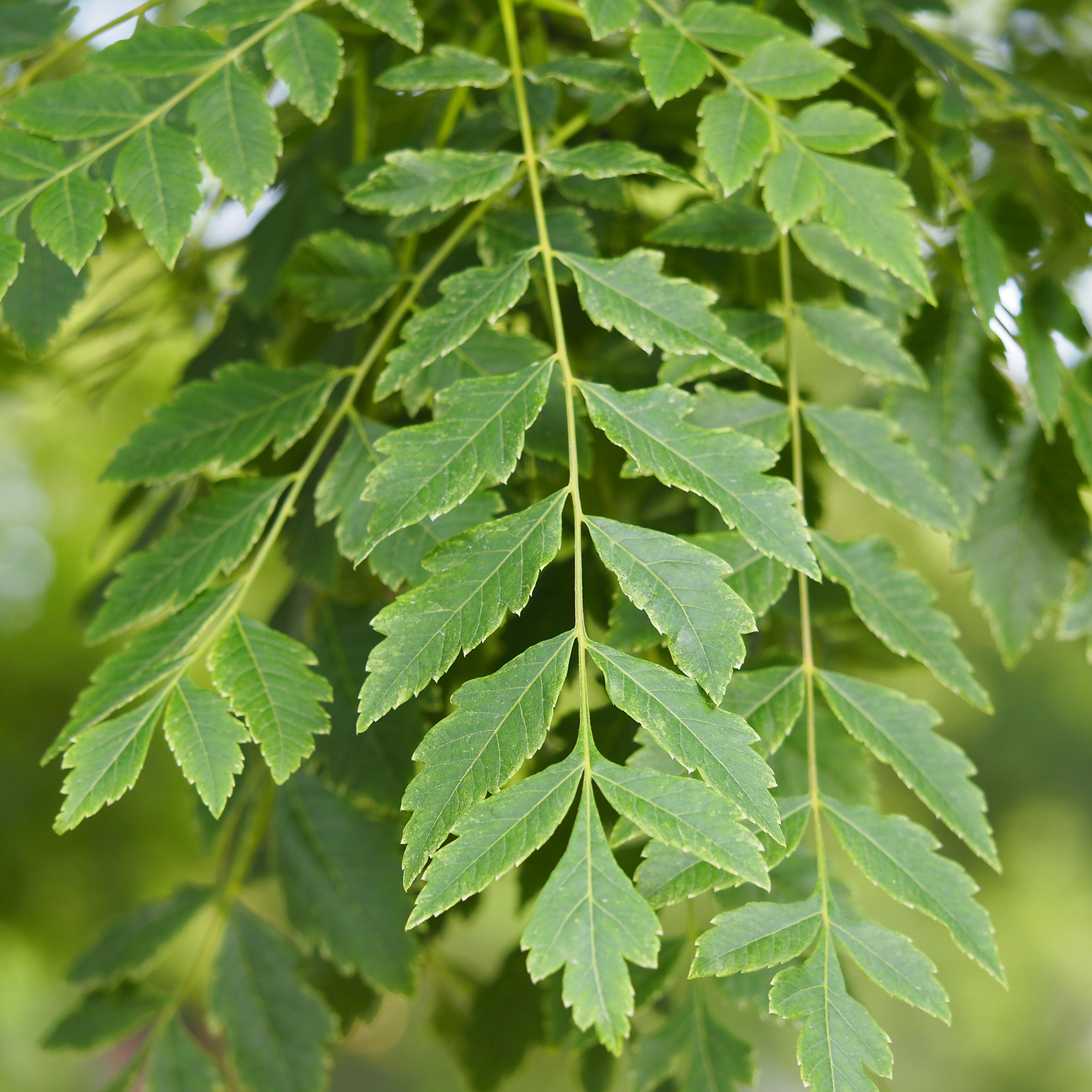
The large leaves grow alternately on the branch. They generally consist of 7-15 leaflets that finish with a single terminal leaflet (unequally pinnate). The leaflets are irregularly coarsely serrated to deeply lobed.
It can grow as a tree or shrub and generally has an erect stem with a very broad crown. The bark is grey-brown with vertical fissures.
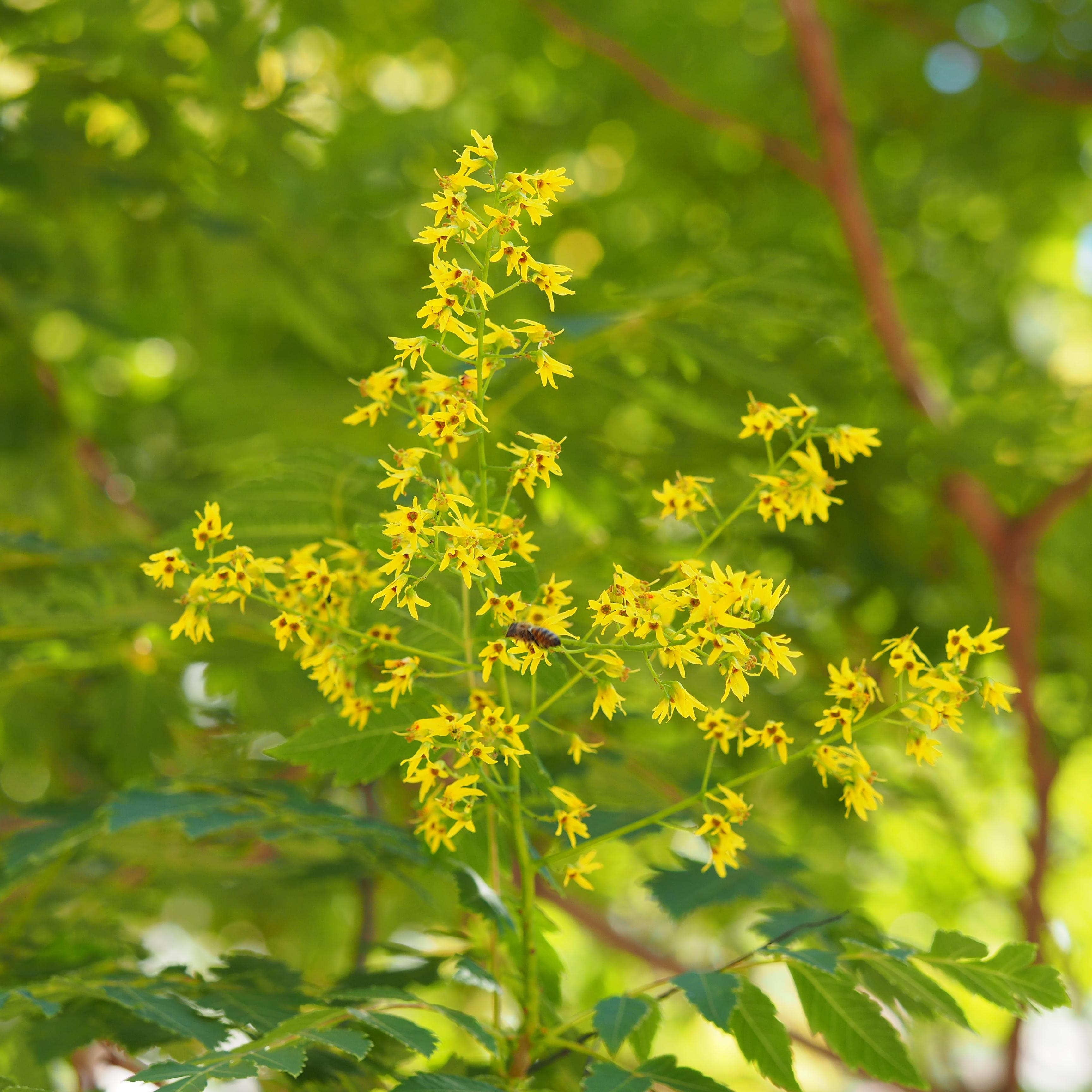
The flowers are yellow with an orange base. They grow in large upright much-branched panicles.
The fruits are dry-skinned capsules with a papery bladder-shaped covering. The seeds are pea-sized and dark-brown.
Features
Goldenrain tree
Koelreuteria paniculata
large bladder-like pods
large pinnate leaflets
In the city
Goldenrain trees are often used as an ornamental tree in parks and gardens. It tolerates drought stress and is largely hardy in Central Europe. Its potential for improving urban air quality by binding particulate matter is also discussed.
Fun Facts
The goldenrain tree is one of the very few trees with yellow flowers. Also, it flowers comparatively late compared to other woody plants. This makes it a popular ornamental tree.
It flowers from June to August.
The fruit ripening season is August to September.
- Endangerment level Germany: not evaluated
The goldenrain tree originates from China, Korea and Japan. It was introduced to Europe as an ornamental tree. It is a non-native plant (neophyte).
The entire plant is mildly poisonous.
Sources
Blatt, Alice Kracht, CC BY-SA 4.0, https://offene-naturfuehrer.de/web/Datei:Koelreuteria_paniculata_(4).JPG
.JPG)
Habitus, Athenchen, CC BY-SA 3.0, https://commons.wikimedia.org/wiki/File:Koelreuteria_paniculata2.jpg

Blütenstand, Alice Kracht, CC BY-SA 4.0, https://offene-naturfuehrer.de/web/Datei:Koelreuteria_paniculata1.JPG

Aas, G. & Riedmiller, A. (2002) Laubbäume. Bestimmen – Kennenlernen – Schützen, Bindlach: Gondrom Verlag.
Forum DIE GRÜNE STADT (2013) Bäume und Pflanzen lassen Städte atmen. Schwerpunkt - Feinstaub, URL: https://www.die-gruene-stadt.de/baeume-und-pflanzen-lassen-staedte-atmen.pdfx (Accessed: 02.08.2018).
Roth, L., Daunderer, M. & Kormann, K. (2008) Giftpflanzen - Pflanzengifte. Vorkommen, Wirkung, Therapie. Allergische und phototoxische Reaktionen, Hamburg: Nikol Verlag.
Page „Blasenesche“. : Wikipedia, The Free Encyclopedia. Date of last revision: 05.12.2015, 23:00 UTC. URL: https://de.wikipedia.org/w/index.php?title=Blasenesche&oldid=148793137 (Accessed: 21.04.2016).