
Short Description
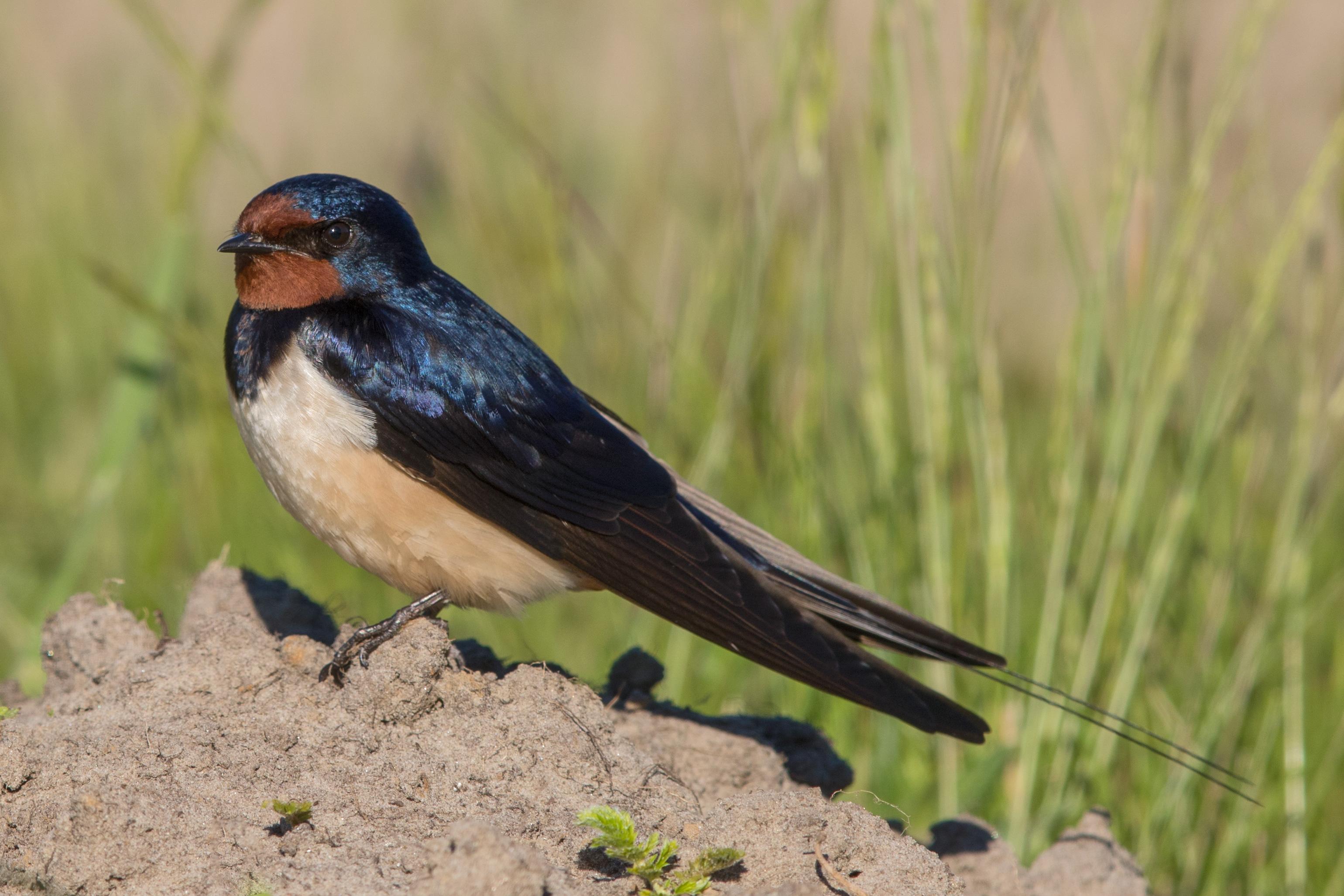
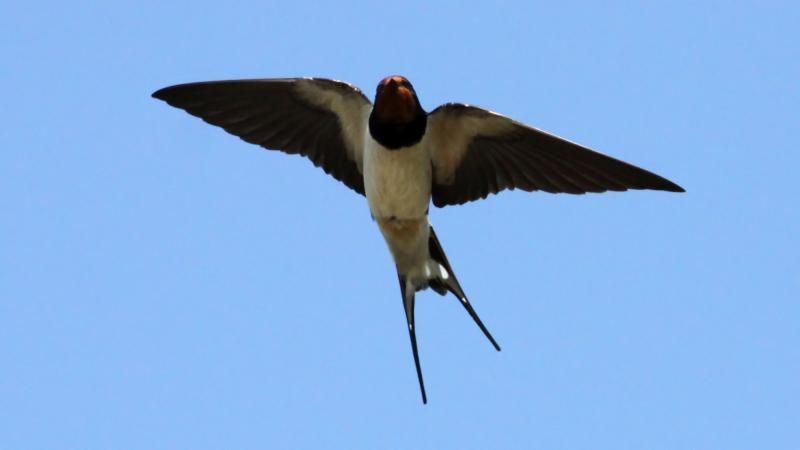
The barn swallow is graceful with a long, deeply forked tail and narrow wings. The upper parts are black-blue with a metallic iridescence. The underside is light brown to whitish. A distinctive feature is its chestnut-brown throat.
Features
Barn swallow
Hirundo rustica
long deeply forked tail
brown throat
Gesang
Frommolt, CC BY-SA 3.0

In the city
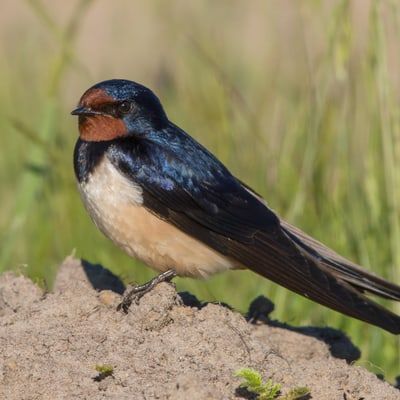
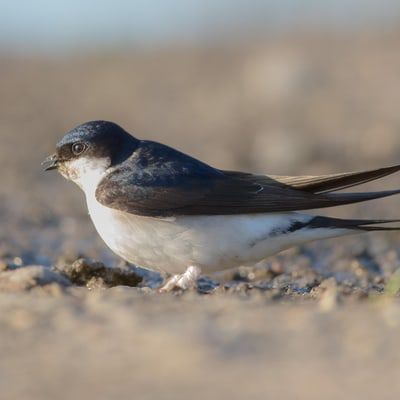
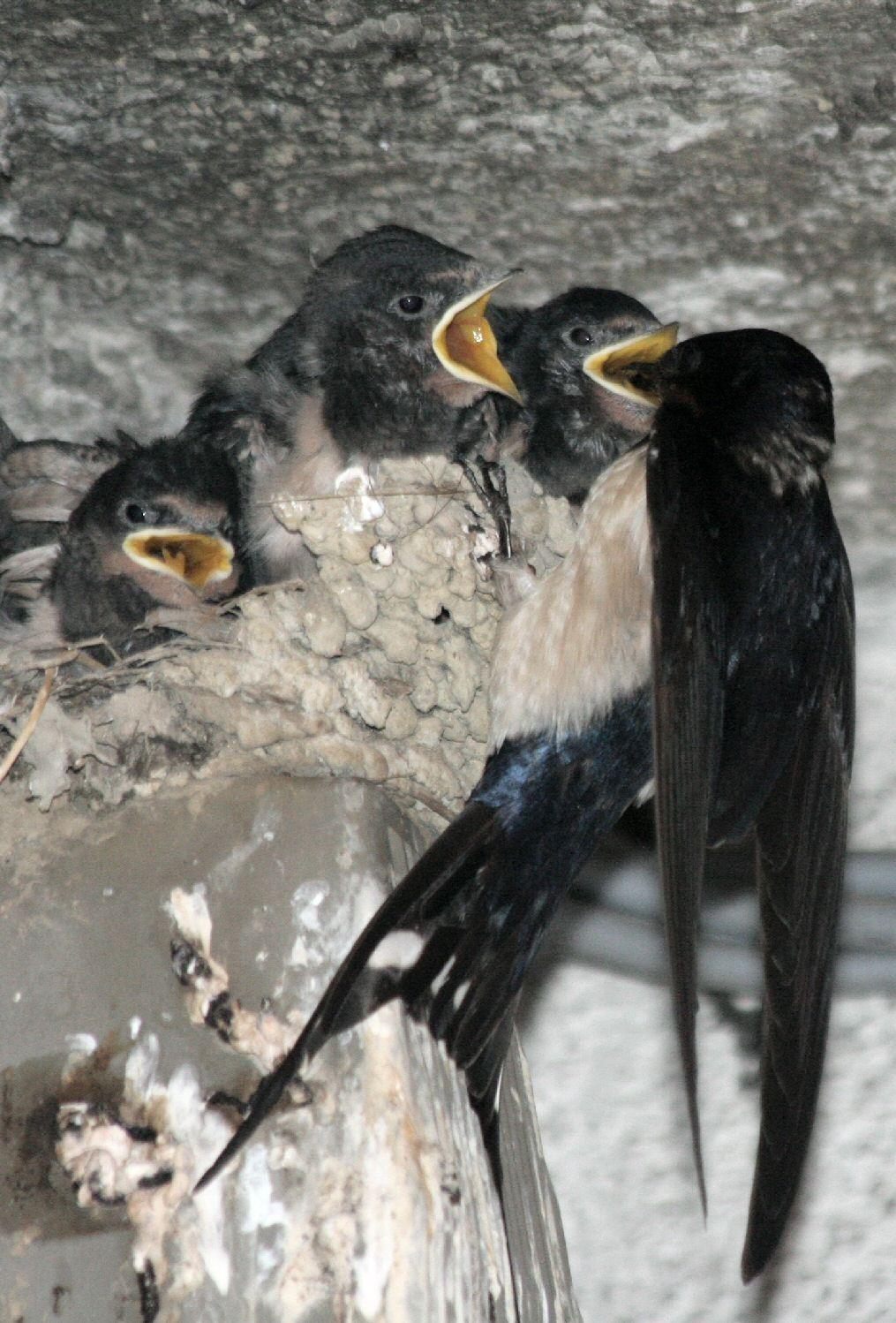
Barn swallows are synanthropic birds and prefer to build their nests in traditional wooden buildings. But the increasing decline in old building substance and the intensive use of green spaces, inner city areas offer fewer and fewer suitable sites for breeding and feeding.
Barn swallows build their nests inside of a building, thus requiring permanently open windows or other openings into buildings. Inhabitants do not always take positively to this and tend to throw the birds out.
Fun Facts
In German literature, swallows are symbols of good luck, particularly if when nesting at a house.
Country lore claims that low-flying swallows indicate a change in the weather for the worse. Prior to rain, air humidity and wind increase. In consequence, most insects are found closer to the ground. Therefore it is indeed true that in bad weather swallows fly lower in their search for food than in good weather.
From April to July, they start to sing approx. 60 minutes before sunrise.
The barn swallow is Estonia’s national bird.
The barn swallow is a migratory bird that flies to tropical and southern Africa in early October. It returns to Germany in late April to early May.
- Endangerment level Germany: endangered
Sources
Habitus , Andreas Trepte, CC BY-SA 2.5, https://commons.wikimedia.org/wiki/File:Rauchschwalbe_Hirundo_rustica.jpg

im Flug, Ken Billington, CC BY-SA 3.0, https://commons.wikimedia.org/wiki/File:Barn_Swallow_(Hirundo_rustica)_(15).JPG
_(15).JPG)
Jungtier, H. Hoffmeister, CC BY-SA 3.0, https://commons.wikimedia.org/wiki/File:Hirundo_rustica_Rauchschwalbe1.jpg

Page „Rauchschwalbe“. : Wikipedia, The Free Encyclopedia. Date of last revision: 27.01.2016, 11:02 UTC. URL: https://de.wikipedia.org/w/index.php?title=Rauchschwalbe&oldid=150739087 (Accessed: 09.02.2016).
Bejcek, V. (1988) Zugvögel, Hanau/Main: Verlag Werner Dausien.
Witt, K. & Steiof, K. (2013) Rote Liste und Liste der Brutvögel von Berlin, 3. version, 15.11.2013. : Berliner Ornithologische Arbeitsgemeinschaft e.V. (eds.) Berliner Ornithologischer Bericht, volume 23, Berlin: Berliner Ornithologische Arbeitsgemeinschaft e.V., 1-23.
NABU – Naturschutzbund Deutschland e.V. (2016) Vogeluhr, URL: https://www.nabu.de/nabu_vogeluhr2/index.php?iframed=1 (Accessed: 10.02.2021).