
Short Description
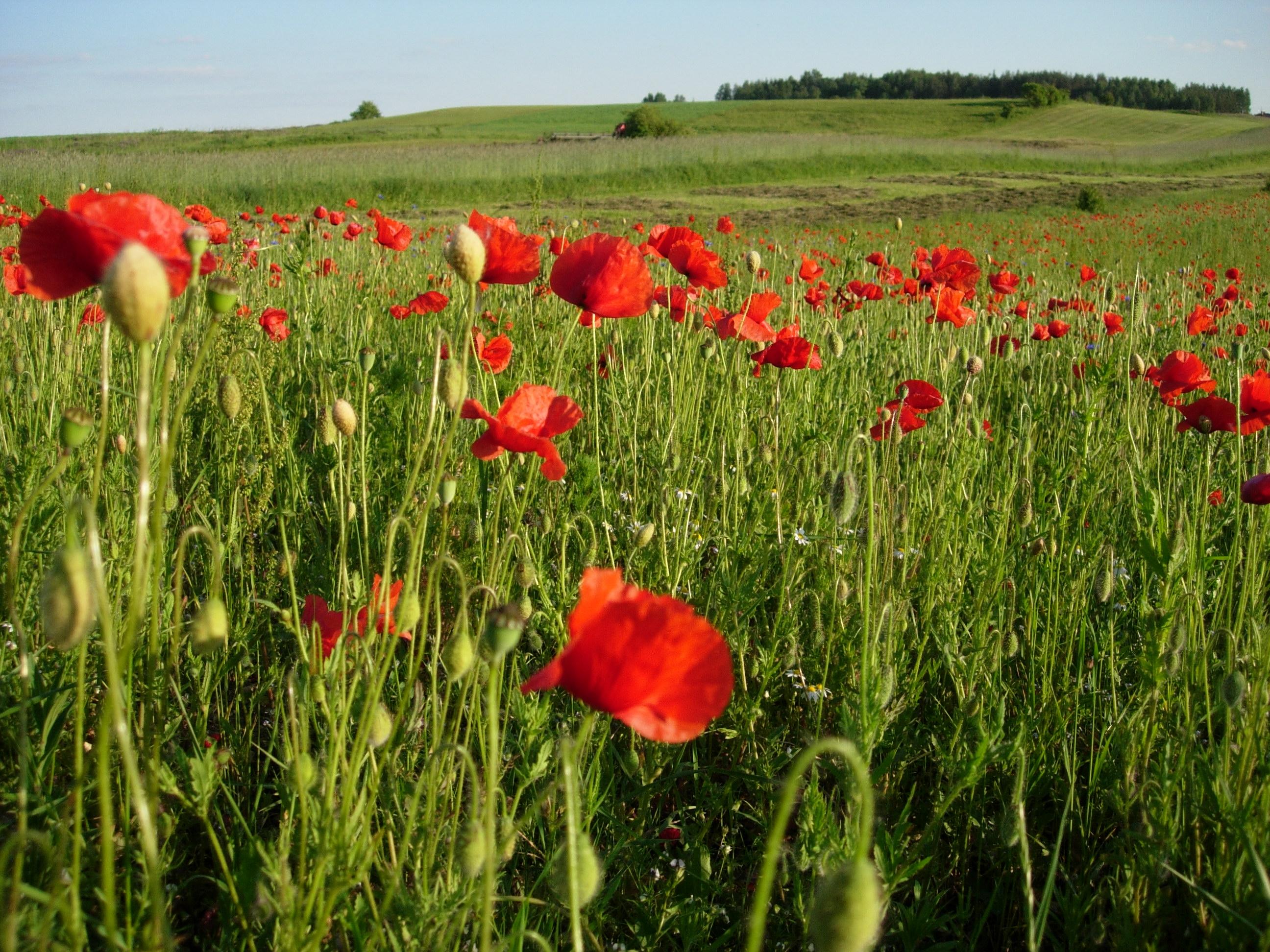
Common poppy can grow to a height of 90 cm.
The leaves are rough and coarsely haired. They grow alternately on the stem. They are simply or doubly incised almost to the centre (pinnatisect) and mostly have serrated sections.
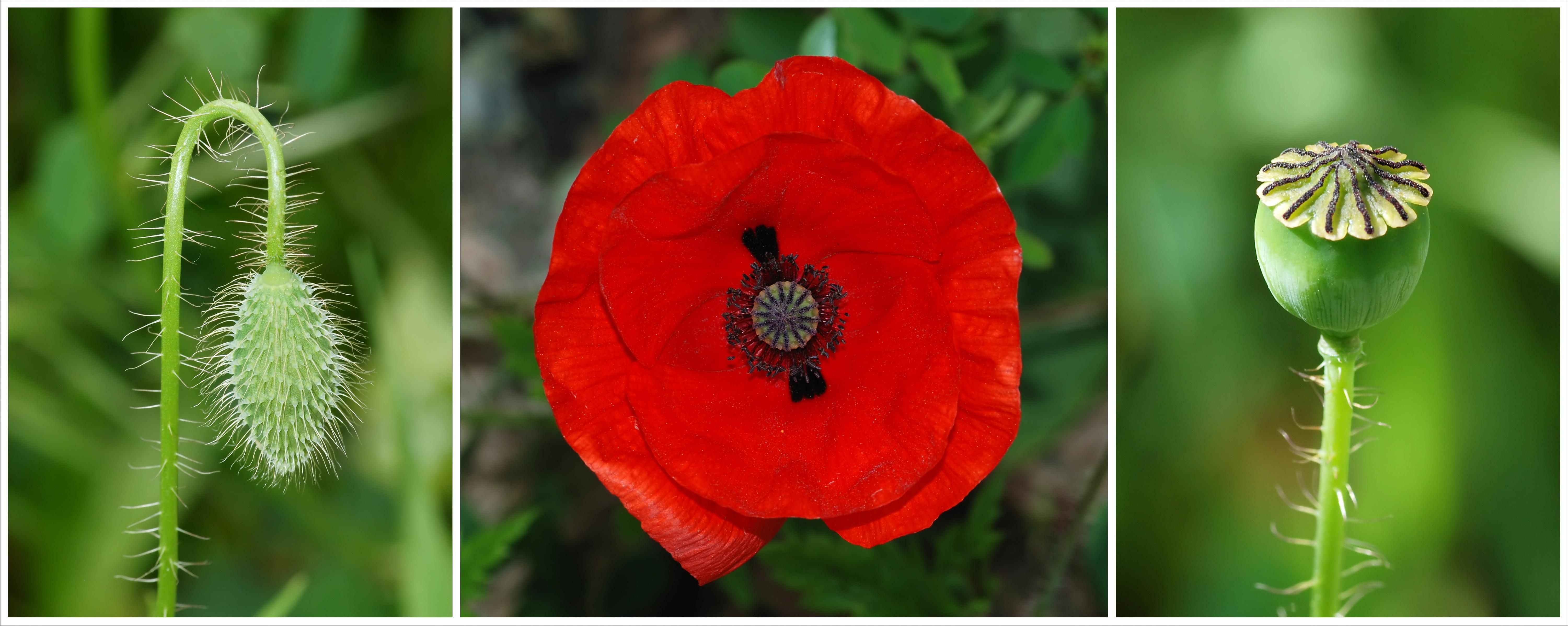
The stem is upright, unbranched and covered in soft hairs. It contains a milky sap.
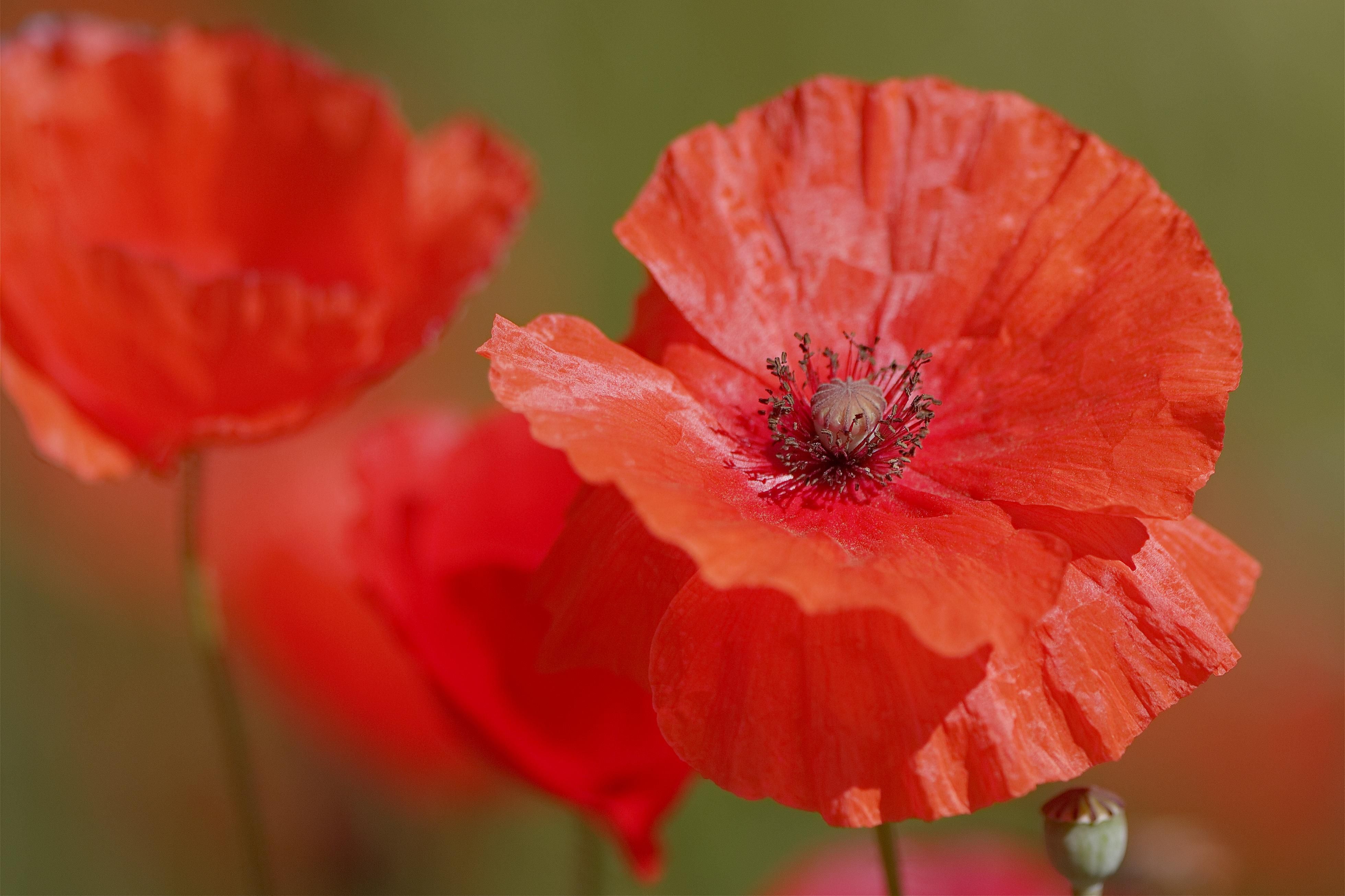
The flowers are separate and bright red. The four petals often have a black spot at their base. Numerous dark-purple stamens are found in the middle of the flower.
The fruit is a bald, spherical capsule with small pores on the upper edge. It contains numerous dark seeds.
Features
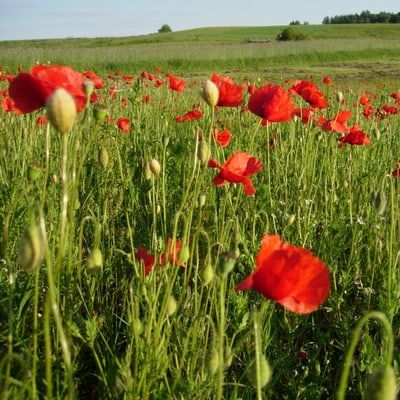
Common poppy
Papaver rhoeas
poisonous
large red flowers
four petals
Similar species
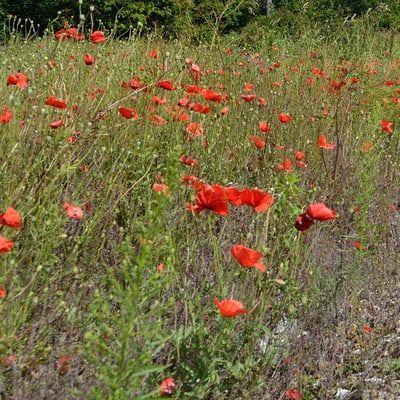
Long-headed poppy
Papaver dubium
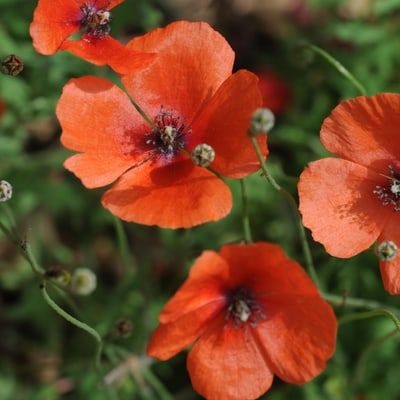
Roemeria argemone
In the city
Poppies are often part of the seed mixtures sown in urban landscaping. In addition, they grow naturally on paths and railway stations. It prefers poor, sunny and nutrient-rich sites on limy clay soil.
It has been a synanthrope (ecologically associated with humans) ever since the Neolithic. Sites newly created by humans such as cultivated fields were beneficial to its proliferation.
Fun Facts
In folk medicine, poppy is used to treat coughs and hoarseness.
Poppy pods are constructed in such a way as to capture the wind thus accelerating the distribution of the seeds.
The increasing use of herbicides and a more specific cleaning of cereal seeds in agriculture, its numbers have sharply declined in cereal fields.
In rare variations, the flowers of the common poppy can be white or light-purple.
It flowers from May to July.
It is a one to two year old plant. This means that a plant lives for one to two years, but flowers only once and dies after the seeds have matured.
- Endangerment level Germany: not endangered
The seeds of the common poppy have spread almost across the entire globe through contaminated cereal seeds.
All parts of the plant are poisonous. The seeds are harmless and used in baking or to produce an oil.
Sources
Habitus, Wilson44691, Gemeinfrei, https://commons.wikimedia.org/wiki/File:Polish_Poppies.JPG

Blüten, MatthiasKabel, CC BY-SA 3.0, https://commons.wikimedia.org/wiki/File:Poppy_closeup_of_a_single_blossom_3.jpg

Knospe, Blüte und Frucht, Alvesgaspar, CC BY-SA 3.0, https://commons.wikimedia.org/wiki/File:Poster_papaver_3a.jpg

Spohn, M., Golte-Bechtle, M. & Spohn, R. (2015) Was blüht denn da? Stuttgart: Franckh Kosmos Verlag.
Fleischhauer, S. G., Guthmann, J. & Spiegelberger, R. (2007) Essbare Wildpflanzen. 200 Arten bestimmen und verwenden, Baden und München: AT Verlag.
Lippert, W. & Podlech, D. (1993) GU Naturführer. Blumen: die wichtigen Blütenpflanzen Mitteleuropas erkennen und bestimmen, München: Gräfe und Unzer Verlag.
Needon, C. & Petermann, J. (1991) Urania-Naturführer Pflanzen, Leipzig, Jena, Berlin: Urania-Verlag.
Schauer, T., Caspari, C. & Caspari, S. (2015) Der illustrierte BLV-Pflanzenführer für unterwegs. 1150 Blumen, Gräser, Bäume und Sträucher, München: BLV.
Scherf, G. (2006) Wildpflanzen neu entdecken, München: BLV.
Page „Klatschmohn“. : Wikipedia, The Free Encyclopedia. Date of last revision: 18.12.2016, 10:50 UTC. URL: https://de.wikipedia.org/w/index.php?title=Klatschmohn&oldid=160763882 (Accessed: 21.12.2016).
Bundesamt für Naturschutz (n.d.) Artensteckbriefe, URL: http://floraweb.de/pflanzenarten/artenhome.xsql?suchnr=4115& (Accessed: 21.12.2016).