
Short Description
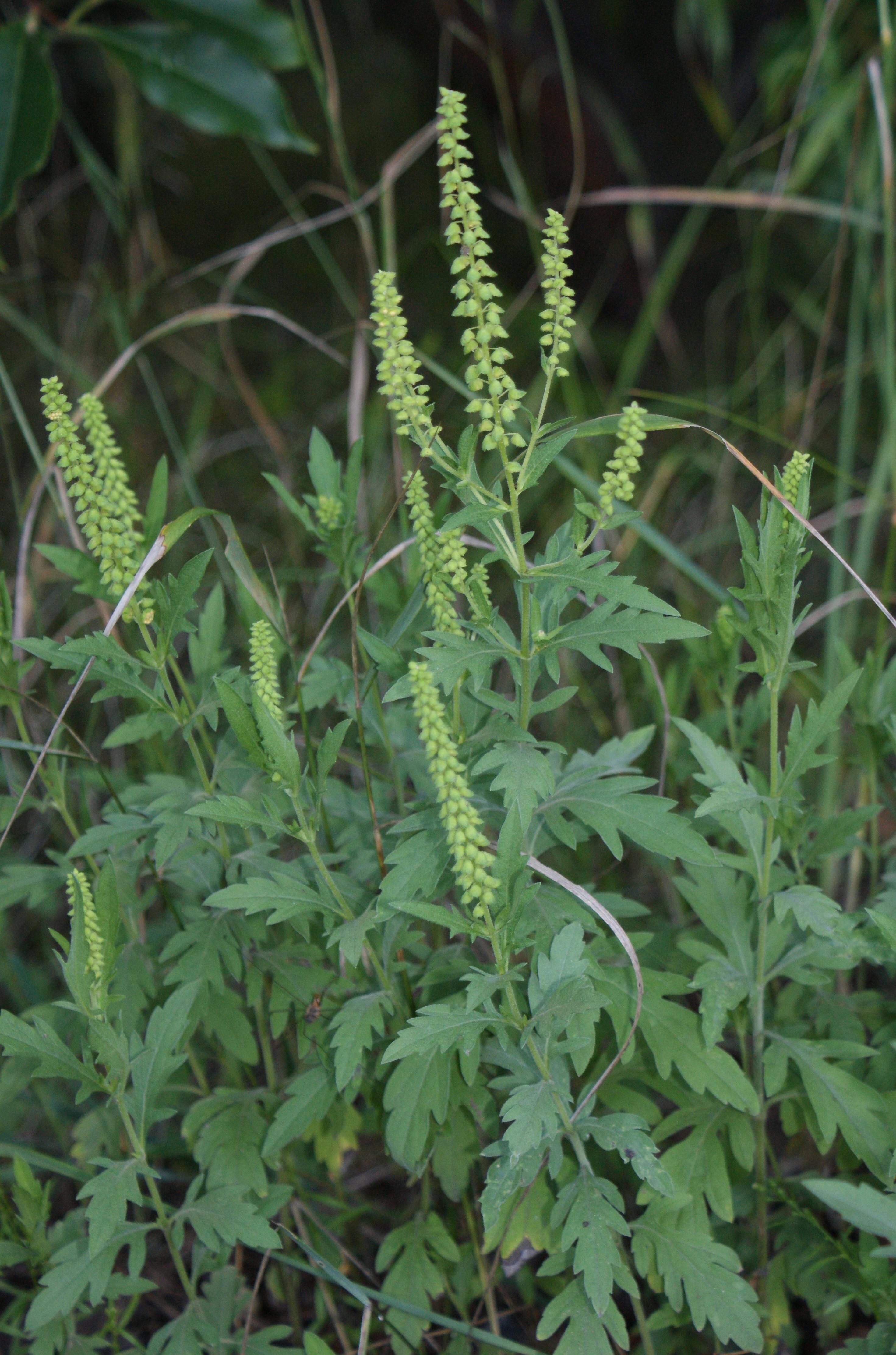
Perennial ragweed can grow to up to 2 metres in height.
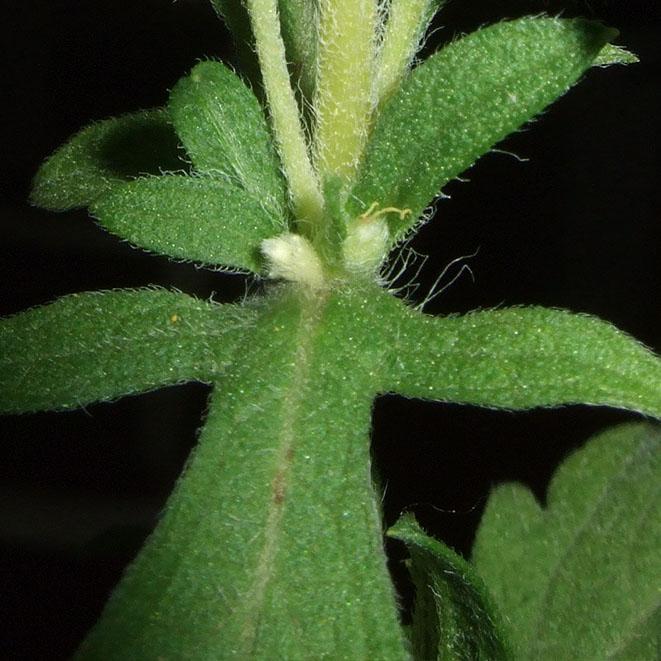
The leaves grow oppositely on the stem. They vary widely in appearance and can be entire to divided (pinnate). The underside of the leaves is covered in dense woolly hairs.
The stem is upright with dense white hairs.
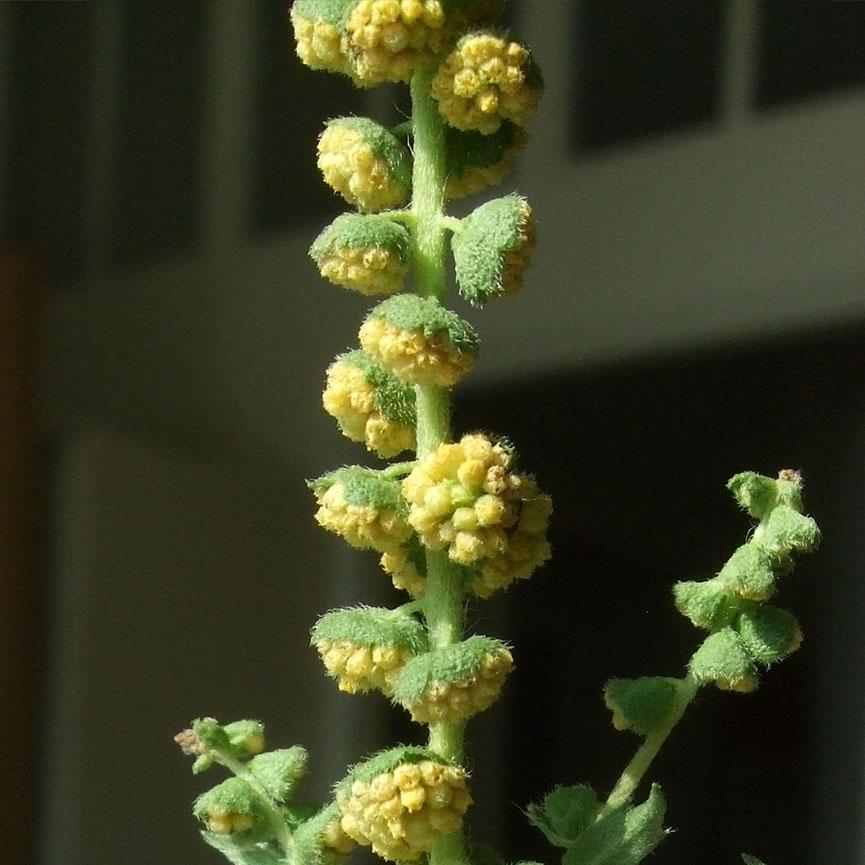
The flowers are very inconspicuous and clustered in numerous flower heads. The numerous pendulous flower heads are distributed along the stem.
The seeds are small nut fruits with five to seven blunt protrusions.
Features
Perennial ragweed
Ambrosia psilostachya
undersides of leaves covered in felt-like hairs
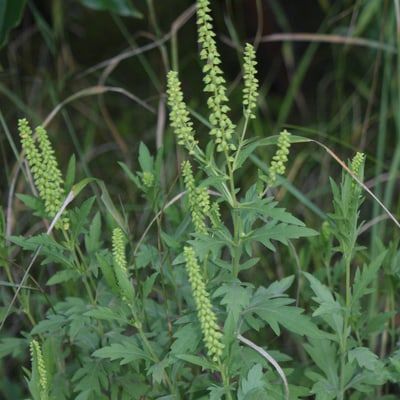
numerous pendulous flower heads
In the city
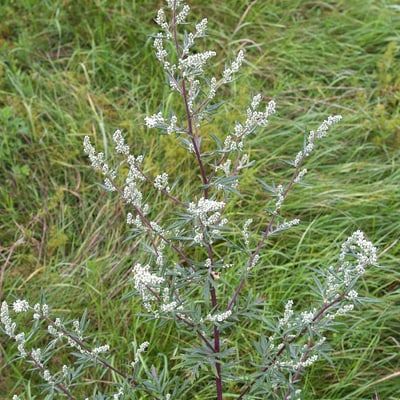
Perennial ragweed is mainly found in road verges, fallow land, gardens, parks and particularly along railway tracks. It prefers sunny, warm sites with nutrient-rich, slightly acidic soil. It also grows in other sites, but not particularly high.
It is generally spread to different sites through transports of contaminated soil as part of building and construction work. Perennial ragweed can trigger strong allergic reactions. For that reason, ragwort is generally removed. Care should be taken to remove as many parts of the root system as possible.
Fun Facts
There are national campaigns in Germany for the removal of ragweed; people are called upon to remove these plants extensively and dispose of them only in domestic waste.
It flowers from July to October.
It mainly spreads via its root system.
- Endangerment level Germany: not evaluated
Perennial ragweed originates from North America and thus is a non-native plant (neophyte).
The pollen is severely allergenic.
Sources
Habitus, Krzysztof Ziarnek Kenraiz, CC BY-SA 3.0, https://commons.wikimedia.org/wiki/File:Ambrosia_psilostachya_kz1.jpg

Weibliche Blüten, Alice Kracht, CC BY-SA 4.0, https://offene-naturfuehrer.de/web/Datei:Ambrosia_psilostachya_3.JPG

Männliche Blütenkörbchen, Alice Kracht, CC BY-SA 4.0, https://offene-naturfuehrer.de/web/Datei:Ambrosia_psilostachya_2.jpg

Page „Traubenkräuter“. : Wikipedia, The Free Encyclopedia. Date of last revision: 21.07.2016, 06:02 UTC. URL: https://de.wikipedia.org/w/index.php?title=Traubenkr%C3%A4uter&oldid=156329648 (Accessed: 13.09.2016).
Institut für Meteorologie, Freie Universität Berlin (2015) Aktionstag gegen Ambrosia, URL: http://ambrosia.met.fu-berlin.de/ambrosia/aktionstag_erster_2015.php (Accessed: 13.09.2016).