
Short Description
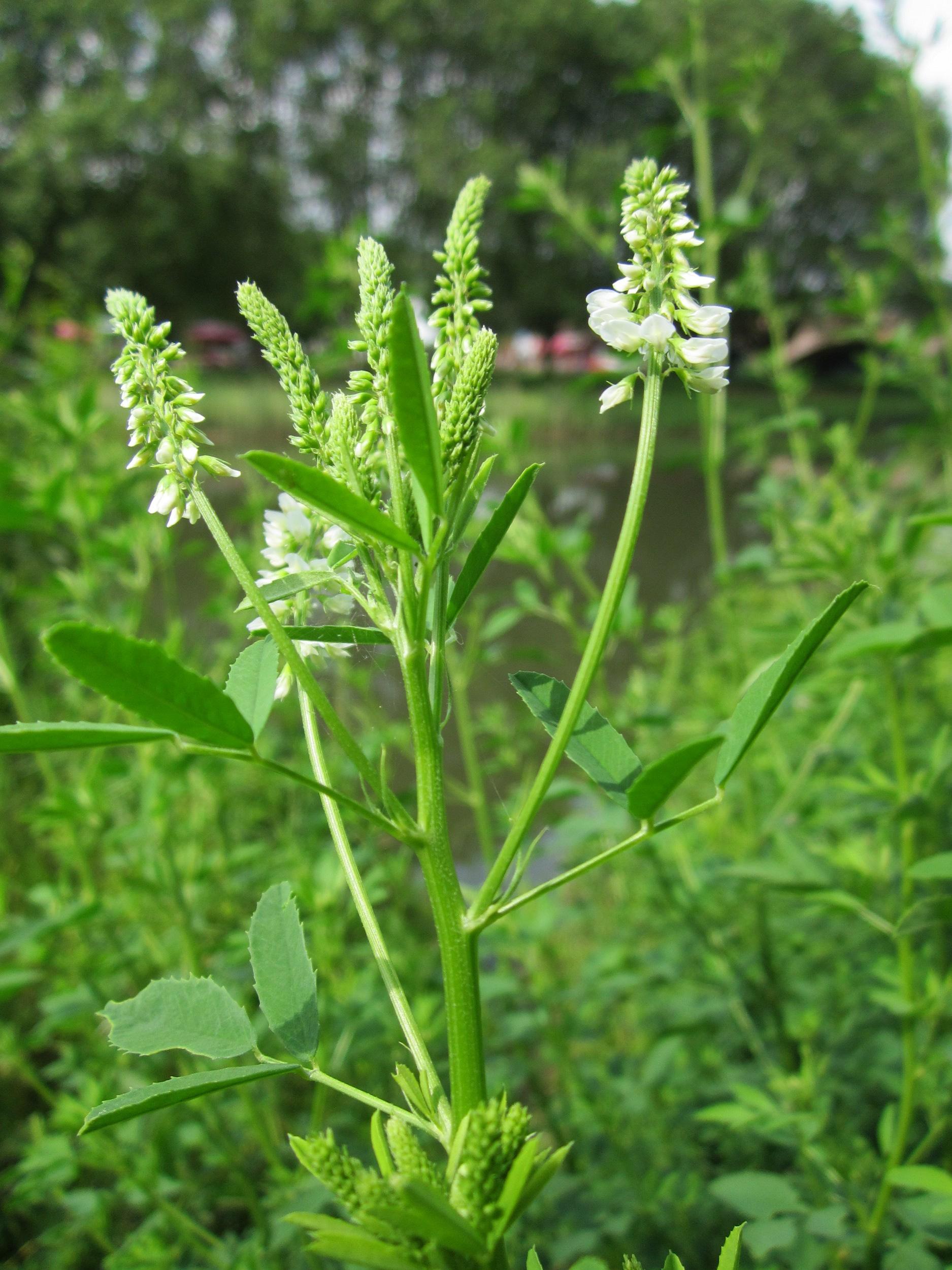
White sweet clover can grow to a height of 1.7 m.
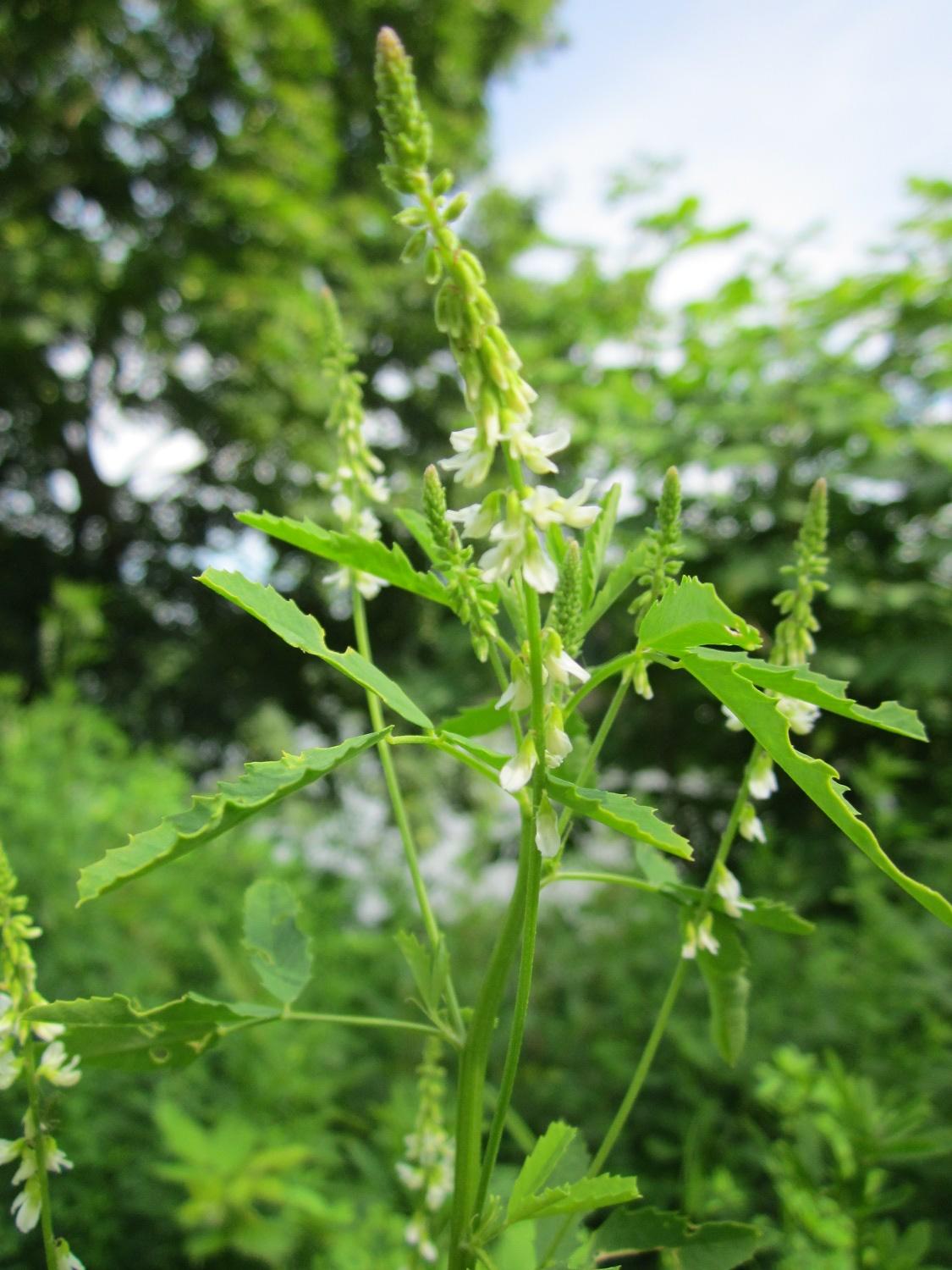
Each leaf is divided into three leaflets (trifoliate). The individual leaflets are lance-shaped to oval.
The stem is upright and usually with lots of branches. It can be tinged with red.
The flowers are white and arranged in very long and slender flower heads. Each flower has only a single mirror axis (mirror-symmetric). It consists of five petals. The large upper petal protrudes upwards. The two lower petals form a hollow boat that surrounds the anthers and pistil.
The fruit is an oval pod that turns black with ripening.
Features
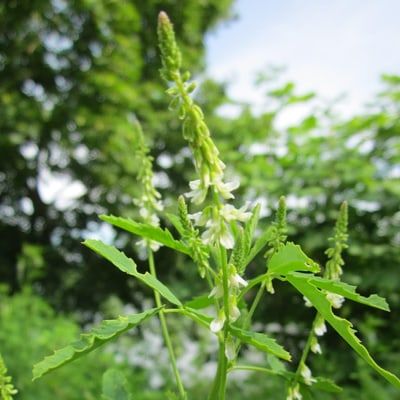
White sweet clover
Melilotus albus
long shoots with numerous small flowers
white flowers
In the city
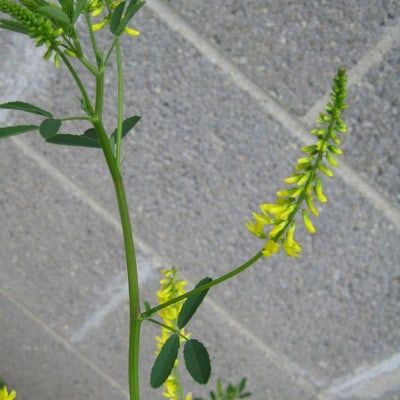
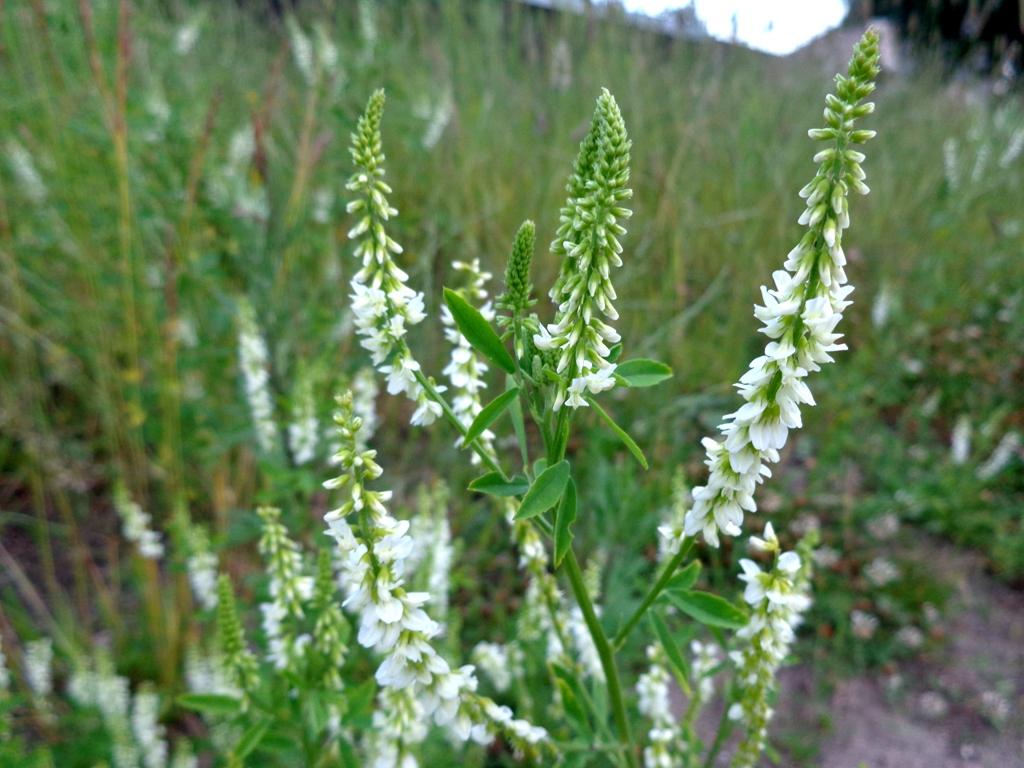
In an urban environment, white sweet clover is often found on hardly weathered soil (virgin soil), but also on wasteland and railway land. It prefers moderately dry sites with nutrient-rich soils.
Fun Facts
Sweet clover contains substances that reduce blood coagulation. The substances are used in the production of medicines and rat poison.
Symbiosis with root-nodulation bacteria is typical for members of the papilionaceae family. The bacteria supply the plant with nitrogen. As the bacteria require a plant to fix nitrogen, this biological interaction is beneficial to both species (symbiosis).
It flowers from June to October.
- Endangerment level Germany: not endangered
Sweet clover can be used to flavour food, similar to woodruff.
Sources
Habitus, AnRo0002, CC0, https://commons.wikimedia.org/wiki/File:20130628Steinklee_Staden1.jpg

Blütenstand, AfroBrazilian, CC BY-SA 3.0, https://commons.wikimedia.org/wiki/File:Melilotus_albus_02.JPG

Habitus, AnRo0002, CC0, https://commons.wikimedia.org/wiki/File:20130702Steinklee_Saarbruecken1.jpg

Spohn, M., Golte-Bechtle, M. & Spohn, R. (2015) Was blüht denn da? Stuttgart: Franckh Kosmos Verlag.
Fleischhauer, S. G., Guthmann, J. & Spiegelberger, R. (2007) Essbare Wildpflanzen. 200 Arten bestimmen und verwenden, Baden und München: AT Verlag.
Needon, C. & Petermann, J. (1991) Urania-Naturführer Pflanzen, Leipzig, Jena, Berlin: Urania-Verlag.
Schauer, T., Caspari, C. & Caspari, S. (2015) Der illustrierte BLV-Pflanzenführer für unterwegs. 1150 Blumen, Gräser, Bäume und Sträucher, München: BLV.
Scherf, G. (2006) Wildpflanzen neu entdecken, München: BLV.
Page „Weißer Steinklee“. : Wikipedia, The Free Encyclopedia. Date of last revision: 13.07.2016, 14:28 UTC. URL: https://de.wikipedia.org/w/index.php?title=Wei%C3%9Fer_Steinklee&oldid=156109225 (Accessed: 24.11.2016).