
Short Description
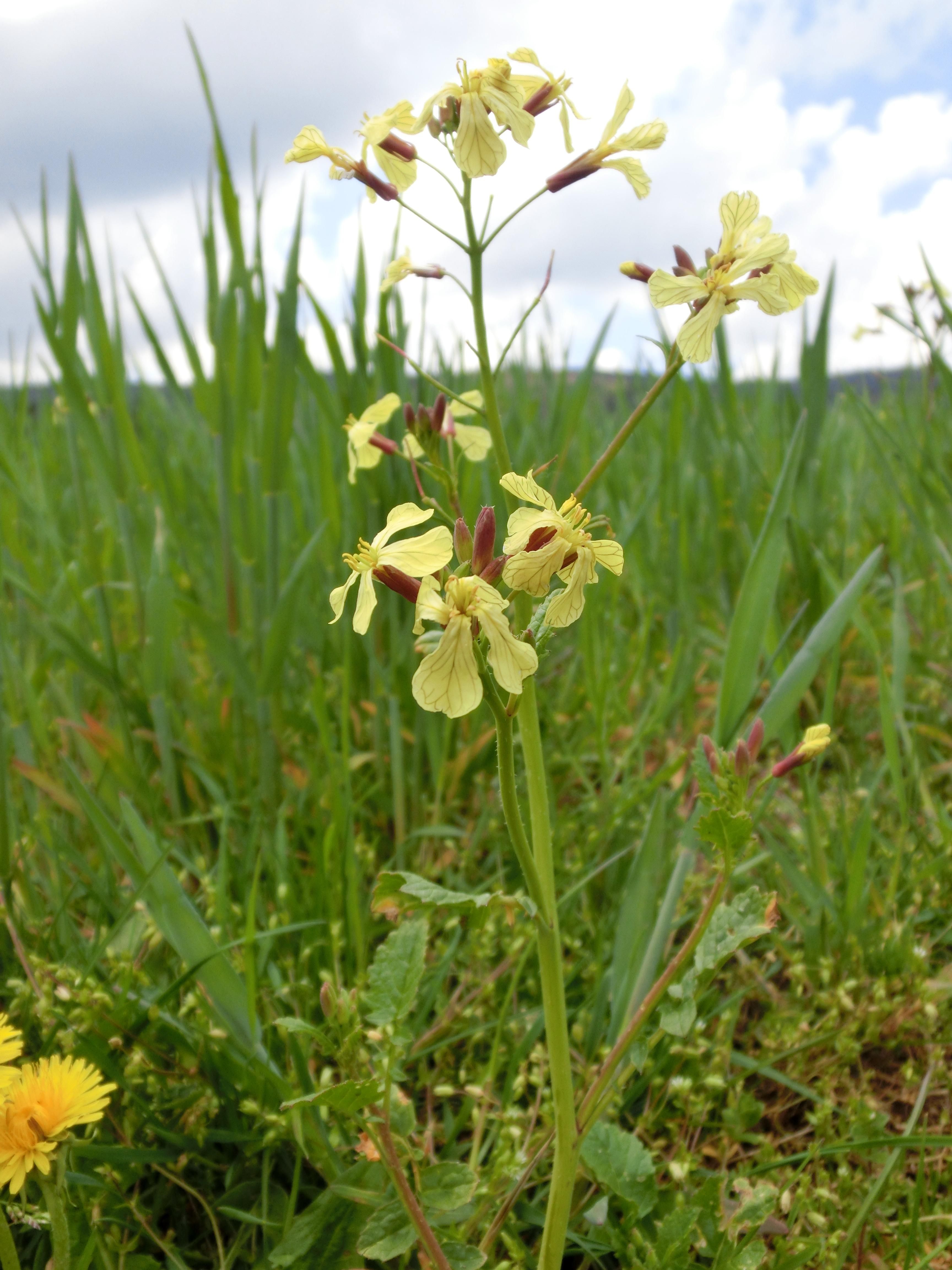
Sea radish can grow up to 60 centimetres high. It takes root over one metre deep.
The lower leaves are rough-haired and incised. The upper leaves are undivided.
The stem grows upright.
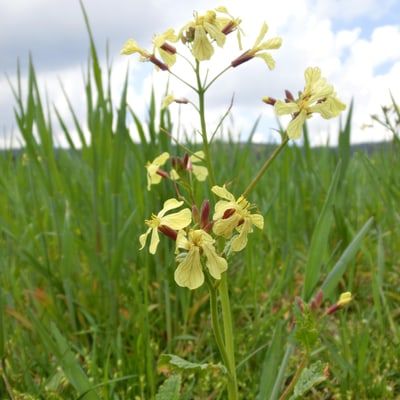
The small flowers grow in loose inflorescences at the end of the stem. They have four white or pale yellow and mostly purple-veined petals.
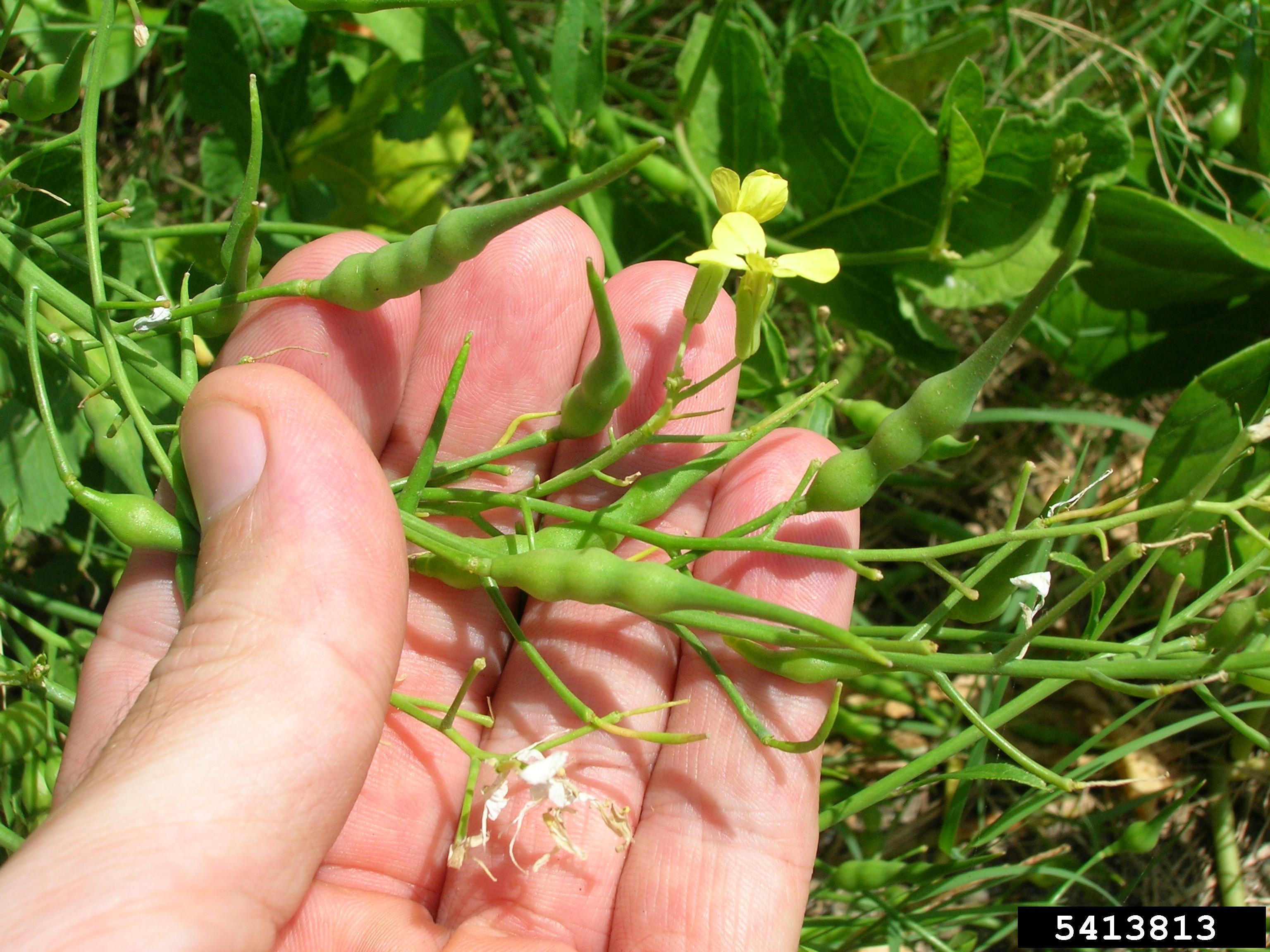
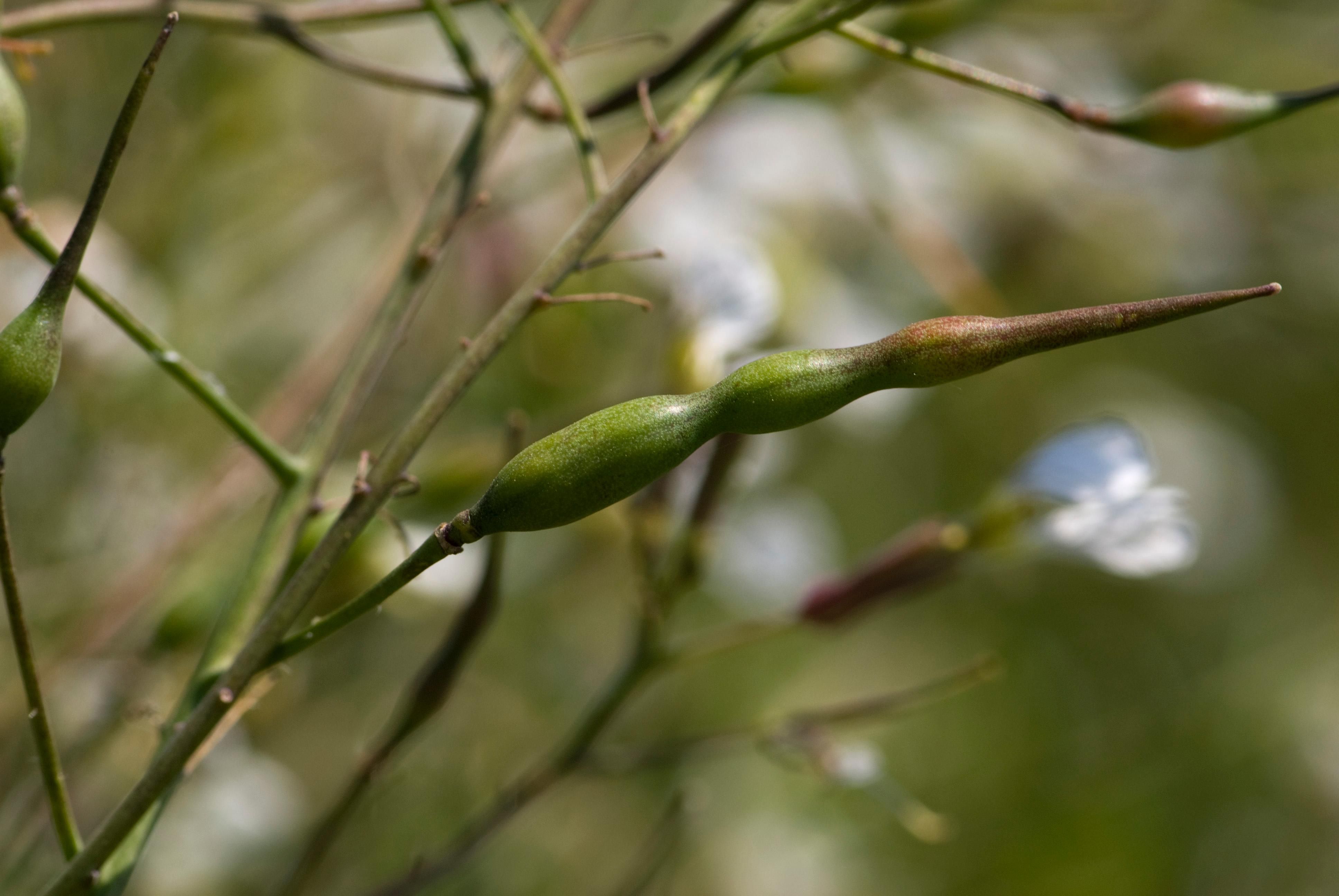
The fruits are bead string-like pods that break apart when ripe.
Features
Sea radish
Raphanus raphanistrum
white or pale yellow racemes
pearl string-like pods
Similar species
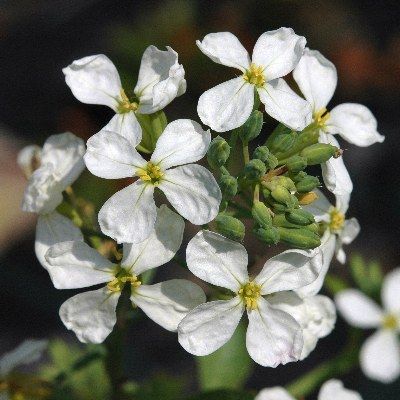
Raphanus sativus
In the city
Sea radish grows in wild herb stands in fields, rubble tips and wastelands. It is also sown as a green manure or forage plant. It prefers calcareous soils and is an indicator of acidity.
Fun Facts
The flowering period is from June to October.
The yellow-flowered form grows mostly in the north and east of Germany on sand. The white-flowered form is found more in the south.
It is an annual plant, i.e. it only flowers for one summer and dies after the seeds have ripened.
- Endangerment level Germany: not endangered
The seeds of the sea radish can be used to produce mustard. The oil from the seeds is edible and also suitable for technical purposes.
Sources
Blütenstand, Orikrin1998, CC BY-SA 3.0, https://commons.wikimedia.org/wiki/File:Raphanus_raphanistrum_(1).jpg
.jpg)
Früchte, Forest & Kim Starr, Starr Environmental, Bugwood.org, CC BY-SA 3.0, http://www.forestryimages.org/browse/detail.cfm?imgnum=5413813
Frucht, Olivier Pichard, CC BY-SA 3.0, https://commons.wikimedia.org/wiki/File:Raphanus_raphanistrum-var-raphanistrum_velennes_80_10062008_4.jpg

Spohn, M., Golte-Bechtle, M. & Spohn, R. (2015) Was blüht denn da? Stuttgart: Franckh Kosmos Verlag.
Schauer, T., Caspari, C. & Caspari, S. (2015) Der illustrierte BLV-Pflanzenführer für unterwegs. 1150 Blumen, Gräser, Bäume und Sträucher, München: BLV.
Seitz, B., Ristow, M., Meißner, J., Machatzi, B. & Sukopp, H. (2018) Rote Liste und Gesamtartenliste der etablierten Farn- und Blütenpflanzen von Berlin. : Der Landesbeauftragte für Naturschutz und Landschaftspflege / Senatsverwaltung für Umwelt, Klima und Verkehr (eds.) Rote Listen der gefährdeten Pflanzen, Pilze und Tiere von Berlin, URL: https://www.berlin.de/sen/uvk/natur-und-gruen/naturschutz/artenschutz/artenlisten-rote-listen/farn-und-bluetenpflanzen/ (Accessed: 26.03.2021).
Bundesamt für Naturschutz (n.d.) Artensteckbriefe, URL: http://floraweb.de/pflanzenarten/artenhome.xsql?suchnr=4780& (Accessed: 21.08.2018).
Page „Acker-Rettich“. : Wikipedia, The Free Encyclopedia. Date of last revision: 12.07.2018, 17:20 UTC. URL: https://de.wikipedia.org/w/index.php?title=Acker-Rettich&oldid=179099699 (Accessed: 21.08.2018).