
Short Description
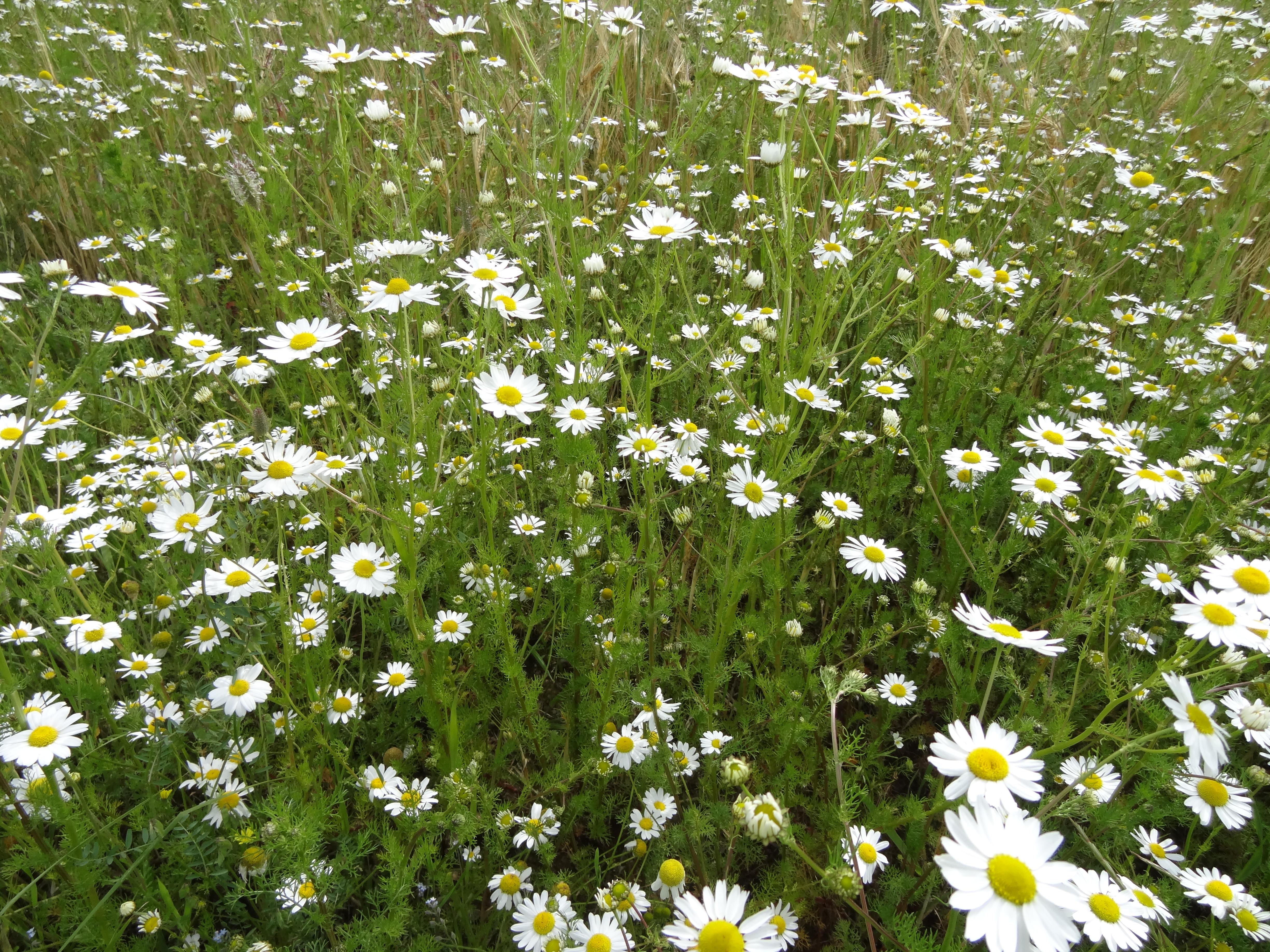
The corn chamomile can reach a height of between 10 and 50 centimetres.
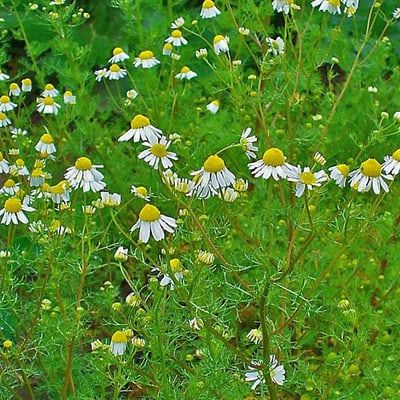
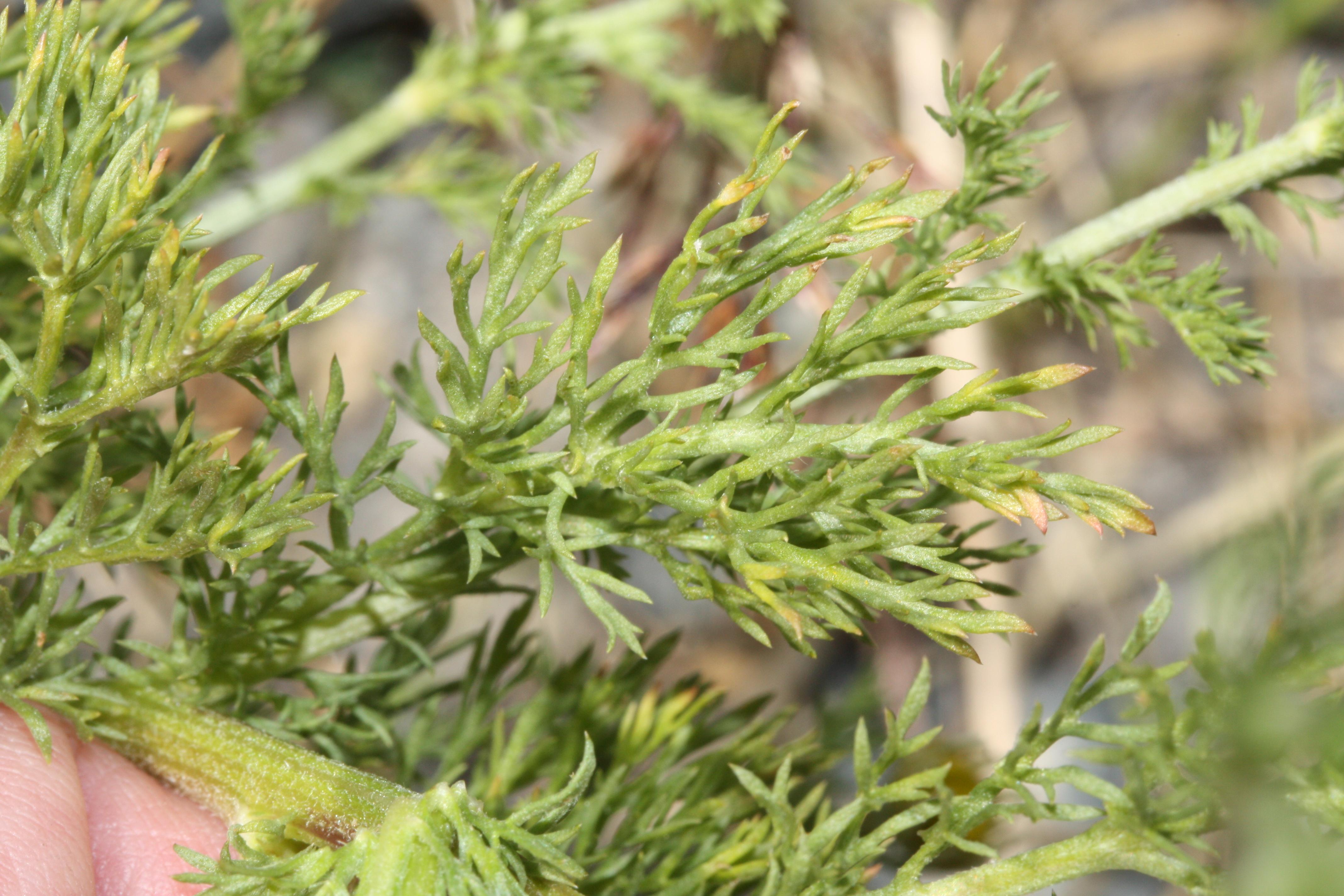
The leaves are solitary and alternate on the stem. They have several lobes (pinnatipartite). They can be glabrous to slightly hairy.
The stem is multi-branched. It grows either upright or lying down.
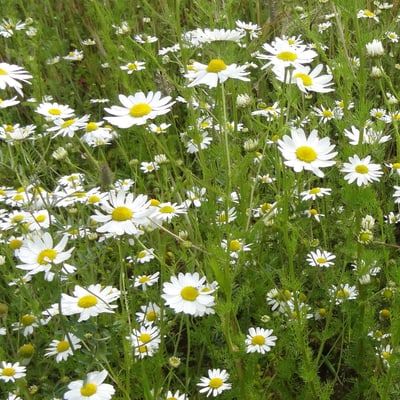
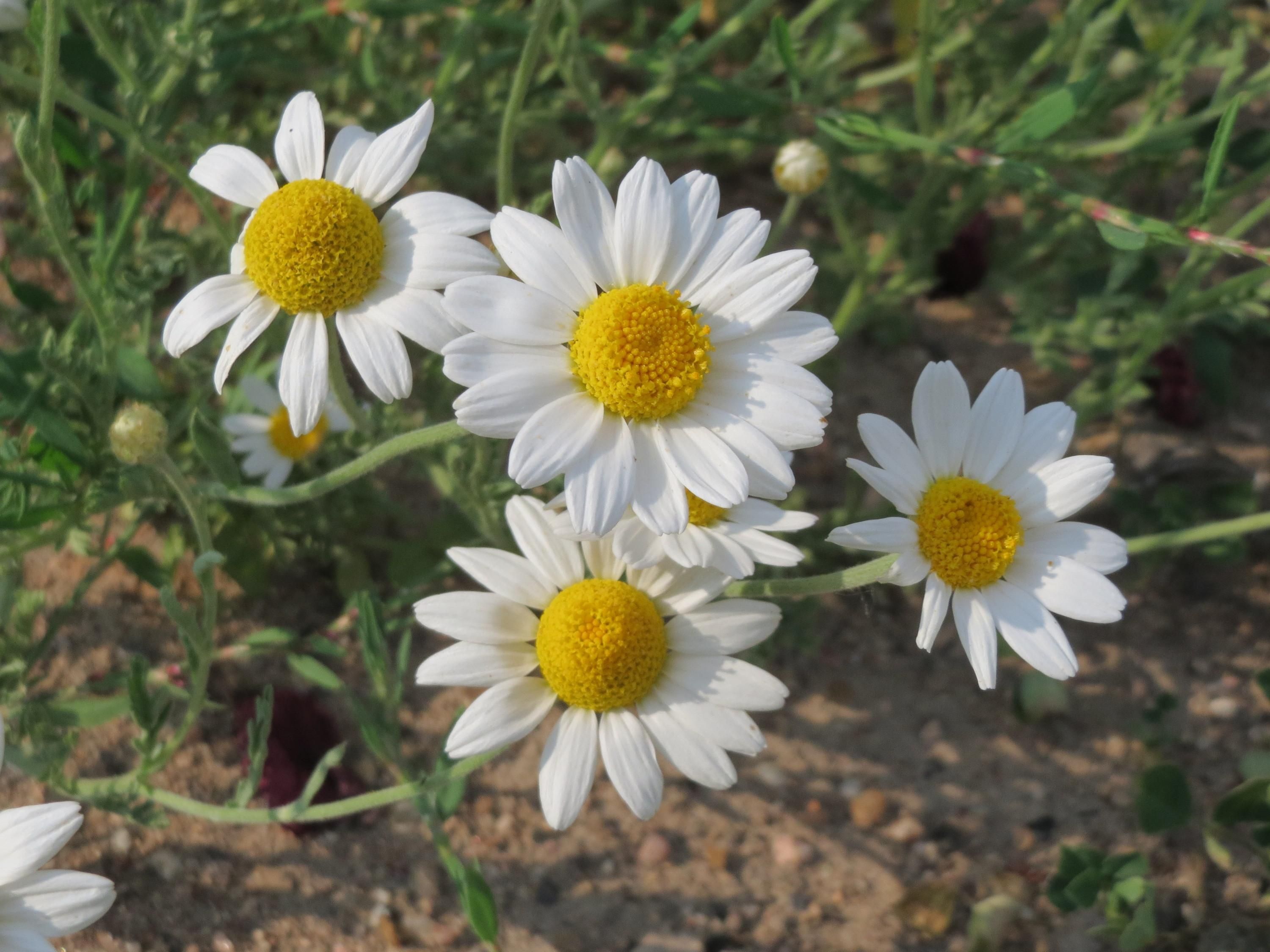
At first glance, the flower head can be mistaken for the flower. It has a diameter of two to three centimetres. It is composed of white ray florets at the edge and numerous yellow tubular florets in the centre. The corolla is conical and filled with pith.
The cross-section of the small fruits is round and clearly grooved.
Features
Corn chamomile
Anthemis arvensis
pith-filled flower head
In the city
The corn chamomile is a typical field wild herb. In the city, however, it often grows on fallow land, rubble and roadsides.
Fun Facts
The ray florets tilt downwards at night. During the day they stand horizontally.
The flowering period is from May to October.
The pollen is spread by insects and self-pollination.
The fruits secrete a slime on their surface. In this way, they stick to animals and are spread.
- Endangerment level Germany: Warning list
The corn chamomile is found throughout Europe. It is a cultivar and has been widely spread mainly through agriculture.
The name derives from the Greek word anthemis = flower and the Latin word arvensis = field.
It contains only little essential oil and therefore smells only faintly of camomile. However, it has no medicinal value.
Sources
Habitus, Udo Schmidt, CC BY-SA 2.0, https://commons.wikimedia.org/wiki/File:Anthemis_arvensis_L._(7477527336).jpg
.jpg)
Blütenstand, AnRo0002, CC0, https://commons.wikimedia.org/wiki/File:20150606Anthemis_arvensis2.jpg

Blätter, Walter Siegmund, CC BY-SA 3.0, https://commons.wikimedia.org/wiki/File:Anthemis_arvensis_2644.JPG

Kammer, P. M. (2016) Pflanzen einfach bestimmen. Schritt für Schritt einheimische Arten kennenlernen, Bern: Haupt Verlag.
Schauer, T., Caspari, C. & Caspari, S. (2015) Der illustrierte BLV-Pflanzenführer für unterwegs. 1150 Blumen, Gräser, Bäume und Sträucher, München: BLV.
Spohn, M., Golte-Bechtle, M. & Spohn, R. (2015) Was blüht denn da? Stuttgart: Franckh Kosmos Verlag.
Page „Acker-Hundskamille“. : Wikipedia, The Free Encyclopedia. Date of last revision: 13.11.2017, 19:52 UTC. URL: https://de.wikipedia.org/w/index.php?title=Acker-Hundskamille&oldid=170972315 (Accessed: 21.12.2017).