
Short Description
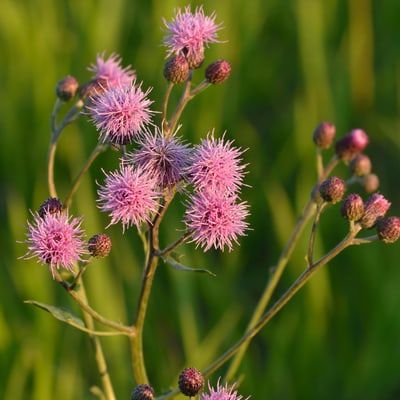
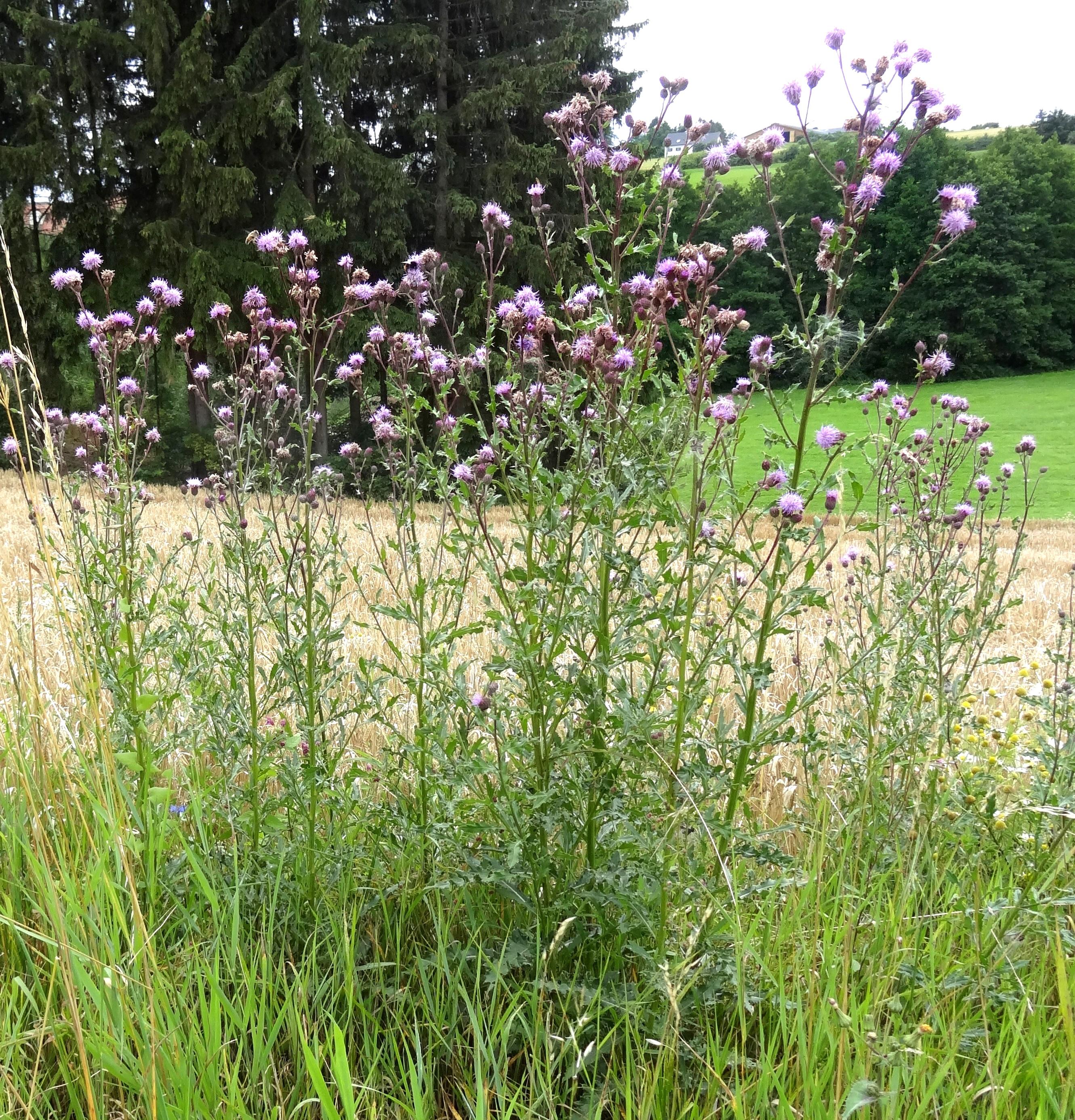
The creeping thistle can grow up to 1.5 m in height.
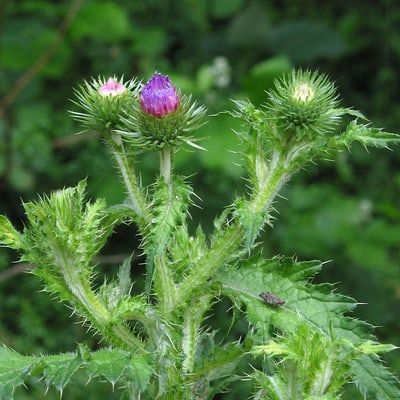
The leaves are lance-shaped and indented. They can be indented up to a third of the side of the leaf (pinnatifid - feather-like appearance). They have spiny ciliated edges, but are hairless on the top.
The upright stem is free from thorns, generally freely branched, without wings and very leafy. It extends deep into the soil.
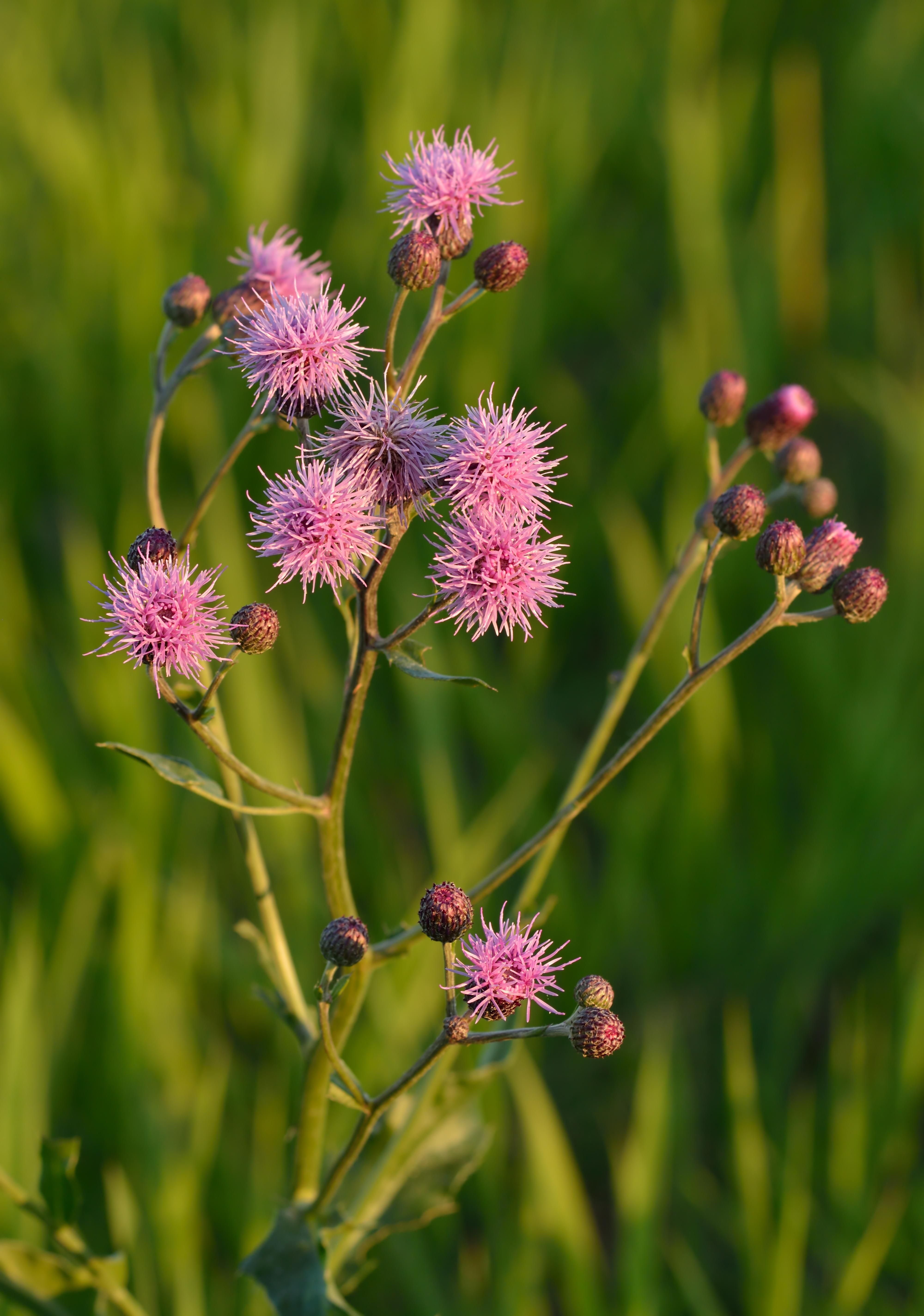
At first glance, the flower head can be mistaken for the flower itself. This pseudanthium (“false flower”) is made up of numerous individual light-purple tubular florets. They have a sweet scent.
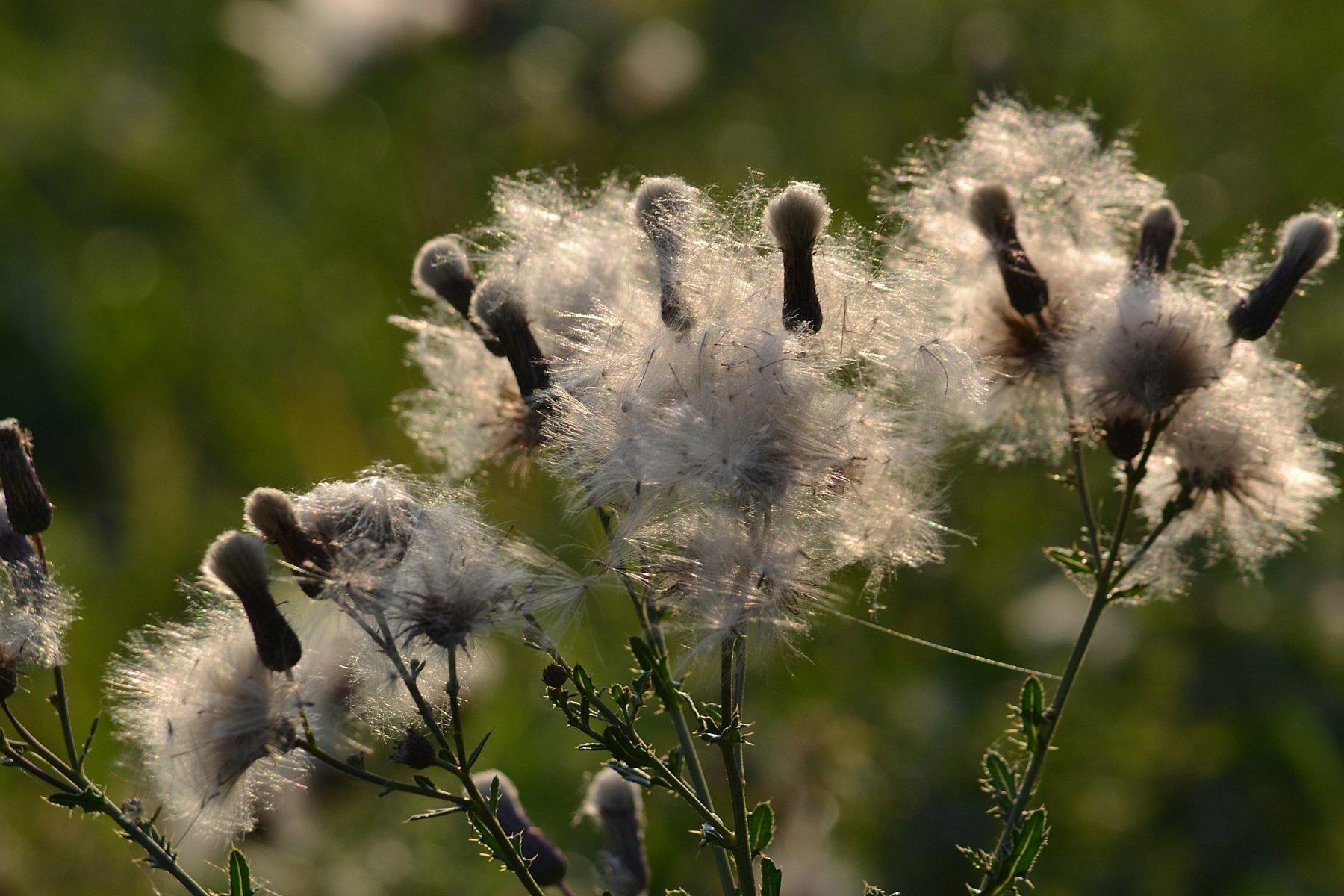
The fruits are brown, elongated, narrow nut-like capsules with a white tuft of hair (pappus). This type of fruit is called an archen.
Features
Creeping thistle
Cirsium arvense
stem not winged
stem without prickles
Similar species
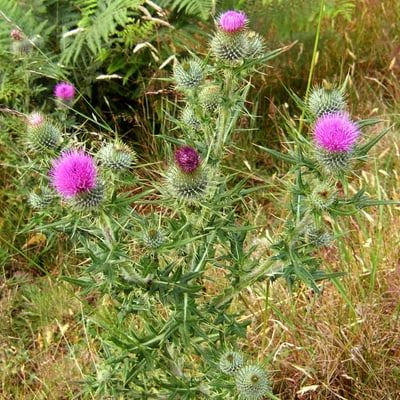
Spear thistle
Cirsium vulgare
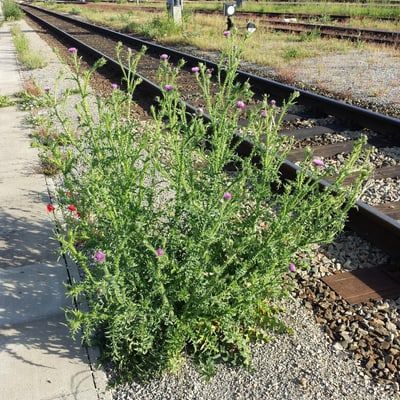
Plumeless thistle
Carduus acanthoides
Welted thistle
Carduus crispus
In the city
The creeping thistle requires dry habitats rich in nutrients. In an urban environment, it can often be found at the roadside and on wasteland.
In Central Europe, the clearing of forests for fields created new favourable habitats for the creeping thistle. Farmers generally dislike the plant and tend to remove it.
Fun Facts
With their sweet scent, thistles attract a lot of butterflies and are an important food source.
Thistles are said to keep away bad spirits.
They flower from July to October.
It lives for several years. It generally blooms and fruits annually (perennial plant).
Pollination is carried out by insects, especially butterflies.
- Endangerment level Germany: not endangered
- Usage:
Dried roots can be made into flour.
In Christian images, Christ or martyrs are often depicted with thistles.
Roots and young shoots used to be made into soup.
Sources
Blütenstand, Ivar Leidus, CC BY-SA 3.0, https://commons.wikimedia.org/wiki/File:Cirsium_arvense_-_p%C3%B5ldohakas.jpg

Habitus, Udo Schmidt, CC BY-SA 2.0, https://commons.wikimedia.org/wiki/File:Cirsium_arvense_(L.)_Scop._(7629194694).jpg
_Scop._(7629194694).jpg)
Fruchtstand, Joanna Boisse, CC BY-SA 4.0, https://commons.wikimedia.org/wiki/File:Atlas_roslin_pl_Ostro%C5%BCe%C5%84_polny_1633_6706.jpg

Lippert, W. & Podlech, D. (1993) GU Naturführer. Blumen: die wichtigen Blütenpflanzen Mitteleuropas erkennen und bestimmen, München: Gräfe und Unzer Verlag.
Page „Acker-Kratzdistel“. : Wikipedia, The Free Encyclopedia. Date of last revision: 18.06.2016, 10:10 UTC. URL: https://de.wikipedia.org/w/index.php?title=Acker-Kratzdistel&odid=155408849 (Accessed: 20.07.2016).
Scherf, G. (2006) Wildpflanzen neu entdecken, München: BLV.
Schauer, T., Caspari, C. & Caspari, S. (2015) Der illustrierte BLV-Pflanzenführer für unterwegs. 1150 Blumen, Gräser, Bäume und Sträucher, München: BLV.
Schönfelder, I. & Schönfelder, P. (2010) Der Kosmos-Heilpflanzenführer. Über 600 Heil- und Giftpflanzen Europas, Stuttgart: Franckh Kosmos Verlag.
Weymar, H. (1988) Lernt Pflanzen kennen, Leipzig, Radebeul: Neumann Verlag.