
Short Description
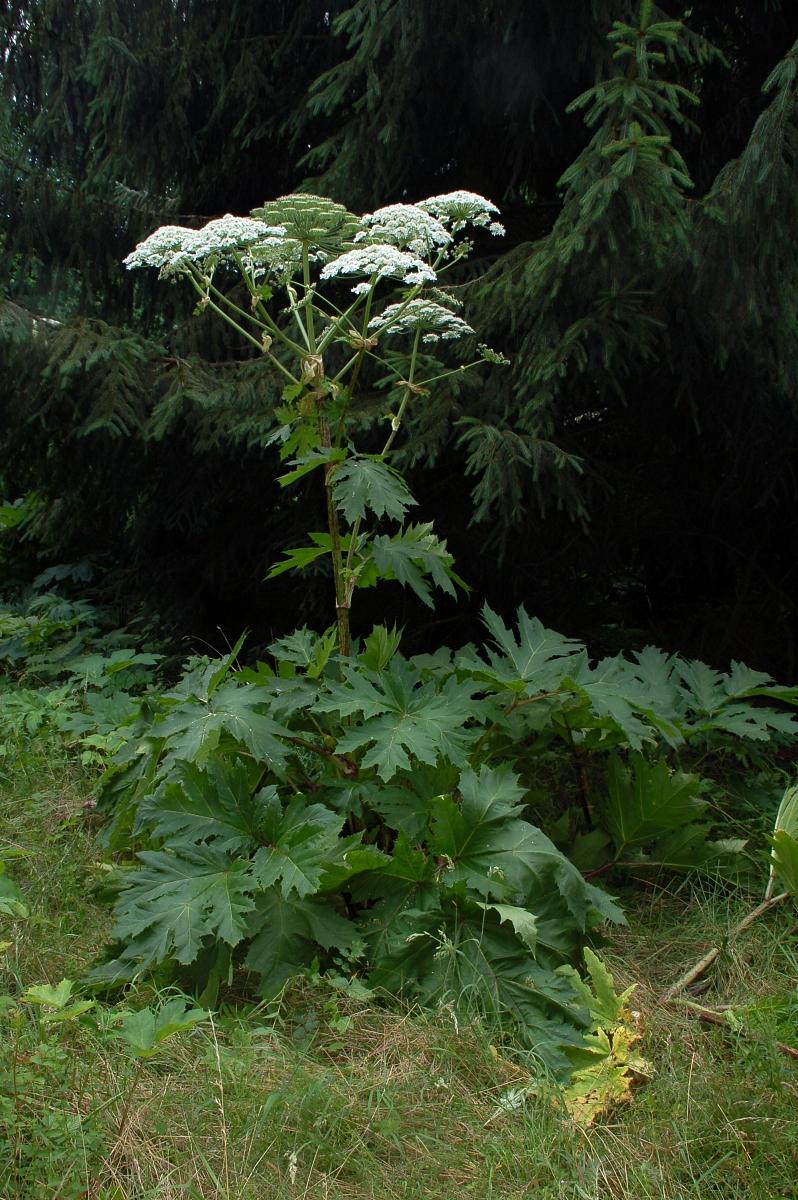
Giant hogweed can grow up to 3.5 metres high.
The dark green leaves are on average one metre long and deeply lobed several times. The leaf edge is toothed.
The stem is round and hollow. It is moderately hairy and usually has purple spots. It can reach a diameter of ten centimetres.
The small individual flowers are white and stand together in double umbels up to 50 centimetres wide. Each side branch of an umbrella-like branch (umbel) ends in turn with a smaller umbel.
The fruits are disc-shaped schizocarps. Their margin is bristly haired.
Features
Giant hogweed
Heracleum mantegazzianum
poisonous
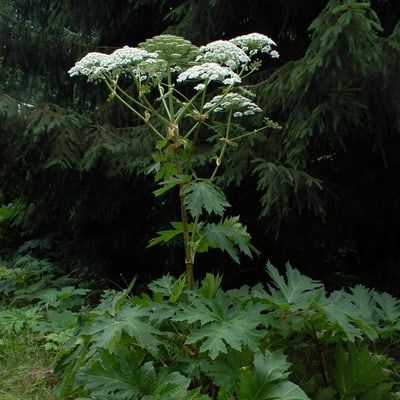
up to 3.5 metres high
purple spotted stem
Similar species
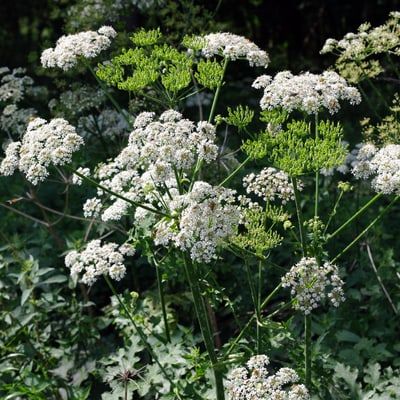
Hogweed
Heracleum sphondylium
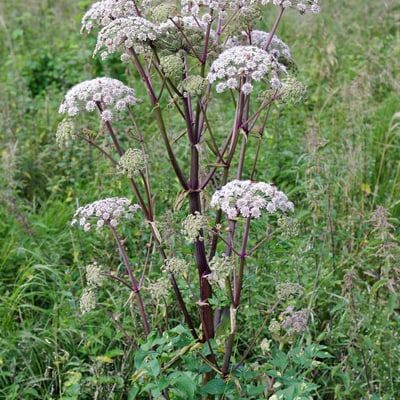
Wild angelica
Angelica sylvestris
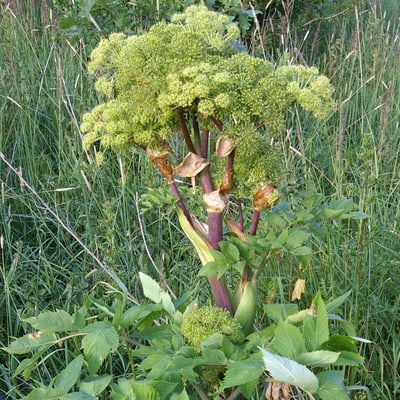
Garden angelica
Angelica archangelica
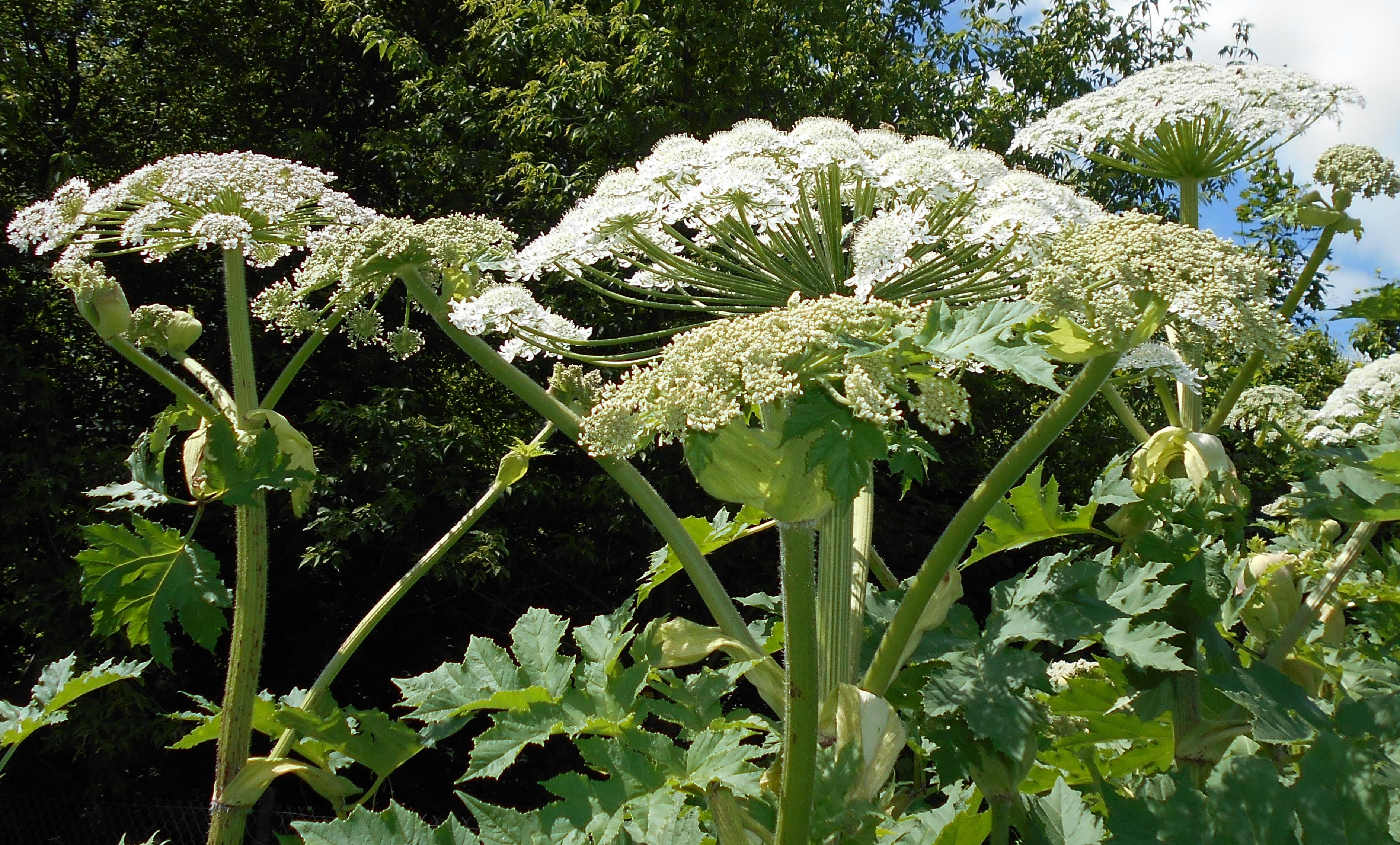
In the city
Giant hogweed has low site requirements. It prefers nitrogen-rich soils. In the city, it often grows on fallow land and on the edges of forests, watercourses and roads. It spreads quickly and its dense stands prevent the emergence of other plants. It is very difficult to control. It should only be approached in suitable protective clothing.
Fun Facts
The umbels of a plant consist of up to 80,000 individual flowers and they produce up to 30,000 seeds.
It is the largest non-woody, wild-growing plant species in Europe.
The German Federal Agency for Nature Conservation assesses giant hogweed as potentially dangerous for native species and has placed it on the management list of the invasive species blacklist.
The flowering period is from July to September.
It flowers and fruits only once in its life. If it does not flower, it can live for several years.
Due to the very high number of seeds, it is considered very spreadable. In addition, the seeds remain germinable for up to ten years. They germinate very early in the year and require frost to break dormancy.
- Endangerment level Germany: not evaluated
Giant hogweed originates from the Caucasus. It was brought to Central Europe around 1890 as an ornamental plant and ran wild. It thus belongs to the non-native plants (neophytes).
All parts of the plant are poisonous. If touched and exposed to the sun at the same time, highly itchy skin inflammations may occur, often accompanied by blistering. They can be compared to third-degree burns.
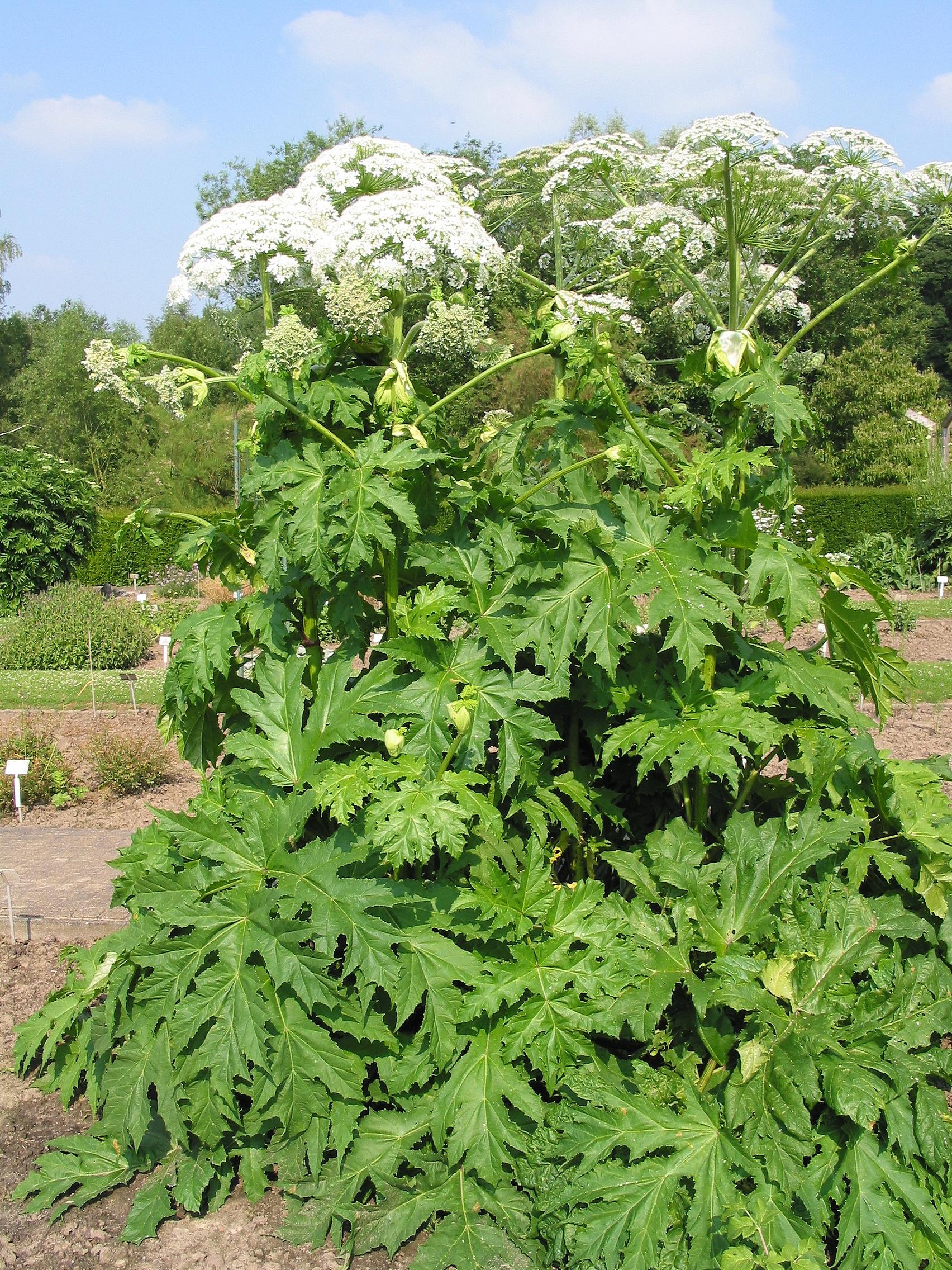
Sources
Habitus, Fritz Geller-Grimm, CC BY-SA 3.0, https://commons.wikimedia.org/wiki/File:Herkulesstaude_fg01.jpg

Blütenstand, Salicyna, CC BY-SA 4.0, https://commons.wikimedia.org/wiki/File:Heracleum_mantegazzianum_2015-06-16_040.jpg

Habitus, Jeaol GRANDMONT, CC BY-SA 3.0, https://commons.wikimedia.org/wiki/File:Heracleum_mantegazzianum_(Meise)_JPG1a.jpg
_JPG1a.jpg)
Kammer, P. M. (2016) Pflanzen einfach bestimmen. Schritt für Schritt einheimische Arten kennenlernen, Bern: Haupt Verlag.
Roth, L., Daunderer, M. & Kormann, K. (2008) Giftpflanzen - Pflanzengifte. Vorkommen, Wirkung, Therapie. Allergische und phototoxische Reaktionen, Hamburg: Nikol Verlag.
Schauer, T., Caspari, C. & Caspari, S. (2015) Der illustrierte BLV-Pflanzenführer für unterwegs. 1150 Blumen, Gräser, Bäume und Sträucher, München: BLV.
Schönfelder, I. & Schönfelder, P. (2010) Der Kosmos-Heilpflanzenführer. Über 600 Heil- und Giftpflanzen Europas, Stuttgart: Franckh Kosmos Verlag.
Spohn, M., Golte-Bechtle, M. & Spohn, R. (2015) Was blüht denn da? Stuttgart: Franckh Kosmos Verlag.
Page „Riesen-Bärenklau“. : Wikipedia, The Free Encyclopedia. Date of last revision: 03.11.2017, 09:36 UTC. URL: https://de.wikipedia.org/w/index.php?title=Riesen-B%C3%A4renklau&oldid=170604557 (Accessed: 19.12.2017).