
Short Description
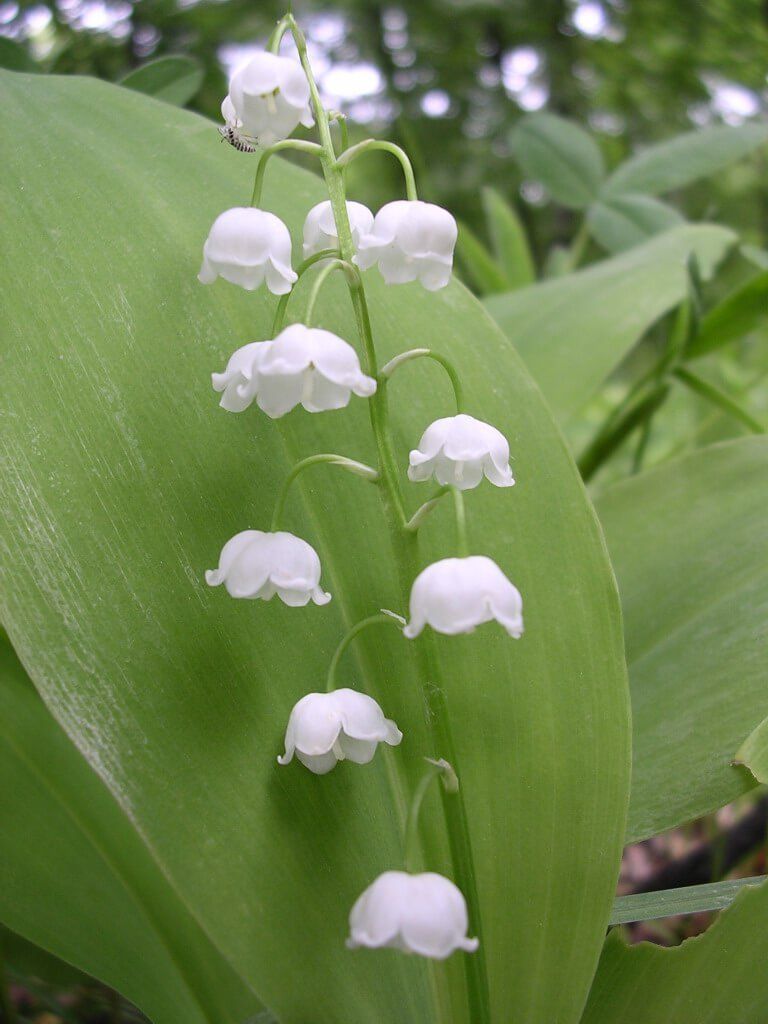
Lily of the valley can grow to a height of 30 cm. Its flowers have a distinctive strong and intensely sweet scent.
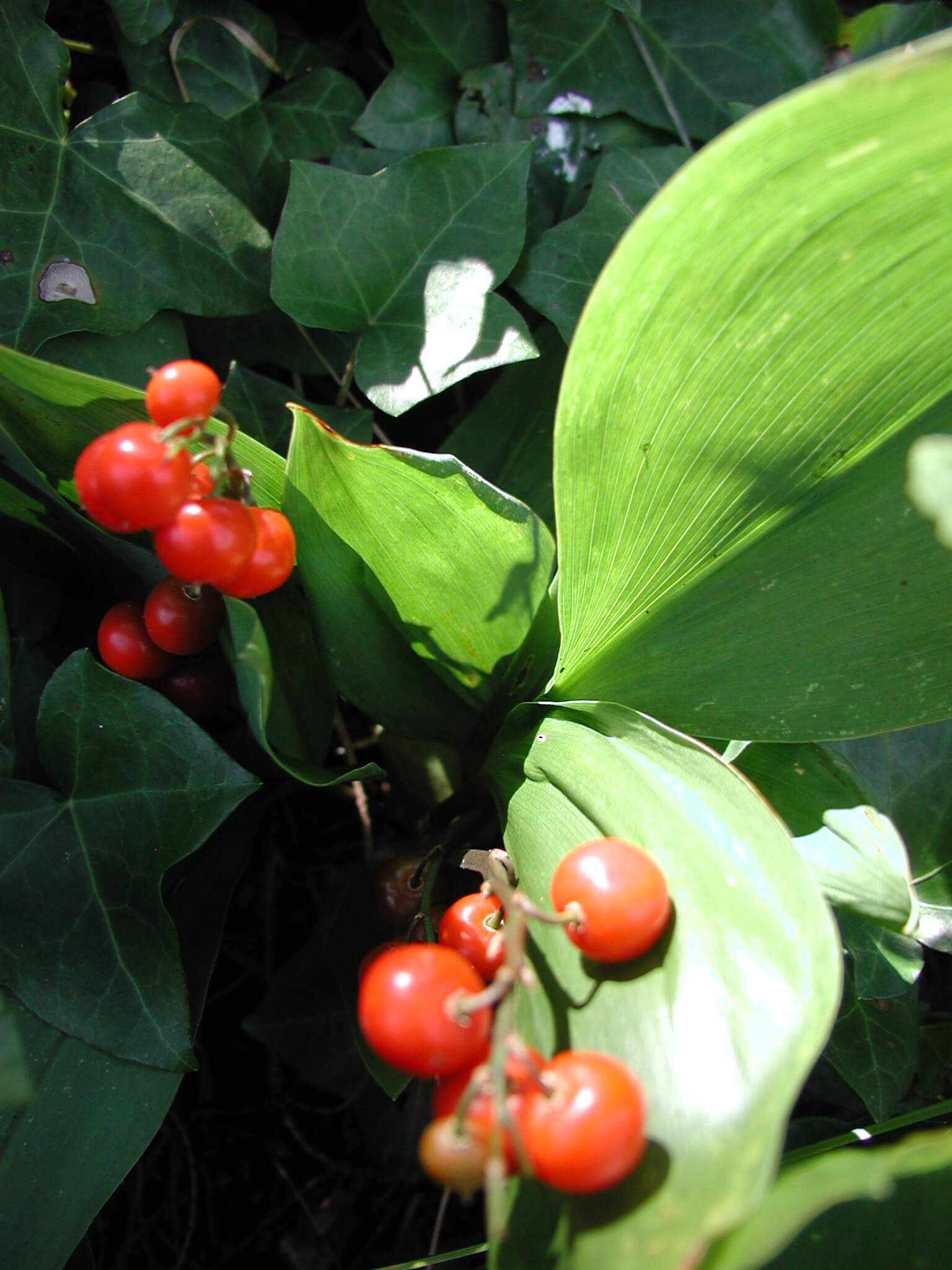
The leaves are broad lance-shaped with short points and no stalk. They grow from subterranean rhizomes. Upper and undersides of the leaves are dark-green.
The underground parts of the shoots (rhizomes) are creeping. Above the ground, the shoots are upright, square and without leaves.
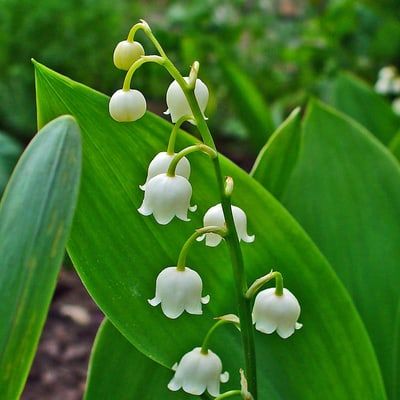
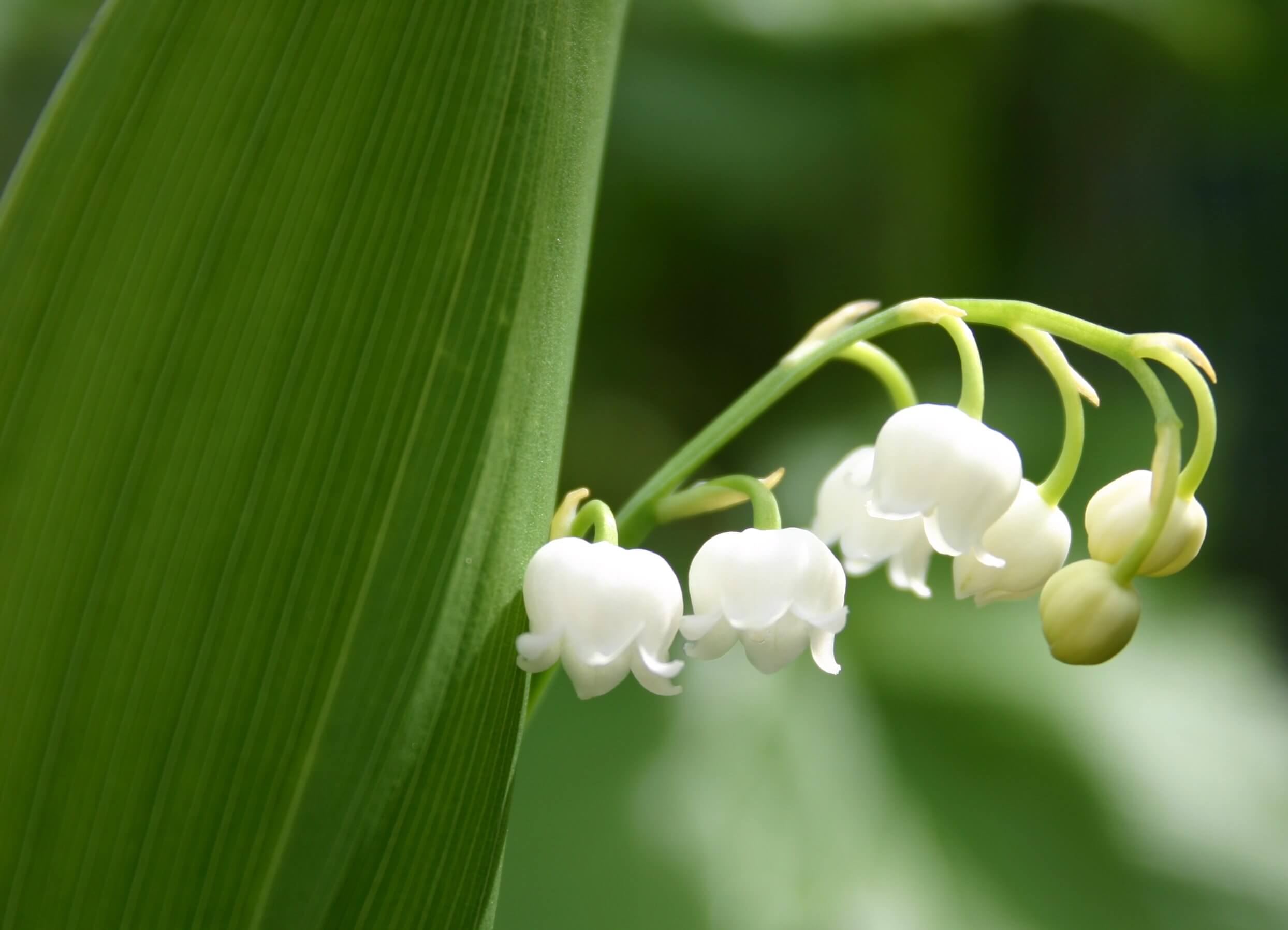
The flowers are arranged in one-sided racemes. They are white, broadly bell-shaped and pendulous. They have six petals. The individual petals are largely fused.
The fruits are round berries that turn bright red when ripening.
Features
Lily of the valley
Convallaria majalis
highly poisonous
round, bell-shaped flowers
intense sweet scent
In the city
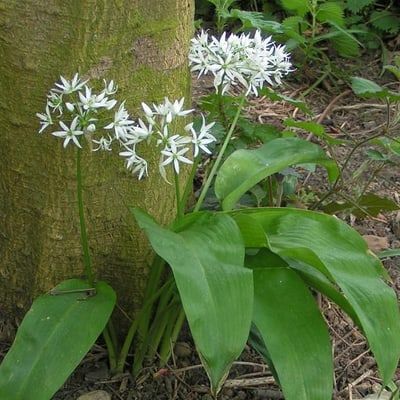
In an urban environment, lily of the valley can be found in municipal deciduous woods, particularly beech and oak woods, but also often in gardens. It is a popular ornamental plant. It prefers dry to moderately damp, semi-shaded sites.
Fun Facts
In medicine, the ingredient substances of lily of the valley are used in the treatment of myocardial insufficiency.
There is a cultivar with pale pink flowers: 'Rosea'.
It flowers from May to June.
- Endangerment level Germany: not endangered
Lily of the valley is very poisonous. Flowers and fruits are particularly rich in toxins. Just the water in a flower vase could already cause poisoning or cardiac arrest.
Sources
Habitus, Olegivvit, CC BY-SA 3.0, https://upload.wikimedia.org/wikipedia/commons/e/ec/Convallaria-oliv-r2.jpg
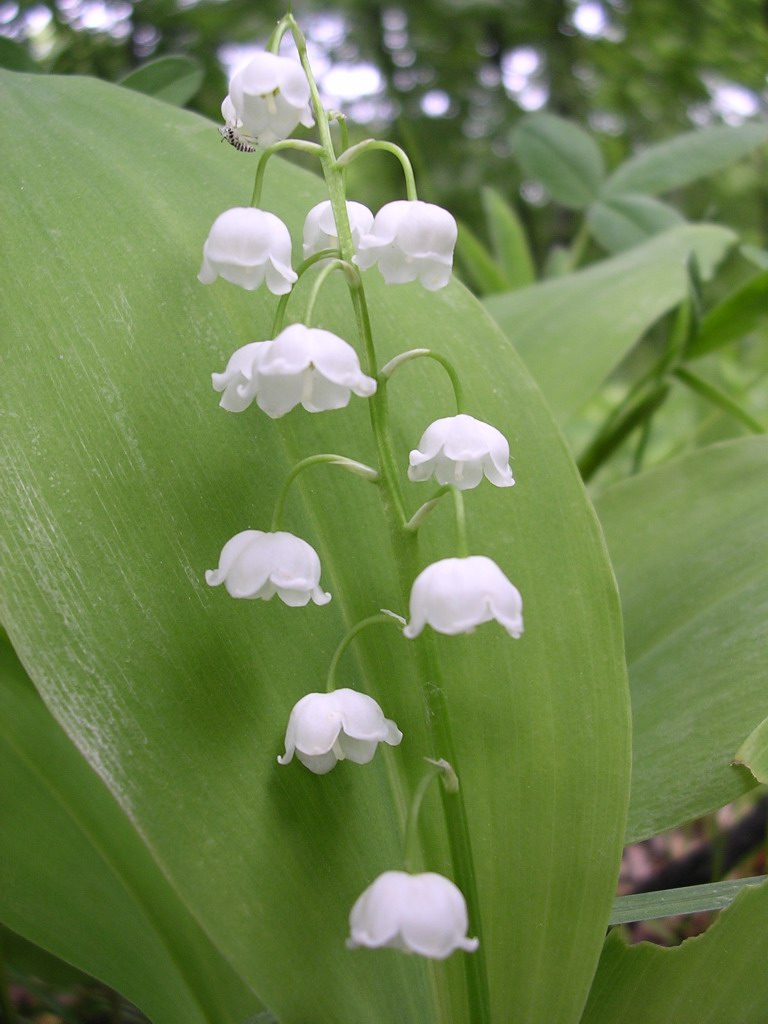
Blossom, FoeNyx, CC BY-SA 3.0, https://upload.wikimedia.org/wikipedia/commons/e/e5/Convallaria_majalis_zoom.jpg

Fruits, Hans Kadereit, CC BY-SA 3.0, https://upload.wikimedia.org/wikipedia/commons/e/e1/Maigl.JPG

Spohn, M., Golte-Bechtle, M. & Spohn, R. (2015) Was blüht denn da? Stuttgart: Franckh Kosmos Verlag.
Fleischhauer, S. G., Guthmann, J. & Spiegelberger, R. (2007) Essbare Wildpflanzen. 200 Arten bestimmen und verwenden, Baden und München: AT Verlag.
Lippert, W. & Podlech, D. (1993) GU Naturführer. Blumen: die wichtigen Blütenpflanzen Mitteleuropas erkennen und bestimmen, München: Gräfe und Unzer Verlag.
Needon, C. & Petermann, J. (1991) Urania-Naturführer Pflanzen, Leipzig, Jena, Berlin: Urania-Verlag.
Schauer, T., Caspari, C. & Caspari, S. (2015) Der illustrierte BLV-Pflanzenführer für unterwegs. 1150 Blumen, Gräser, Bäume und Sträucher, München: BLV.
Scherf, G. (2006) Wildpflanzen neu entdecken, München: BLV.
Page „Maiglöckchen“. : Wikipedia, The Free Encyclopedia. Date of last revision: 15.09.2016, 20:00 UTC. URL: https://de.wikipedia.org/w/index.php?title=Maigl%C3%B6ckchen&oldid=157957935 (Accessed: 20.10.2016).