
Short Description
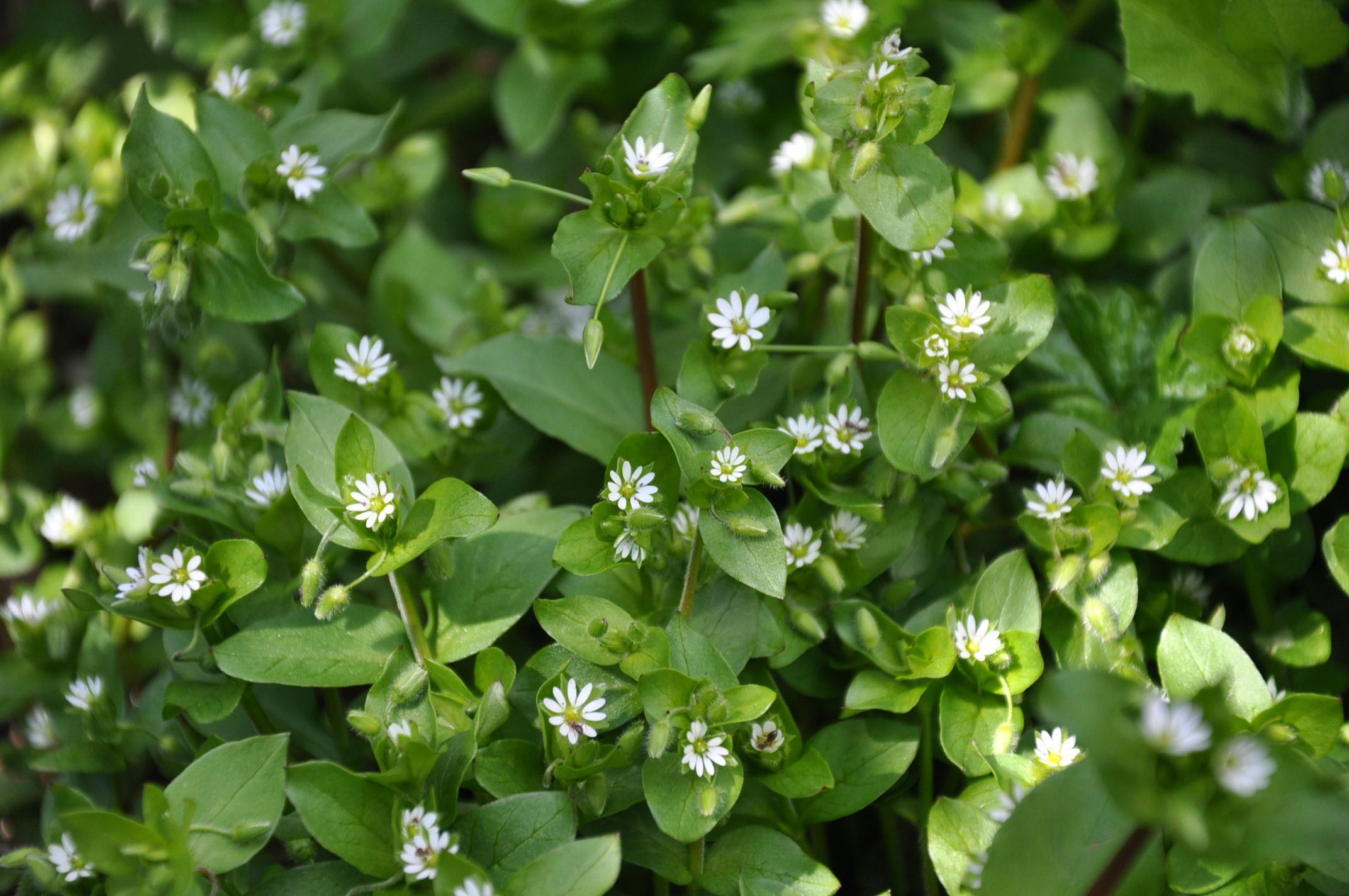
Chickweed stems grow up to 30 cm long.
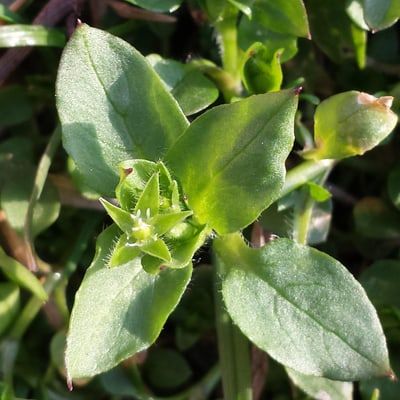
The leaves are hairless (glabrous) or sometimes only hairy along the margins, oval with a tiny tip and opposite. Lower leaves often have a hairy stalk.
The plant is prostrate. The stems are round and often with a line of hairs. Roots can develop from nodes.
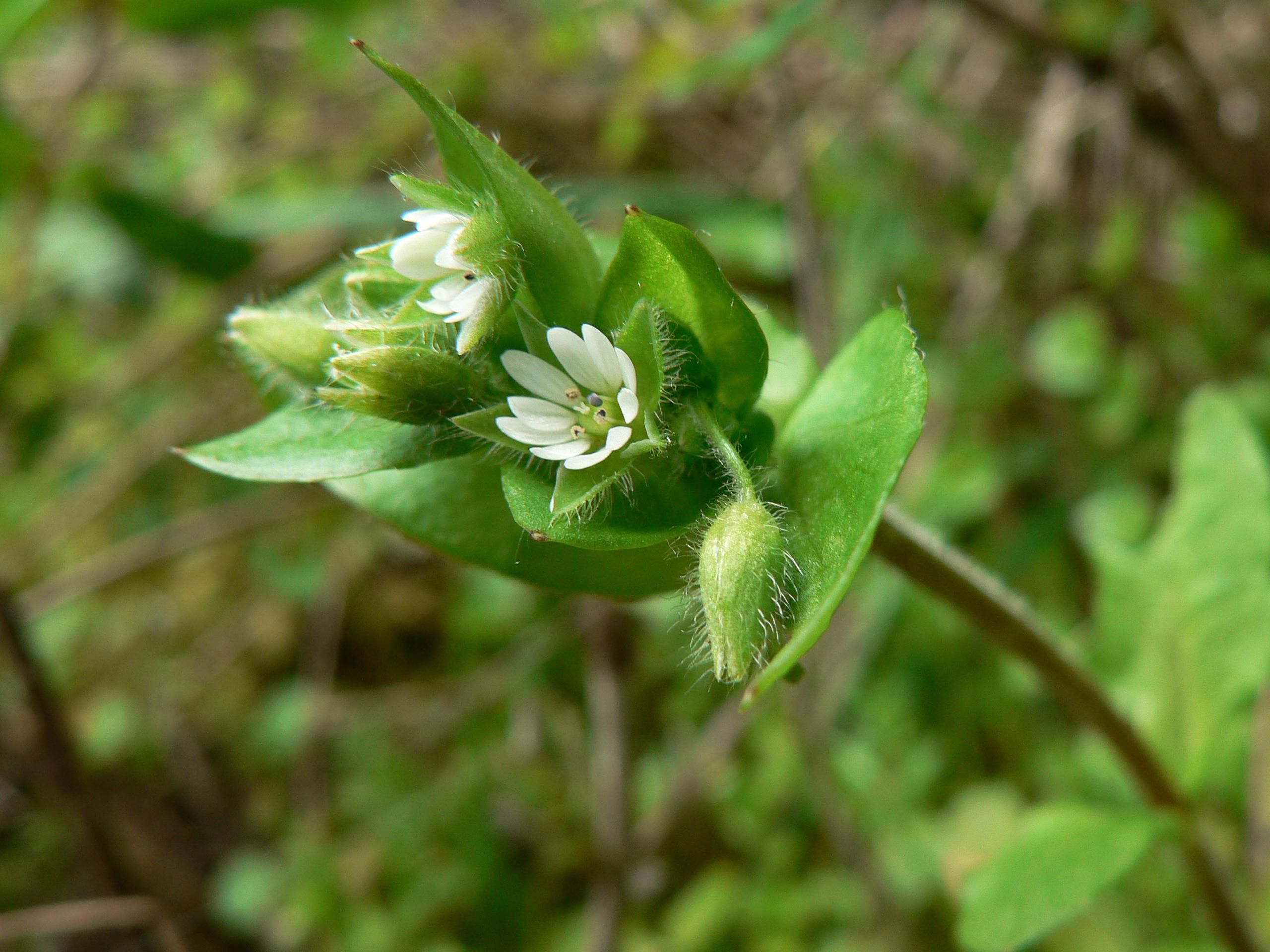
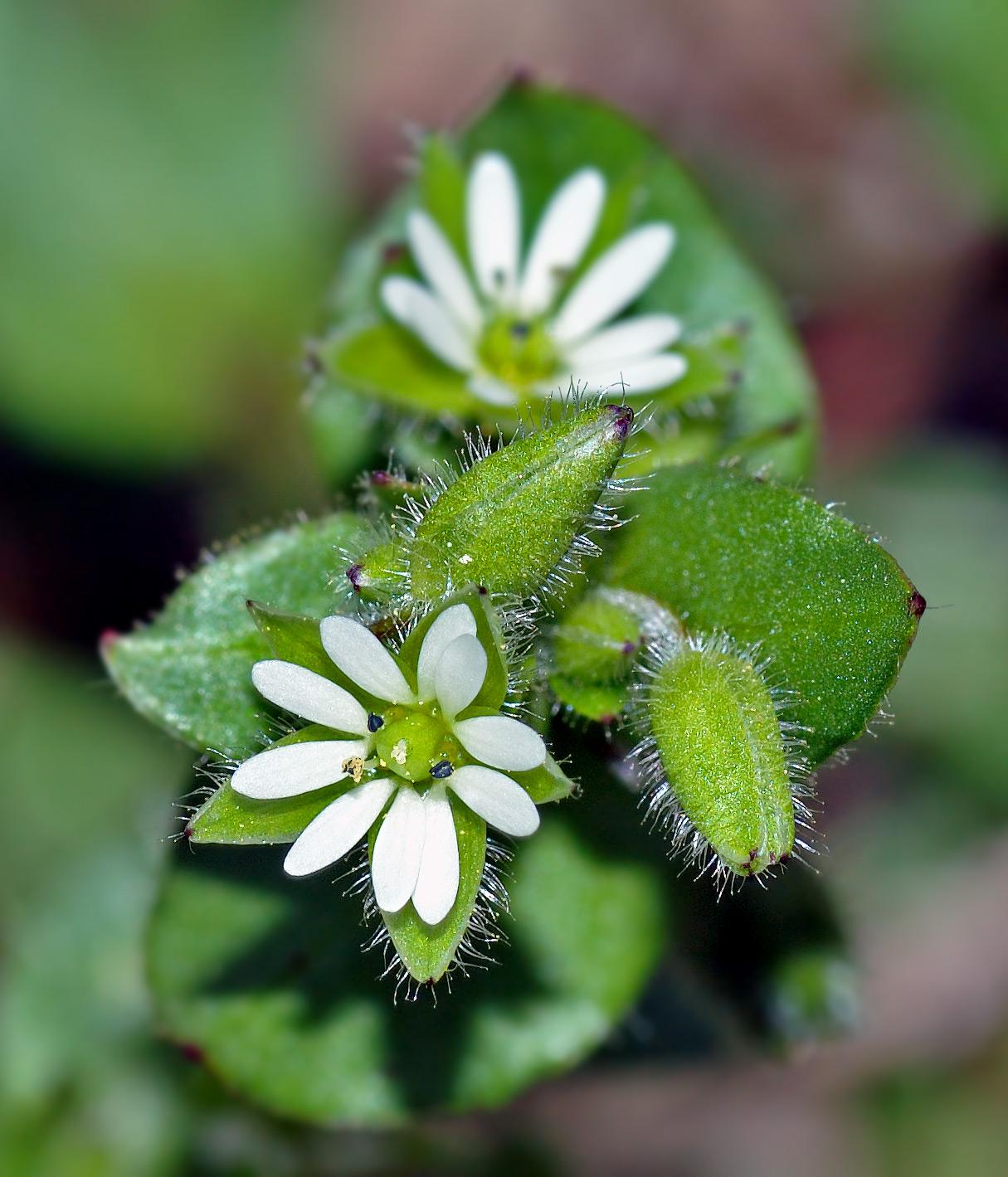
The five petals are white and very deeply divided, so that they could be mistaken for ten petals.
The fruit is a dark-brown capsule that opens up completely.
Features
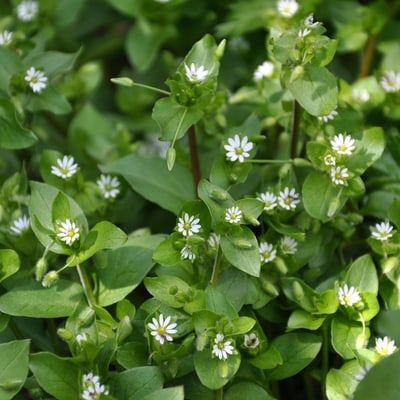
Chickweed
Stellaria media
deeply split petals
creeping
Similar species
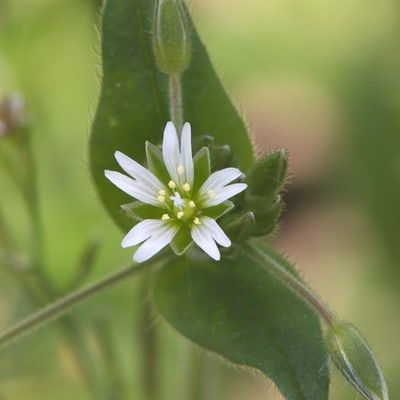
Mouse-ear chickweed
Cerastium fontanum
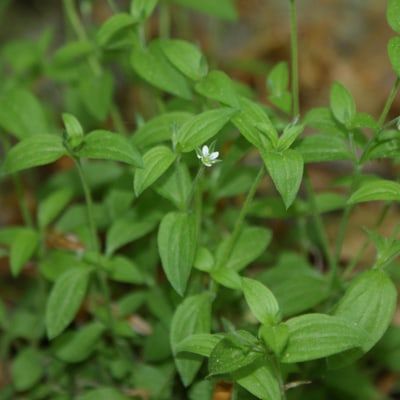
Three-nerved sandwort
Moehringia trinervia
Lesser chickweed
Stellaria apetala
In the city
Chickweed grows almost everywhere, even in partial shade. In gardens it can form dense lawns. It prefers nutrient-rich, humus-rich soil with a sufficient supply of water. It is rarely found on paths, as it is not tread-resistant. It is considered an indicator plant for a good nitrogen supply.
Fun Facts
Chickweed is a host plant for aphids and the cucumber mosaic virus transmitted by aphids.
It is pollinated by insects. Self-pollination is also possible.
It is said that the plant only opens its flowers in the morning if the weather is good and no rain expected.
Its seeds can survive in the soil for more than fifty years.
It flowers from February to November.
The seeds are spread with the wind.
- Endangerment level Germany: not endangered
In natural cuisine, it is very popular as a salad herb thanks to its high vitamin-C content. It has a juicy delicate taste. However, it should only be consumed in moderation.
Sources
Habitus, Lazaregagnidze, CC BY-SA 4.0, https://commons.wikimedia.org/wiki/File:Stellaria_media_Common_Chickweed_%E1%83%9F%E1%83%A3%E1%83%9C%E1%83%9F%E1%83%A0%E1%83%A3%E1%83%99%E1%83%98.JPG

Blütenstand, Walter Siegmund (talk), CC BY-SA 3.0, https://commons.wikimedia.org/wiki/File:Stellaria_media_38469.JPG

Blüte und Blätter, André Karwath, CC BY-SA 2.5, https://commons.wikimedia.org/wiki/File:Chickweed_(aka).jpg
.jpg)
Wohlers, W. (2014) Stellaria media – Vogelmiere (JKI-Pflanzenportraits), URL: https://offene-naturfuehrer.de/web/Stellaria_media_%E2%80%93_Vogelmiere_(JKI-Pflanzenportraits) (Accessed: 13.07.2016).
Page „Gewöhnliche Vogelmiere“. : Wikipedia, The Free Encyclopedia. Date of last revision: 20.05.2016, 18:06 UTC. URL: https://de.wikipedia.org/w/index.php?title=Gew%C3%B6hnliche_Vogelmiere&oldid=154553015 (Accessed: 13.07.2016).
Fleischhauer, S. G., Guthmann, J. & Spiegelberger, R. (2007) Essbare Wildpflanzen. 200 Arten bestimmen und verwenden, Baden und München: AT Verlag.
Lippert, W. & Podlech, D. (1993) GU Naturführer. Blumen: die wichtigen Blütenpflanzen Mitteleuropas erkennen und bestimmen, München: Gräfe und Unzer Verlag.
Needon, C. & Petermann, J. (1991) Urania-Naturführer Pflanzen, Leipzig, Jena, Berlin: Urania-Verlag.
Scherf, G. (2006) Wildpflanzen neu entdecken, München: BLV.