
Short Description
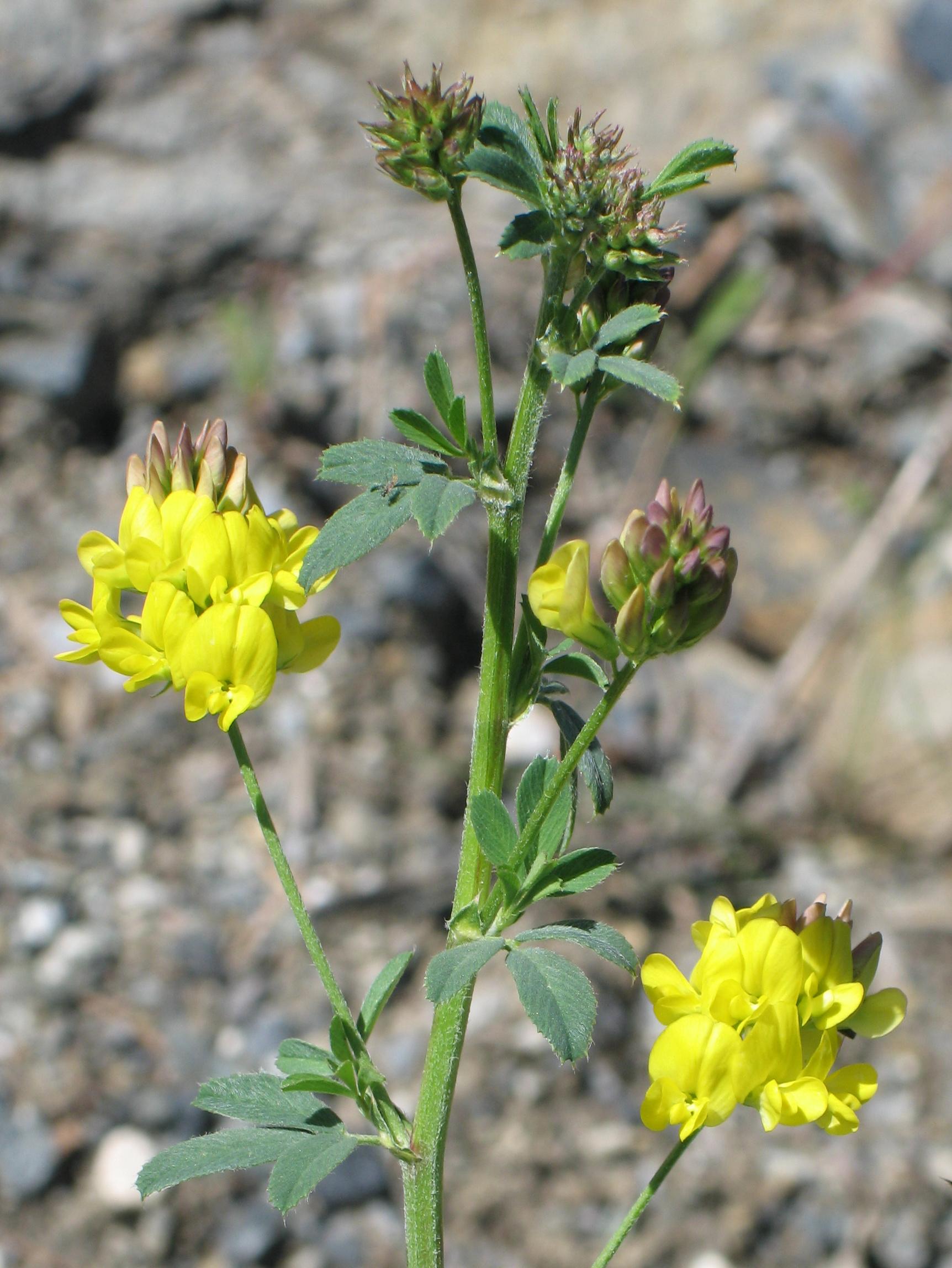
The sand lucerne can grow to a height of 80 cm.
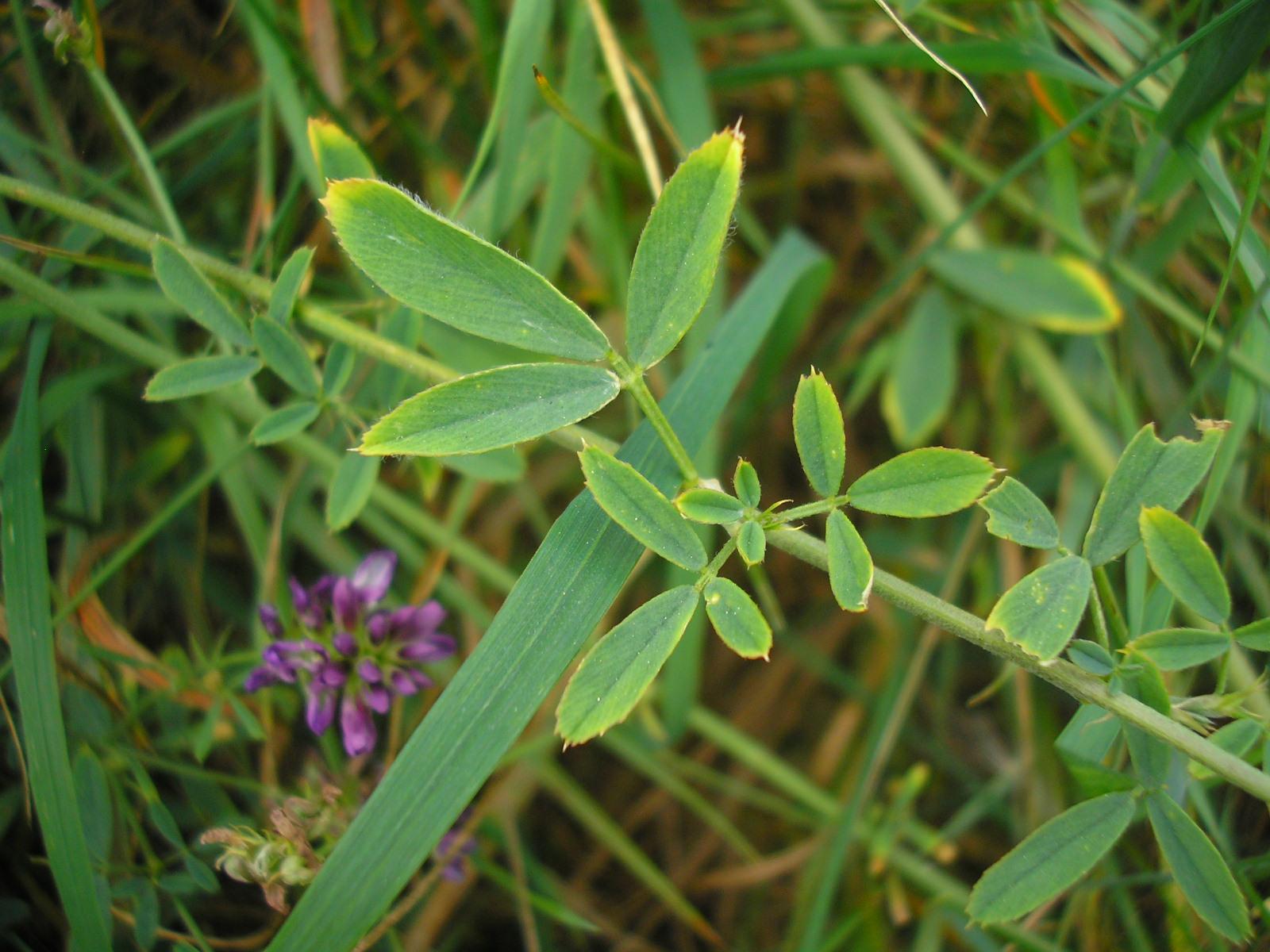
The leaves are alternately arranged on the stem. Each leaf is made up of three parts (trifoliate). The individual parts are lance-shaped and often serrated at the top.
The stem is rising or erect and generally branched.
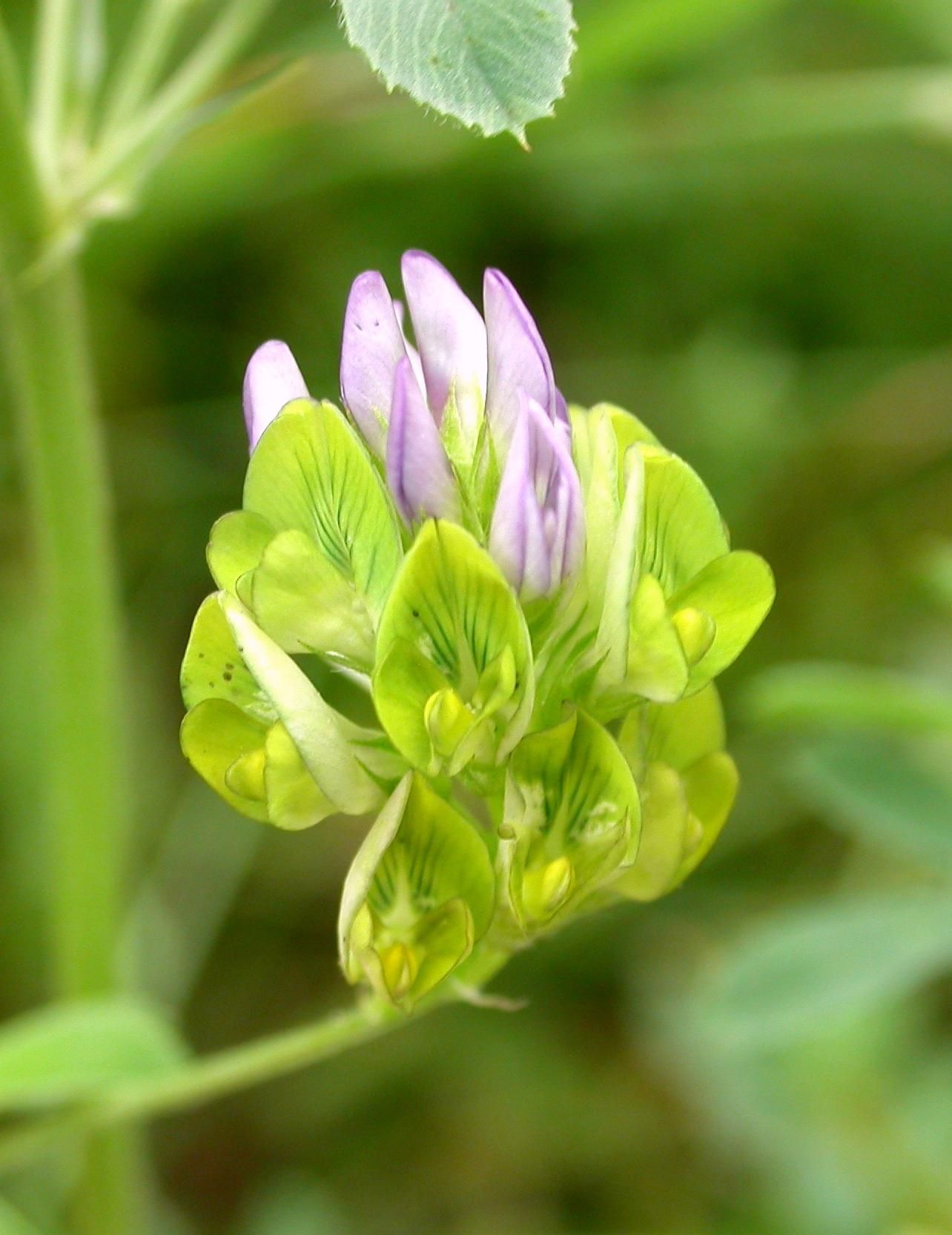
The small flowers are bunched (flower head). Their colours vary widely from light yellow to purple-brown. Each flower has only a single mirror axis (mirror-symmetric). It consists of five petals. The large upper petal protrudes upwards. The two lower petals form a hollow boat that surrounds the anthers and pistil.
The fruit is a twisted seed pod.
Features
Sand lucerne
Medicago × varia
three part leaves
Flowers in bunches
twisted seed pod as fruit
Similar species
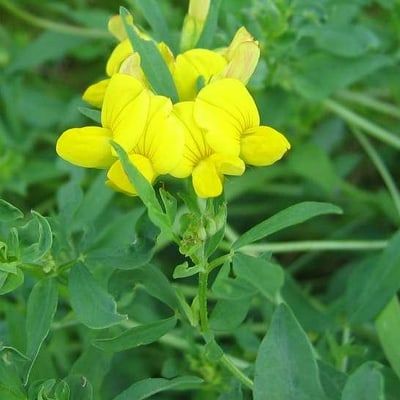
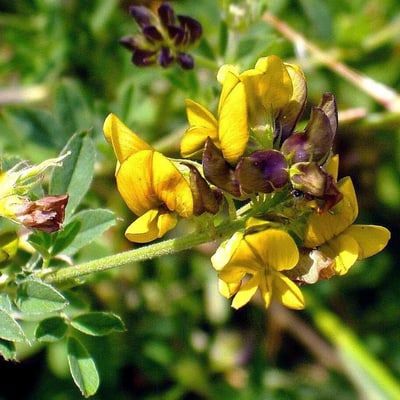
Bird's-foot trefoil
Lotus corniculatus
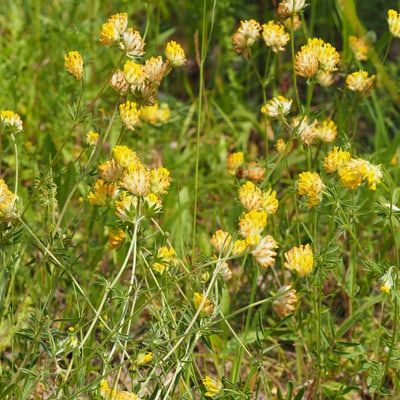
Common kidney vetch
Anthyllis vulneraria
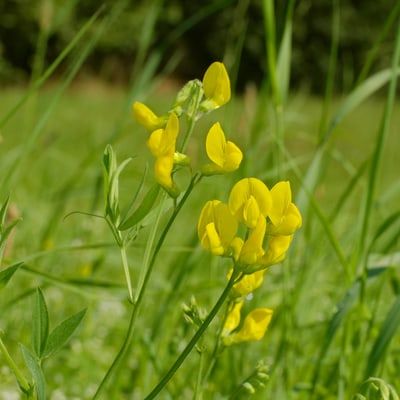
Meadow vetchling
Lathyrus pratensis
In the city
In an urban environment, sand lucernes are mainly found in dry meadows and at the edges of fields and paths. They prefer dry and sunny sites with alkaline soils.
Fun Facts
It is globally cultivated, mainly as animal feed.
It is a hybrid of a real lucerne/alfalfa (Medicago sativa) and sickle medick (Medicago falcata).
Symbiosis with root-nodulation bacteria is typical for members of the papilionaceae family. The bacteria supply the plant with nitrogen. As the bacteria require a plant to fix nitrogen, this biological interaction is beneficial to both species (symbiosis).
A papilionaceous flower is a form of flower typical for most members of the legume family.
It flowers from June to August.
It lives for several years and generally flowers and fruits annually (perennial plant).
- Endangerment level Germany: not evaluated
The sand lucerne belongs to the non-native plants (neophytes).
Roots and sprouts are edible.
Sources
Habitus, Robert Flogau, CC BY-SA 4.0, https://commons.wikimedia.org/wiki/File:Medicago_%C3%97_varia_RF.jpg

Blätter, Julia Kruse, CC BY-SA 3.0, https://species-id.net/openmedia/File:Medicago_x_varia_JuliaKruse_4.jpg

Blütenstand, Vojtěch Zavadil, CC BY-SA 3.0, https://commons.wikimedia.org/wiki/File:5488-Medicago_x_varia-Slov._Raj-7.05.JPG

Spohn, M., Golte-Bechtle, M. & Spohn, R. (2015) Was blüht denn da? Stuttgart: Franckh Kosmos Verlag.
Page „Bastard-Luzerne“. : Wikipedia, The Free Encyclopedia. Date of last revision: 21.05.2016, 08:26 UTC. URL: https://de.wikipedia.org/w/index.php?title=Bastard-Luzerne&oldid=154564445 (Accessed: 14.11.2016).