
Short Description
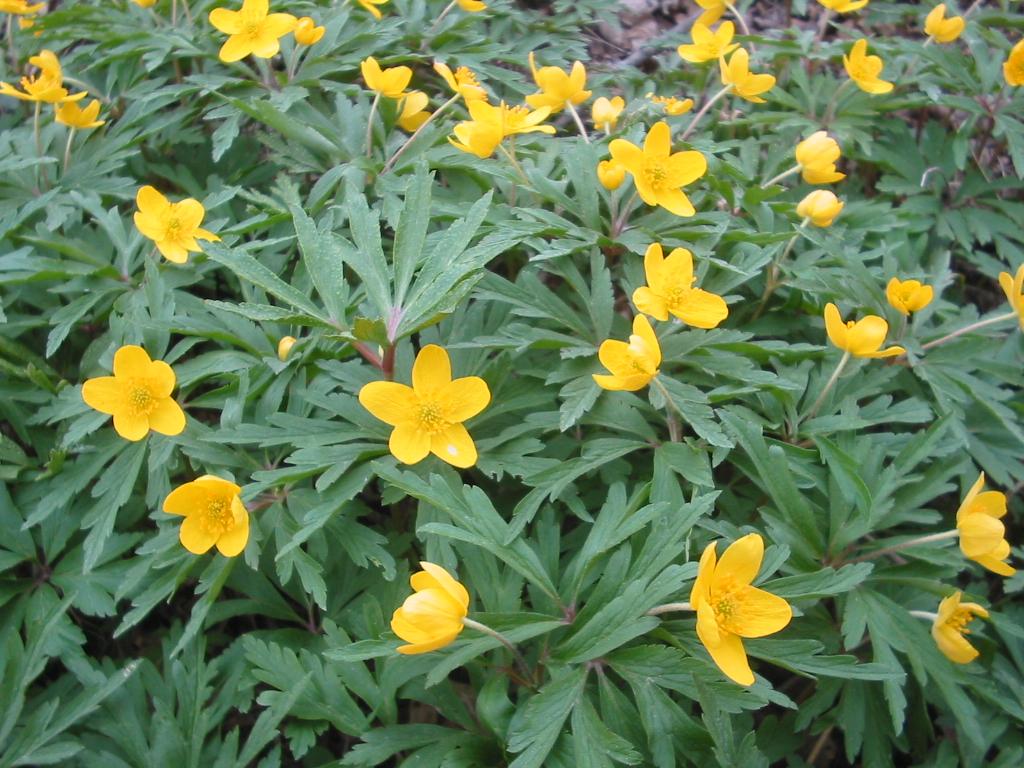
The yellow anemone can grow up to 30 centimetres high.
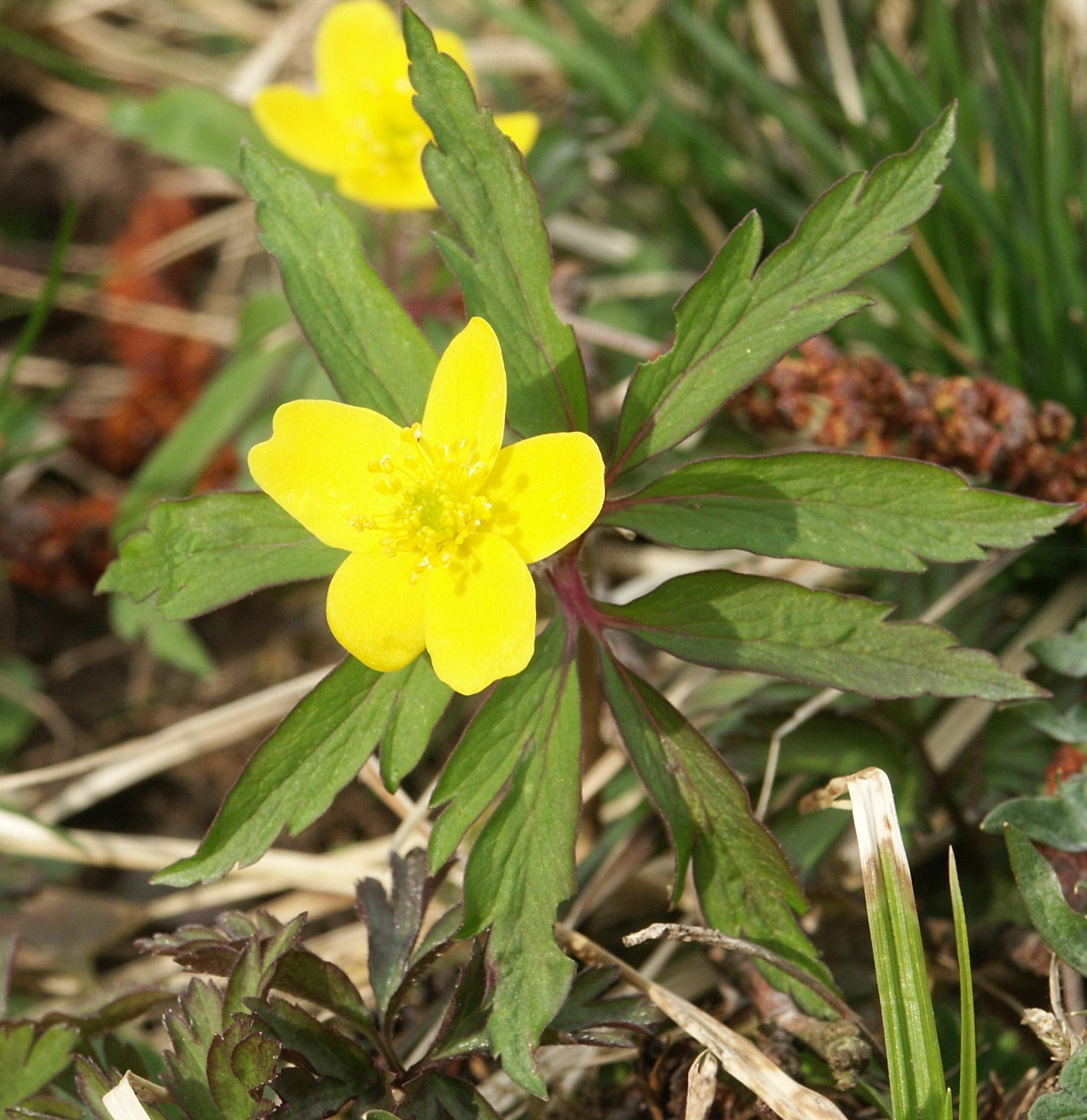
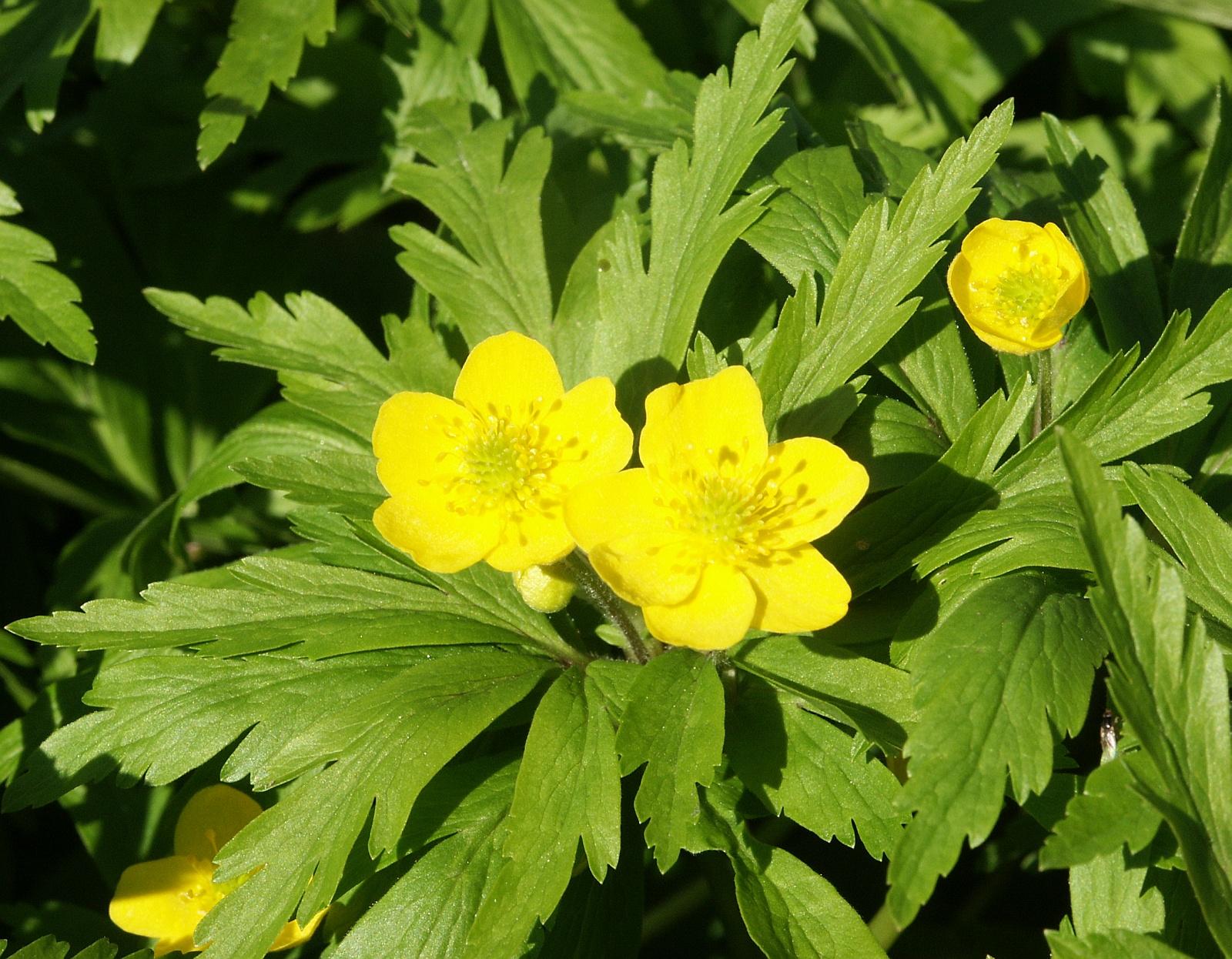
The deciduous leaves are divided into three leaflets and have a palmate appearance. Their edge is toothed. There are always three leaves in a whorl on the stem.
The stem is leafless except for the three leaves and grows erect.
The flower has five yellow petals and numerous stamens in the centre. One to three, but usually two, flowers develop per plant.
The fruitlets (nutlets) are densely hairy.
Features
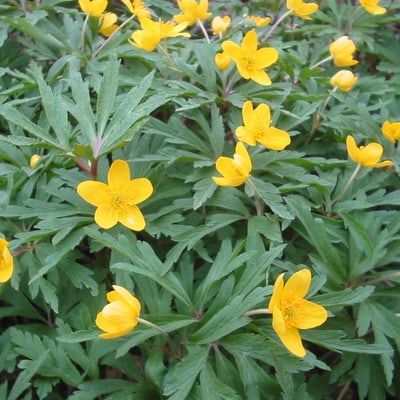
Yellow anemone
Anemone ranunculoides
poisonous
leaves trifoliolate
usually two, maximum three flowers per plant
In the city
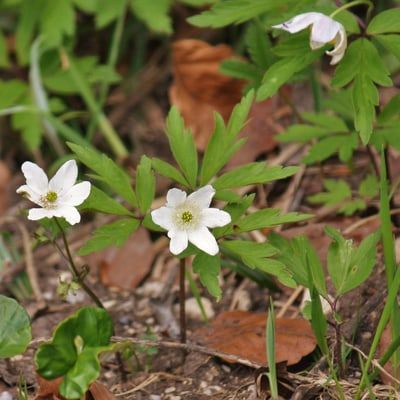
The yellow anemone prefers moist and nutrient-rich sites. It is a typical spring species that forms the herb layer in forests and flowers before the trees bear leaves. Yellow anemone often grows in groups and often together with wood anemone. It is rarely found in the city.
Fun Facts
The flowering period is from March to May.
The root stores a lot of nutrients in the previous year so that the yellow anemone can sprout quickly and first in spring.
It lives for several years and generally flowers and fruits annually (perennial plant).
The fruitlets have a nutrient-rich appendage to attract ants. These then spread the seeds.
- Endangerment level Germany: not endangered
The yellow anemone is native to almost all of Europe.
The name is composed of the ancient Greek word anemos = wind and the Latin word ranunculus = little frog.
All parts of the plant are poisonous and can cause nausea, diarrhoea and kidney damage. The lethal dose is 30 plants.
Sources
Habitus, Bogdan, CC BY-SA 3.0, https://commons.wikimedia.org/wiki/File:Anemone_ranunculoides_bgiu.jpg

Blüte, BerndH, CC BY-SA 3.0, https://commons.wikimedia.org/wiki/File:Anemone_ranunculoides_300303.jpg

Habitus, Bernd Haynold, CC BY-SA 3.0, https://commons.wikimedia.org/wiki/File:Anemone_ranunculoides_030405.jpg

Kammer, P. M. (2016) Pflanzen einfach bestimmen. Schritt für Schritt einheimische Arten kennenlernen, Bern: Haupt Verlag.
Roth, L., Daunderer, M. & Kormann, K. (2008) Giftpflanzen - Pflanzengifte. Vorkommen, Wirkung, Therapie. Allergische und phototoxische Reaktionen, Hamburg: Nikol Verlag.
Schauer, T., Caspari, C. & Caspari, S. (2015) Der illustrierte BLV-Pflanzenführer für unterwegs. 1150 Blumen, Gräser, Bäume und Sträucher, München: BLV.
Spohn, M., Golte-Bechtle, M. & Spohn, R. (2015) Was blüht denn da? Stuttgart: Franckh Kosmos Verlag.
Page „Gelbes Windröschen“. : Wikipedia, The Free Encyclopedia. Date of last revision: 02.04.2017, 03:57 UTC. URL: https://de.wikipedia.org/w/index.php?title=Gelbes_Windr%C3%B6schen&oldid=164165900 (Accessed: 12.12.2017).
Bundesamt für Naturschutz (n.d.) Artensteckbriefe, URL: http://floraweb.de/pflanzenarten/artenhome.xsql?suchnr=436& (Accessed: 12.12.2017).