
Short Description
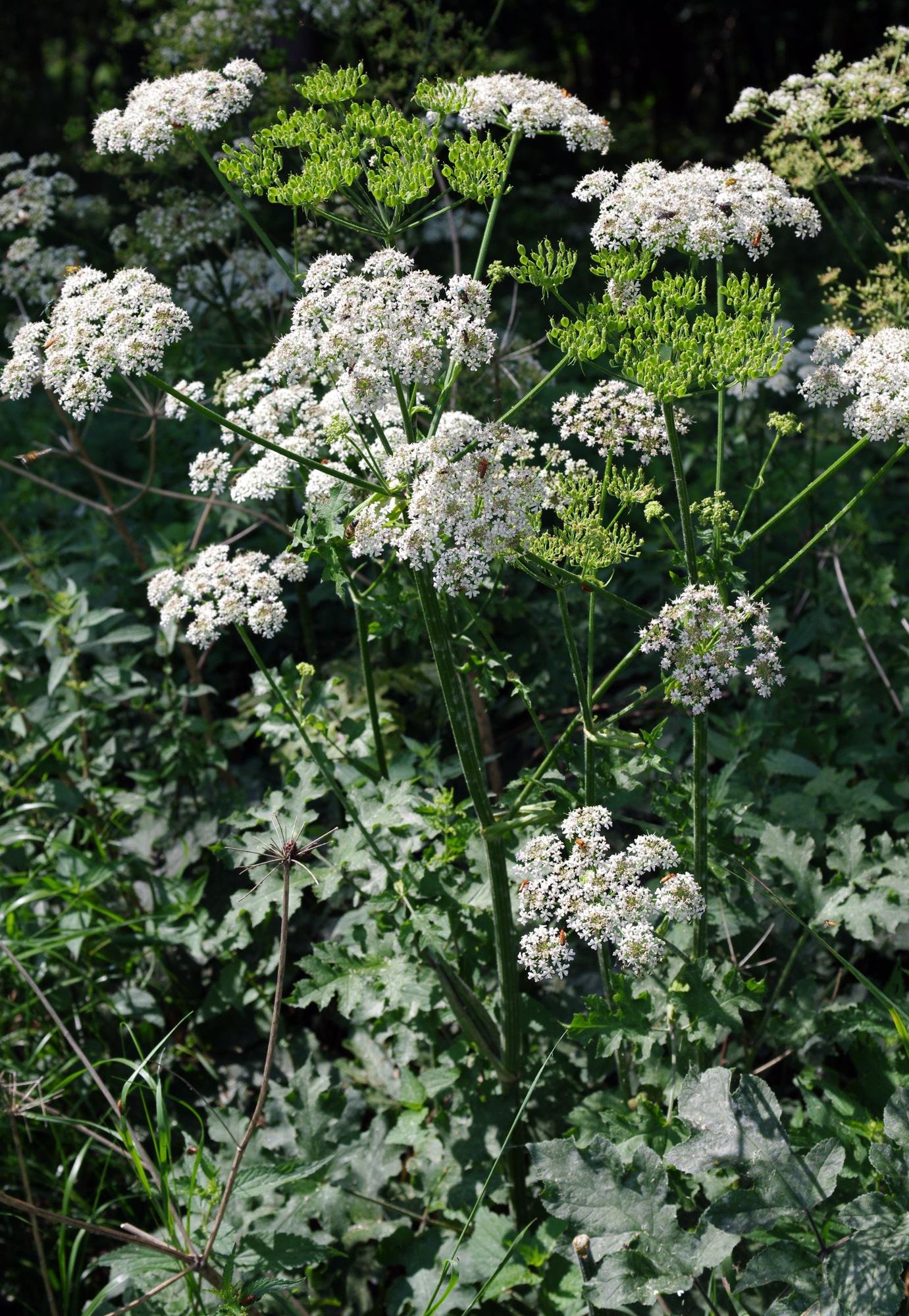
Hogweed can grow to a height of 1.5 metre.
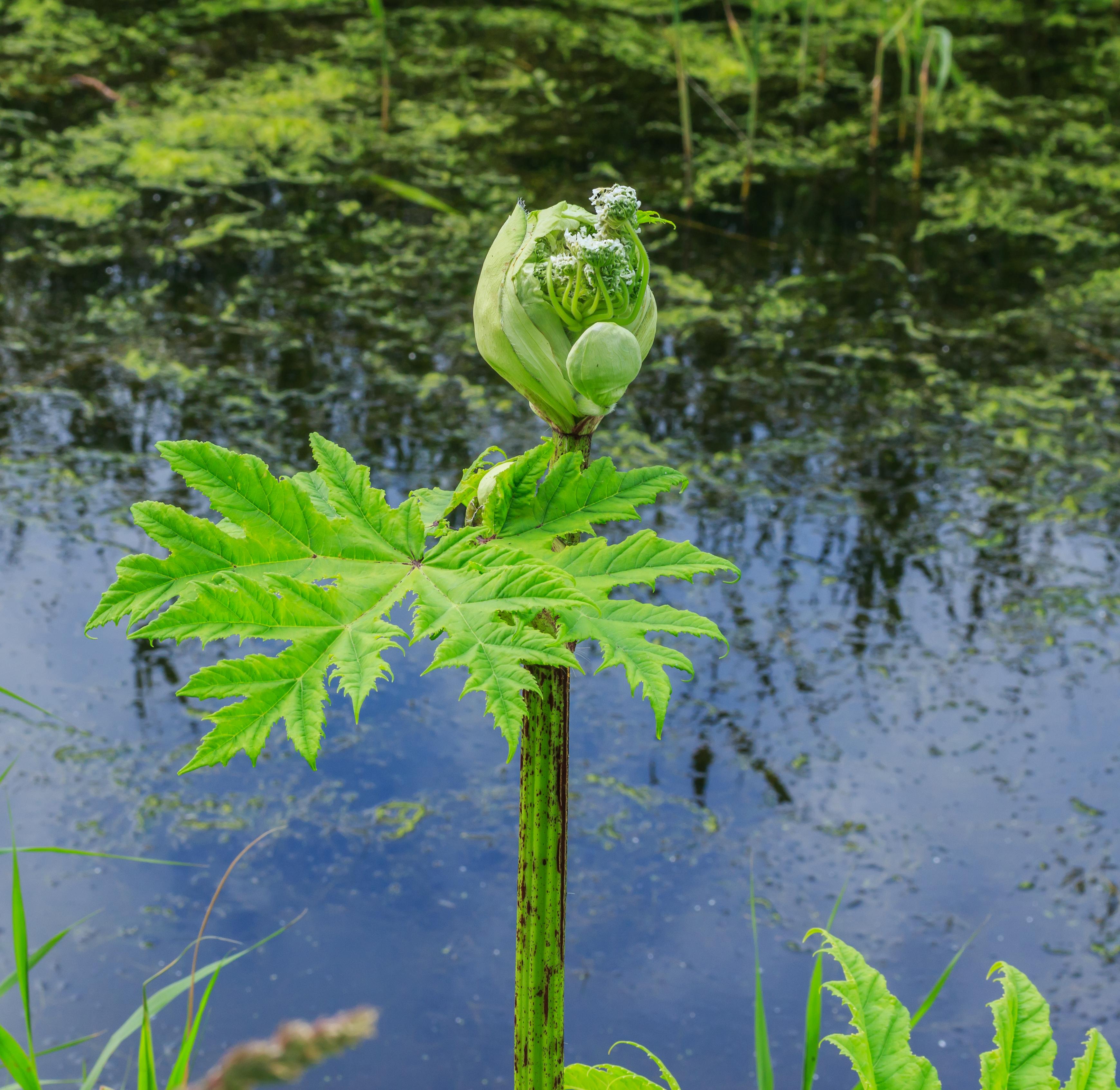
The leaves are lobed to simple incised (pinnately parted) and irregularly serrated. The leaf sheath enclosing the base of the leaf stalk is inflated. The leaves emit an unpleasant smell when rubbed.
The stem is ridged and angular with stiff bristly hairs.
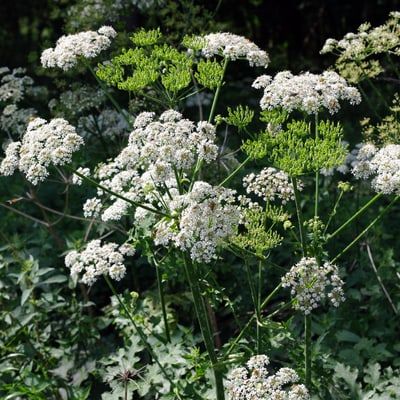
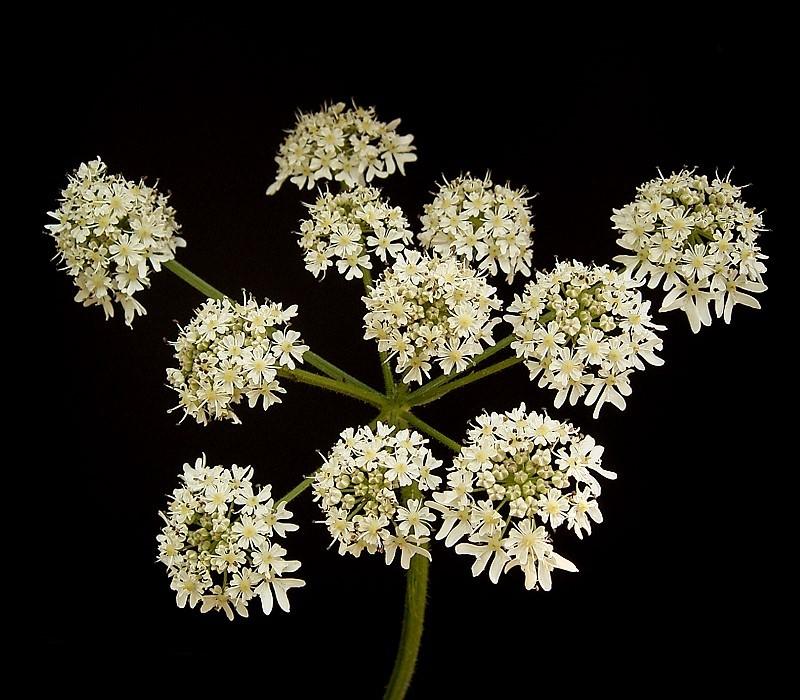
The individual small white flowers are clustered in large double umbels (flower heads). This means that each branch of the umbel (like ribs of an umbrella) is again tipped with a smaller umbellule. The outer flowers often have longer petals.
The fruit is flat, hairless and consists of two mericarps.
Features
Hogweed
Heracleum sphondylium
skin-irritating
unpleasant smell
inflated sheath at the base of the leaf stalk
Similar species
In the city
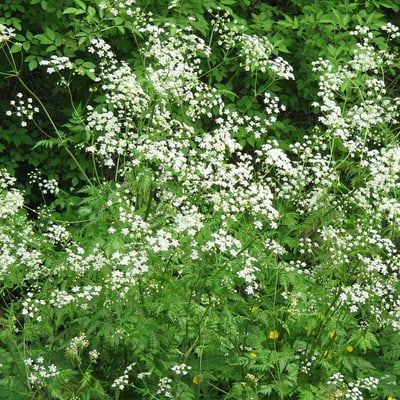
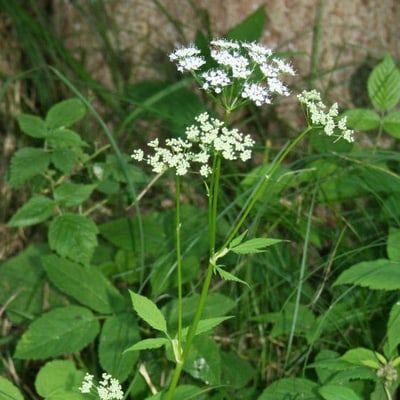
In the city, the hogweed can be found on meadows, forest edges and near banks. It prefers fresh and nutrient-rich sites.
Fun Facts
The lobed leaves are reminiscent of paws. The characteristic pig-like smell of the flowers gives it its german name.
It flowers from June to September.
In folk medicine, hogweed is used to treat hysteria, epilepsy and bronchitis.
In sensitive people, touching the plant may cause severe skin irritation.
It lives for several years and generally flowers and fruits annually (perennial plant).
- Endangerment level Germany: not endangered
Sources
Habitus, Christian Fischer, CC BY-SA 3.0, https://commons.wikimedia.org/wiki/File:HeracleumSphondylium1.jpg

Blütenstand, Frank Vincentz, CC BY-SA 3.0, https://commons.wikimedia.org/wiki/File:Heracleum_sphondylium_08_ies.jpg

Knospe, Dominicus Johannes Bergsma, CC BY-SA 4.0, https://commons.wikimedia.org/wiki/File:Bloemknop_gewone_berenklauw_(Heracleum_sphondylium)._Locatie._Nationaal_Park_Lauwersmeer_02.jpg
._Locatie._Nationaal_Park_Lauwersmeer_02.jpg)
Eggenberg, S. & Möhl, A. (2007) Flora Vegetativa: Ein Bestimmungsbuch für Pflanzen der Schweiz im blütenlosen Zustand, Bern, Stuttgart, Wien: Haupt Verlag.
Spohn, M., Golte-Bechtle, M. & Spohn, R. (2015) Was blüht denn da? Stuttgart: Franckh Kosmos Verlag.
Jäger, E. J. (2011) Rothmaler - Exkursionsflora von Deutschland. Gefäßpflanzen: Grundband, Heidelberg: Spektrum Akademischer Verlag.
Kammer, P. M. (2016) Pflanzen einfach bestimmen. Schritt für Schritt einheimische Arten kennenlernen, Bern: Haupt Verlag.
Lippert, W. & Podlech, D. (1993) GU Naturführer. Blumen: die wichtigen Blütenpflanzen Mitteleuropas erkennen und bestimmen, München: Gräfe und Unzer Verlag.
Schauer, T., Caspari, C. & Caspari, S. (2015) Der illustrierte BLV-Pflanzenführer für unterwegs. 1150 Blumen, Gräser, Bäume und Sträucher, München: BLV.
Page „Wiesen-Bärenklau“. : Wikipedia, The Free Encyclopedia. Date of last revision: 29.01.2017, 05:37 UTC. URL: https://de.wikipedia.org/w/index.php?title=Wiesen-B%C3%A4renklau&oldid=162095620 (Accessed: 15.03.2017).
Bundesamt für Naturschutz (n.d.) Artensteckbriefe, URL: http://floraweb.de/pflanzenarten/artenhome.xsql?suchnr=2820& (Accessed: 15.03.2017).