
Short Description
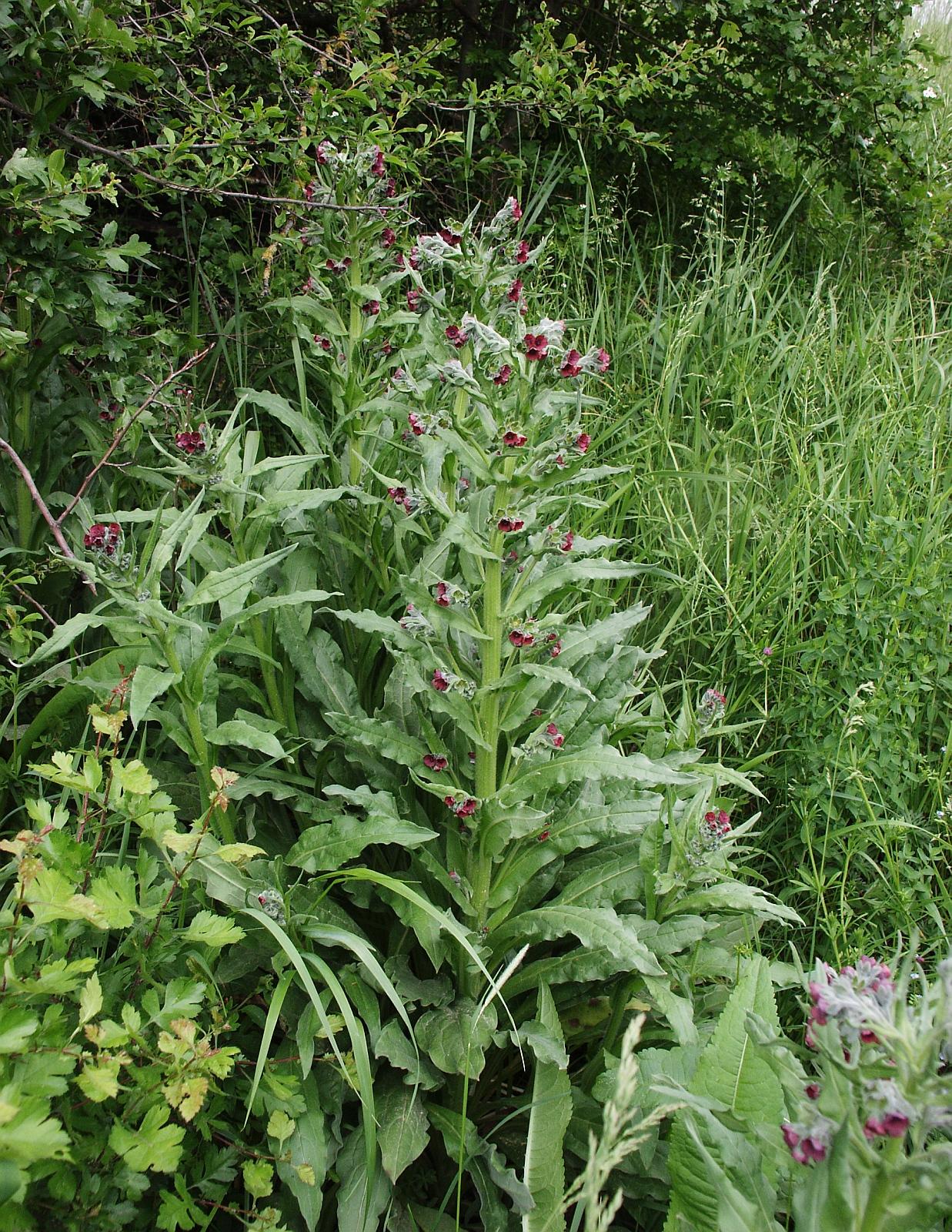
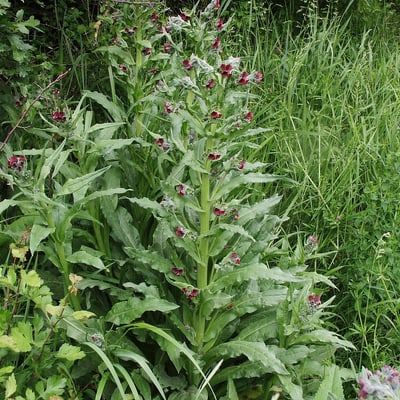
Hound's-tongues can grow to a height of up to one metre.
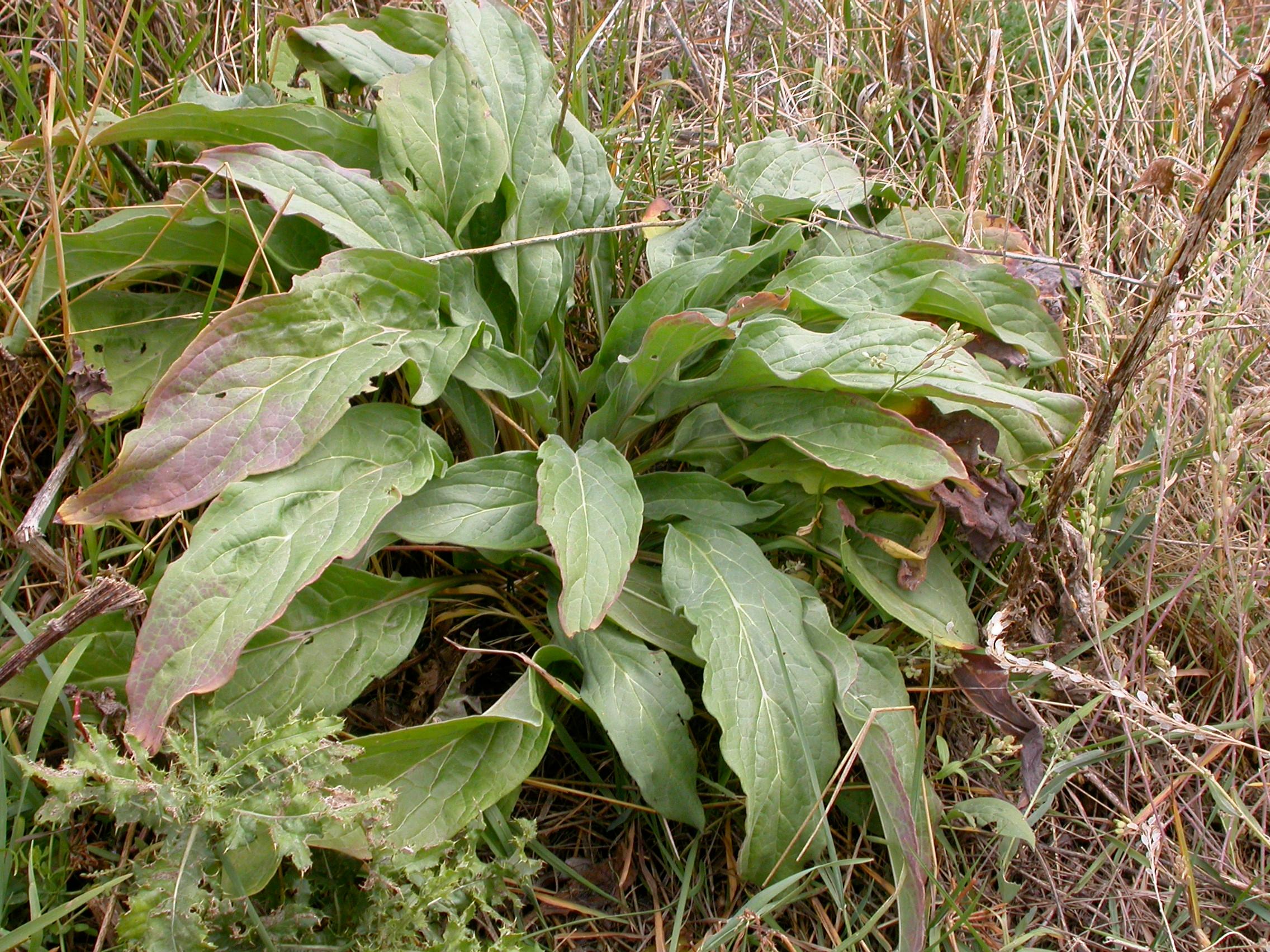
The leaves form a basal rosette or are alternately arranged on the stem. They are rough, very hairy and thus of grey-green appearance.
The stem is stout and upright. It can measure up to 1 cm in diameter. It is angular, loosely covered in shaggy hairs and densely leaved.
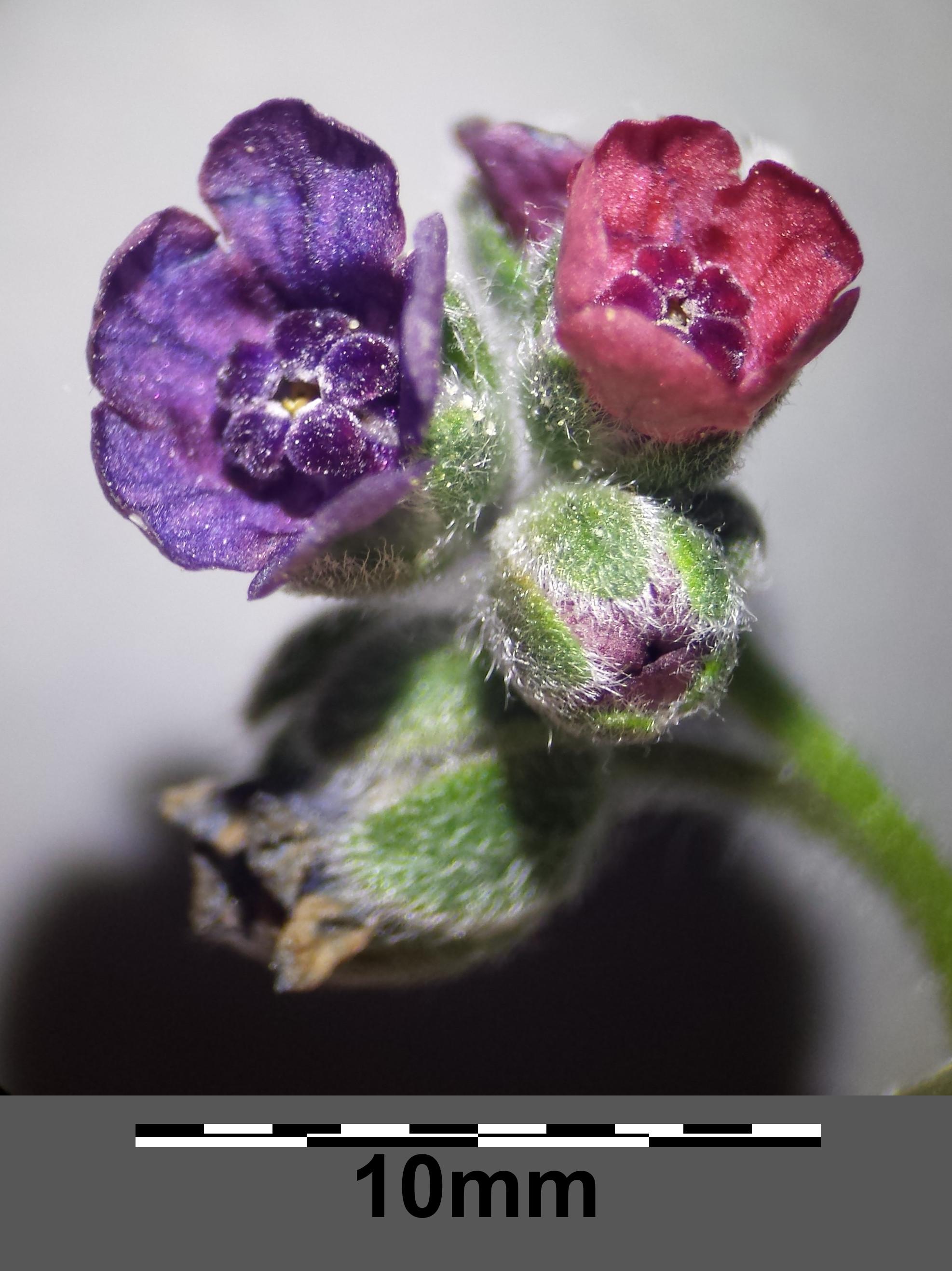
The flowers have five petals. They are arranged in long upright flower heads that are initially rolled up. The colour of the flowers changes over time from dark red to dark purple. At the centre of the flower are five thick coronal scales.
The fruit consists of four mericarps (mericarpic nutlets). Mericarps are fruits that split into several sections after ripening.
Features
Hound's-tongue
Cynoglossum officinale
poisonous
very hairy
purple and red flowers on the same plant
In the city
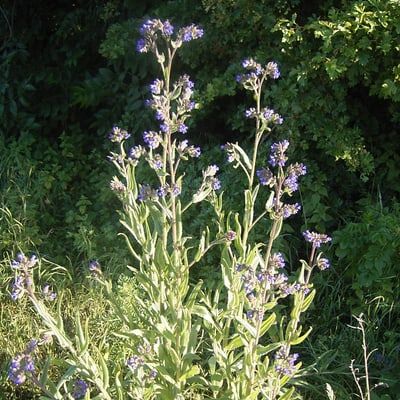
In an urban environment, hound's-tongue often grows on waysides, wasteland and railway land.
It benefits from the nutrient enrichment in urban soils and can propagate quite well.
Fun Facts
The fruit parts of the hound's-tongue have a barbed-prickly surface that act like a hook and loop fastener and stick to the fur of animals.
Over the course of their development, flowers change in colour from dark red to dark purple. This is caused by a change in the flower’s pH value. The pH value increases over time and the environment within the flower cells becomes increasingly alkaline.
It flowers from May to July.
- Endangerment level Germany: Warning list
The plant contains carcinogenic substances; its use as a medicinal plant should thus not continue.
Sources
Habitus, Bernd Haynold, CC BY-SA 2.5, https://commons.wikimedia.org/wiki/File:Cynoglossum_officinale_190506.jpg

Blüten, Stefan.lefnaer, CC BY-SA 4.0, https://commons.wikimedia.org/wiki/File:Cynoglossum_officinale_sl14.jpg

Blätter, Matt Lavin, CC BY-SA 2.0, https://commons.wikimedia.org/wiki/File:Cynoglossum_officinale_(4970183327).jpg
.jpg)
Spohn, M., Golte-Bechtle, M. & Spohn, R. (2015) Was blüht denn da? Stuttgart: Franckh Kosmos Verlag.
Needon, C. & Petermann, J. (1991) Urania-Naturführer Pflanzen, Leipzig, Jena, Berlin: Urania-Verlag.
Schauer, T., Caspari, C. & Caspari, S. (2015) Der illustrierte BLV-Pflanzenführer für unterwegs. 1150 Blumen, Gräser, Bäume und Sträucher, München: BLV.
Page „Gewöhnliche Hundszunge“. : Wikipedia, The Free Encyclopedia. Date of last revision: 27.11.2016, 11:36 UTC. URL: https://de.wikipedia.org/w/index.php?title=Gew%C3%B6hnliche_Hundszunge&oldid=160118562 (Accessed: 15.12.2016).
Page „Zerfallfrucht“. : Wikipedia, The Free Encyclopedia. Date of last revision: 15.11.2015, 18:25 UTC. URL: https://de.wikipedia.org/w/index.php?title=Zerfallfrucht&oldid=148071942 (Accessed: 20.01.2017).