
Short Description
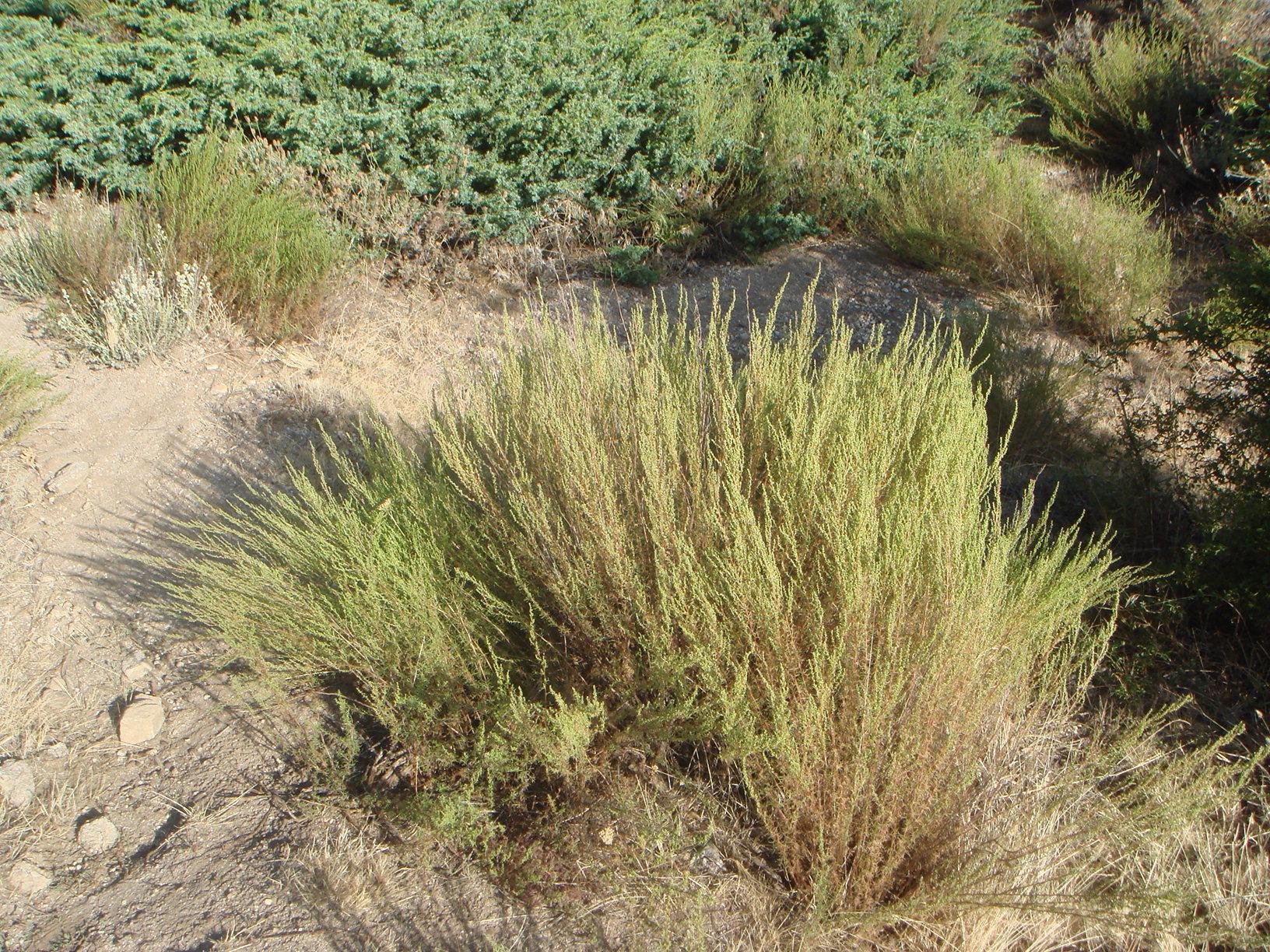
Field wormwood can reach a height of up to 1.5 m.
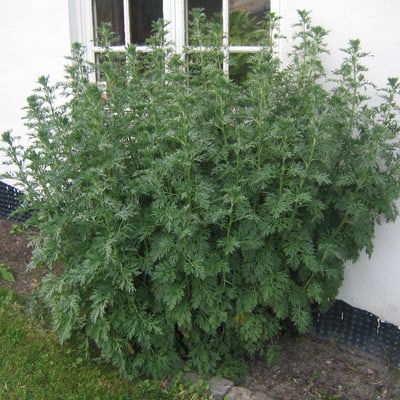
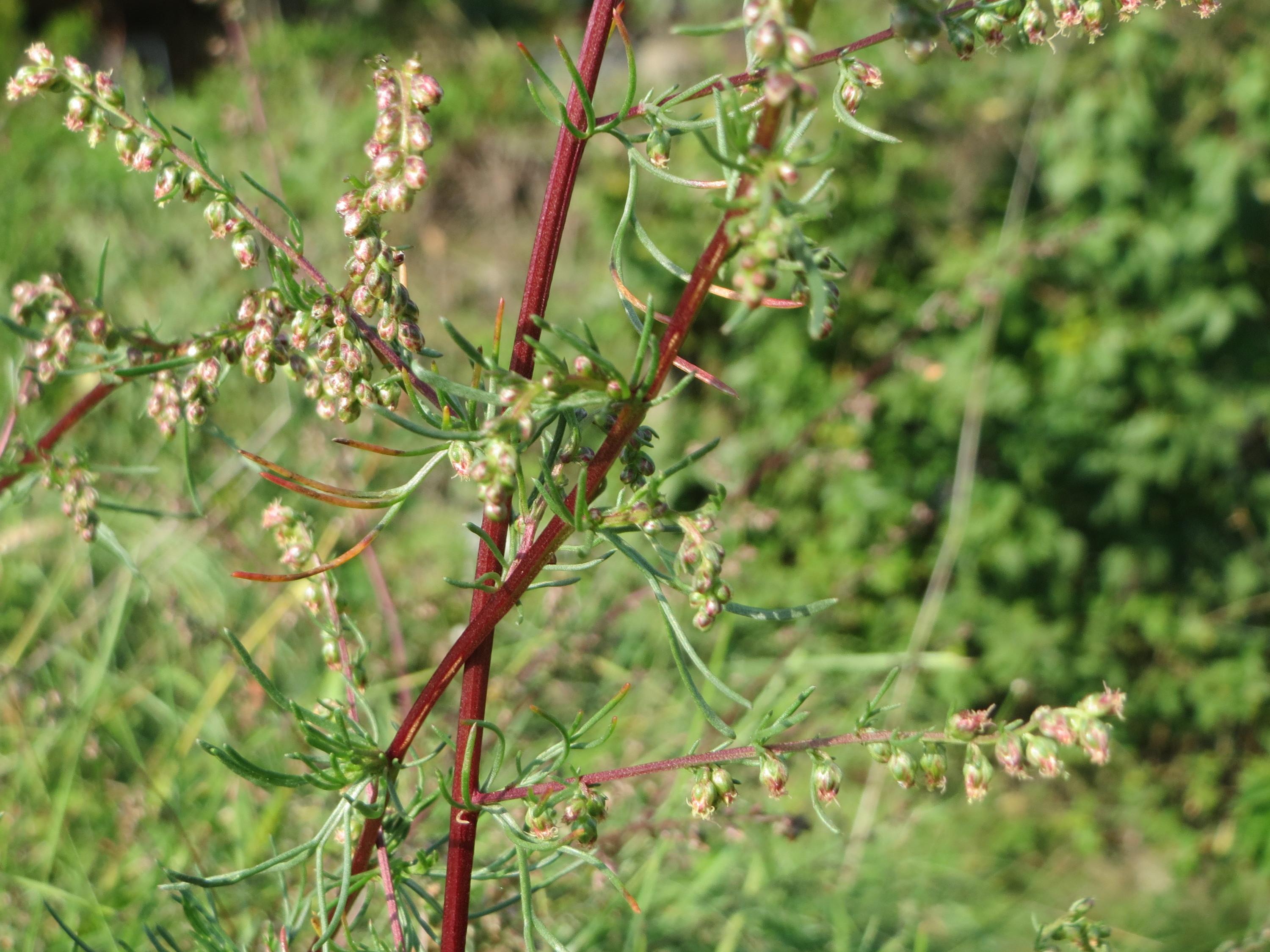
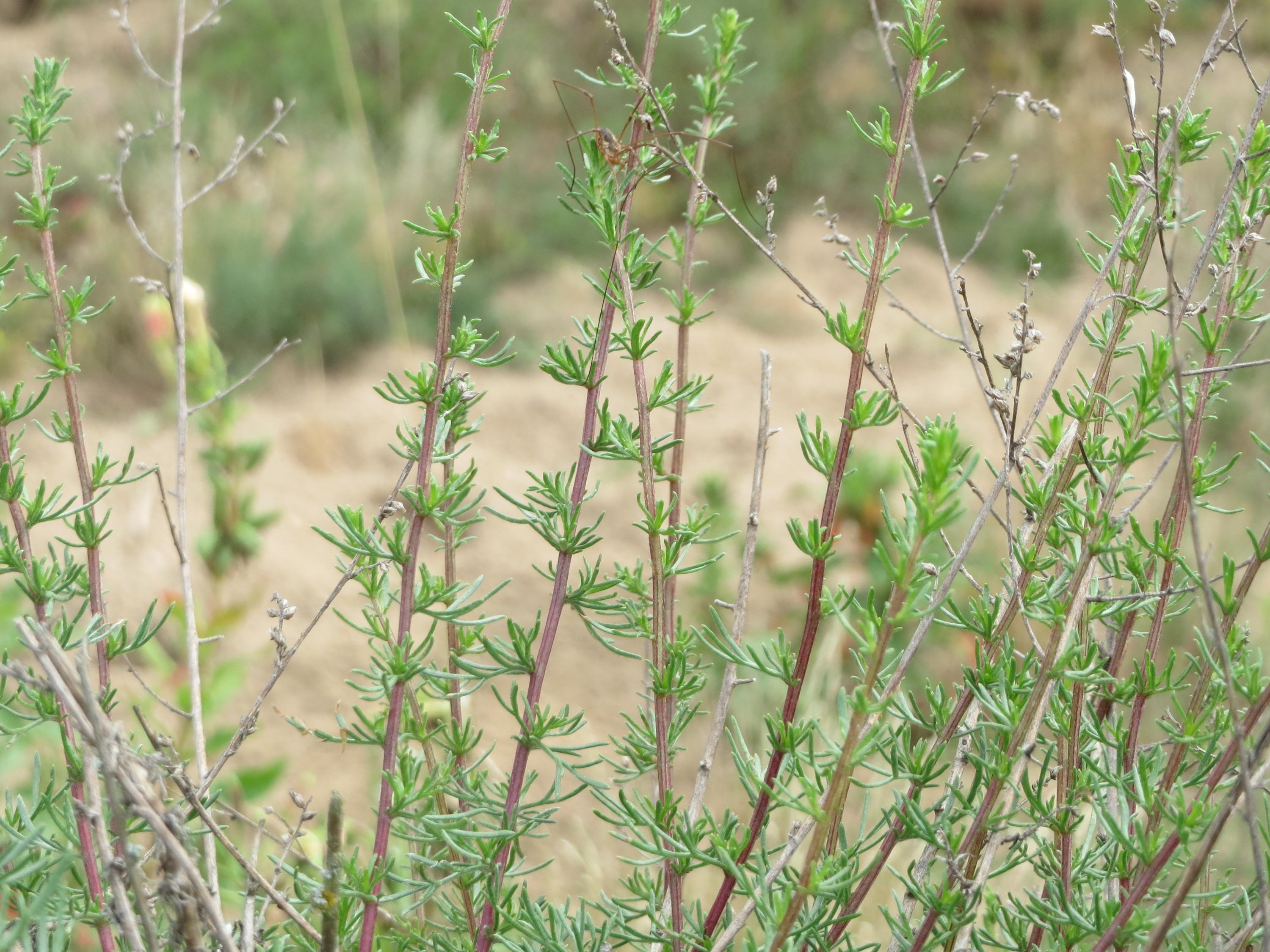
The leaves are solitary and alternate on the stem. They are very finely, two to three times irregularly divided (pinnately). The leaves are silky-haired at first and later become glabrous.
The stem is hairless to silky and almost odourless.
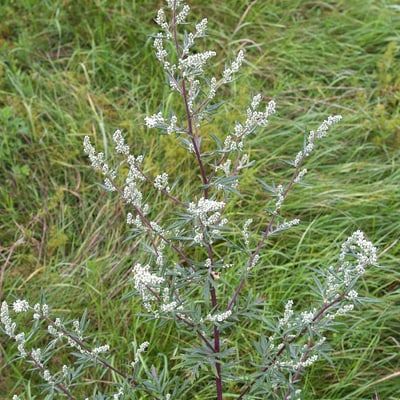
The inconspicuous flowers are small and yellowish to reddish brown. They are grouped in small flower heads. The flower heads are arranged in large, strongly branched inflorescences that are usually turned to one side only (unilateral).
The fruits are very small, smooth, dark brown and nut-like. They have a ring of hairs.
Features
Field wormwood
Artemisia campestris
poisonous
very finely divided leaves
In the city
In the city, field wormwood can be found on rubble tips, fallow land and along railway lines. It prefers dry and sandy soils.
Fun Facts
The flowering period is from August to October.
The genus name "Artemisia" refers to the Greek goddess of hunting and birth Artemis.
- Endangerment level Germany: not endangered
All mugwort species contain santonin. It was formerly used as a vermifuge. It is toxic to humans and can cause hallucinations in higher doses. Therefore, it is no longer used.
Sources
Habitus, Xemenendura, CC BY-SA 3.0, https://commons.wikimedia.org/wiki/File:Artemisia_campestris_1.JPG

Blütenstand, AnRo0002, CC0, https://commons.wikimedia.org/wiki/File:20170927Artemisia_campestris1.jpg

Blätter, AnRo0002, CC0, https://commons.wikimedia.org/wiki/File:20150628Artemisia_campestris.jpg

Jäger, E. J. (2011) Rothmaler - Exkursionsflora von Deutschland. Gefäßpflanzen: Grundband, Heidelberg: Spektrum Akademischer Verlag.
Page „Feld-Beifuß“. : Wikipedia, The Free Encyclopedia. Date of last revision: 18.12.2016, 13:44 UTC. URL: https://de.wikipedia.org/w/index.php?title=Feld-Beifu%C3%9F&oldid=160770486 (Accessed: 21.06.2017).
Bundesamt für Naturschutz (n.d.) Artensteckbriefe, URL: http://floraweb.de/pflanzenarten/artenhome.xsql?suchnr=596& (Accessed: 21.06.2017).