
Short Description
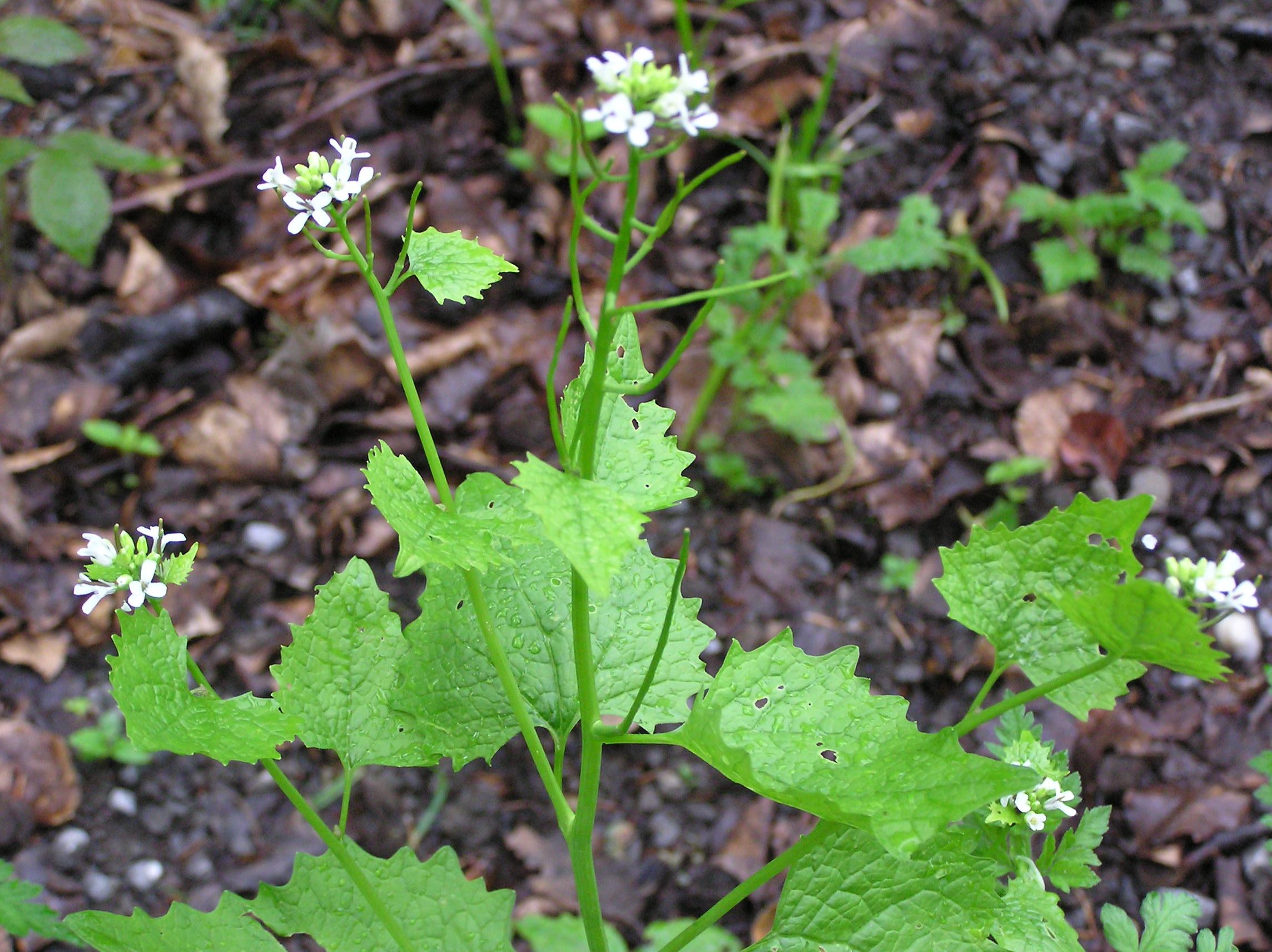
Garlic mustard can grow to a height of one metre.
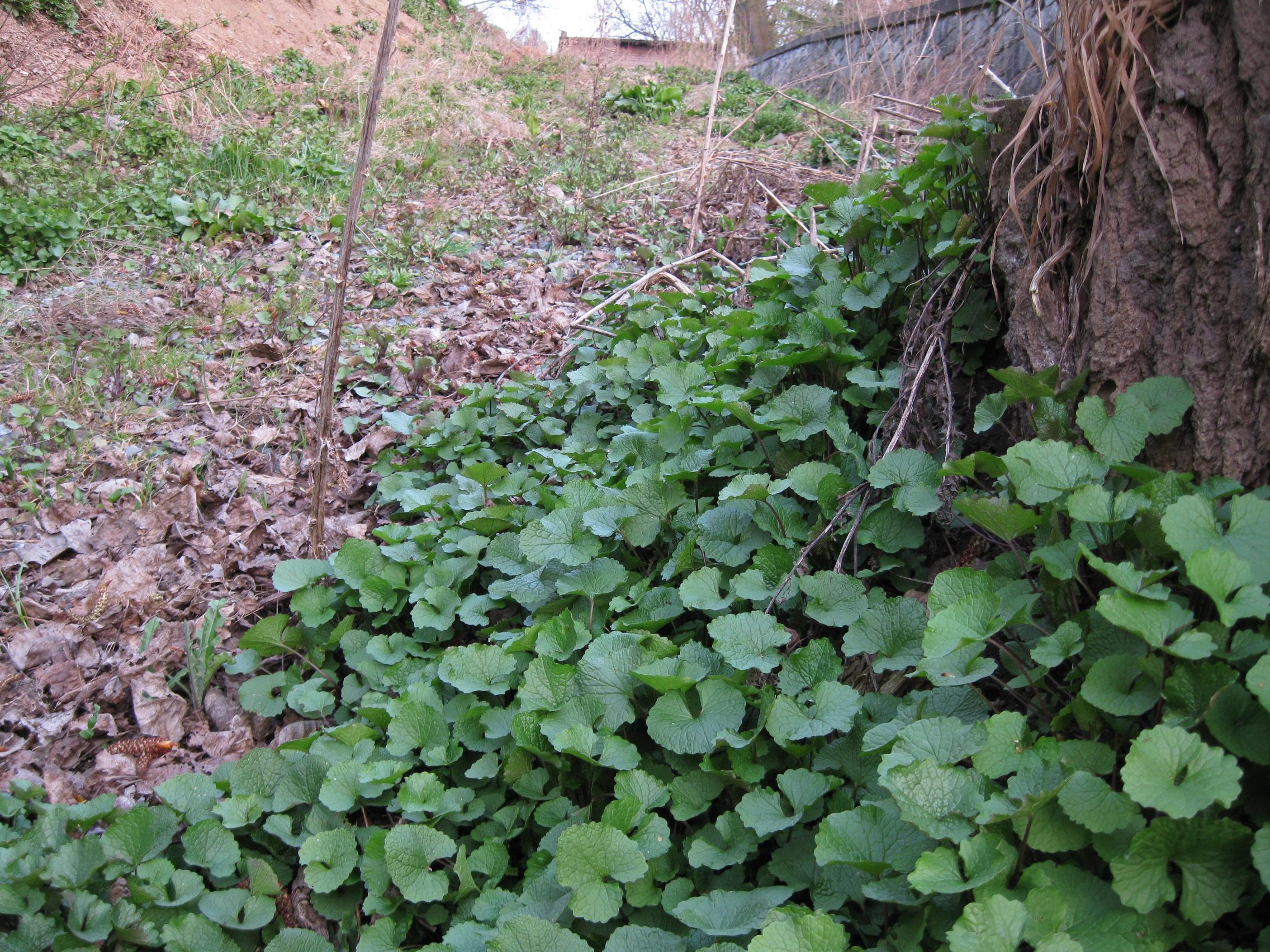
The leaves are heart- to kidney-shaped, with long points and lobed margins. The leaves grow alternately on the stem. Rubbing the leaves releases a garlicky smell.
The stem is upright and squarish. Its lower sections are often haired.
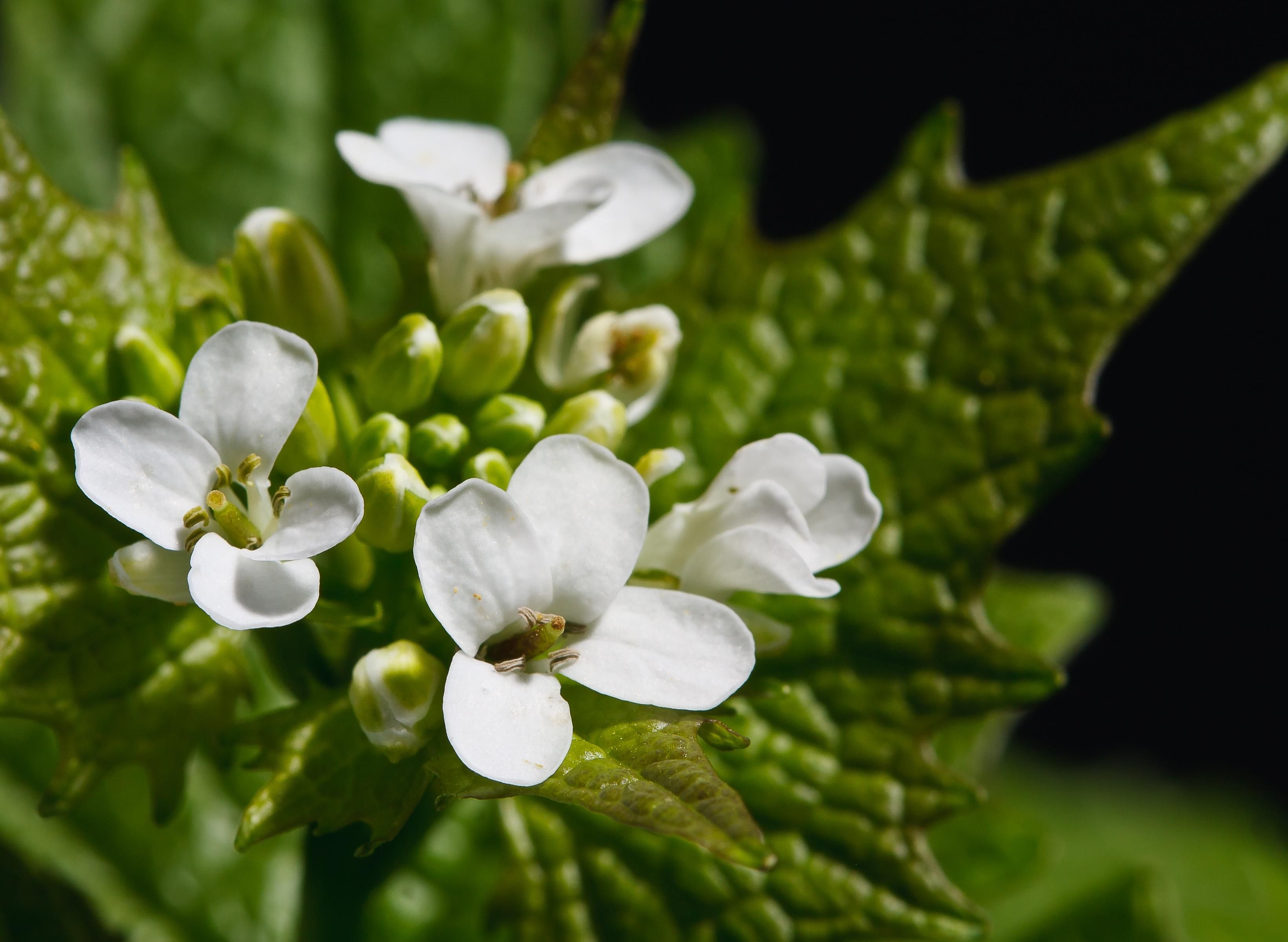
The flowers are clustered at the end of a botryoidal (shaped like a bunch of grapes) flower head. They are white with four petals. At the centre of each flower are four long and two shorter stamens.
The fruits are long narrow pods that grow on stalks below the flower.
Features
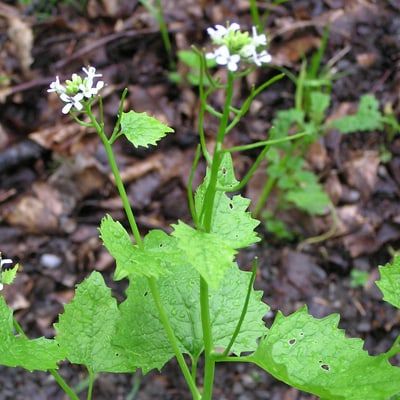
Garlic mustard
Alliaria petiolata
white flowers with four petals
garlicky smell
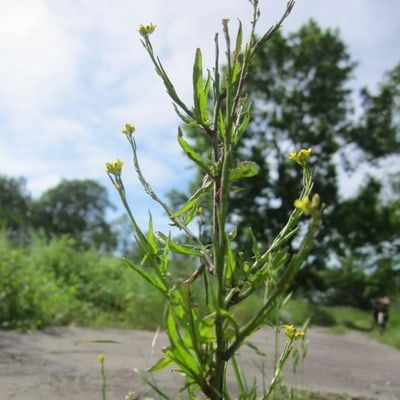
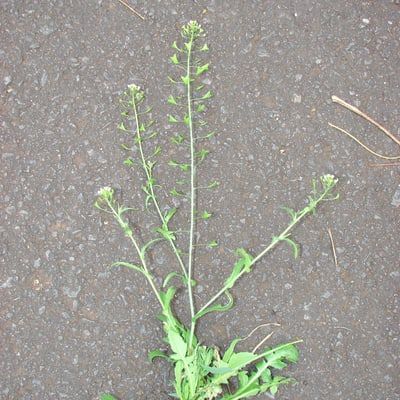
Similar species
In the city
In an urban environment, garlic mustard is frequently found in hedges, gardens, parks and wasteland. Nutrient-rich urban soils provide it with good habitat conditions. It prefers fresh, shaded to semi-shaded sites with nutrient-rich loamy soil.
Fun Facts
Garlic mustard is the oldest known native herb in Germany.
It flowers from April to July.
In natural medicine, the plant is described as antiseptic and diuretic and useful in wound cleansing.
Garlic mustard is an important food plant for the caterpillars of the orange tip butterfly.
Garlic mustard belongs to the same family of plants as mustard and cabbage. It contains mustard oil glycosides that are common in the cruciferous plants.
It is a perennial plant. This means that a plant grows older than two years, but flowers only once and dies after the seeds have ripened.
- Endangerment level Germany: not endangered
- Usage:
Its young shoots can be eaten raw. Dried seeds can be used as a seasoning similar to peppercorns.
Garlic mustard was formerly used as a herb and medicinal plant and frequently cultivated in gardens.
Sources
Habitus, Anke Hüper, PD, https://commons.wikimedia.org/wiki/File:Knoblauchsrauke01.jpg

Blüten, Bücking, CC BY-SA 3.0, https://commons.wikimedia.org/wiki/File:Alliaria_blossom.jpg

Blätter, Krümelomat, Gemeinfrei, https://commons.wikimedia.org/wiki/File:Knoblauchsraukentriebe.jpg

Eggenberg, S. & Möhl, A. (2007) Flora Vegetativa: Ein Bestimmungsbuch für Pflanzen der Schweiz im blütenlosen Zustand, Bern, Stuttgart, Wien: Haupt Verlag.
Spohn, M., Golte-Bechtle, M. & Spohn, R. (2015) Was blüht denn da? Stuttgart: Franckh Kosmos Verlag.
Jäger, E. J. (2011) Rothmaler - Exkursionsflora von Deutschland. Gefäßpflanzen: Grundband, Heidelberg: Spektrum Akademischer Verlag.
Kammer, P. M. (2016) Pflanzen einfach bestimmen. Schritt für Schritt einheimische Arten kennenlernen, Bern: Haupt Verlag.
Lippert, W. & Podlech, D. (1993) GU Naturführer. Blumen: die wichtigen Blütenpflanzen Mitteleuropas erkennen und bestimmen, München: Gräfe und Unzer Verlag.
Schauer, T., Caspari, C. & Caspari, S. (2015) Der illustrierte BLV-Pflanzenführer für unterwegs. 1150 Blumen, Gräser, Bäume und Sträucher, München: BLV.
Page „Knoblauchsrauke“. : Wikipedia, The Free Encyclopedia. Date of last revision: 18.12.2016, 10:42 UTC. URL: https://de.wikipedia.org/w/index.php?title=Knoblauchsrauke&oldid=160763609 (Accessed: 19.01.2017).
Bundesamt für Naturschutz (n.d.) Artensteckbriefe, URL: http://floraweb.de/pflanzenarten/artenhome.xsql?suchnr=280& (Accessed: 19.01.2017).