
Short Description
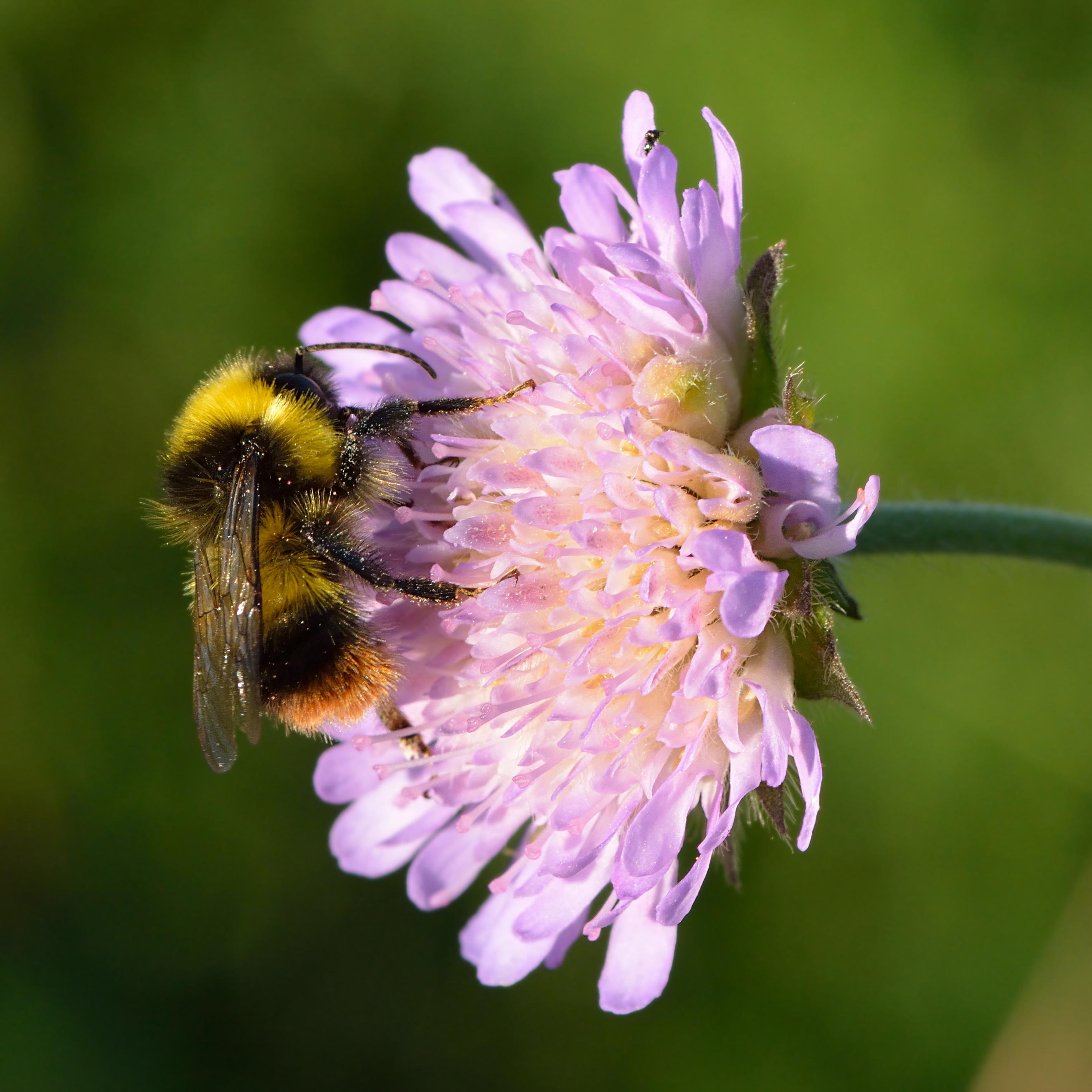
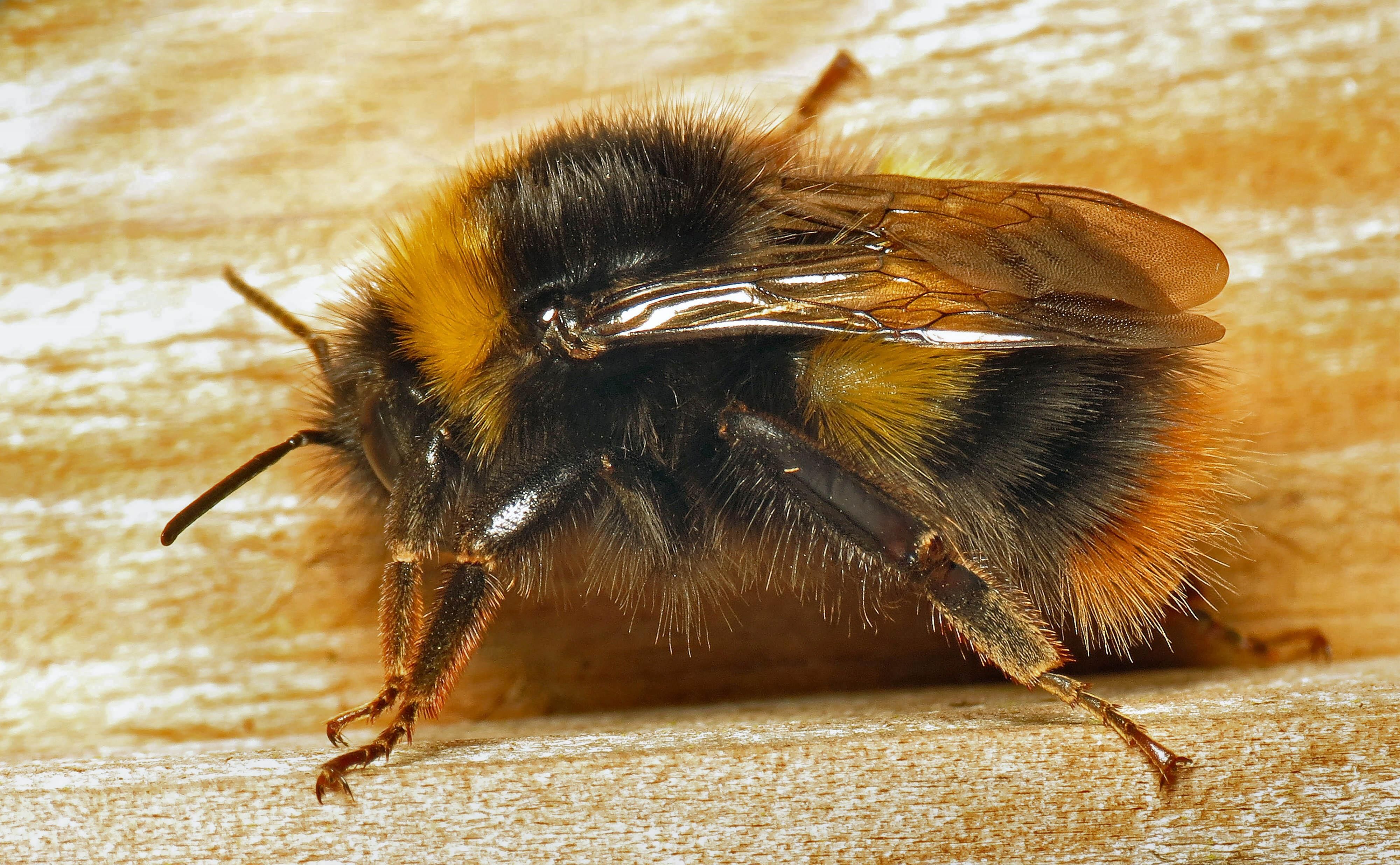
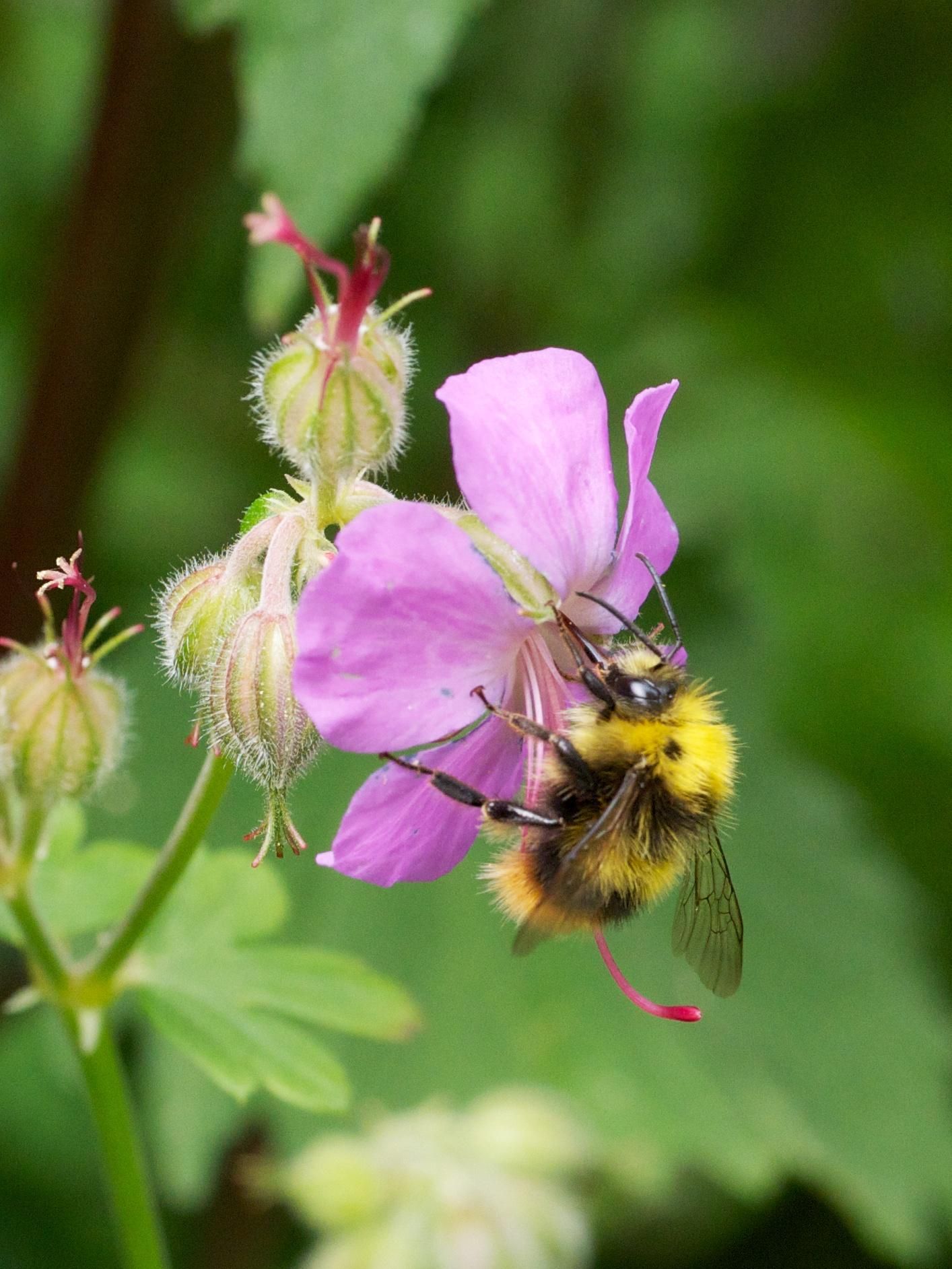
The early bumblebee belongs to the smaller bumblebee species. It has black and yellow horizontal stripes. The upper side of the rear segment is orange. The whole body has shaggy hairs. Different colour variations are possible.
Features
Early bumblebee
Bombus pratorum
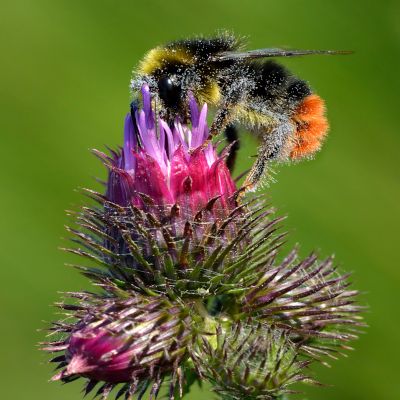
orange-red abdomen
two yellow cross bands
In the city
Early bumblebees colonise a variety of different habitats. They are particularly common in sparse forests, parks and gardens as well as in meadows. They usually build their nests above ground in hedges, bushes or wall crevices. Sometimes, however, they also build their nests in abandoned mice nests.
Fun Facts
Bumblebees can sting, but they are very peaceful and rather shy.
They feed on nectar and pollen from various plants.
A colony consists of 50 to 120 animals.
Bumblebees make an important contribution to the pollination of numerous flowers.
- Endangerment level Germany: not endangered
Sources
Männchen, Ivar Leidus, CC BY-SA 4.0, https://commons.wikimedia.org/wiki/File:Bombus_pratorum_(male)_-_Knautia_arvensis_-_Keila.jpg
_-_Knautia_arvensis_-_Keila.jpg)
Königin, Martin Cooper, CC BY-SA 2.0, https://commons.wikimedia.org/wiki/File:Early_Bumble_Bee_(Bombus_pratorum)_queen_(13043911623).jpg
_queen_(13043911623).jpg)
Habitus, Sputniktilt, CC BY-SA 3.0, https://commons.wikimedia.org/wiki/File:Bombus_pratorum_on_geranium_2014_01.jpg

Saure, C. (2005) Rote Liste und Gesamtartenliste der Bienen und Wespen (Hymenoptera part.) von Berlin mit Angaben zu den Ameisen. : Der Landesbeauftragte für Naturschutz und Landschaftspflege / Senatsverwaltung für Stadtentwicklung (eds.) Rote Listen der gefährdeten Pflanzen und Tiere von Berlin, URL: https://www.berlin.de/sen/uvk/natur-und-gruen/naturschutz/artenschutz/artenlisten-rote-listen/insekten/ (Accessed: 29.03.2021).
Page „Wiesenhummel“. : Wikipedia, The Free Encyclopedia. Date of last revision: 29.11.2016, 07:19 UTC. URL: https://de.wikipedia.org/w/index.php?title=Wiesenhummel&oldid=160178502 (Accessed: 10.01.2018).
Bellmann, H. (1999) Der neue Kosmos-Insektenführer. Über1400 Fotos, Stuttgart: Franckh Kosmos Verlag.
Bellmann, H. (2005) Bienen, Wespen, Ameisen. Hautflügler Mitteleuropas, Stuttgart: Franckh Kosmos Verlag.
Binot-Hafke, M., Balzer, S., Becker, N., Gruttke, H., Haupt, H., Hofbauer, N., Ludwig, G., Matzke-Hajek, G. & Strauch, M. (2011) Rote Liste gefährdeter Tiere, Pflanzen und Pilze Deutschlands. volume 3: Wirbellose Tiere (part 1), Bonn-Bad Godesberg: Bundesamt für Naturschutz.