
Short Description
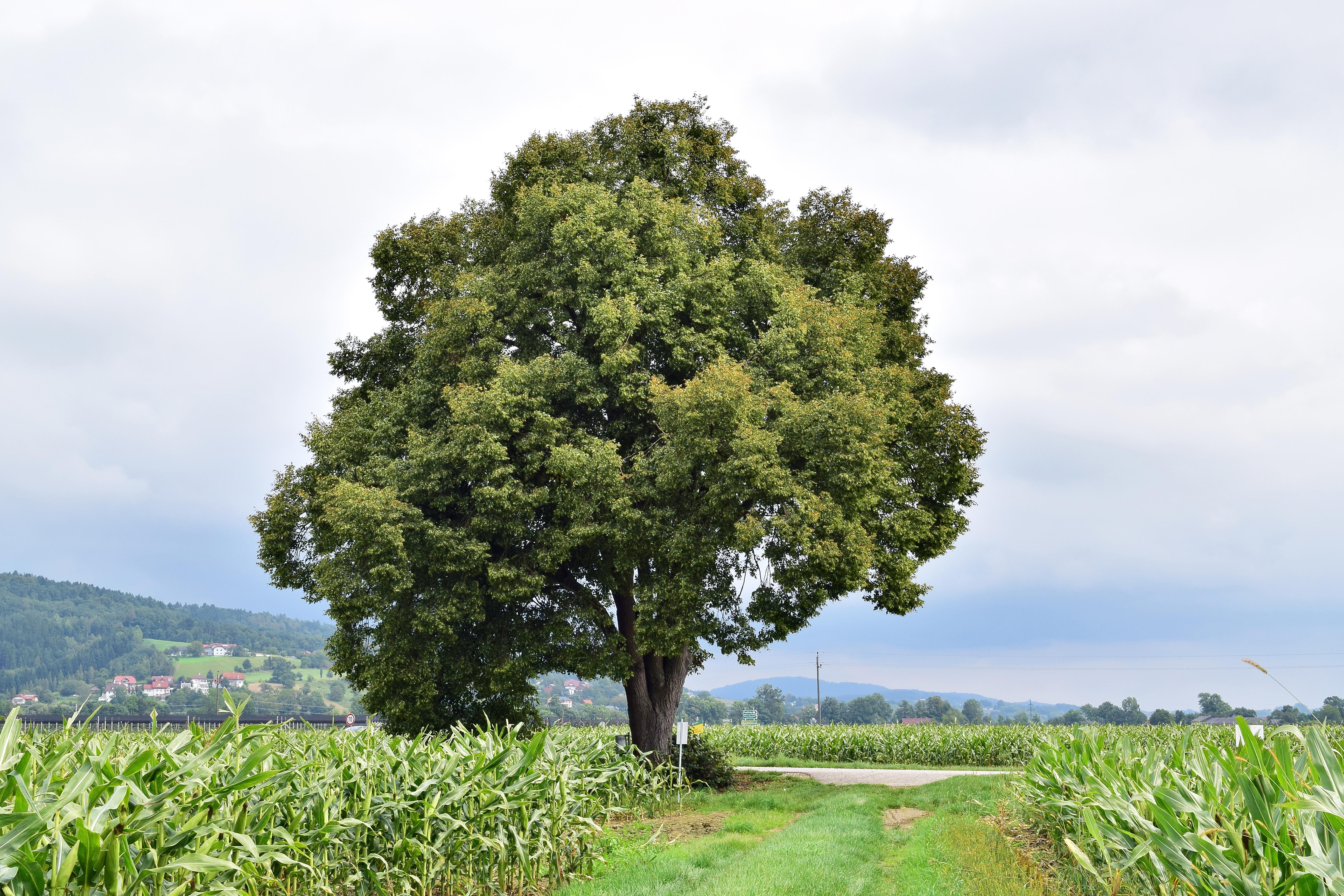
Small-leaved lime can grow up to 40 m tall. The crown is high and irregularly domed.
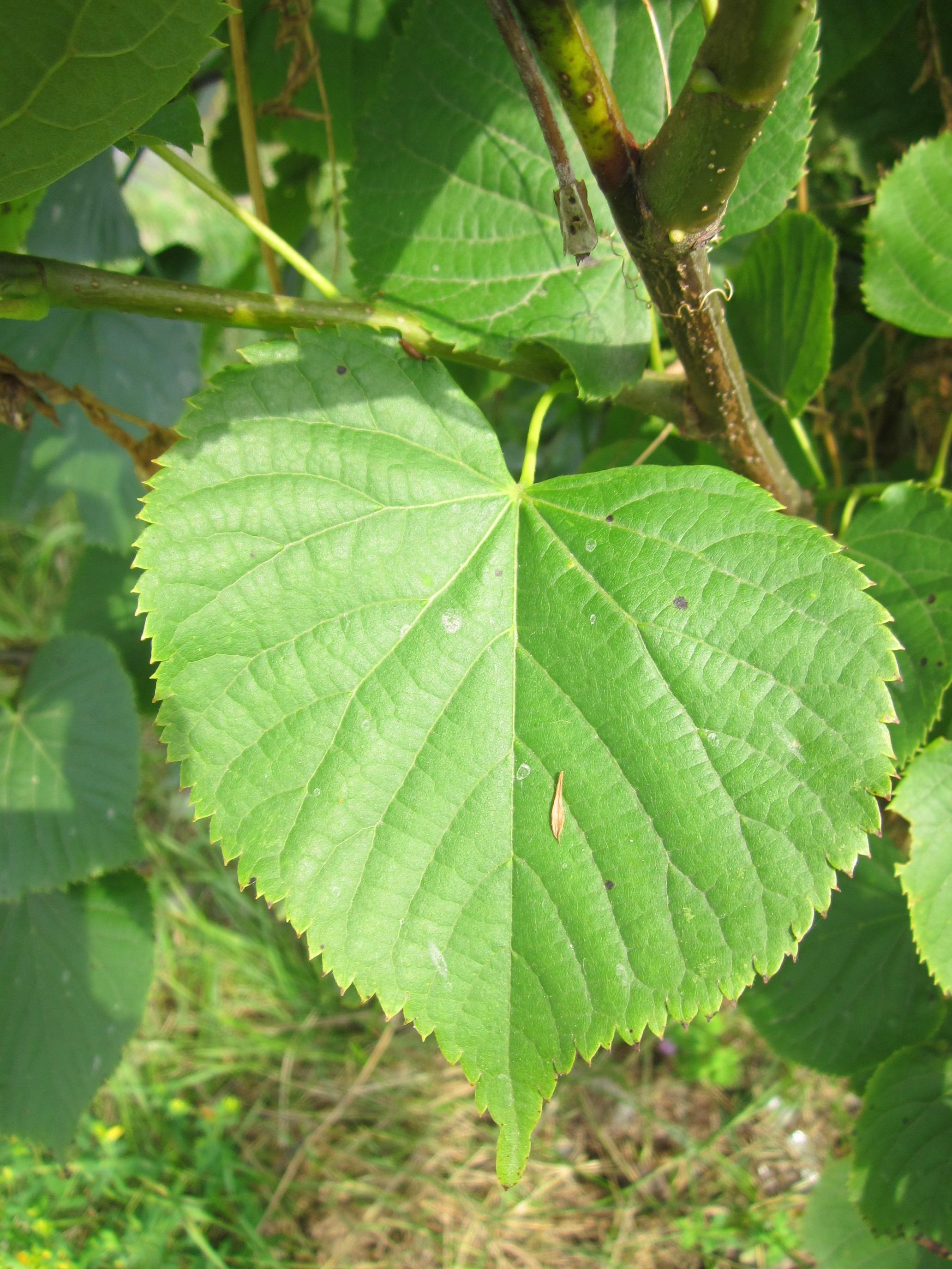
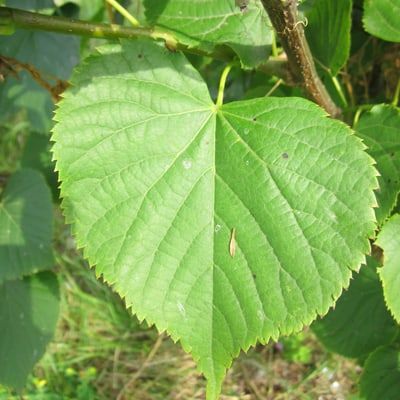
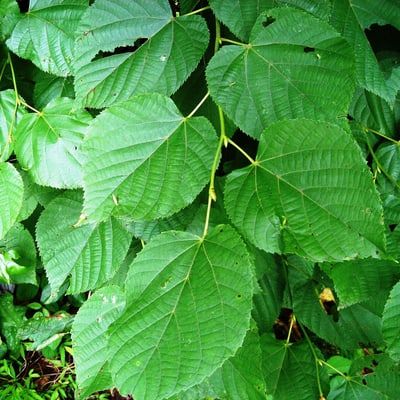
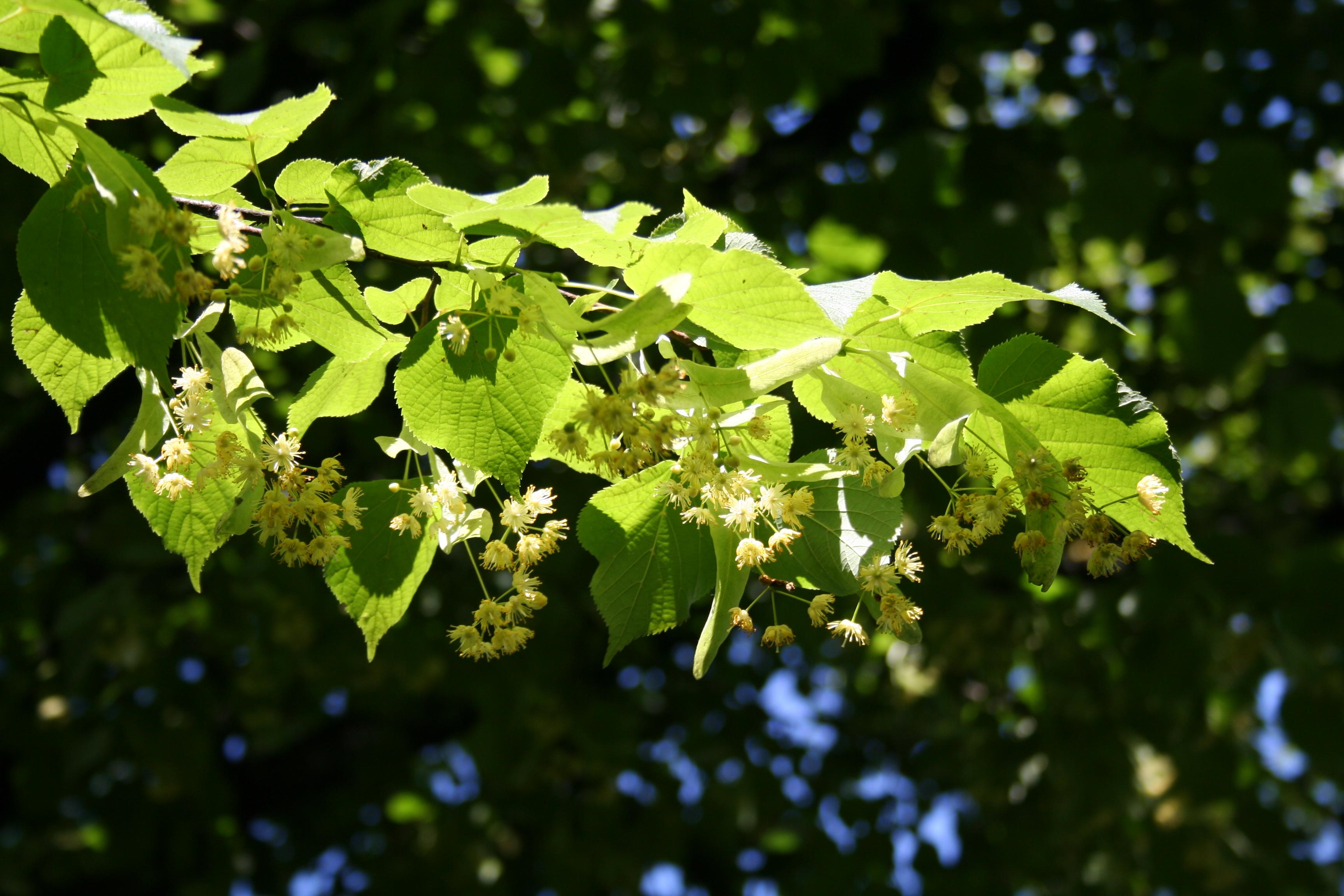
The leaflets are heart-shaped or triangular-ovate (oval) and pointed. The top of the leaves is hairless. In older leaves, the underside has brown hairs in the leaf vein axils. The leaf margins are irregularly fine and sharply serrated.
The bark is smooth and dark-grey to blackish with a shallow, vertically fissured outer layer.
Several pale flowers are clustered in cymes. The cymes are fused with a narrow, whitish to light-green floral bract. The flowers have a rich scent
The fruits are spherical, thin-shelled and vaguely angular nutlets.
Features
Small-leaved lime
Tilia cordata
hairless top of the leaves
small tufts of brown hair in the leaf vein axils (older leaves)
flowers with a whitish or light green floral bract
In the city
Small-leaved lime trees are popular trees in parks and along roads. They prefer fresh to moderately dry sites.
The honeydew from aphids dropping from the leaves make lime trees unpopular in some areas because cars and bicycles get covered with a sticky layer.
Fun Facts
The bast fibres are used to make basket and rope products.
Lime blossom honey is one of the most popular varieties of honey. It is produced from the nectar of the flowers. By contrast, lime honey is made from the honeydew of aphids.
It flowers from June to July.
The fruit ripening season is in September.
- Endangerment level Germany: not endangered
- Usage:
Limewood is light and soft and is used for various purposes.
ime tree (linden) flowers are used as a tea. Lime blossoms are said to have a sweat-inducing and blood-cleansing effect.
Sources
Blatt, AnRo0002, PD, https://commons.wikimedia.org/wiki/File:20130705Linde_Reilingen4.jpg

Habitus, Haeferl, CC BY-SA 3.0, https://commons.wikimedia.org/wiki/File:Feldkirchen_an_der_Donau_-_Naturdenkmal_nd325_-_Linde_in_Feldkirchen_-_Winter-Linde_(Tilia_cordata).jpg
.jpg)
Blütenstand, N p holmes, CC BY-SA 3.0, https://commons.wikimedia.org/wiki/File:Lime_tree.jpg

Aas, G. & Riedmiller, A. (2002) Laubbäume. Bestimmen – Kennenlernen – Schützen, Bindlach: Gondrom Verlag.
Amann, G. & Richter, P. (1962) Bäume und Sträucher des Waldes, Melsungen: Verlag J. Neumann – Neudamm.
Böhlmann, D. (2015) Laubbäume temperierter Klimate mit ihrer Artenvielfalt, Berlin: Patzer Verlag.
Mitchell, A. (1975) Die Wald- und Parkbäume Europas. Ein Bestimmungsbuch, Hamburg und Berlin: Verlag Paul Parey.
Quartier, A. (1989) Bäume und Sträucher, München: BLV.
Roloff, A. (2013) Bäume in der Stadt. Besonderheiten - Funktion - Nutzen - Arten - Risiken, Stuttgart: Verlag Eugen Ulmer.
Page „Winterlinde“. : Wikipedia, The Free Encyclopedia. Date of last revision: 11.05.2016, 08:45 UTC. URL: https://de.wikipedia.org/w/index.php?title=Winterlinde&oldid=154274403 (Accessed: 19.05.2016).