
Short Description
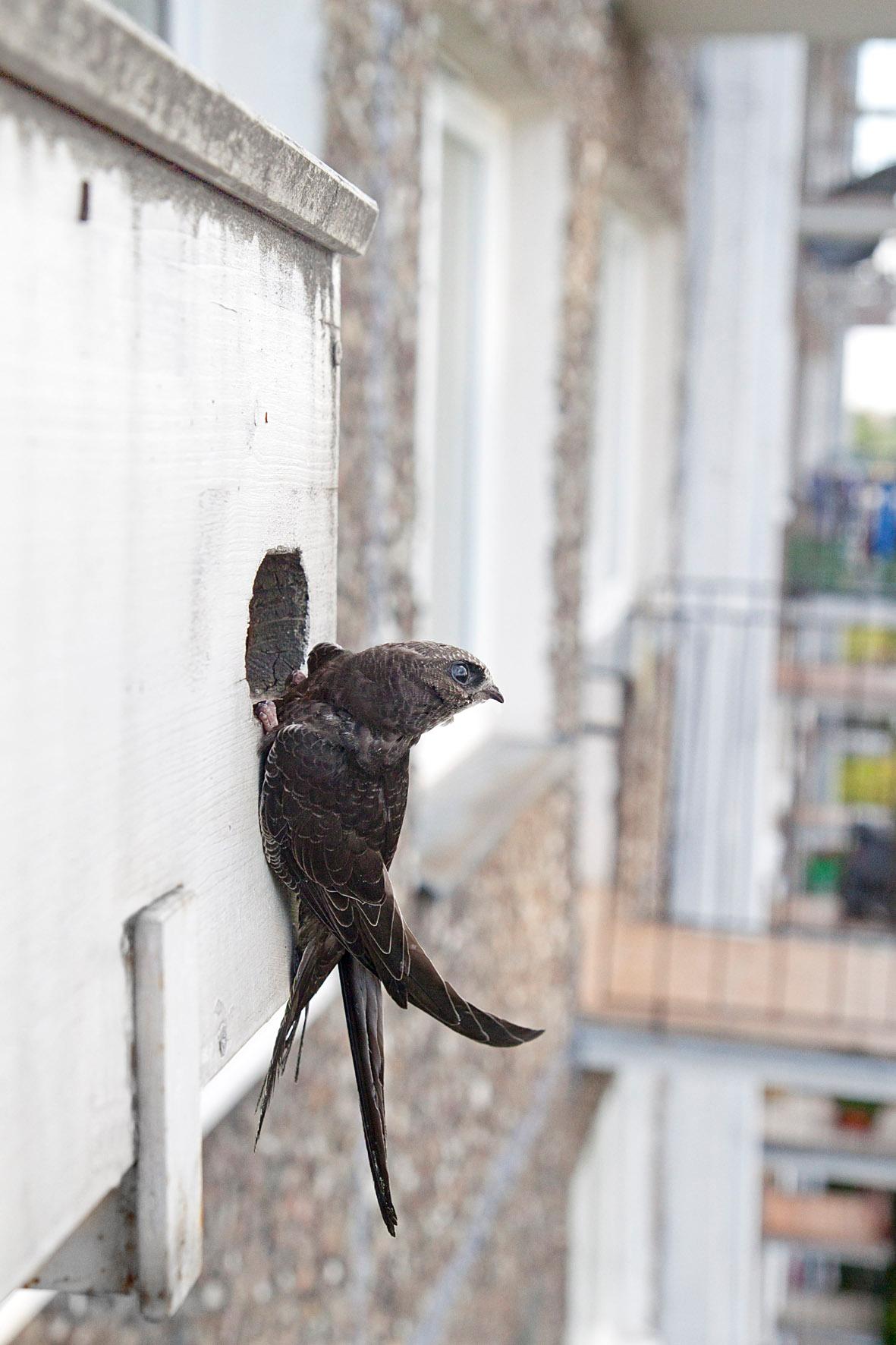
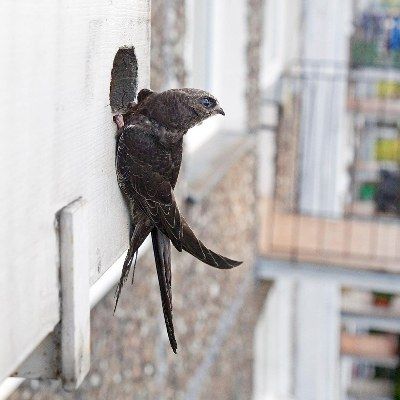
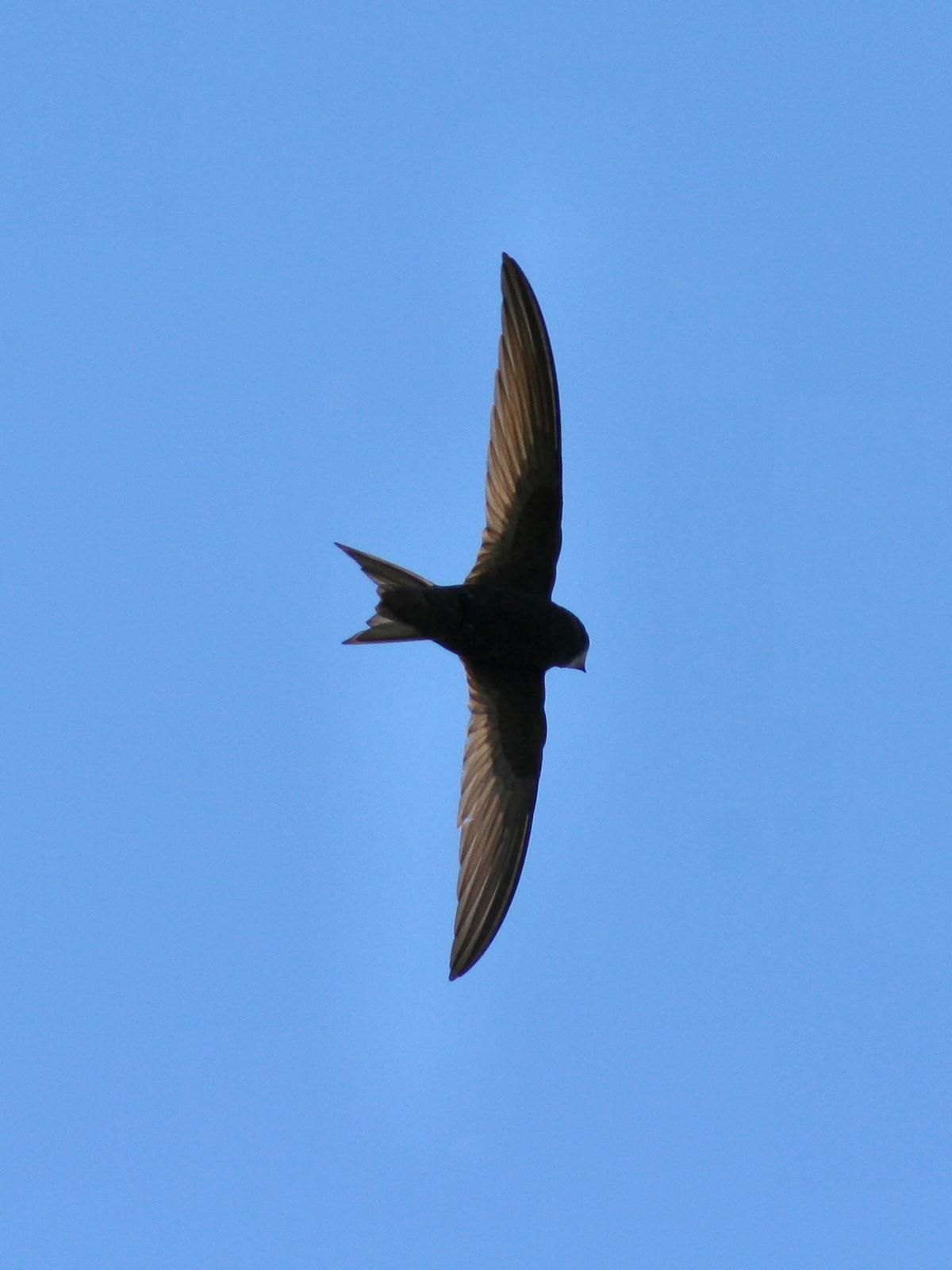
Common swifts are best recognised by their comparatively short forked tails and their long, crescent-shaped wings. They are brownish-black to dark-grey with a light-grey and whitish throat. Unmistakeable, too, are their constant calls while flying.
The plumage of young swifts is darker and less shiny. Their white throat is more pronounced.
Features
Common swift
Apus apus
short forked tail
long crescent-shaped wings
Gruppe: Flugrufe
Tembrock (CC BY-SA 3.0)

Similar species
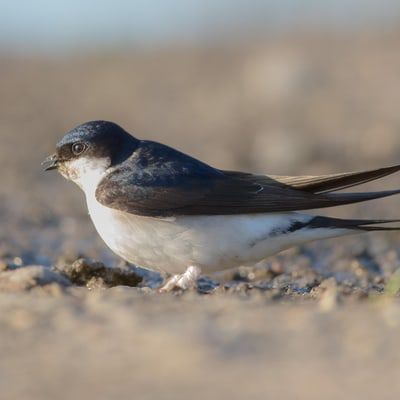
Common house martin
Delichon urbicum
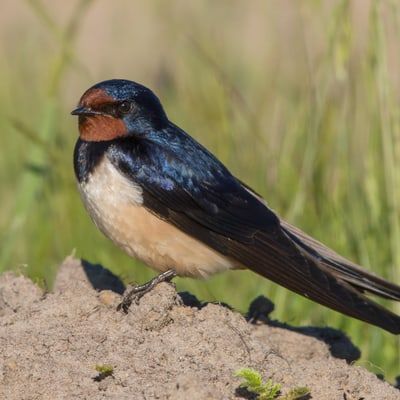
Barn swallow
Hirundo rustica
In the city
As original cliff breeders, swift have adapted well to life in town. Old buildings rich in surface structures and cavities offer plentiful opportunities for nest building. Swifts tend to avoid modern buildings with smooth façades. Nesting places are also lost as the result of building restoration.
Fun Facts
Common swifts reach flight speeds in excess of 200km/h.
They only land to nest. They sleep and rest on the wing.
Young swifts fly for 2-3 years without a break, before they land for the first time to breed.
Swifts have the shortest legs of all birds.
Swifts sitting on the ground cannot lift off against the wind; running on their short legs is very difficult. If you want to give a helping hand for lift off, put the bird on your flat hand, but never throw it up in the air.
Common swifts can be seen in Germany from the middle of May to the middle of August. They spend the winter in southern or tropical Africa. Some birds only fly as far as the Mediterranean. In mild winters, they may also be spotted in southern Germany. Most of these are hand-reared young birds or birds that were injured and released into the wild too late.
- Endangerment level Germany: not endangered
The German name "Mauersegler" refers to the typical flight behaviour just past walls and roofs, which can often be observed.
Sources
Habitus , Amikosik, CC BY-SA 3.0, https://commons.wikimedia.org/wiki/File:Jerzyk_przy_skrzynce.jpg

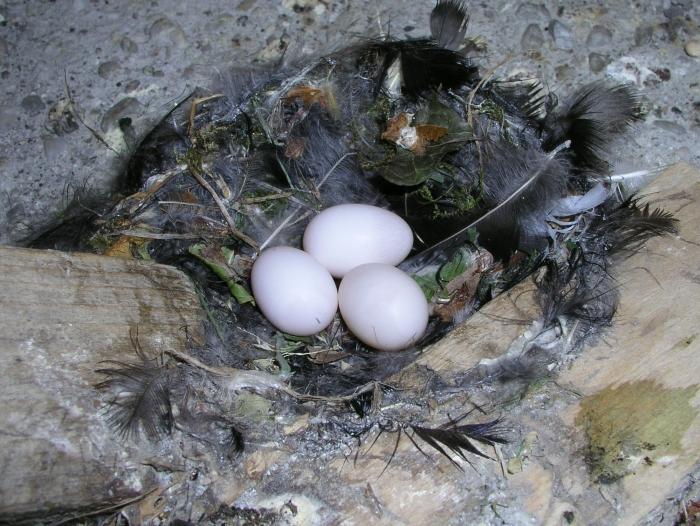
Nest mit Eiern, Pellinger Attila, CC BY-SA 3.0, https://commons.wikimedia.org/wiki/File:Sarl%C3%B3sfecske_f%C3%A9szekalja.jpg

im Flug, Paweł Kuźniar, GFDL, https://commons.wikimedia.org/wiki/File:Apus_apus_01.jpg

Harrison, C. (1975) Jungvögel, Eier und Nester aller Vögel Europas, Nordafrikas und des Mittleren Ostens - Ein Naturführer zur Fortpflanzungsbiologie, Hamburg und Berlin: Verlag Paul Parey.
Bejcek, V. (1988) Zugvögel, Hanau/Main: Verlag Werner Dausien.
Witt, K. & Steiof, K. (2013) Rote Liste und Liste der Brutvögel von Berlin, 3. version, 15.11.2013. : Berliner Ornithologische Arbeitsgemeinschaft e.V. (eds.) Berliner Ornithologischer Bericht, volume 23, Berlin: Berliner Ornithologische Arbeitsgemeinschaft e.V., 1-23.
NABU – Naturschutzbund Deutschland e.V. (2016) Rote Liste der Brutvögel Deutschlands. 5. version, published August 2016, URL: https://www.nabu.de/tiere-und-pflanzen/voegel/artenschutz/rote-listen/10221.html (Accessed: 07.04.2017).
Page „Mauersegler“. : Wikipedia, The Free Encyclopedia. Date of last revision: 04.02.2016, 16:07 UTC. URL: https://de.wikipedia.org/w/index.php?title=Mauersegler&oldid=151065756 (Accessed: 12.02.2016).
NABU Ortsgruppe Mosbach (n.d.) Mauersegler und Mehlschwalbe. Vorboten des Sommers mit erstaunlichen Flugkünsten, URL: http://www.nabu-mosbach.de/html/schwalbe_und_mauersegler.html (Accessed: 22.03.2021).